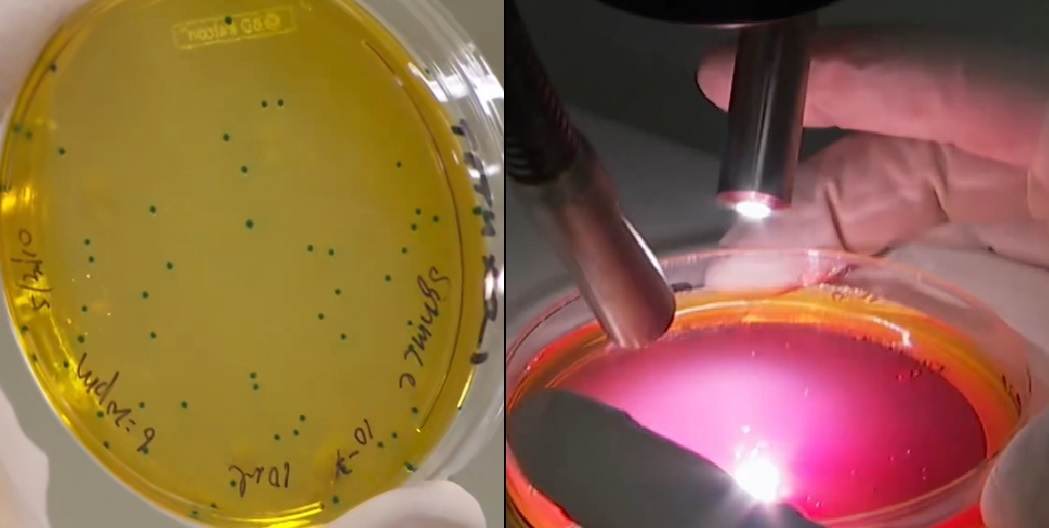
ROCKVILLE, MARYLAND — May 2, 2026 : Researchers at the J. Craig Venter Institute (JCVI) have successfully created the world’s first synthetic bacterial species whose genetic instructions are entirely derived from a laboratory-designed chromosome rather than natural DNA. The milestone, first announced in 2010 after 15 years of research and approximately $40 million in investment, established a new technical foundation for the field of synthetic biology.
The organism, named Mycoplasma mycoides JCVI-syn1.0, is a self-replicating bacterium whose genome was designed on a computer, chemically synthesized, and assembled in the laboratory before being transplanted into a recipient cell. Once activated, the synthetic genome directed the cell’s biological processes, allowing it to grow and divide under standard laboratory conditions.
A Genome Built From Digital Design
The project was led by geneticist J. Craig Venter, whose team constructed a complete genome consisting of approximately 1.08 million base pairs. The DNA sequence was based on the naturally occurring bacterium Mycoplasma mycoides, but included deliberate modifications such as watermark sequences, engineered deletions, and polymorphisms to distinguish it from naturally existing organisms.
The synthetic genome was assembled from smaller chemically synthesized DNA fragments using enzymatic methods and cloning steps in yeast. It was then transplanted into a related bacterium, Mycoplasma capricolum, whose original genetic material had been removed. After transplantation, the recipient cell began expressing proteins and functions consistent with M. mycoides, demonstrating that control of the cell had shifted entirely to the synthetic chromosome.
Demonstrating a Self-Replicating Synthetic Cell
The resulting organism exhibited logarithmic growth and the ability to replicate indefinitely under appropriate conditions. Researchers confirmed that all cellular activity was governed by the synthetic DNA, making JCVI-syn1.0 the first example of a living cell controlled exclusively by a man-made genome.
The work built on earlier achievements, including the 2008 chemical synthesis of the smaller genome of Mycoplasma genitalium. The 2010 experiment integrated advances in genome sequencing, DNA synthesis, assembly techniques, and transplantation methods developed over more than a decade.
Collaboration and Technical Process
The project involved collaboration between JCVI, Synthetic Genomics, and other research partners. Key technical steps included high-fidelity chemical synthesis of DNA segments, hierarchical genome assembly, cloning in yeast cells to maintain large DNA constructs, and precise genome transplantation into a prepared host cell.
The success of these processes demonstrated that a complete bacterial genome could be converted from digital sequence information into a functioning biological system.
Expansion to Minimal Synthetic Cells
Following the creation of JCVI-syn1.0, researchers continued to refine genome design. In 2016, the team reported the development of JCVI-syn3.0, a minimal synthetic cell containing approximately 531,000 base pairs and 473 genes. This organism represents the smallest known genome capable of supporting independent self-replication, providing insights into the minimal genetic requirements for life.
Scientific and Industrial Implications
The ability to design and construct functional genomes has enabled further research into engineered microorganisms with specific capabilities. Applications under investigation include microbial systems for biofuel production, pharmaceutical synthesis, environmental remediation, and materials development.
The work also established a framework for studying genome organization, essential genes, and cellular functions using fully controlled genetic systems.
Biosafety and Regulatory Considerations
The creation of a synthetic organism has prompted ongoing discussions among scientists, policymakers, and biosecurity experts. Key considerations include the environmental impact of potential accidental release, the dual-use nature of genome synthesis technologies, and the need for regulatory frameworks governing the creation and application of synthetic life forms.
Oversight mechanisms continue to evolve as synthetic biology advances toward broader industrial and medical use.
Renewed Attention Following Venter’s Death
Interest in the 2010 breakthrough has resurfaced following the death of J. Craig Venter on April 29, 2026, at the age of 79. Archival reports and footage documenting the original announcement have reentered public discussion, highlighting the experiment’s role as the first clear demonstration that a self-replicating organism can be created using a genome entirely designed and synthesized by humans.
The JCVI-syn1.0 project remains a central reference point in synthetic biology, marking the transition from reading genetic code to constructing and operating living systems based on engineered DNA.
——— End of Article ———