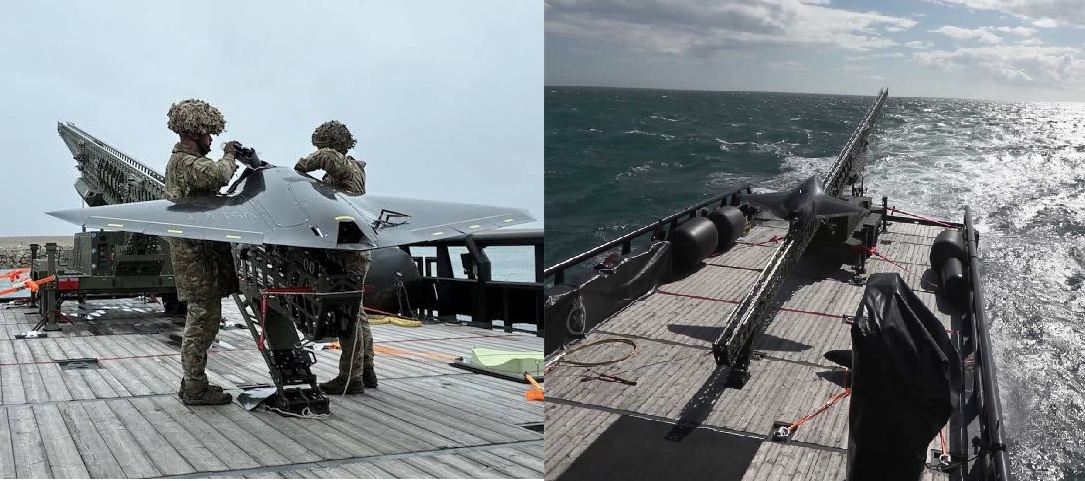
London — The Royal Navy has completed the first at-sea launch of the British-built Nyan One-Way Effector (OWE) autonomous strike drone from the experimental vessel XV Patrick Blackett, during trials off the south coast of England.
The launch was carried out while the ship was underway as part of Exercise Neptune Reach under Project VANTAGE, a tri-service programme bringing together the Royal Navy, British Army and Royal Air Force to evaluate maritime strike drones for operational use.
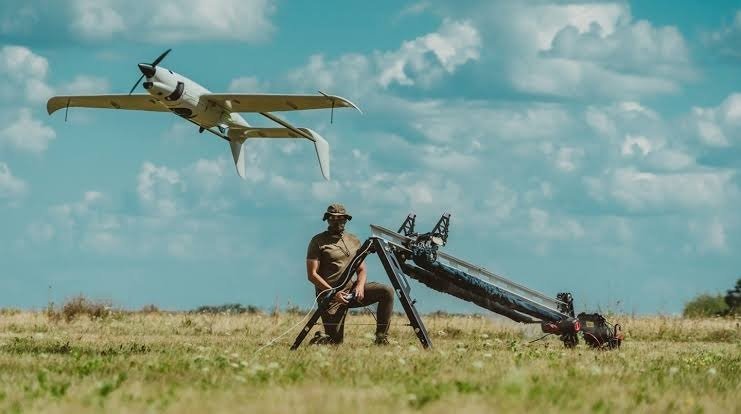
A catapult launcher was fitted to the deck of XV Patrick Blackett for the trial. The launcher accelerated the drone to speeds of up to 55 metres per second, after which the aircraft flew autonomously to a pre-programmed target area. Personnel from 26 Regiment Royal Artillery, 744 Naval Air Squadron, and the ship's crew supported the launch.
UK Tests Indigenous Nyan One-Way Effector Drone
— Global Defense Insight (@Defense_Talks) July 4, 2026
The Royal Navy and British Army have successfully conducted the first extensive trials of the Nyan One-Way Effector (OWE) Uncrewed Air System, a domestically developed precision-strike drone designed for both maritime and land… pic.twitter.com/LsHU1PxEp6
The Royal Navy said flight data from the test is now being reviewed. Further trials could be conducted from the aircraft carrier HMS Queen Elizabeth.
The Nyan One-Way Effector is built by Callen-Lenz, a subsidiary of BAE Systems. The autonomous strike drone has a 2.9-metre wingspan, is powered by a small turbojet engine, and has an estimated range of more than 150 kilometres. It is built mainly from carbon fibre and includes a low-observable exhaust nozzle intended to reduce detection by air defence systems. The estimated unit cost is under £100,000.
Callen-Lenz Chief Executive Matt Foster said the company has already produced more than 1,000 Nyan drones. The system provides a lower-cost precision strike option than traditional naval missiles and has a range exceeding several legacy anti-ship weapons.
The drone had already completed land-based trials before the maritime launch. During Exercise Spring Storm in Estonia in May 2026, British Army units from the Royal Artillery used the system alongside NATO forces to demonstrate deep-fire support during field exercises.
The sea trial forms part of the UK's Hybrid Navy programme, which combines crewed warships with autonomous vessels and drone systems. The concept is included in the UK's Defence Investment Plan, which allocates more than £5 billion over the next four years for autonomous systems and drone technologies.
Minister for Defence Readiness and Industry Luke Pollard said Britain is moving forward with the Hybrid Navy concept by bringing Army and Navy expertise together to field ship-launched strike drones.
Lieutenant Commander David Burton, the Royal Navy's Maritime One-Way Effectors capability sponsor, said the trial moves the programme from land-based experimentation into maritime operations. Under Project VANTAGE, the service is working to integrate one-way strike drones with crewed naval platforms to expand operational reach and increase the tempo of operations.
The Nyan builds on one-way effector technology already fielded by the British Army. Project VANTAGE is focused on adapting those capabilities for use at sea through a common approach across the Royal Navy, British Army and Royal Air Force.
Source: forcesnews.
——— End of Article ———