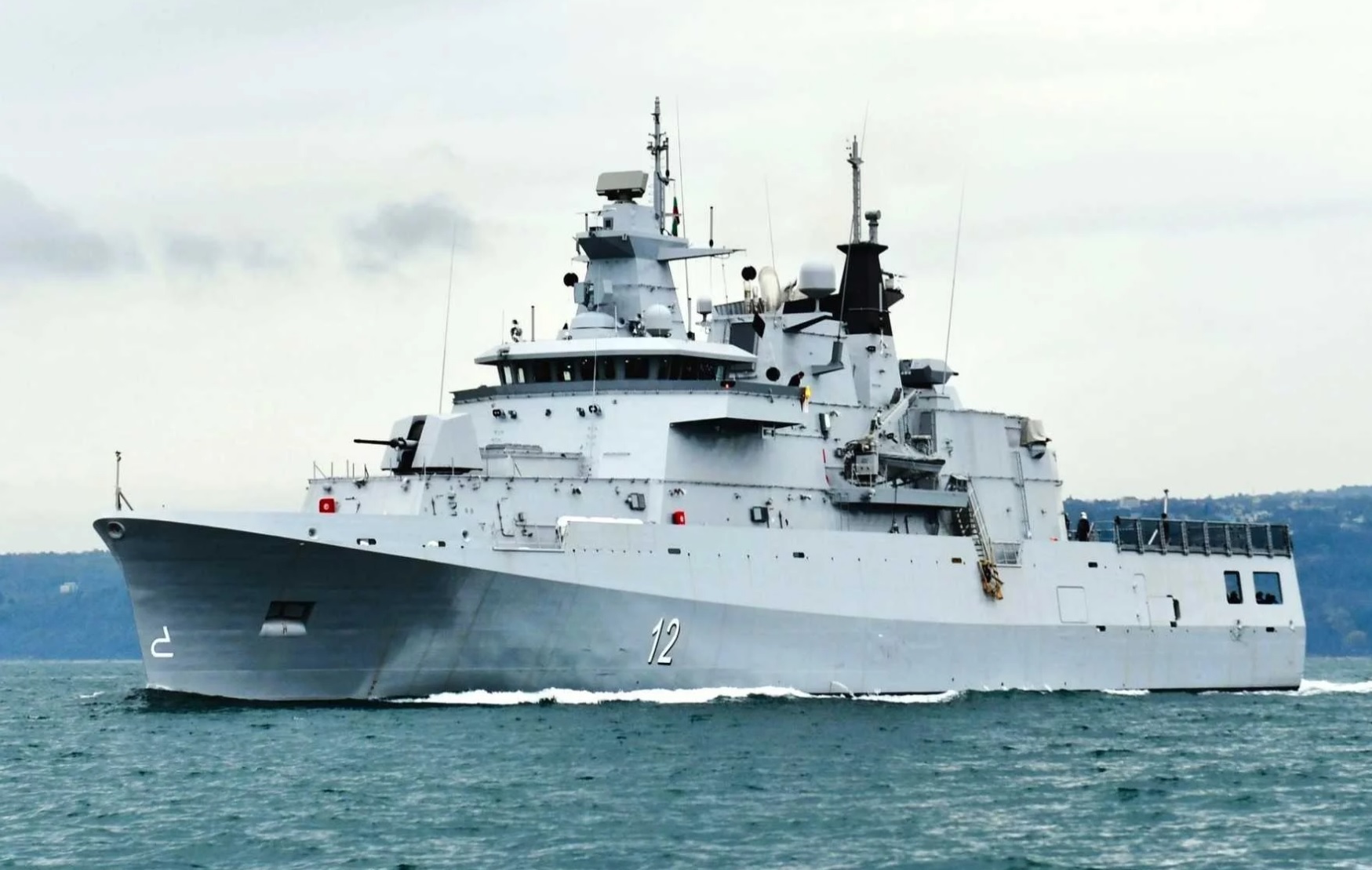
BUCHAREST — April 30, 2026 : Romania is moving forward with a major naval modernization effort centered on domestic shipbuilding, with plans to construct four new vessels at the Mangalia 2 Mai Shipyard under a joint venture led by Rheinmetall. The program includes two multipurpose offshore patrol vessels (OPVs) configured as light corvettes and two specialized diver support and intervention ships.
Program Scope and Financial Structure
The naval procurement forms part of a broader package of 16 military acquisition programs valued at €8.3 billion under the European Union-backed Security Action for Europe (SAFE) framework. Within this package, the naval component is valued at approximately €920 million, making it the second-largest individual procurement effort.
Of the naval allocation, €836 million is designated for the acquisition of the two light corvettes based on the MMPV 90 design. Around €160 million from this allocation will be used to settle existing debts at the Mangalia shipyard, effectively integrating financial restructuring into the construction program.
Romania’s joint defence committees in parliament issued preliminary approval for the procurement on April 29, 2026. A full parliamentary vote remains pending and must be completed before the end of May 2026, when the emergency ordinance enabling SAFE-related financing expires. Upon approval, the Ministry of National Defence will be authorized to proceed with contract awards.
Industrial Restructuring at Mangalia
The construction program is closely tied to the restructuring of Romania’s shipbuilding industry. Defence Minister Radu Miruță confirmed that hull construction and integration of combat systems will take place domestically at the Mangalia 2 Mai Shipyard.
This follows the bankruptcy of the Damen Mangalia Shipyard on April 6, 2026, after a prolonged insolvency process that began in June 2024. In response, the Romanian government invoked legal provisions introduced in March 2026 allowing intervention in strategically important industrial assets.
The facility is being reorganized under a joint venture structure in which Rheinmetall holds a majority stake and serves as prime contractor and systems integrator. The Romanian state retains a minority share, contributing land and fixed infrastructure, while MSC Group participates as an industrial partner responsible for civilian shipbuilding operations alongside military production.
Domestic industrial participation is expected to account for approximately 55–60 percent of the contract value.
Platform Selection: MMPV 90 Corvette Design
The two light corvettes will be based on the MMPV 90 platform developed by NVL Group, which became part of Rheinmetall’s naval division following its acquisition on March 1, 2026. The same baseline design is currently in production for the Bulgarian Navy’s Hrabri-class vessels.
The MMPV 90 design features an overall length of approximately 90 meters, a beam of 13.5 meters, and a full-load displacement exceeding 2,300 tonnes. The ships are designed to reach speeds of up to 24 knots and have an operational range exceeding 3,000 nautical miles. Each vessel will accommodate a crew of around 70 personnel.
Aviation facilities include a flight deck and hangar capable of supporting the Eurocopter AS565 Panther and unmanned aerial vehicles (UAVs). The ships will also be equipped with two rigid-hulled inflatable boats (RHIBs) deployed from amidships.
While Bulgaria’s variant incorporates a stern ramp for boat deployment, Romania’s configuration is expected to emphasize anti-submarine warfare (ASW) capabilities, influencing both sensor selection and internal layout.
For comparison, Bulgaria’s two MMPV 90 vessels were constructed locally at the MTG Dolphin Shipyard in Varna under a €420 million base contract, with total project costs estimated at approximately €500 million excluding weapons and ammunition.
Sensors, Combat Systems, and Armament
The Romanian corvettes are expected to incorporate a more advanced suite of sensors and weapons, contributing to the higher overall program cost.
Electronic systems are anticipated to be supplied largely by Thales Group. These are expected to include the TACTICOS combat management system and a multifunction radar from the NS100 or NS110 family, with integrated identification friend-or-foe (IFF) capability. Additional sensors may include STIR 1.2 EO Mk2 fire control radar and MIRADOR Mk3 electro-optical systems, as well as navigation and helicopter approach radars operating in X- and S-band.
Electronic warfare capabilities are expected to include the VIGILE radar electronic support measures (R-ESM) and ALTESSE-H communications electronic support measures (C-ESM). Communications infrastructure will include satellite communications (SATCOM) and onboard monitoring systems such as CCTV.
For ASW operations, the vessels are expected to be equipped with a hull-mounted sonar, likely the BLUEWATCHER system, and a variable depth sonar such as CAPTAS-2.
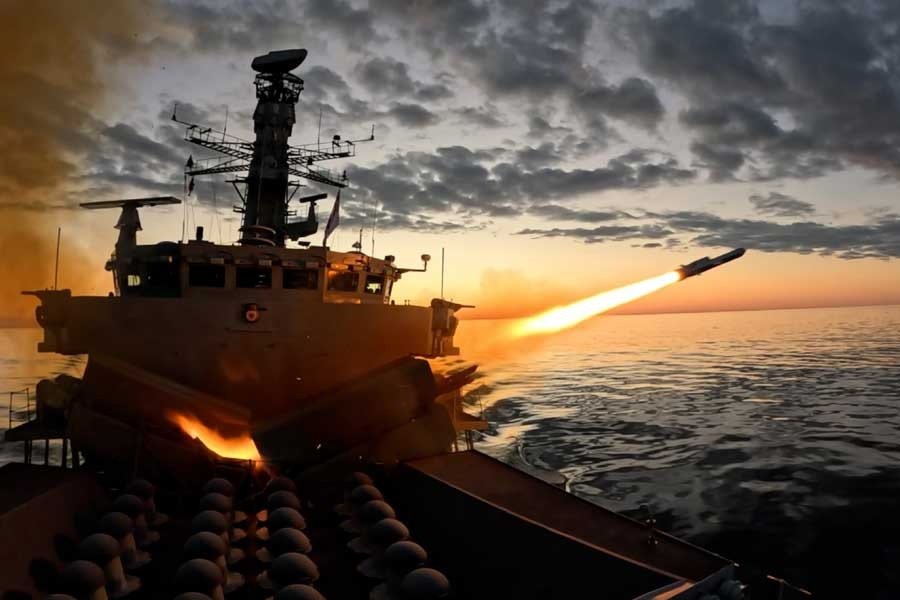
The projected armament configuration includes a 76 mm OTO 76/62 Super Rapid main gun from Leonardo S.p.A., supported by a Rheinmetall Oerlikon MILLENNIUM 35 mm close-in weapon system (CIWS). Anti-ship capabilities are expected to be provided by Naval Strike Missiles (NSM) from Kongsberg Gruppen, likely deployed via two twin launchers.
Air defense will be handled by a 21-cell Rolling Airframe Missile (RAM) launcher, representing a configuration change compared to Bulgaria’s use of an 8-cell vertical launch system (VLS) for VL MICA missiles.
Anti-submarine armament is expected to include 324 mm torpedo launchers firing MU90 torpedoes, along with decoy launchers such as Rheinmetall’s MASS system.
Procurement Background and Interim Measures
The current program follows earlier attempts to modernize Romania’s naval fleet. In 2019, the government selected Naval Group in partnership with Șantierul Naval Constanța to deliver four Gowind 2500 corvettes and upgrade two Type 22 frigates. Despite a signed letter of intent, the €1.2 billion program encountered legal and contractual disputes and was formally suspended in 2023 without entering into force.
To address capability gaps in the interim, Romania signed a contract in December 2025 with ASFAT for the acquisition of the Hisar-class offshore patrol vessel TCG Akhisar (P-1220). The ship was transferred to Romania as an operational platform configured for light corvette roles.
Timeline and Outlook
The new MMPV 90 vessels are expected to be delivered by 2030. The SAFE framework allows Romania access to up to €16.6 billion in low-interest loans through that year, supporting broader defense modernization efforts.
With parliamentary approval pending ahead of the May 31, 2026 deadline, the Mangalia-based program represents both a naval capability upgrade and an industrial policy initiative aimed at restoring domestic shipbuilding capacity while integrating advanced European defense systems.
——— End of Article ———