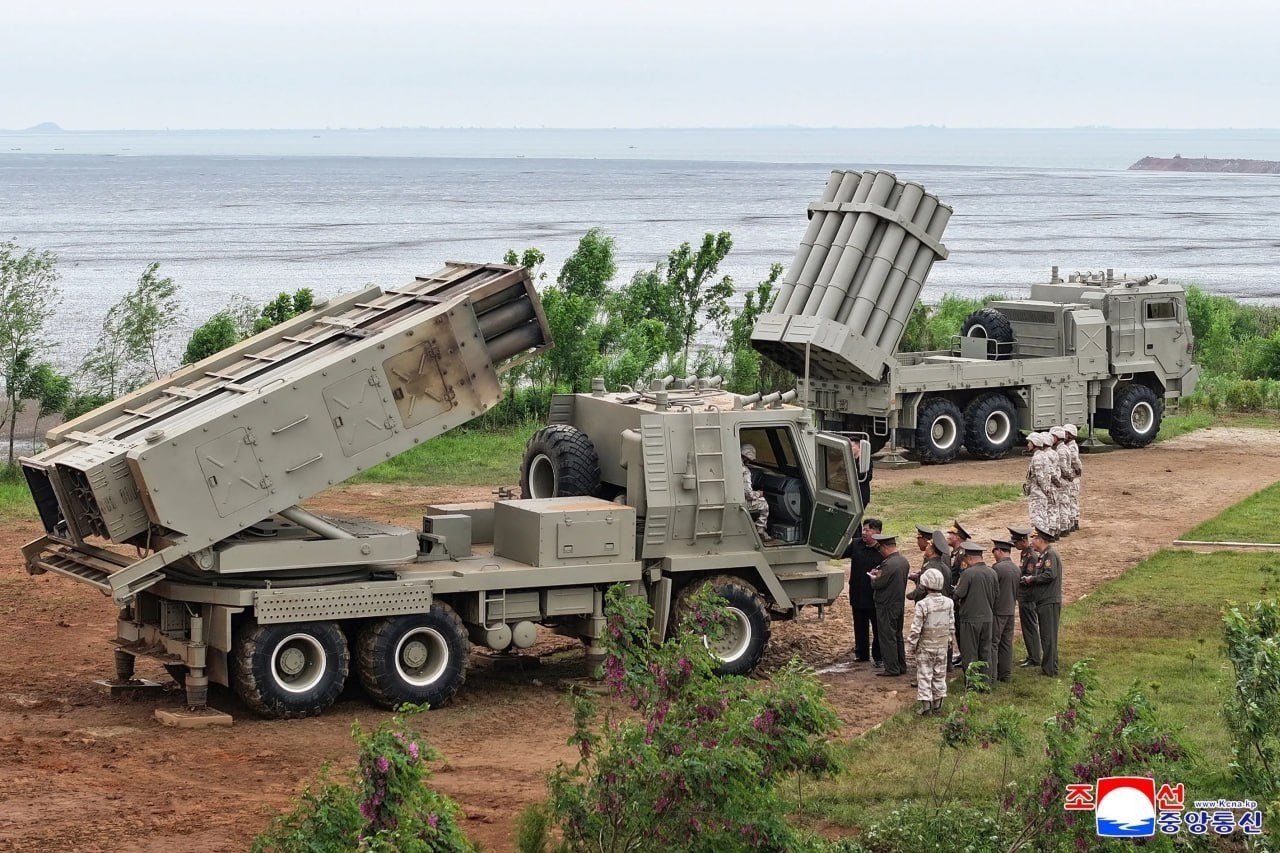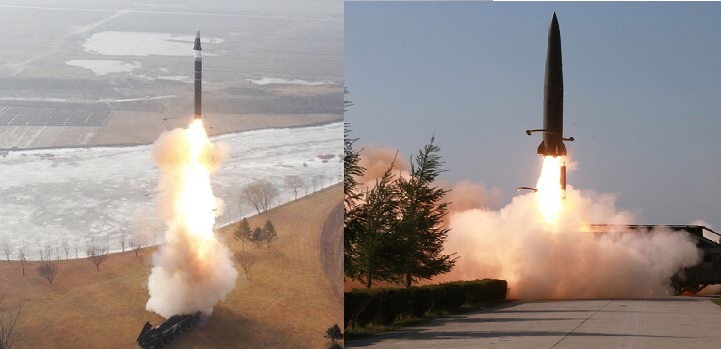
SEOUL, — April 9, 2026 : North Korea conducted a series of coordinated weapons tests between April 6 and April 8, 2026, demonstrating an integrated strike package that combines a Hwasong-11 (KN-23) cluster missile, a carbon-fibre blackout munition, and a non-nuclear electromagnetic weapon. The systems are designed to disable airpower, infrastructure, and command networks of United States and allied forces during the initial phase of a conflict.
The tests were carried out by research agencies under North Korea’s Missile Administration and involved launches from the Wonsan area on the country’s east coast. According to South Korea’s Joint Chiefs of Staff, missiles were tracked flying approximately 240 kilometers in one set of launches, while another missile exceeded 700 kilometers. Flight analysis is continuing in coordination with the United States.
Coordinated Strike Concept and Test Objectives
The April test cycle demonstrated synchronized capabilities intended to blind, disrupt, and overwhelm South Korean and U.S. defenses. The integrated package combines kinetic and non-kinetic systems, enabling simultaneous attacks on physical targets, electrical infrastructure, and electronic networks.
North Korean state media said the tests were conducted to evaluate the combat application and effectiveness of tactical ballistic missile warheads, including new payload configurations. Leader Kim Jong Un described the electromagnetic and blackout systems as “special means of strategic character”, indicating their intended role alongside conventional strike capabilities.
The systems are designed for beyond line-of-sight operations, targeting rear-area infrastructure ahead of follow-on strikes.
Hwasong-11 Missile and Cluster Warhead Capabilities
The delivery platform used in the tests is a derivative of the Hwasong-11, associated with the KN-23 family. It is a road-mobile, single-stage, solid-fuel short-range ballistic missile measuring approximately 7.5 meters in length and 0.95 meters in diameter, with a launch weight of about 3,415 kilograms and a payload capacity of roughly 500 kilograms.
The missile has a stated range of up to 690 kilometers, although recent test data confirmed flight distances exceeding 700 kilometers. It employs a quasi-ballistic trajectory with terminal pull-up maneuvers, complicating interception by theater missile defense systems.
The variant tested, referred to as Hwasongpho-11 Ka (Hwasong-11Ga/Hwasong-11A), was equipped with a cluster warhead. This payload disperses submunitions mid-flight to cover an area of approximately 6.5 to 7 hectares, producing high-density effects across multiple targets.
The configuration is designed for area targets, including airfields, logistics hubs, troop concentrations, vehicle parks, command posts, radar systems, fuel storage facilities, and assembly areas. Compared to unitary warheads, the cluster configuration shifts the missile’s role from point-target precision to wide-area coverage with simultaneous effects.
Blackout Munition and Power Infrastructure Disruption
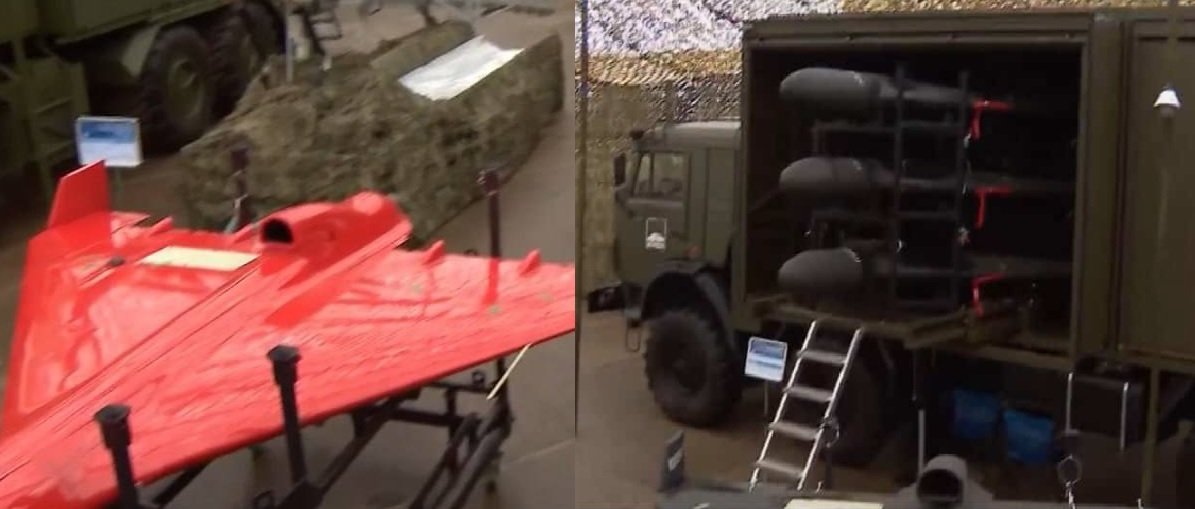
Alongside the missile tests, North Korea demonstrated a carbon-fibre (graphite) blackout munition, designed as a non-destructive infrastructure weapon.
The munition disperses conductive filaments over high-voltage equipment such as transformers, switchyards, and transmission lines. Once settled, the filaments create short circuits and electrical arcing, leading to localized or widespread power outages without physically destroying infrastructure.
This capability is intended to disrupt power distribution networks supporting ports, rail systems, industrial facilities, and military installations, enabling rapid operational impact with limited structural damage.
Electromagnetic Weapon and Counter-Electronics Capability
The strike package also included a non-nuclear electromagnetic weapon system, representing an expansion of North Korea’s counter-electronics capabilities.
The system operates using high-power microwave (HPM) or similar technologies to generate electromagnetic pulses that interact with electronic systems. These pulses are designed to disrupt or damage radars, communications relays, fire-control systems, data centers, missile seekers, and command networks.
Unlike nuclear-generated electromagnetic pulse (EMP) effects, the system operates at tactical ranges with more localized and controllable impact. The capability is assessed as a direct threat to electronically dependent military platforms and networked command systems.
Additional Systems Tested
The April 2026 test cycle also included trials of a new low-cost missile engine and short-range anti-aircraft missiles, indicating efforts to improve production efficiency and expand layered air defense capabilities.
State media characterized the electromagnetic and blackout systems as strategic support assets intended for integration with broader military operations.
Strategic and Operational Implications
The coordinated strike package reflects an evolving North Korean military approach focused on asymmetric warfare and system disruption. By targeting the electrical and digital infrastructure that underpins modern military operations, the system aims to degrade intelligence, surveillance, reconnaissance (ISR) capabilities and command-and-control networks.
The integration of maneuverable missile delivery systems with area-effect warheads and electronic disruption tools allows for simultaneous engagement of multiple target categories. The cluster warhead enables wide-area coverage, while blackout and electromagnetic components provide soft-kill effects against infrastructure and electronics.
The Hwasong-11 family has previously been associated with both conventional and nuclear roles, and the addition of these payloads expands its operational flexibility.
Regional Context and Ongoing Analysis
South Korea and the United States continue to analyze flight data and system performance, including guidance accuracy, fuse reliability, and electromagnetic output, which were not disclosed in official announcements.
The April 6–8 tests build on earlier developments in the Hwasong-11/KN-23 series by incorporating new warhead types and electronic attack systems into a single operational concept.
Defense analysts note that the demonstrated capabilities may require adjustments in allied defense planning, including increased focus on hardened infrastructure, resilient power systems, electromagnetic protection, and distributed military operations.
North Korea stated that the tests form part of ongoing efforts to expand capabilities for infrastructure disruption, ISR denial, and command network degradation, aligning with broader trends observed in modern conflict environments.
——— End of Article ———