TOKYO — March 23, 2026 : Japan is considering the possibility of deploying its Maritime Self-Defense Force (MSDF) for minesweeping operations in the Strait of Hormuz, contingent on a complete ceasefire in the ongoing conflict involving the United States, Israel, and Iran, according to statements by Foreign Minister Toshimitsu Motegi.
Speaking during a Fuji TV program on March 22, Motegi outlined that any such deployment remains conditional and hypothetical. “If there were to be a complete ceasefire, hypothetically speaking, then things like minesweeping could come up,” he said, adding that the presence of naval mines obstructing maritime traffic would be a key factor in any decision. He emphasized that Japan is not considering military deployment during active hostilities.
Conditional Role Linked to Ceasefire Scenario
Japanese officials clarified that any involvement by the MSDF would be limited strictly to post-conflict conditions. The government has not outlined any timeline, operational plan, or specific assets for deployment, and the proposal remains under consideration rather than an active policy decision.
Motegi stated that minesweeping would only be considered if navigation in the Strait of Hormuz is obstructed following a ceasefire. The approach reflects Japan’s legal and political constraints on overseas military operations, particularly in active conflict zones.
Strategic Importance of the Strait of Hormuz
The Strait of Hormuz remains a critical maritime chokepoint, handling nearly 20 percent of global oil shipments. Japan, which imports more than 90 percent of its crude oil from the Middle East, is particularly dependent on uninterrupted access through the waterway.
Approximately 45 Japan-linked vessels are currently affected by restrictions and disruptions in the strait, highlighting the economic and logistical implications for Tokyo. Ensuring safe and open navigation remains a central concern for Japanese policymakers.
Engagement with Iran and Navigation Issues
Iran has indicated a willingness to allow vessels linked to Japan to transit the strait. The issue was discussed during a recent phone call between Iranian Foreign Minister Abbas Araghchi and Motegi.
Despite this, Japanese officials have stated that Tokyo is not pursuing unilateral arrangements with Iran to secure passage for its ships. Instead, Japan’s position focuses on maintaining freedom of navigation for all international shipping, rather than negotiating country-specific exemptions.
Motegi confirmed that discussions with Iran have begun, but reiterated that Japan’s policy remains aligned with broader international maritime principles.
U.S. Pressure and Allied Coordination
The potential role of Japan comes amid continued calls from the United States for allied contributions to securing maritime routes in the Gulf region. U.S. President Donald Trump recently met with Japanese Prime Minister Sanae Takaichi and indicated that Japan was “stepping up.”
However, Motegi clarified that no formal request for minesweeping deployment was made during these discussions. A U.S. envoy separately suggested that Japan had committed naval assets, but Japanese authorities have emphasized that any such involvement would be strictly limited to post-ceasefire conditions.
Minesweeping Capabilities and Operational Context
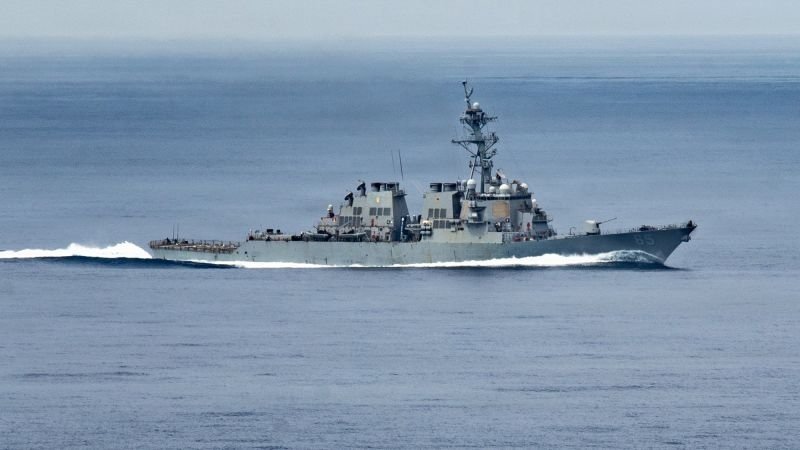
Japan possesses advanced minesweeping capabilities, which are considered among the most capable globally. These capabilities are viewed as potentially significant given the limited number of dedicated U.S. Navy minesweeping vessels.
The U.S. Navy currently operates four minesweeping ships, all stationed in Japan, following the retirement of approximately half of its fleet in 2025. This has increased reliance on allied capabilities for mine countermeasure operations in key maritime regions.
The current conflict has included Iranian threats to deploy naval mines in the Strait of Hormuz, as well as U.S. operations targeting suspected mine-laying vessels. These developments have raised concerns about the long-term safety of maritime navigation in the area.
International Coordination Efforts
Several European countries, along with Japan and Canada, have issued a joint statement supporting the potential formation of a coalition to ensure the reopening and security of the strait. However, no specific operational commitments or timelines have been announced.
The concept of a coordinated post-conflict minesweeping effort remains under discussion among allied nations, with Japan’s potential participation tied to developments on the ground.
Safety of Nationals and Domestic Considerations
Motegi also addressed the situation of Japanese nationals in the region. He confirmed that one Japanese citizen has been released from Iranian custody, while efforts continue to secure the release of another individual.
The Japanese government has stated that it will take responsibility for the safety of its nationals and vessels but has no plans to seek special arrangements for passage through the strait.
Domestic public opinion remains a significant factor in policy considerations. Recent polls indicate that a majority of the Japanese public—ranging from 52 to 67 percent—oppose the deployment of military assets to the Middle East.
——— End of Article ———