TOKYO — March 23, 2026 : The Japan Maritime Self-Defense Force (JMSDF) has implemented its most extensive organizational restructuring since its establishment in 1954, formally disbanding the long-standing Fleet Escort Force and Mine Warfare Force and replacing them with a unified Fleet Surface Force. The reform also includes the creation of a new Information Warfare/Operations Command, reflecting a broader shift toward integrated, multi-domain operations.
The changes, which took effect on March 23, consolidate surface combatants and mine countermeasure units under a single command structure while introducing a centralized framework for intelligence, cyber, and communications functions.
Transition to the Fleet Surface Force
The Fleet Escort Force, established in 1961, served as the primary operational component of Japan’s surface fleet for more than six decades. Its disbandment, alongside the Mine Warfare Force, marks the end of a long-standing organizational model.
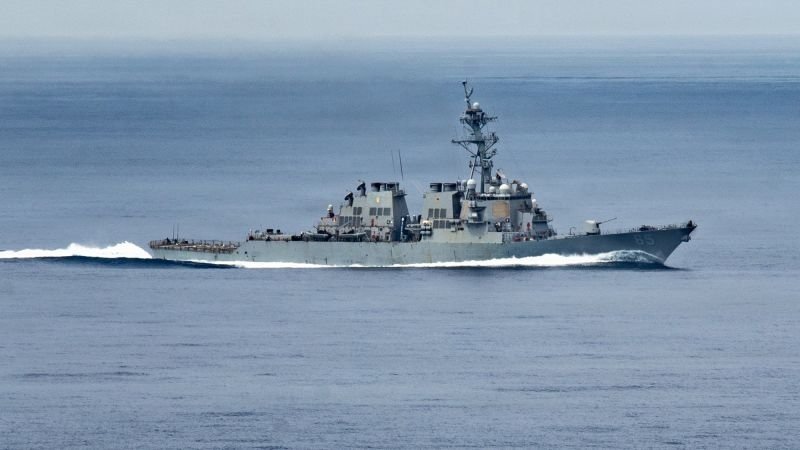
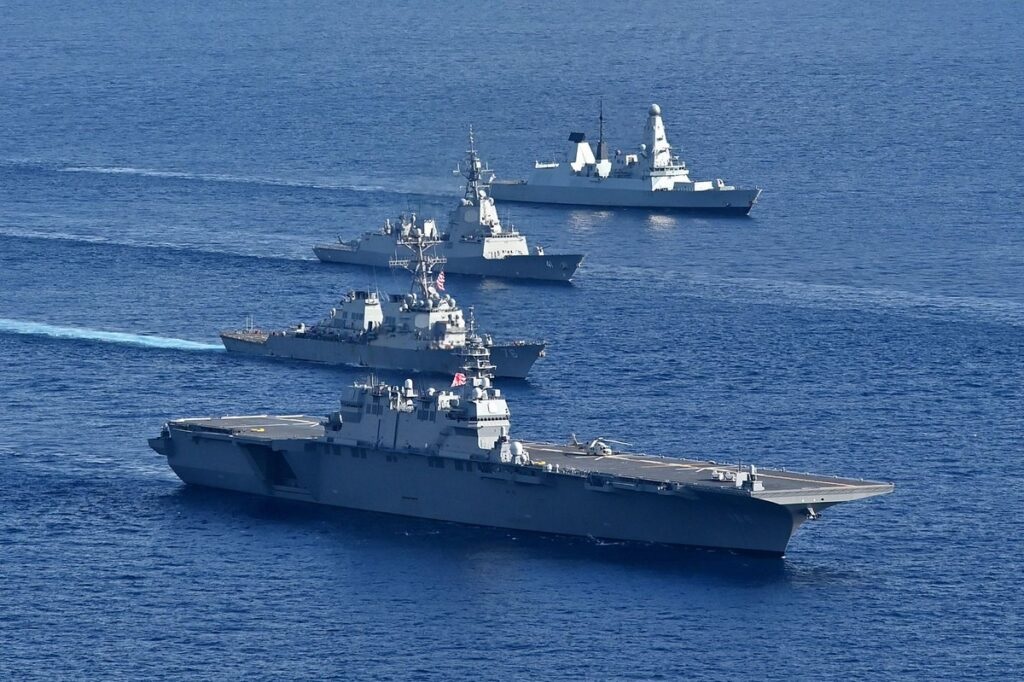
Under the previous structure, the JMSDF operated four Escort Flotillas, each composed of one helicopter destroyer (DDH), two Aegis-equipped destroyers (DDG), and five general-purpose destroyers (DD). The new framework reorganizes these into three Surface Warfare Groups while maintaining approximately the same number of ships and personnel.
Surface Warfare Group 1 is headquartered in Yokosuka and operates with the helicopter carrier JS Izumo (DDH 183) as its flagship. Surface Warfare Group 2 is based in Kure with JS Kaga (DDH 184) as its flagship. Surface Warfare Group 3 is headquartered in Maizuru with JS Hyuga (DDH 181) serving as flagship.
Under the revised structure, the Fleet Surface Force functions primarily as a “force provider,” responsible for training, maintenance, and readiness. Operational commanders act as “force users,” drawing from these groups to support mission-specific requirements. JMSDF Chief of Staff Adm. Akira Saito stated that the reform represents a redesign rather than a reduction in capability, noting that “the only number decreasing is the number of groups,” while fleet size and personnel levels remain largely unchanged.
Organizational Adjustments and Operational Considerations
The consolidation from four flotillas to three surface warfare groups has prompted analysis from defense observers and retired officers. Some have raised concerns that a reduced number of maneuver units could affect redundancy and sustainability during prolonged operations or simultaneous contingencies.
Adm. Saito addressed these concerns by emphasizing that operational resilience should be measured through “force density” rather than the number of command units, adding that the fundamental framework for operational command remains intact.
The restructuring also simplifies command relationships by integrating escort and mine warfare elements into a single organizational entity, while maintaining established operational roles.
Amphibious and Mine Warfare Integration
As part of the broader restructuring, the JMSDF has established a new Amphibious and Mine Warfare Group headquartered in Sasebo, Nagasaki Prefecture, on Kyushu Island.
This group combines mine countermeasure vessels, transport ships, and amphibious capabilities under one command. It operates with the Hyuga-class helicopter destroyer JS Ise (DDH 182) as its flagship.
The unit is designed to operate in coordination with the Japan Ground Self-Defense Force’s Amphibious Rapid Deployment Brigade, also based in Sasebo. The integration reflects a strategic focus on the defense of Japan’s southwestern Nansei Islands, where rapid deployment, mine clearance, and amphibious operations may be required in potential contingency scenarios.
Establishment of Information Warfare/Operations Command
In parallel with the fleet restructuring, the JMSDF has launched the Information Warfare/Operations Command, consolidating intelligence, cyber, communications, and oceanographic functions into a single operational hub.
The command is intended to support Command, Control, Communications, Computers, Intelligence, Surveillance, and Reconnaissance (C4ISR) activities and enhance coordination across operational domains. While it does not directly command ships or aircraft, it provides centralized support for decision-making and operational planning.
According to Adm. Saito, the establishment of this command addresses several institutional requirements, including the need to resolve organizational fragmentation, improve cross-domain integration, and create a senior information command structure aligned with those of allied navies, particularly the United States Navy.
Strategic Context and Implications
The restructuring reflects a shift in how the JMSDF organizes and employs its naval capabilities, with greater emphasis on flexibility, integration, and multi-domain coordination. By consolidating surface and mine warfare elements and establishing a dedicated information command, the JMSDF aims to enhance readiness without increasing overall fleet size.
Ministry of Defense materials indicate that the new structure is designed to enable more efficient allocation of resources and improved responsiveness to evolving security conditions in the Indo-Pacific region.
The effectiveness of the new framework will be assessed over time through operational performance, particularly in scenarios involving complex or simultaneous contingencies.
——— End of Article ———