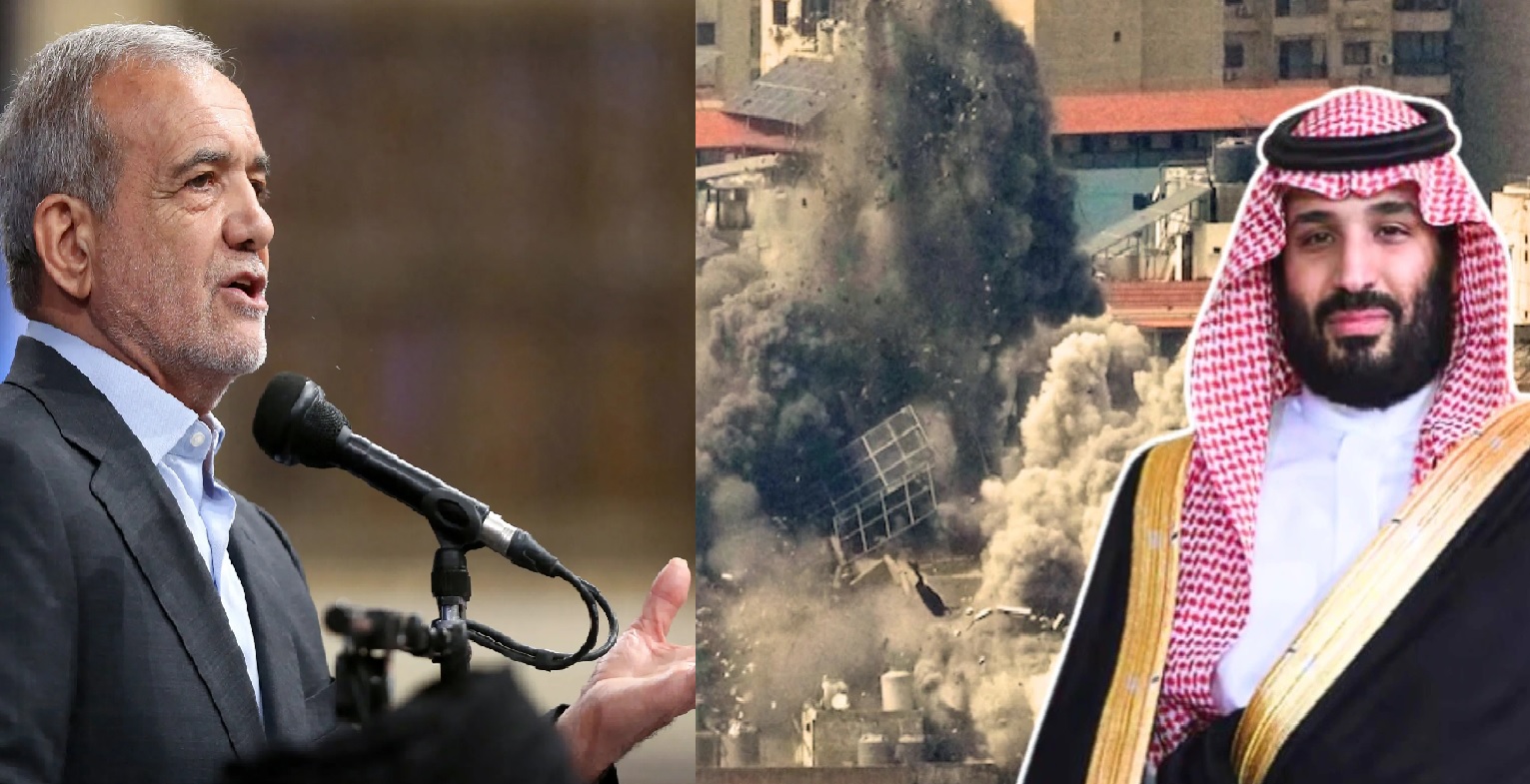
JERUSALEM — March 23, 2026 : Iran has reduced the scale of its military strikes against Saudi Arabia and Qatar while continuing operations against other Gulf states, according to sources cited by The Jerusalem Post, as regional assessments indicate that Tehran is seeking to avoid escalation into a broader conflict involving ground forces.
The reported adjustment follows weeks of Iranian missile and drone operations targeting energy infrastructure and military facilities across the Gulf. While strikes on Saudi Arabia and Qatar have been limited, operations against Kuwait, Bahrain, and the United Arab Emirates (UAE) are continuing without change.
Shift in Targeting Priorities
Two sources familiar with the matter stated that Iran’s decision is linked to concerns that continued attacks on Saudi Arabia could provoke a direct and potentially large-scale military response from Riyadh. Saudi officials have indicated that sustained strikes could trigger retaliation, a step the kingdom has not yet taken.
The limitation applies specifically to Saudi Arabia and Qatar. Iranian strikes on Kuwait, Bahrain, and the UAE are expected to “continue as usual,” maintaining pressure on other regional targets.
Recent Iranian operations have included attacks on refineries in Saudi Arabia, the Ras Laffan industrial gas facility in Qatar, and key refining infrastructure in Kuwait, including Mina Al Ahmadi and Abdullah Port. In Bahrain and the UAE, strikes have targeted facilities linked to military operations and allied presence.
Broader Regional Operations Continue
Iranian strikes have also been directed at U.S.-linked military installations and infrastructure in the region, including bases in Kuwait and the UAE, as well as facilities in Bahrain. In response, Gulf states have activated air defence systems, managed fires at affected facilities, and taken diplomatic measures, including the expulsion of Iranian officials in some instances.
Regional energy infrastructure has been affected, although key export routes remain operational. Saudi Arabia has continued oil shipments through its East-West pipeline, while Kuwait and other states have restored operations at impacted refineries.
Diplomatic Coordination and Gulf Response
Foreign ministers from Saudi Arabia, the UAE, Qatar, Kuwait, Bahrain, and other regional states convened in Riyadh to coordinate responses. The meeting reaffirmed the principle of sovereignty and emphasized that continued violations could lead to consequences.
Officials referenced the right to self-defense under Article 51 of the United Nations Charter. Saudi Foreign Minister Prince Faisal bin Farhan stated that the kingdom has not ruled out military action if attacks continue.
Influence of the Saudi–Pakistan Defence Agreement
Analysts assess that Iran’s recalibration is influenced by the Saudi–Pakistan Strategic Mutual Defence Agreement, signed on September 17, 2025. The agreement includes provisions under which an attack on one party may be treated as an attack on both, introducing the possibility of coordinated military action.
According to regional observers, Tehran is acting to avoid triggering the agreement’s mutual defense clauses. A sustained Iranian campaign against Saudi territory could create conditions for activation of the pact. Analysts further note that such attacks could provide the United States and Israel with an opportunity to leverage this agreement against Iran in a broader conflict scenario.
Pakistani officials have raised the issue in diplomatic engagements with Iran. Foreign Minister Ishaq Dar confirmed discussions with Iranian Foreign Minister Abbas Araghchi, who sought assurances that Saudi territory would not be used as a platform for operations against Iran.
Pakistan has also engaged in diplomatic outreach, with Prime Minister Shehbaz Sharif, Foreign Minister Ishaq Dar, and Army Chief General Asim Munir visiting Riyadh and emphasizing restraint to prevent escalation.
Defense analyst Ayesha Siddiqa noted that Pakistan’s current role is focused on communication and de-escalation, reflecting the broader interest of regional actors in avoiding a widening conflict.
Ground Conflict Considerations
Military assessments indicate that Iran’s concerns extend beyond immediate air and missile exchanges to the potential for a broader conflict that could include ground operations. Analysts highlight that the activation of the Saudi–Pakistan defense framework could introduce a new axis of pressure along Iran’s eastern border.
In such a scenario, external support from partners including the United States and allied countries could provide financial, logistical, and intelligence backing to participating forces. While the extent and likelihood of such involvement remain uncertain, the possibility is considered in regional strategic calculations.
Iran’s defense posture relies in part on dispersed missile forces, underground storage and launch facilities, and hardened infrastructure. While these systems are designed to withstand aerial attacks, analysts note that ground operations targeting logistical nodes, launch sites, and command infrastructure would present a different operational challenge.
At the same time, experts emphasize that any large-scale ground campaign against Iran would face significant constraints, including geography, terrain, and the scale of Iranian military capabilities.
Strategic Implications for Iran
The prospect of a multi-front conflict—combining continued air and missile exchanges with potential ground pressure—represents a complex risk environment for Tehran. By limiting attacks on Saudi Arabia and Qatar, Iran appears to be seeking to reduce the likelihood of triggering broader alliance mechanisms while maintaining its operational posture elsewhere in the Gulf.
Analysts indicate that this approach allows Iran to sustain regional pressure while attempting to manage escalation risks linked to larger coalition responses.
Ongoing Developments
The reported adjustment has not been officially confirmed by Iranian authorities, and the information remains based on sources familiar with the situation.
The regional security environment remains fluid, with continued military activity, diplomatic engagement, and coordination among Gulf states. Air defence systems remain active across the region, and military readiness levels are elevated.
Further developments will depend on the trajectory of Iranian operations, responses from Gulf states, and the role of external actors as the situation continues to evolve.
——— End of Article ———