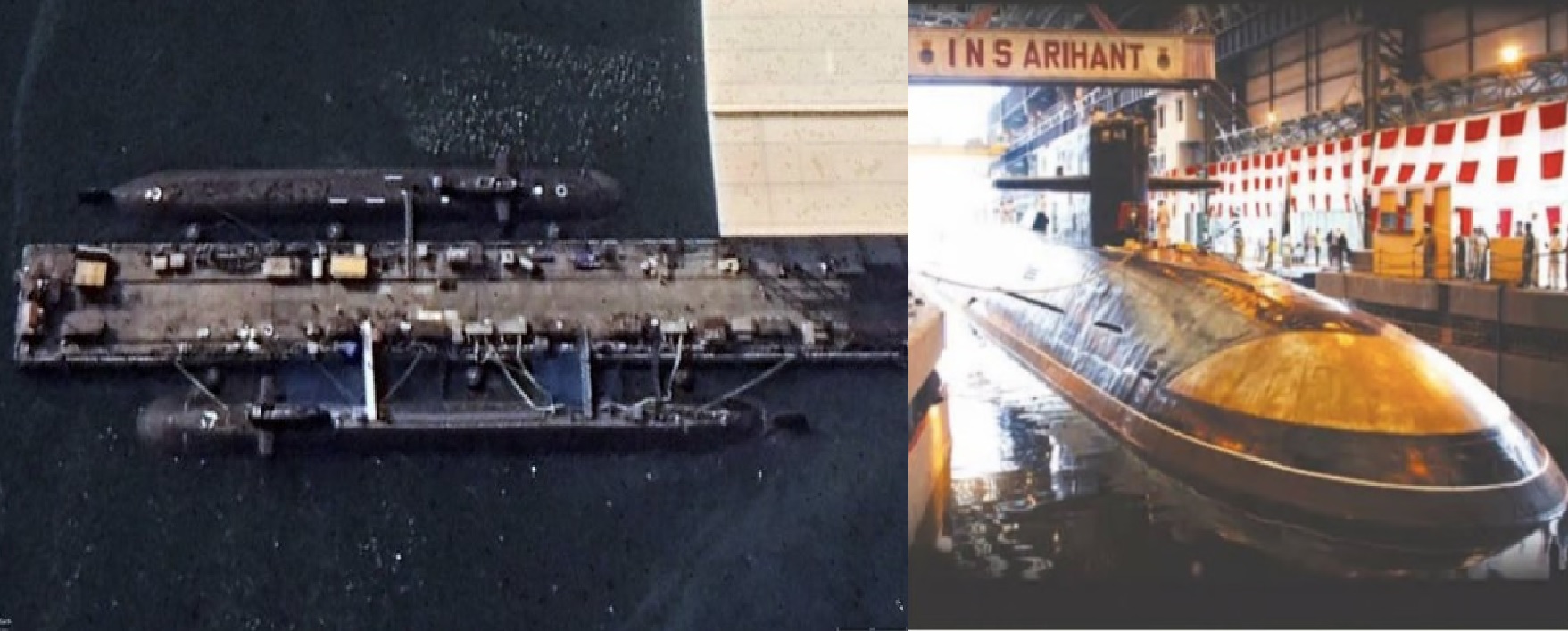
Visakhapatnam: India has moved closer to completing the first phase of its sea-based nuclear deterrent with the commencement of sea trials of its fourth ballistic missile submarine (SSBN), S4*. The 7,000-tonne nuclear-powered submarine sailed out from the Shipbuilding Centre (SBC) in Visakhapatnam sometime last week, marking a major milestone for the country’s indigenous strategic submarine programme.
The S4* is the final submarine in the Arihant-class SSBN series and is designed to carry eight nuclear-capable K-4 submarine-launched ballistic missiles (SLBMs), each with a range exceeding 3,500 kilometres. Officials familiar with the programme indicate that the submarine will undergo nearly a year of harbour and sea trials, following which it is expected to be ready for induction into the Indian Navy by early 2027.
Highest Indigenous Content in the Arihant Class
A key distinction of the S4* is its indigenous content of over 80 per cent, the highest achieved among the four Arihant-class submarines constructed so far. This reflects the growing maturity of India’s strategic industrial base under the Advanced Technology Vessel (ATV) Project, encompassing domestic capabilities in nuclear propulsion, hull fabrication, combat management systems, sensors and missile integration.
With the S4* entering trials, India now has four SSBNs at sea, comprising two submarines already in service and two undergoing trials. The third unit, INS Aridhaman, has completed its sea trials and is scheduled for commissioning in late 2026.
Four Decades in the Making
The current milestone marks the culmination of a strategic programme initiated in 1984, when India set up the Advanced Technology Vessel Project to develop an indigenous nuclear-powered ballistic missile submarine capability. The effort gathered momentum after India’s nuclear weapons tests and was aimed at creating a credible and survivable second-strike deterrent.
The hull of the first submarine of the class, INS Arihant, was laid down in 1998, the same year India conducted the Pokhran-II nuclear tests. Arihant was launched in 2009, commissioned in 2016, and completed its first deterrent patrol in 2018, formally operationalising India’s sea-based leg of the nuclear triad.
The second submarine, INS Arighaat, was commissioned on August 29, 2024, adding operational depth and redundancy to the SSBN fleet.
Larger Design, Greater Firepower
While INS Arihant and INS Arighaat are identical in size—over 110 metres in length with a displacement of more than 6,000 tonnes—and can carry 16 K-15 SLBMs or four K-4 SLBMs, the later boats represent a clear design evolution.
Both INS Aridhaman and the S4* feature a stretched hull, incorporating a 10-metre plug that enables them to carry four additional K-4 missiles, raising their total to eight SLBMs. This enhancement significantly improves strike range, payload flexibility and deterrence credibility.
The official name of the S4* has not yet been announced. However, following established naming conventions, it is expected to carry a name prefixed with “Ari”, derived from Sanskrit and meaning enemy.
Bridge to the Next-Generation S5 Submarines
The S4* was sanctioned over a decade ago as an interim solution between the Arihant-class submarines and the larger S5 SSBN programme. Construction of the first two S5 submarines has already begun under the ATV framework.
With a projected displacement of 13,500 tonnes, the S5 SSBNs will be almost twice the size of the Arihant class and are expected to carry a larger missile load, improved stealth features and more powerful reactors. The first S5 submarine is expected to enter service in the early 2030s, with four S5 SSBNs planned for induction by the late 2030s.
Strategic Significance
Though conducted away from public view, the sea trials of the S4* represent a defining moment for India’s strategic forces. Once inducted, the submarine will complete India’s first operational quartet of SSBNs, ensuring continuous at-sea deterrence and reinforcing the survivability of the nation’s nuclear arsenal.
As India advances toward a more capable next-generation SSBN fleet, the S4* stands as both the culmination of the Arihant-class programme and a critical stepping stone toward a more resilient and enduring nuclear deterrent posture.
——— End of Article ———