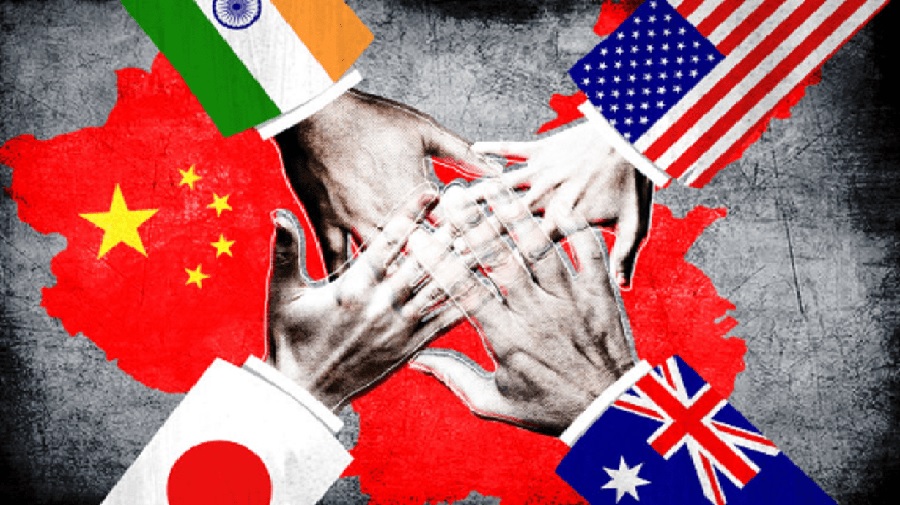
India has once again demonstrated its commitment to an independent foreign policy, this time in response to Japan’s proposal for an “Asian NATO,” a strategic military alliance aimed at countering China’s growing influence in the region. The concept, put forward by Japan’s Prime Minister, Shigeru Ishiba, reflects Tokyo's concern over China’s assertive actions in the East and South China Seas, as well as tensions in the Taiwan Strait. However, India, a key regional power, has firmly declined the idea, opting instead to reaffirm its longstanding principle of strategic autonomy.
India’s External Affairs Minister, Dr. S. Jaishankar, clearly articulated India’s stance during a recent press conference. “We have never been a treaty ally of any country. We don’t have that strategic architecture in mind,” he said, signaling India’s refusal to join a formal military alliance that could compromise its ability to independently navigate international relations. This position is deeply rooted in India’s foreign policy philosophy, which seeks to engage with multiple partners while avoiding rigid military alignments that could limit its freedom of action.
The proposal for an “Asian NATO” mirrors NATO’s collective defense framework in Europe, where member states pledge mutual defense against common threats. Japan sees a similar structure as a necessary deterrent in a region increasingly shaped by China’s economic and military rise. For Japan, this alliance could create a stronger, unified front among regional powers like India, Australia, and the United States, which have mutual concerns over China's growing assertiveness.
India, however, views its security concerns through a broader lens, shaped not only by its complex relationship with China but also by its ongoing tensions with Pakistan and other neighborhood dynamics. While India shares Japan’s concerns over China's rise, New Delhi has made it clear that it prefers to handle these challenges through flexible partnerships and multilateral engagements, such as the Quadrilateral Security Dialogue (Quad), rather than committing to a formalized military bloc.
India’s decision to decline Japan’s proposal is not surprising, considering its historical approach to foreign policy. Since gaining independence, India has cultivated a reputation for non-alignment, choosing not to side with any of the major power blocs during the Cold War. This led to India’s leadership role in the Non-Aligned Movement (NAM), a coalition of countries that sought to avoid entanglement in the U.S.-Soviet rivalry. Though the Cold War is long over, the principle of non-alignment has evolved into what India now calls "strategic autonomy."
Strategic autonomy allows India to engage with various global powers on its terms, without being bound by the obligations of a formal military alliance. This approach provides the flexibility to cooperate with countries like Japan and the U.S. on shared concerns, such as countering China, while also maintaining strong relations with other global powers like Russia. It ensures India can protect its national interests without the risks that come with permanent alliances.
In recent years, India has focused on deepening its strategic partnerships with like-minded countries, especially in the Indo-Pacific. However, these relationships, including India’s involvement in the Quad, have been based on cooperation in areas such as infrastructure development, cybersecurity, and maritime security. India sees these engagements as complementary to its broader foreign policy goals, rather than steps toward creating a formal military bloc.
Japan’s push for an "Asian NATO" is a reflection of its desire for a more robust security framework in the region. Japan, which has a pacifist constitution that limits its military activities, has been increasingly vocal about the need for stronger defense measures amid China’s expanding influence. For Tokyo, a collective defense mechanism offers a more structured and effective way to address these regional challenges. But for India, the context is different. Its security calculus includes the reality of its nuclear-armed neighbor Pakistan, ongoing border disputes with China, and the need to maintain influence in its immediate neighborhood, particularly South Asia.
India’s rejection of the "Asian NATO" proposal aligns with its broader strategy of ensuring it is not drawn into the larger geopolitical struggles between global powers. As the world shifts toward multipolarity, with new centers of influence emerging, India is positioning itself as a major power capable of independent action on the global stage. This not only reinforces India’s foreign policy identity but also signals its intent to continue navigating complex global challenges with a focus on maintaining balance and safeguarding its sovereignty.
By turning down Japan’s proposal, India has once again underscored its commitment to a foreign policy that remains flexible, independent, and centered around its national interests. While Japan may seek formal alliances to address its security concerns, India will continue to rely on strategic autonomy to engage with the world on its terms.
This decision also highlights the evolving nature of global security alliances in the 21st century, where countries like India prefer issue-based partnerships over permanent military commitments. As regional tensions continue to rise, particularly concerning China, India’s approach of maintaining sovereignty over its strategic decisions will likely remain central to its foreign policy for years to come.
——— End of Article ———