BERLIN, — June 14, 2026 : A new dispute has emerged between Dassault Aviation and Airbus Defence and Space over the multinational Eurodrone program, only days after France and Germany formally acknowledged the collapse of the Future Combat Air System (FCAS) fighter project. The disagreement has raised fresh concerns about the future of major European defense cooperation initiatives and added pressure to an already strained Franco-German industrial partnership.
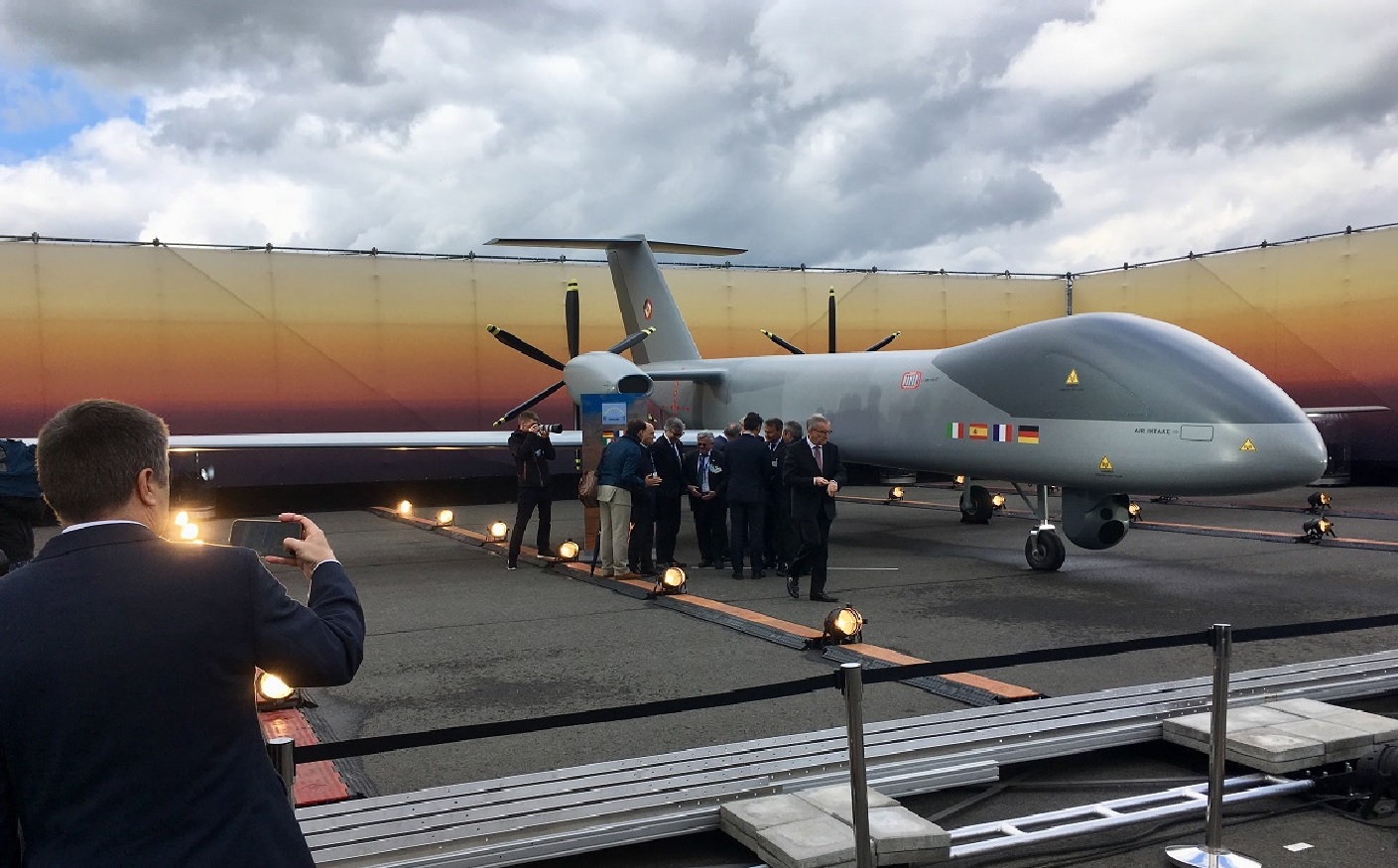
The latest dispute centers on the European Medium-Altitude Long-Endurance Remotely Piloted Aircraft System (MALE RPAS), commonly known as the Eurodrone, a joint European unmanned aircraft program valued at approximately €7 billion ($8.1 billion). Developed by France, Germany, Italy, and Spain, the project is intended to provide Europe with an independent intelligence, surveillance, target acquisition, and reconnaissance (ISTAR) capability while reducing reliance on foreign systems such as the MQ-9 Reaper and Israeli-made unmanned aircraft.
Fallout From FCAS Collapse
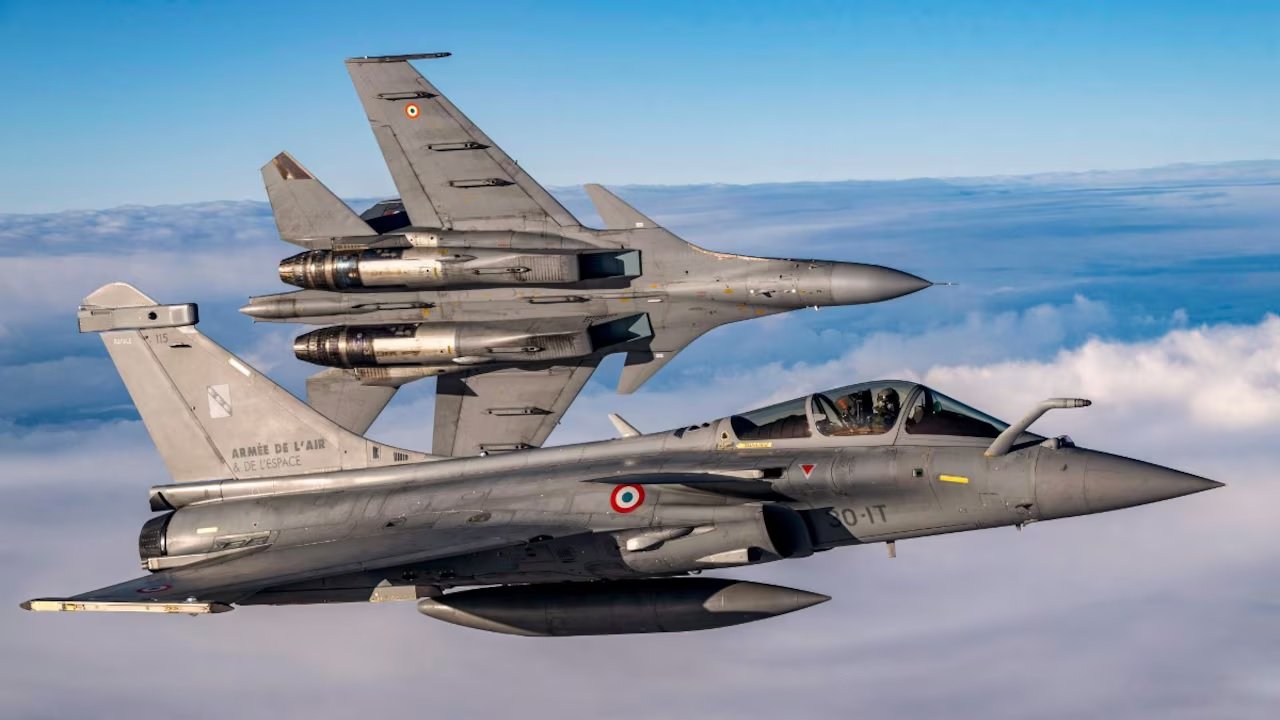
The Eurodrone disagreement follows the breakdown of the much larger FCAS New Generation Fighter (NGF) initiative, launched in 2017 by France and Germany and later joined by Spain. The program, estimated at around €100 billion, aimed to develop a sixth-generation combat aircraft and supporting systems for service by 2040.
Negotiations between the industrial partners ultimately failed due to disagreements over intellectual property rights, industrial leadership, governance structures, and operational requirements. France sought capabilities that would allow the future fighter to operate from aircraft carriers and carry nuclear weapons, requirements that were not priorities for Germany.
Following months of unsuccessful negotiations, French President Emmanuel Macron and German Chancellor Friedrich Merz recently concluded that the joint fighter effort could no longer continue in its existing form.
The growing separation became increasingly visible during the ILA Berlin Air Show 2026, where eight German aerospace companies led by Airbus announced the formation of the "Team Gen 6" alliance, signaling plans to pursue future fighter aircraft development without Dassault's participation.
Compensation Demand Linked to Procurement Changes
The current disagreement within the Eurodrone program stems from France's decision to postpone or significantly reduce planned Eurodrone acquisitions through 2035 under a recently proposed defense spending framework.
French defense officials have indicated that alternative systems better suited for high-intensity warfare environments are being evaluated. Among the platforms attracting attention is the Aarok unmanned aircraft developed by French company Turgis & Gaillard, which is viewed as a potentially more cost-effective solution for some operational requirements.
Under Europe's defense industrial "geo-return" principle, industrial workshare is allocated according to each participating country's financial contribution and procurement commitments. Because France's future purchases have been reduced or delayed, the volume of work assigned to Dassault has also declined.
Dassault is responsible for key Eurodrone components, including the aircraft's flight control systems and mission communication architecture. The company argues that the procurement adjustments have reduced its expected industrial participation and is therefore seeking financial compensation from Airbus, which serves as the program's prime contractor.
The request is intended to offset investments made by Dassault based on earlier production and procurement assumptions.
Airbus Maintains Program Remains Intact
Despite growing tensions, Airbus officials have rejected suggestions that the Eurodrone program faces the same fate as FCAS.
Speaking during the ILA Berlin Air Show, Jean-Brice Dumont, Head of Air Power at Airbus Defence and Space, said France remains part of the program despite adjustments to its acquisition timeline.
According to Dumont, the project still includes the same four partner nations that joined at the outset, and changes to procurement schedules are not unusual in large multinational defense programs. Airbus continues to maintain that France has not withdrawn from the initiative and that all partner countries remain committed to its long-term objectives.
Eurodrone Development Progress
Unlike the FCAS fighter project, which remained largely in the conceptual and design phase, the Eurodrone is already in advanced development.
The aircraft was originally expected to conduct its first flight in 2025, but the schedule has slipped, with the first flight now anticipated between 2027 and 2029. Development activities continue across the participating nations through a distributed industrial structure.
Italian defense company Leonardo is responsible for supplying the Gabbiano Active Electronically Scanned Array (AESA) multi-mode radar, while other major subsystems are being developed by Airbus and Dassault.
Current plans call for France, Germany, Italy, and Spain to each operate at least a dozen systems. Japan and India have also joined the program as official observers.
Eurodrone Specifications
The Eurodrone is designed as a twin-engine MALE unmanned aircraft capable of conducting long-endurance surveillance and reconnaissance missions while also supporting strike operations when required.
| Specification | Details |
|---|---|
| Aircraft Type | Medium-Altitude Long-Endurance (MALE) UAS |
| Program Status | Prototype Development Phase |
| Planned Fleet | More than 60 aircraft |
| Length | 16 meters |
| Wingspan | 26 meters |
| Maximum Takeoff Weight | 13,000 kg |
| Powerplant | Two General Electric Catalyst turboprop engines |
| Maximum Speed | 500 km/h |
| Endurance | Up to 40 hours |
| Service Ceiling | 12,000 meters |
| Payload Capacity | Up to 2,300 kg across five hardpoints |
| Potential Armament | Brimstone missiles, GBU-49 Enhanced Paveway II bombs, and other precision-guided munitions |
| Crew | Unmanned aircraft operated by 2–3 ground mission personnel |
Concerns Extend to MGCS Tank Program
The difficulties affecting FCAS and Eurodrone have also increased scrutiny of the Main Ground Combat System (MGCS) program, the third major Franco-German defense initiative launched in 2017.
MGCS is intended to replace Germany's Leopard 2 and France's Leclerc main battle tanks with a highly networked combat system by around 2040. However, the project has already experienced significant delays and is reportedly running at least a decade behind its original schedule.
Adding to concerns, Armin Papperger, Chief Executive Officer of Rheinmetall, recently warned that France may seek to reduce its financial contribution to the MGCS program to less than half of earlier projections.
Future of European Defense Cooperation
The simultaneous challenges facing FCAS, Eurodrone, and MGCS have highlighted the difficulties involved in managing large multinational defense programs that must balance national military requirements, industrial interests, technology sharing, and procurement commitments.
While Airbus insists that the Eurodrone remains on track despite current disagreements, the compensation dispute between Dassault and Airbus underscores the continuing tensions within Europe's defense industrial base. The outcome of ongoing negotiations will be closely watched by governments and industry leaders as they assess whether major collaborative programs can be preserved or whether future capabilities will increasingly be pursued through national development efforts.
——— End of Article ———