NEW DELHI, — June 14, 2026 : India’s Defence Research and Development Organisation (DRDO) has accelerated development of Phase 3 of its Ballistic Missile Defence (BMD) programme following the successful completion of Phase 2 testing. The new phase is designed to counter some of the most advanced missile threats expected to emerge over the coming decades, including hypersonic weapons and missiles equipped with Multiple Independently Targetable Re-entry Vehicles (MIRVs).
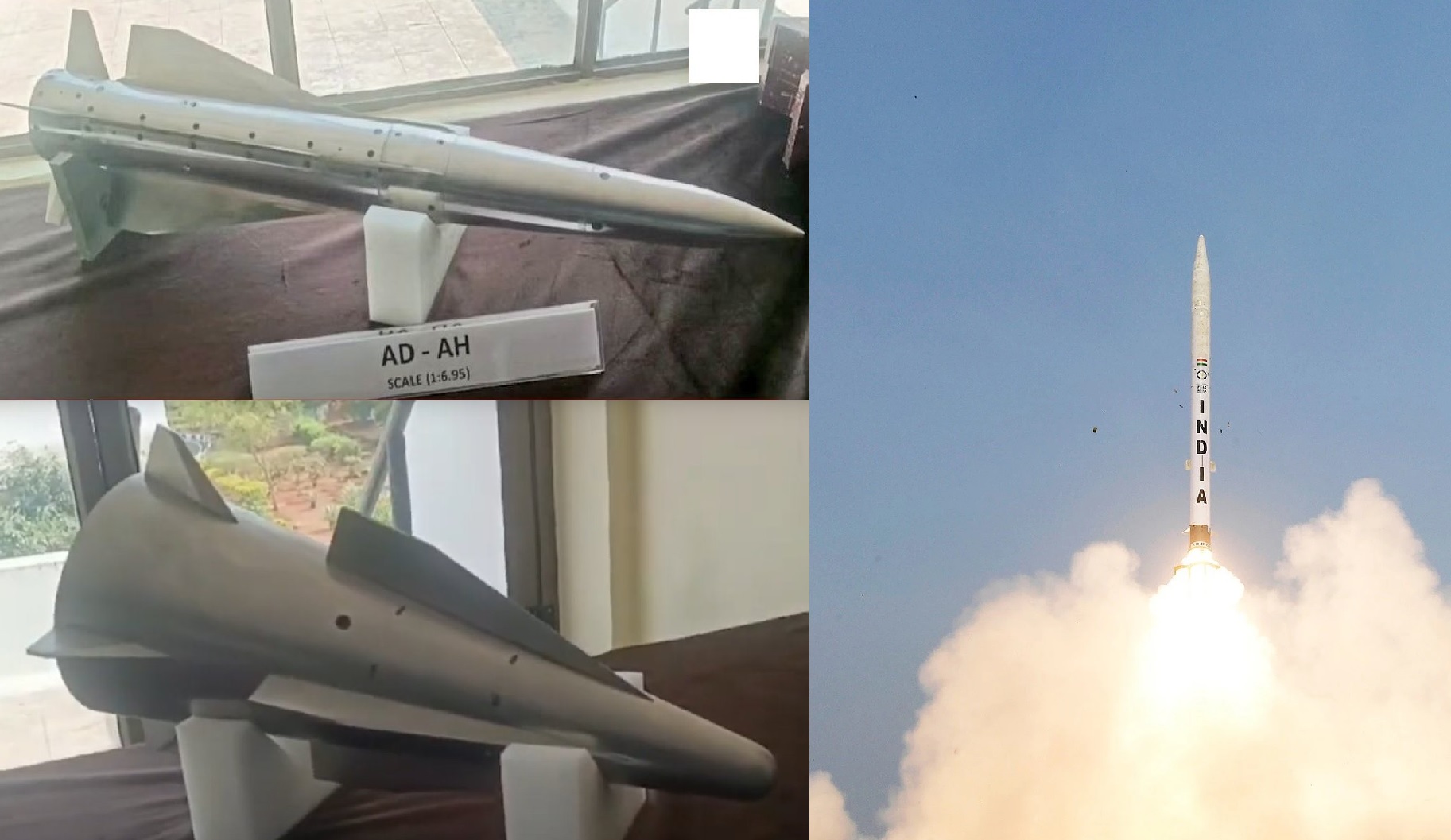
The programme will introduce two new interceptor systems—Advanced Defence Anti-Hypersonic (AD-AH) and Advanced Defence Anti-Missile (AD-AM)—which are intended to expand India’s missile defence envelope beyond conventional ballistic missile threats and provide protection against highly manoeuvrable targets operating at extreme speeds.
Phase 3 Designed for Next-Generation Missile Threats
Unlike earlier phases of India’s missile defence programme, which focused primarily on ballistic missiles, Phase 3 is being developed specifically to address threats that are significantly more difficult to track and intercept.
The AD-AH interceptor is intended to engage hypersonic glide vehicles (HGVs). These weapons travel at speeds exceeding Mach 5 and can manoeuvre extensively during flight, making their trajectories far less predictable than those of traditional ballistic missiles.
The AD-AM interceptor is being developed to counter hypersonic cruise missiles, which remain powered throughout their flight and operate at high speeds within the atmosphere. Such missiles can fly at lower altitudes and change course during flight, reducing reaction times for defensive systems.
Both interceptors are expected to employ hit-to-kill kinetic warheads, destroying incoming threats through direct impact rather than explosive blast effects. This approach is considered more effective against high-speed manoeuvring targets.
MOKV Technology Makes Phase 3 Globally Unique
One of the most significant aspects of India’s Phase 3 BMD architecture is the planned integration of Multiple Object Kill Vehicle (MOKV) technology, also referred to as Multiple Kill Vehicle (MKV) capability.
Modern MIRV-equipped ballistic missiles can carry multiple warheads, each capable of striking separate targets. In addition, these missiles often deploy decoys and penetration aids designed to confuse missile defence systems.
To counter this challenge, the AD-AM interceptor is expected to carry multiple independently guided kill vehicles on a single booster. After reaching the engagement zone, the interceptor can release several smaller kill vehicles, each capable of tracking and destroying a separate warhead or decoy.
This means a single interceptor could potentially engage multiple objects simultaneously, significantly improving interception efficiency against complex missile attacks.
Only India and the United States Are Pursuing the Capability
According to publicly available information, India and the United States are the only countries actively developing missile defence interceptors capable of carrying MOKV/MKV payloads on a single booster.
The United States began researching the concept through its Multiple Kill Vehicle (MKV) Programme, launched by the Missile Defense Agency (MDA) to improve the ability of ground-based interceptors to defeat missiles carrying multiple warheads and decoys. Although the original programme underwent restructuring, research into multi-object interception technologies continued through subsequent initiatives.
More recently, MOKV-related technologies have been associated with the Next Generation Interceptor (NGI) programme, which is being developed to strengthen homeland missile defence against advanced ballistic missile threats.
India is now pursuing a similar capability through the AD-AM interceptor, but within a broader missile defence architecture specifically designed to counter both MIRV-equipped ballistic missiles and emerging hypersonic threats.
If DRDO successfully demonstrates operational MOKV capability before a comparable U.S. system enters testing, India could become the first country in the world to flight-test and demonstrate a missile defence interceptor capable of independently engaging multiple targets from a single launch vehicle.
Built on the Success of Phase 2
The acceleration of Phase 3 development follows the successful completion of India’s Phase 2 BMD trials, which validated the country's ability to intercept long-range ballistic missile threats.
Phase 2 relied on the AD-1 and AD-2 interceptors, both developed by DRDO to engage advanced ballistic missile targets. The system demonstrated interception capabilities against missiles with ranges of up to approximately 5,000 kilometres, including engagements both inside and outside the Earth's atmosphere.
These tests expanded India’s missile defence capabilities beyond the objectives of Phase 1 and placed the country among a small group of nations possessing advanced long-range ballistic missile interception technology.
A Major Expansion of India’s Missile Shield
India’s missile defence programme has evolved through a phased approach.
Phase 1 was designed to defend against ballistic missiles with ranges of up to 2,000 kilometres and is approaching operational deployment around key strategic locations.
Phase 2 extended protection against longer-range threats through the introduction of AD-1 and AD-2 interceptors.
Phase 3 is expected to represent the most technologically advanced stage of the programme. In addition to expanding interception ranges and engagement altitudes, it aims to provide the capability to defeat hypersonic glide vehicles, hypersonic cruise missiles, MIRV-equipped ballistic missiles, and sophisticated decoys.
Development Timeline
DRDO has already initiated early development work on both the AD-AH and AD-AM interceptors. Initial flight testing is expected in the early 2030s as the programme moves from the design and technology maturation stage toward system validation.
With the integration of dedicated hypersonic interceptors and MOKV technology, Phase 3 is expected to become one of the most advanced missile defence programmes currently under development. The combination of capabilities under a single architecture is what makes India’s Phase 3 BMD effort distinct, positioning it among the few programmes worldwide specifically designed to counter both hypersonic and MIRV-based missile threats simultaneously.
——— End of Article ———