NEW DELHI — March 18, 2026 : India is evaluating potential participation in next-generation fighter aircraft development programs, with the Ministry of Defence (MoD) examining options to join either the Global Combat Air Programme (GCAP) or the Future Combat Air System (FCAS), according to a parliamentary report tabled in the Lok Sabha.
The report, submitted to the Standing Committee on Defence, confirms that discussions remain at an exploratory stage. No formal commitment has been made, but the assessment reflects a strategic effort to align India’s long-term airpower capabilities with emerging global standards in sixth-generation combat aviation.
Parliamentary Assessment and Strategic Context
The Ministry of Defence informed lawmakers that participation in an international sixth-generation fighter consortium could complement India’s domestic aerospace programs while accelerating access to advanced technologies.
The Indian Air Force (IAF) has emphasized the need for a timely decision, citing rapid progress in comparable programs globally, particularly developments in China’s next-generation fighter initiatives. The IAF’s position highlights concerns over maintaining operational and technological parity in the coming decades.
Officials indicated that collaboration with an established consortium would enable India to integrate into a broader “system-of-systems” combat framework, which is expected to define future air warfare.
Indigenous AMCA Remains Core Priority
The MoD clarified that the Advanced Medium Combat Aircraft (AMCA) program will remain the central pillar of India’s fighter modernization plan. The AMCA, classified as a fifth-generation platform with elements of sixth-generation capability, is scheduled for rollout by the end of 2028.
Its first flight is targeted for early 2029, with induction into the Indian Air Force expected in the mid-2030s.
According to the parliamentary briefing, any international partnership would be structured to support—not replace—the AMCA program. The dual-track approach aims to preserve domestic design and manufacturing capabilities while enabling access to advanced technologies that would otherwise require extended development timelines.
Technology Objectives and Capability Focus
The report outlines that participation in either GCAP or FCAS would provide India with exposure to a range of emerging combat technologies. These include artificial intelligence-enabled combat clouds, manned-unmanned teaming (MUM-T), drone swarm integration, and directed energy systems.
Such technologies form the foundation of sixth-generation air combat concepts, which extend beyond traditional fighter aircraft to include networked, multi-domain operations involving autonomous systems and real-time data integration.
Global Combat Air Programme (GCAP)
The Global Combat Air Programme is a trilateral initiative involving the United Kingdom, Italy, and Japan. The program aims to field a sixth-generation fighter aircraft by 2035.
Development is expected to formally begin in 2025, with a demonstrator aircraft scheduled to fly in 2027. Entry into service is planned from 2035 onward.
The program operates through the Edgewing joint venture, which includes BAE Systems (UK), Leonardo (Italy), and Mitsubishi Heavy Industries (Japan).
Financial commitments from partner nations include:
Japan has allocated approximately ¥700 billion (around $4.4 billion) for research and development between 2023 and 2027.
Italy has approved €8.77 billion for initial phases, with projected expenditure rising to €18.6 billion through 2035–2037.
The United Kingdom has committed £2 billion since 2021 and outlined a broader investment exceeding £12 billion over the next decade.
Program officials have reaffirmed the 2035 deployment target. While minor administrative delays have occurred—primarily related to contract approvals and the UK’s Defence Investment Plan—industry assessments indicate that these issues are not expected to significantly affect the overall timeline.
Future Combat Air System (FCAS)
The Future Combat Air System is a European program led by France, Germany, and Spain, with Belgium participating in an observer or transitional role.
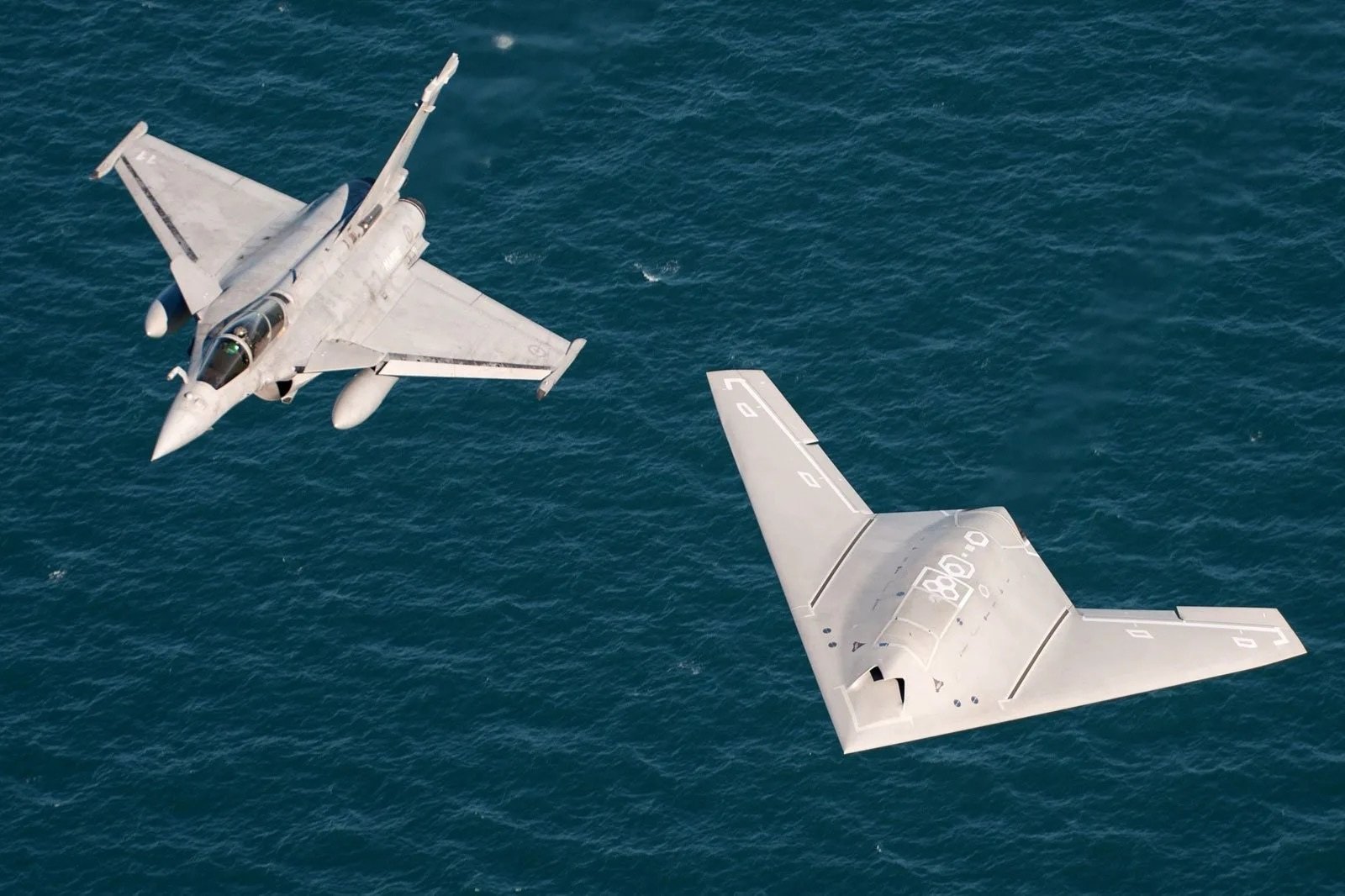
The FCAS is designed as a comprehensive system centered on a Next-Generation Fighter (NGF), supported by remote carrier drones and a digital combat cloud. The program targets entry into service around 2040.
A technology demonstrator is expected to fly between 2027 and 2029.
The total development cost is estimated to exceed €100 billion, with Germany anticipated to contribute approximately one-third of the funding. The program is currently in Phase 1B, supported by a €3.2 billion budget focused on demonstrator development and technology maturation.
However, the FCAS program is facing industrial challenges. Ongoing disagreements between Dassault Aviation (France) and Airbus (Germany and Spain) over workshare distribution and leadership of the NGF component have delayed progression to Phase 2, now expected in 2026.
Public statements from industry leadership have highlighted the risk of structural divergence within the program, including proposals for alternative development pathways. Despite these issues, India has engaged in bilateral discussions with France as recently as February 2026, indicating continued interest in FCAS technologies, particularly in sensor fusion and combat cloud architecture.
Policy Approach and Outlook
The parliamentary report outlines a balanced acquisition strategy that combines indigenous development with selective international collaboration.
By continuing to prioritize the AMCA program, India aims to maintain sovereign design and production capabilities. At the same time, potential participation in GCAP or FCAS would provide early access to advanced operational concepts and technologies expected to define air combat beyond 2035.
Officials noted that discussions with both consortia remain preliminary. Any future decision will depend on program stability, industrial arrangements, cost-sharing structures, and alignment with India’s long-term defence objectives.
The evaluation reflects a broader shift in India’s defence planning toward integrating domestic capability development with participation in global high-technology ecosystems, particularly in areas where timelines and complexity present significant challenges for standalone development.
——— End of Article ———