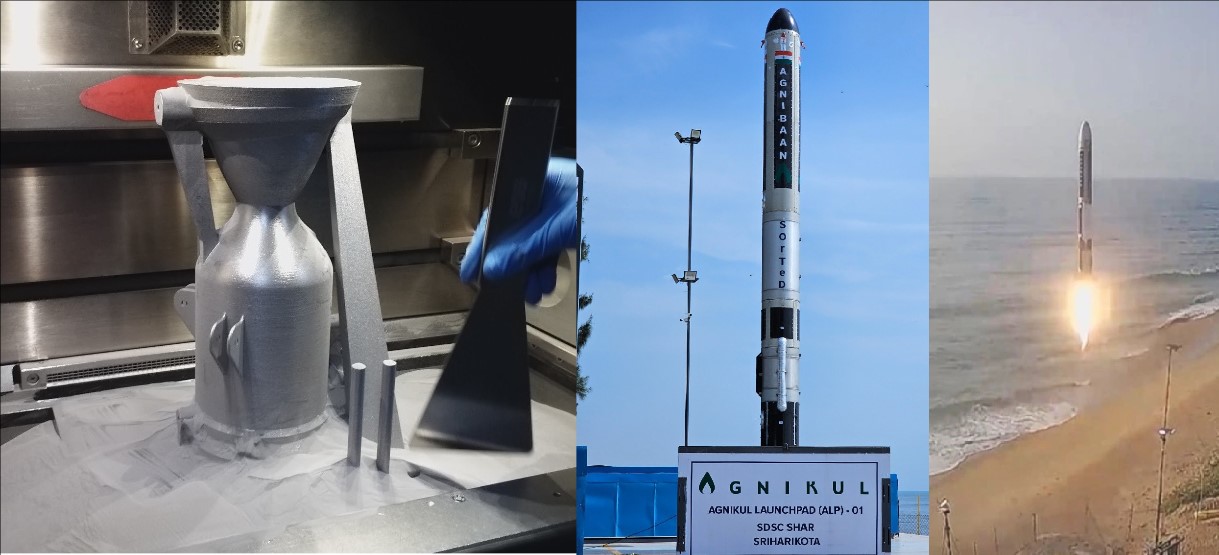
Agnikul Cosmos achieves a milestone in space technology with the world's first single-piece, 3D-printed rocket engine, powering India's Agnibaan launch vehicle. This innovation promises faster production, lower costs, and a transformative impact on space exploration.
Agnikul Cosmos, a rising star in the Indian space industry, has made history with the successful launch of Agnibaan – a launch vehicle powered by the world's first ever single-piece, 3D-printed rocket engine. This groundbreaking achievement marks a significant leap forward in space technology, promising faster development cycles, lower costs, and a potential revolution in how we access space.
Blazing a Trail with 3D Printing
Traditionally, rocket engine manufacturing is a complex and time-consuming process involving numerous parts assembled meticulously. Agnikul's innovation lies in utilizing 3D printing technology to create a complete engine in a single piece. This method, using a high-performance alloy called Inconel, offers a multitude of advantages:
- Unmatched Speed: Agnikul's 3D printing process can manufacture a complete engine in a mere 72 hours, compared to the industry standard of 2-3 months required by conventional methods. This drastic reduction in production time translates to faster development cycles and the ability to adapt to evolving launch needs.
- Cost Efficiency: 3D printing eliminates the need for intricate assembly processes and reduces material wastage. Agnikul estimates their 3D-printed engine to be a fraction of the cost – roughly one-tenth – compared to a traditionally manufactured engine. This opens doors for more affordable space exploration and broader participation from private companies and research institutions.
- Design Freedom: 3D printing allows for intricate designs that might be impossible with traditional methods. This opens doors for further optimization of engine performance and efficiency in future iterations.
Agnibaan's Maiden Flight: A Historic Moment
On May 30, 2024, Agnikul successfully launched Agnibaan from India's first private launchpad, Dhanush, at Sriharikota. This suborbital vehicle not only showcased the capabilities of the 3D-printed engine but also marked several other firsts:
- India's First Semi-Cryogenic Engine: The Agnibaan engine, named Agnilit, utilizes a "semi-cryogenic" fuel – subcooled oxygen – offering better performance than traditional rocket propellants.
- Private Launch Success: This launch marks the second successful launch by a private Indian space company, highlighting the growing potential of the domestic space industry.
The Road Ahead: A Brighter Future for Space Exploration
Agnikul's achievement represents a significant step towards "on-demand" rocket launches. The potential for faster production, lower costs, and design flexibility paves the way for a more agile and accessible space industry. This could lead to:
- More Frequent Launches: Faster production times could enable more frequent launches, facilitating advancements in space research, satellite deployment, and exploration missions.
- Reduced Launch Costs: Lower production costs for rockets could make space exploration more accessible, opening doors for new players and innovative missions.
- Customization Possibilities: The design freedom offered by 3D printing could enable the creation of engines tailored to specific launch requirements, promoting mission versatility.
Agnikul's pioneering work with 3D-printed rocket engines has ignited a new era in space exploration. With continued development and innovation, this technology has the potential to democratize access to space and propel us towards a future filled with exciting discoveries.
——— End of Article ———