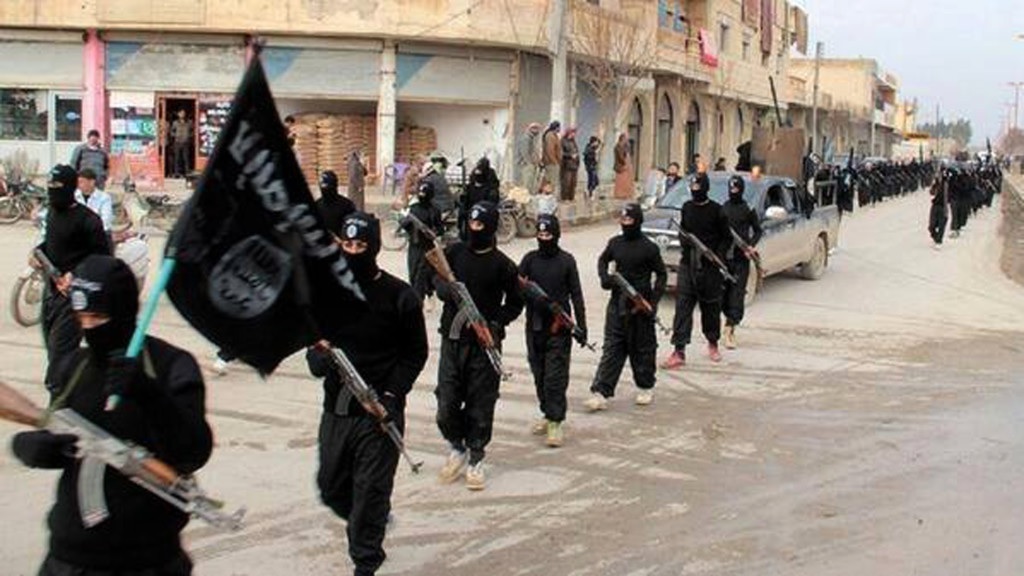
DAMASCUS — April 23, 2026 : The Islamic State group (ISIS) has shifted its operational approach in Syria, moving away from attempts to seize and hold territory toward a sustained guerrilla-style insurgency aimed at increasing the cost of governance for the Syrian state led by President Ahmed al-Sharaa. The transition follows the withdrawal of United States forces from eastern Syria and the transfer of formerly Kurdish-administered areas to central government control.
Post-Withdrawal Security Transition
The change in ISIS strategy comes after a significant reconfiguration of control in eastern Syria during early 2026. A 14-point ceasefire agreement in January enabled the integration of the Syrian Democratic Forces (SDF) into Syrian state structures, allowing Damascus to expand its authority over areas east of the Euphrates River, including Deir ez-Zor, Raqqa, and parts of Hasakah province.
The United States subsequently completed a phased military withdrawal. Control of the al-Tanf base was handed over in February 2026, followed by the transfer of Qasrak air base in mid-April 2026. Earlier handovers also included al-Shaddadi installations. Syrian government forces, including units such as the 60th Division, assumed responsibility for security across these areas following the departure of U.S. troops.
Increase in Low-Level Attacks
Following the transition, ISIS has intensified a campaign of small-scale attacks targeting Syrian government forces. The group conducted approximately 22 operations in March 2026, based on compiled reports from its own claims and monitoring sources. These attacks primarily involved improvised explosive devices (IEDs), ambushes, and direct assaults on checkpoints, patrols, and isolated security positions.
The operations have been concentrated in rural and desert areas along the Euphrates River valley, where ISIS cells operate with mobility and rely on local terrain. Attackers frequently withdraw into civilian populations after engagements, limiting the ability of security forces to conduct immediate counteractions.
No large-scale offensives or territorial seizures have been reported in April 2026, and the group is assessed to lack the capability to reestablish territorial control following its defeat in 2019. Current activity remains limited to low-intensity harassment operations.
Propaganda and Political Targeting
ISIS has coupled its operational shift with a coordinated propaganda effort aimed at undermining the Syrian leadership. Messaging disseminated through its weekly publication al-Naba and statements by spokesman Abu Hudhayfa al-Ansari has focused on discrediting President Ahmed al-Sharaa.
The group characterizes the Syrian government as illegitimate and influenced by foreign actors, including the United States and Turkey. It has labeled the leadership as secular and accused it of deviating from Islamist governance principles. Communications also emphasize calls for defections among government-aligned fighters and attempt to position ISIS as the primary armed opposition.
Recruitment and Local Dynamics
ISIS recruitment efforts have focused on eastern Syria, particularly Deir ez-Zor province, where tribal dynamics and economic conditions present opportunities for infiltration. Analysts note that the transition of authority from SDF administration to central government control has created localized grievances.
Poor living conditions in displacement and detention facilities in northeastern Syria, including camps such as al-Hol, remain a factor in recruitment. Earlier security disruptions in 2026 reportedly enabled some ISIS-linked individuals to leave detention environments and reconnect with active cells.
The group has sought to leverage these conditions by portraying the Syrian government as unable to address economic challenges, unemployment, and service delivery gaps in newly integrated areas.
Government Response and Coalition Role
Syrian government forces have initiated security operations across Deir ez-Zor, Raqqa, and surrounding provinces in response to the increase in ISIS activity. These measures include targeted raids, arrests of suspected operatives, and efforts to secure key infrastructure and transit routes.
The Syrian authorities have also formally joined the U.S.-led international coalition against ISIS, despite the withdrawal of American troops, in an effort to maintain coordination on counterterrorism measures.
Officials report that the threat remains contained and that ISIS operations have not disrupted overall governance or resulted in territorial losses. However, security forces continue to address gaps created during the transition period.
Strategic Assessment
Analysts assess that ISIS is now operating within a defined insurgency model focused on attrition rather than expansion. The group’s objective is to increase operational and administrative burdens on the Syrian state by targeting personnel, infrastructure, and local stability.
The timing of the increased activity aligns with the handover of U.S. bases and the rapid expansion of Syrian government control into eastern regions, conditions that created temporary vulnerabilities. While the scale of attacks remains limited, the continuation of such operations indicates an effort to sustain long-term pressure.
The developments occur as the Syrian government consolidates control approximately one year after the fall of the previous regime in December 2024. As of April 2026, monitoring indicates continued low-level ISIS activity without significant escalation. Further operational details from official sources have not been publicly disclosed.
——— End of Article ———