BERLIN — April 25, 2026 : Germany has begun preparations to deploy naval vessels to the Mediterranean Sea as part of contingency planning for a possible multinational mission in the strategically vital Strait of Hormuz, amid ongoing instability linked to the conflict involving the United States, Israel, and Iran.
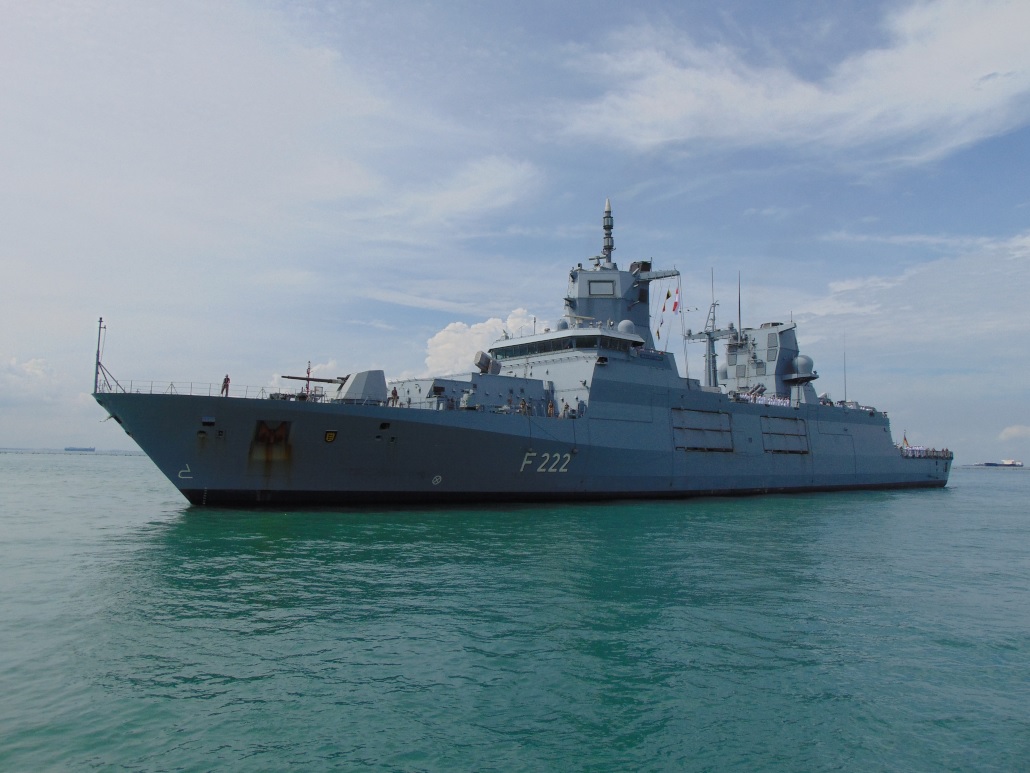
German Defence Minister Boris Pistorius confirmed on April 25 that the Bundeswehr will dispatch a minesweeper, identified as the Fulda, along with a command and supply ship. The vessels are being positioned in advance to enable rapid deployment once formal authorization is granted by the Bundestag.
According to Pistorius, the forward positioning is intended to reduce response time for Germany’s participation in a possible international maritime security operation. The Fulda, designed for mine detection and neutralization, operates with a crew of approximately 45 personnel.
The proposed mission would center on mine clearance and maritime reconnaissance to restore safe navigation in the Strait of Hormuz, a corridor that handles roughly one-fifth of global daily oil shipments. Commercial shipping through the strait has been severely disrupted since hostilities escalated on February 28, followed by Iranian restrictions and a U.S.-led naval blockade initiated on April 13.
German officials emphasized that any deployment into the Gulf region remains conditional. Pistorius stated that operations would only proceed in the event of a sustained ceasefire or a confirmed end to hostilities, alongside the establishment of a clear international legal mandate. Berlin is exploring the possibility of expanding the scope of the European Union naval mission Operation Aspides to cover Hormuz-related operations, a move that would also require participation from the United States and the United Kingdom.
Chancellor Friedrich Merz has reiterated Germany’s readiness to contribute to a multinational coalition under such conditions, highlighting the country’s established role within NATO in mine countermeasure operations. The Bundeswehr currently maintains a fleet of eight minehunting vessels and two mine-diving units, though officials have not specified how many assets would be committed.
The German initiative aligns with broader European coordination among the E3 group — Germany, France, and the United Kingdom — aimed at securing maritime routes and stabilizing energy supply chains affected by the crisis. The United Kingdom and France have already begun efforts to organize a coalition focused on protecting commercial shipping and conducting mine clearance operations in the region. U.S. estimates suggest that clearing naval mines in the area could take up to six months.
Germany’s naval planning remains defensive in scope, focusing on surveillance and hazard removal rather than combat operations. Military planners are currently assessing logistical and operational requirements, with deployment timelines described only as “in the coming days” for the Mediterranean positioning phase.
Parallel to military preparations, diplomatic efforts are ongoing. Representatives from the United States and Iran are expected to hold talks in Islamabad over the weekend, aimed at negotiating a potential de-escalation framework.
Until a formal agreement is reached and conditions are met, German naval units will remain stationed in the Mediterranean, prepared for rapid activation under an approved international mandate.
——— End of Article ———