BERLIN, — March 21, 2026 : The German Federal Ministry of Defence (BMVg) has announced plans to procure four MEKO A-200 class frigates from thyssenkrupp Marine Systems (TKMS) as an interim capability measure to address delays in the F126 anti-submarine warfare (ASW) frigate programme. The decision was outlined in a ministry statement issued on March 18.
The procurement will proceed alongside ongoing negotiations concerning the continuation of the F126 programme and is intended to ensure that Germany maintains its NATO commitments in anti-submarine warfare while the primary programme remains under review.
F126 Programme Delays and Industrial Adjustments
The F126 programme, originally awarded in 2020 to Dutch shipbuilder Damen Naval, has experienced sustained delays linked to software integration challenges and supply chain disruptions. The vessels, designed as large multi-role frigates with a displacement of approximately 10,000 tons, were initially expected to begin entering service around 2028.
In response to these delays, the BMVg is currently in discussions with Rheinmetall’s Marine Division Naval Systems, which includes Naval Vessels Lürssen (NVL), as a potential new general contractor to stabilize and advance the programme.
The ministry emphasized that the procurement of the MEKO A-200 frigates represents a risk mitigation measure and does not constitute a change in the long-term plan to field the F126 class as the German Navy’s primary future ASW platform.
MEKO A-200 Procurement Framework
The Bundestag Budget Committee has approved an amendment to a preliminary contract signed on January 28, 2026, enabling TKMS to continue reserving production capacity, maintain supplier commitments, and begin ordering long-lead materials and equipment.
This step was necessary to preserve the option of delivering the first vessel by December 2029, with subsequent ships to follow. Industry sources indicate that securing production slots at an early stage was essential to maintaining the proposed timeline.
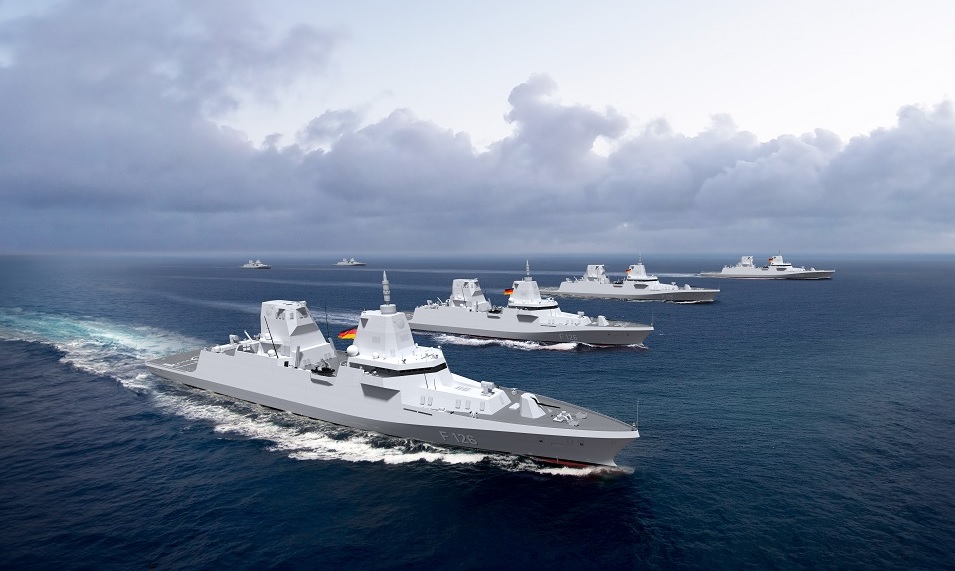
The MEKO A-200 frigates are described as commercially available, off-the-shelf platforms, already in production for international customers, including Egypt and South Africa, which allows for a shorter delivery timeline compared to new-design vessels.
The ministry noted that preparations for a final construction contract are ongoing and will include tendering processes, bid evaluations, price assessments, formal contract drafting, and parliamentary approval procedures.
Technical Characteristics and Capabilities
The MEKO A-200 class is a multi-role frigate platform designed for operations across multiple domains, including anti-submarine warfare.
Each vessel has an overall length of approximately 121 meters, a beam of 16.4 meters, and a design draught of 4.4 meters, with a full-load displacement of around 3,950 tons.
The ships are equipped with a CODAG-WARP (Combined Diesel and Gas – Waterjet and Refined Propellers) propulsion system, enabling speeds exceeding 29 knots and a range of more than 6,500 nautical miles at 16 knots. The propulsion configuration is designed to reduce acoustic signature, supporting ASW operations.
The platform supports a core crew of approximately 125 personnel, with capacity for up to 49 additional embarked personnel. Aviation facilities allow for the operation of two helicopters, or one larger helicopter combined with unmanned aerial systems, and the ships can deploy rigid-hull inflatable boats for auxiliary missions.
The design incorporates modular mission systems, enabling adaptation to different operational requirements, including ASW, surface warfare, and maritime security tasks.
Operational Context and NATO Commitments
The procurement decision is driven in part by the aging of the German Navy’s existing ASW-capable platforms, including the Type 123 Brandenburg-class frigates, many of which have been in service for more than three decades.
Ensuring continuity in ASW capabilities is considered essential for meeting NATO operational requirements, particularly in the context of increased maritime security demands.
Bastian Ernst, a member of the Defence Committee and naval rapporteur for the CDU/CSU parliamentary group, supported the ministry’s approach, stating that maintaining operational readiness and mitigating capability gaps remain key priorities. He also highlighted the parallel industrial contributions, with NVL involved in the F126 programme and TKMS leading the MEKO A-200 effort.
Programme Outlook
The BMVg stated that the MEKO A-200 acquisition is intended as a bridging solution and supplement, ensuring that Germany can maintain required naval capabilities while the F126 programme is stabilized.
At the same time, the F126 project continues to be reviewed as the long-term cornerstone of the German Navy’s future frigate fleet. The ministry indicated that both tracks will proceed in parallel, with further decisions to be taken as programme developments progress.
——— End of Article ———