Düsseldorf, Germany — April 27, 2026 : Rheinmetall has been awarded a €1.04 billion (gross) contract by the German armed forces to modernise existing soldier systems and deliver additional units under the “Infantry Soldier of the Future – Enhanced System (IdZ-ES)” programme. The contract marks a significant step in Germany’s ongoing effort to digitise and upgrade its infantry capabilities.
The order was placed by the Federal Office of Bundeswehr Equipment, Information Technology and In-Service Support with Rheinmetall Electronics GmbH under an existing framework agreement. Deliveries are scheduled between November 2027 and December 2029 and will equip approximately 8,600 additional German soldiers with updated digital combat systems.
Programme Scale and Deployment
Upon completion of the contract, the Bundeswehr will operate a total of 353 IdZ-ES platoon systems, comprising more than 12,000 individual soldier equipment sets. The contract, formally awarded in April 2026, will be reflected in Rheinmetall’s financial results for the second quarter of the year.
Germany’s parliament has approved €1.3 billion in funding for the broader IdZ-ES programme, a move that Rheinmetall indicated could lead to additional call-off orders under the current framework arrangement.
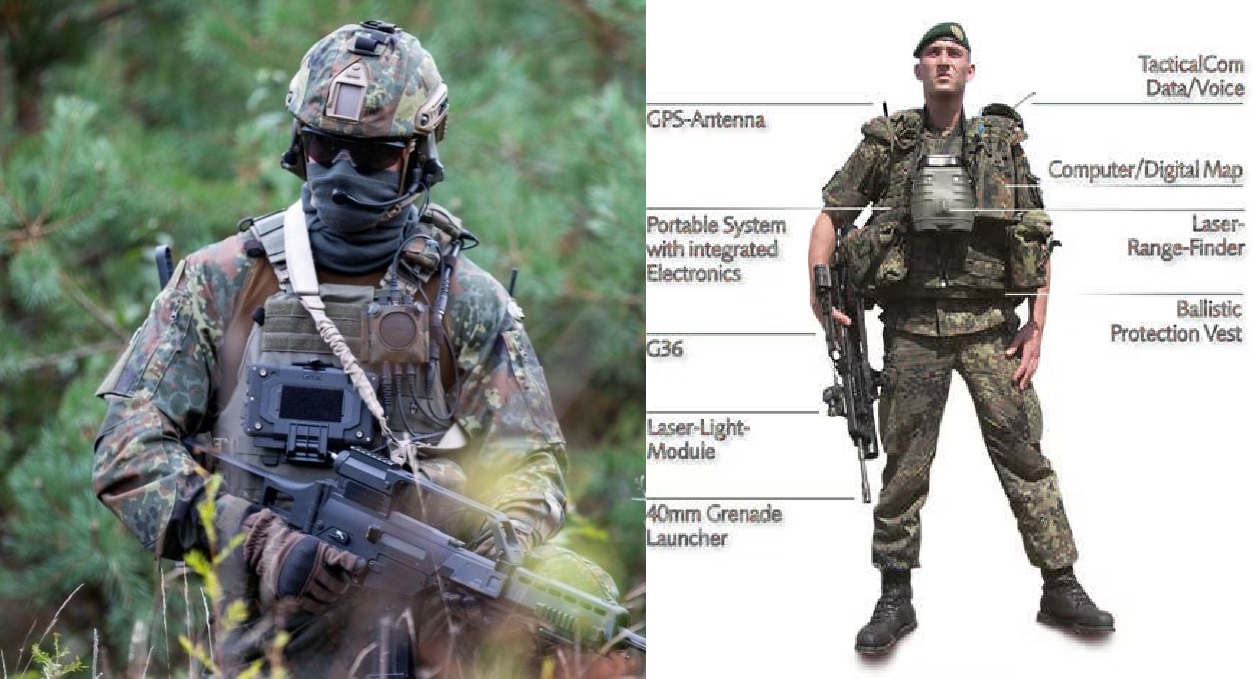
Each platoon system typically includes around 35 individual soldier kits, along with supporting platoon-level equipment. These systems integrate a combination of advanced information technology, optics, optronics, protective gear, military clothing, and load-carrying systems.
System Modernisation and Technical Enhancements
The updated IdZ-ES configuration removes obsolete components and introduces a range of improvements focused on communication, interoperability, and power efficiency. The revised hardware enables direct connectivity to Germany’s “Digitisation of Land-based Operations (D-LBO)” network, allowing real-time data exchange across units.
Enhanced communication architecture supports interoperability with combat vehicle platforms such as the Boxer armored transport and the Puma infantry fighting vehicle, which serve as operational hubs for dismounted troops.
Additional upgrades include a redesigned ergonomic interface, with a back-mounted control unit integrating the UHF radio to optimise space on body armour. The modernised VJTF+ variant incorporates expanded sensor and countermeasure capabilities, including portable drone warning systems, helmet-mounted laser sensors, and a unified controller for reconnaissance and strike drones.
Power management has also been improved, with battery capacity increased by approximately 40 percent, reducing the number of batteries required per soldier from six to four.
Industrial Scope and Integration
As prime contractor, Rheinmetall is responsible for full system integration and coordination of contributions from more than 30 subcontractors involved in the programme. The company oversees the development, assembly, and delivery of the integrated soldier systems.
The current order is part of a broader framework agreement signed in February 2025 between BAAINBw and Rheinmetall Electronics GmbH. That agreement, valued at up to €3.1 billion and valid through the end of 2030, represents the largest soldier systems contract ever concluded by both Rheinmetall and the German procurement agency.
The initial agreement included a firm order worth approximately €417 million for the modernisation of 68 systems already in service and the procurement of 24 new platoon systems. The framework allows for the regeneration of existing equipment as well as the production and delivery of up to 368 IdZ-ES platoon systems, along with options for additional components and services.
Operational Context
Rheinmetall stated that networked soldier systems are becoming increasingly relevant for modern battlefield operations. The IdZ-ES programme is designed to support the Bundeswehr’s digitisation strategy by enabling integrated communication, improved situational awareness, and coordinated action across infantry units.
Further orders are expected under the framework agreement following the recent parliamentary funding approval, indicating continued expansion of Germany’s digital soldier capabilities through the remainder of the decade.
——— End of Article ———