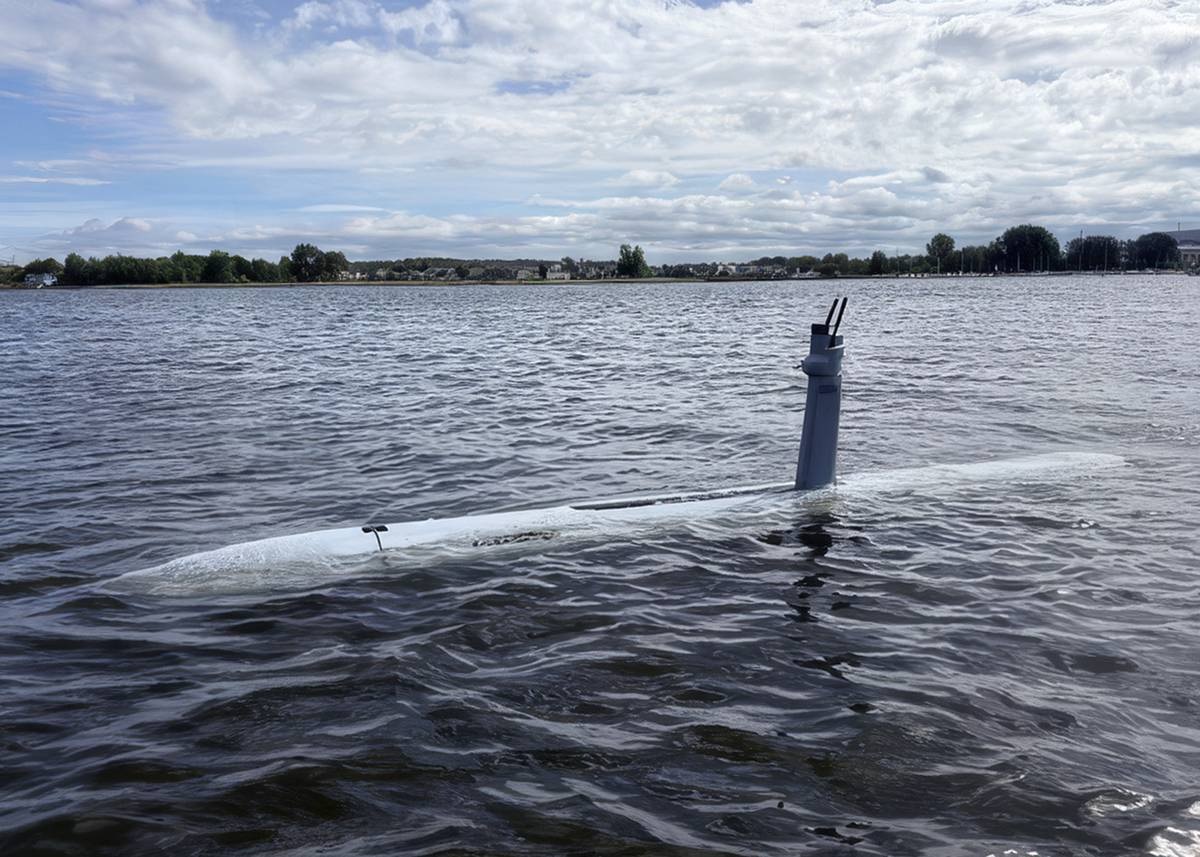
LÜBECK and ROSTOCK, Germany — German submarine systems company GABLER and defense technology firm FLANQ have successfully completed the Sea Acceptance Test (SAT) of their Torpedo-Tube-Launched Uncrewed Surface Vessel (TTL USV) capability demonstrator, marking a key milestone in the development of autonomous maritime systems for future naval operations.
The capability demonstrator, named Ranger, completed sea trials in northern Germany during June 2026, where engineers validated the integration and operation of its core technologies. According to the companies, the trials confirmed the vessel's seaworthiness, while performance data collected during testing verified the system's maturity at the current stage of development. The successful completion of the SAT also marks the end of the proof-of-concept phase.
The project is being jointly developed by GABLER and FLANQ under a partnership that formally began in 2025. The collaboration combines GABLER's more than six decades of experience in submarine systems and mission-critical defense manufacturing with FLANQ's expertise in artificial intelligence-enabled autonomy, maritime mission software, open capability architectures, and rapid development of autonomous systems.
Designed for Covert Submarine Operations
The Ranger is designed to be launched directly from a standard 21-inch (533 mm) submarine torpedo tube, allowing submarines to deploy the vessel without diver assistance. After launch, the vehicle autonomously reaches the surface and carries out intelligence, surveillance, and reconnaissance (ISR) missions.
The platform measures 4.5 meters in length and uses a common hull rated for depths of up to 300 meters. To fit inside a standard torpedo tube, it features a folding keel and a collapsible sensor mast. The vessel is powered by an electric drivetrain and includes a mission-configurable payload bay, allowing it to support different mission requirements.
The companies said the Ranger is intended to provide naval forces with an autonomous platform that can be deployed discreetly from submarines while expanding operational options during maritime missions. The platform is also being developed with the potential for submarines to deploy and recover uncrewed systems while remaining covert.
Strike Variant Also Under Development
Alongside the reusable Ranger designed for ISR missions, GABLER and FLANQ are also developing a one-way attack (OWA) version known as Strike, which was previously introduced under the project name Raider.
The Strike variant is intended for single-use missions and will carry a user-supplied effector payload in its forward compartment. The concept is designed to allow naval forces to engage high-value targets while reducing the exposure of crewed submarines and other naval platforms to hostile environments.
Both Ranger and Strike are based on the same hull design, enabling a common platform for different operational roles.
Partnership Progress Since 2025
The cooperation between GABLER and FLANQ was first announced during DALO Industry Days in Denmark in August 2025. One month later, in September 2025, GABLER publicly presented initial concepts for the torpedo-tube-launched uncrewed surface vehicles during an industry event.
Following the successful Sea Acceptance Test, GABLER will continue leading the program's commercialization, integration with host platforms, and delivery to naval customers, while FLANQ remains responsible for system design, autonomous technologies, mission software, and rapid manufacturing.
Development of the Ranger capability demonstrator will continue toward operational deployment for naval customers, including European and NATO partner forces.
Expanding Future Naval Operations
Marine autonomous systems are becoming increasingly important in modern naval operations. Uncrewed platforms launched from submarines or surface ships can expand operational flexibility by supporting intelligence gathering, surveillance, force protection, and other maritime missions while reducing risks to personnel.
The Ranger project reflects the broader effort to integrate autonomous systems with existing naval platforms. By combining conventional submarines with next-generation uncrewed surface vehicles, naval forces can increase operational capability without requiring major changes to existing fleet structures. The completion of the Sea Acceptance Test provides technical validation as the program moves toward future operational use.
Source : marinetechnologynews
——— End of Article ———