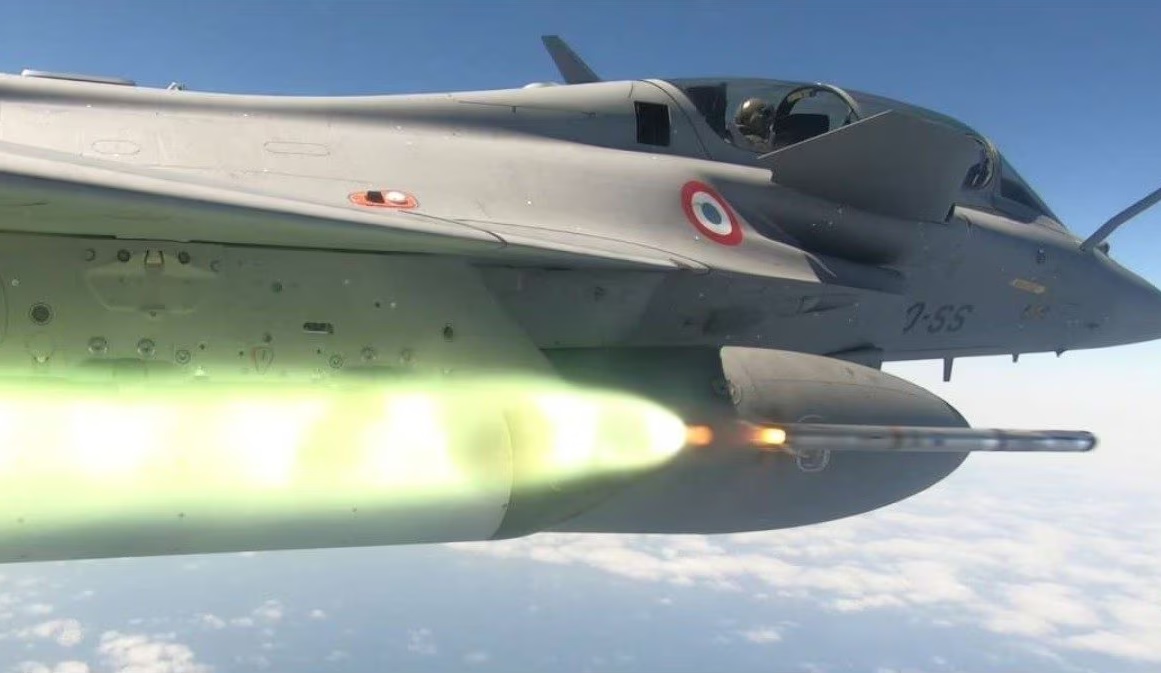
Paris, France — France has officially integrated a new low-cost anti-drone weapon system onto its Dassault Rafale fighter jets, providing the French Air and Space Force with a more economical way to intercept unmanned aerial vehicles (UAVs). The French Ministry of the Armed Forces and the Directorate General of Armaments (DGA) confirmed the successful completion of the testing campaign for the LADAC (Lutte Anti-Drone sur Avion de Combat) system on July 7, 2026.
The new capability equips Rafale fighters with 68-mm Aculeus LG laser-guided rockets, allowing the aircraft to engage drones without relying solely on expensive air-to-air missiles. The system was developed in response to the increasing use of low-cost attack drones, including Iranian-designed Shahed-136-type UAVs, which have been widely used in recent conflicts.
A More Cost-Effective Approach to Drone Interception
The LADAC program was launched to address the growing cost imbalance in modern air defense operations. During recent missions in the Middle East, air forces frequently used advanced interceptor missiles to destroy relatively inexpensive one-way attack drones.
A French MICA air-to-air missile is estimated to cost between $1 million and $2 million per round, while a Shahed-type drone is believed to cost around $50,000 to produce. By comparison, the Thales Aculeus LG 68-mm laser-guided rocket is estimated to cost between $20,000 and $40,000, providing a significantly more affordable option for countering drone threats.
The new system is intended to preserve high-value air-to-air missile inventories while improving the sustainability of drone interception missions.
How the LADAC System Operates
The LADAC system combines existing Rafale sensors and targeting equipment with new guided rocket launchers.
The engagement process begins with the Rafale's RBE2 AESA radar, which detects and tracks an incoming drone. After the target is identified, the aircraft's TALIOS targeting pod locks onto it and continuously illuminates it with a laser.
The pilot then launches the Aculeus LG laser-guided rockets from JF12/TELSON launcher pods, manufactured by Thales. The rockets follow the reflected laser energy to the target until impact.
Each JF12/TELSON launcher carries 12 rockets, allowing a single Rafale to engage multiple drones during one mission without quickly exhausting its primary air-to-air missile inventory.
Rapid Development Following Operational Requirements
The LADAC program moved from requirement to operational readiness within a relatively short period. Following urgent operational needs identified in late 2025, the DGA awarded the contract and began flight testing in February 2026.
The development and evaluation involved several French defense organizations, including the Directorate General of Armaments (DGA), the Center for Military Aviation Expertise (CEAM), Dassault Aviation, and Thales.
Testing covered the full operational cycle, including radar detection, target tracking, live launches against drone targets, assessment of the launcher pods' impact on Rafale flight performance, and system reliability in electronic warfare environments.
Following the successful validation campaign, the system has reached initial operational readiness. Thales has started preparations for serial production of the LADAC kits, with the first launcher pods expected to be delivered to French Air and Space Force operational units by the end of July 2026.
Part of a Wider Shift in Counter-Drone Operations
France joins several other countries that have adopted lower-cost precision-guided rockets for air-to-air drone interception. The United States and the United Kingdom have integrated 70-mm APKWS (Advanced Precision Kill Weapon System) laser-guided rockets onto fighter aircraft, including the F-15E Strike Eagle, F-16 Fighting Falcon, and Eurofighter Typhoon.
These systems have been used during operations in the Middle East to intercept Iranian drones, demonstrating a broader shift toward using affordable precision-guided weapons against low-cost aerial threats instead of relying exclusively on expensive interceptor missiles.
Although the LADAC system is currently intended for the French military, defense officials have indicated that the capability could eventually be made available to international operators of the Rafale fighter jet.
The integration of LADAC expands the Rafale's air-to-air capabilities by adding a practical and cost-effective option for countering unmanned aerial threats while making use of the aircraft's existing radar, targeting, and weapons systems.
Source : timesofindia
——— End of Article ———