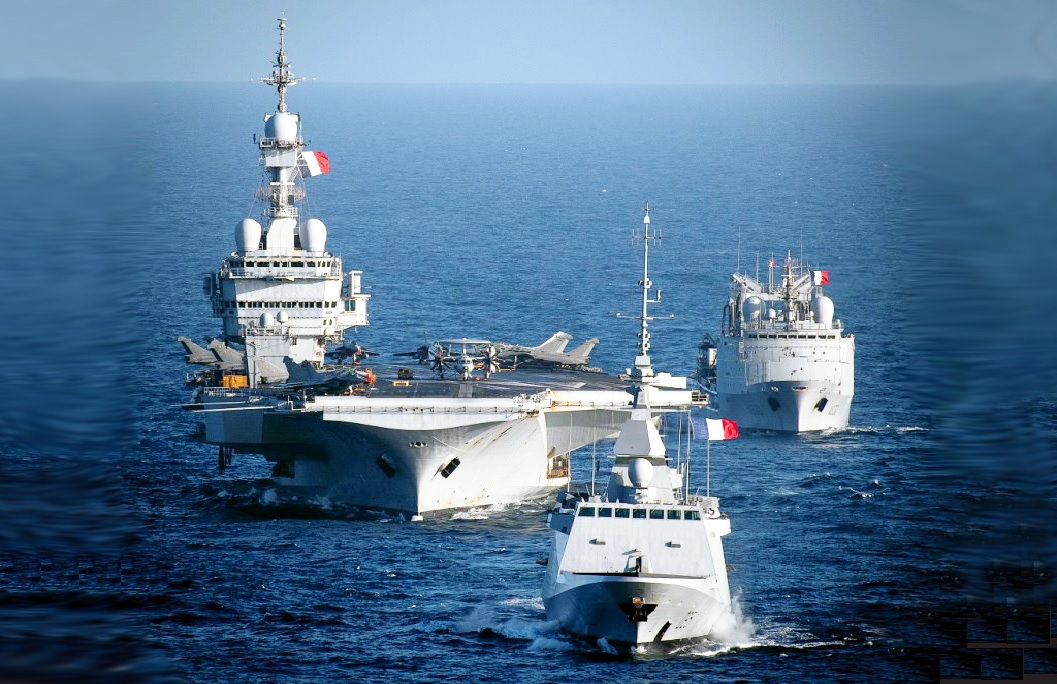
PARIS, — March 21, 2026 : The French Navy (Marine Nationale) is reassessing its strategic posture and operational planning across short-, medium-, and long-term timelines in response to a changing global security environment, according to Vice Admiral Alban Lapointe, Deputy Chief of the Navy.
The framework was presented during the fourth Paris Naval Conference, held on February 2–3, 2026, and co-hosted by the French Navy and the Institut français des relations internationales (IFRI). The conference brought together military, industry, and academic participants to examine naval operations, rearmament, and evolving threats to the rules-based international order.
Vice Admiral Lapointe stated that planning across three time horizons—2026, 2030, and 2040—forms a central focus of daily naval strategy.
Short-Term Outlook (2026): Adapting to Immediate Threats
For the immediate period, the French Navy assesses that the operational environment has undergone a significant shift, with areas previously considered stable now presenting elevated risks.
Lapointe noted that “the fundamentals are no longer where we expect them to be,” emphasizing that traditional maritime “comfort zones” have become “danger zones.”
To address near-term challenges, the Navy is prioritizing:
-
Strengthening alliances, particularly within NATO, to enhance intelligence sharing and operational coordination
-
Identifying and addressing vulnerabilities in cooperation with partner navies
-
Maintaining operational agility, enabling rapid response to emerging situations
Lapointe highlighted the pace of developments, stating that opportunities in modern operations are time-sensitive and require immediate action.
Medium-Term Objectives (2030): Readiness and Logistics
Looking toward 2030, the French Navy’s primary objective is achieving full-spectrum combat readiness in a complex operational environment that includes hybrid warfare threats, such as cyber operations and infrastructure disruption.
Lapointe stated that forces must be prepared “to attack and to be attacked,” requiring readiness across all operational domains.
Key priorities for this period include:
-
Enhancing personnel training and operational mindset
-
Upgrading equipment and capabilities to meet evolving threats
-
Strengthening logistics and supply chains, identified as critical to sustained operations
Lapointe emphasized that logistical capacity is essential, noting that operational success depends on the ability to maintain supply and support during extended engagements.
Long-Term Strategy (2040): Fleet Renewal and Strategic Adaptation
By 2040, the French Navy expects to operate within a strategic environment shaped by ongoing geopolitical developments and potential large-scale disruptions. In response, France is planning a comprehensive fleet recapitalization and modernization effort.
Key programmes include:
-
Aircraft Carrier Renewal: Replacement of the FS Charles de Gaulle with the Porte-Avions de Nouvelle Génération (PANG), a nuclear-powered aircraft carrier expected to enter service around 2038, with construction planned to begin in the early 2030s
-
Submarine Modernization: Continued integration of Suffren-class (Barracuda) nuclear attack submarines, alongside development of third-generation ballistic missile submarines (SNLE 3G) to sustain France’s nuclear deterrent
-
Technology Integration: Adoption of advanced data processing systems, uncrewed platforms, and next-generation weapons systems
These efforts are intended to maintain France’s position as a capable maritime power while adapting to technological and operational changes.
Role of Alliances and Strategic Coordination
Lapointe highlighted that the effectiveness of future naval operations will depend significantly on the strength and resilience of allied relationships. Cooperation within NATO and with international partners remains central to addressing shared challenges.
He noted that forums such as the Paris Naval Conference contribute to collective strategic reflection, allowing participants to assess emerging threats, prepare for potential disruptions, and coordinate long-term responses.
Strategic Outlook
The three-tiered framework reflects the French Navy’s approach to balancing immediate operational demands, mid-term readiness objectives, and long-term force development.
Officials indicated that aligning these timelines is necessary to ensure continuity in capability, adaptability to evolving threats, and the ability to operate effectively in contested maritime environments.
——— End of Article ———