TALLINN, Estonia — April 24, 2026 : Estonian defense startup Frankenburg Technologies has released new footage documenting ground test firings of its Mark I missile configured for air-to-air operations, marking a key phase in the system’s development ahead of full airborne trials.
The test campaign focuses on validating three critical technical parameters that govern the viability of any air-launched weapon: rail and pylon configuration, safe separation from the launch platform, and the missile’s transition to stable flight immediately after release. These elements are widely regarded as gating requirements in missile integration, as failures in separation dynamics or post-launch stability can result in safety risks to the launch platform and render the weapon ineffective regardless of its terminal guidance performance.
According to the company, conducting these evaluations in a controlled ground environment allows engineers to isolate and resolve aerodynamic and mechanical variables before progressing to live air-launch testing. The geometry of the rail and pylon system, in particular, plays a decisive role in determining how the missile departs the aircraft and clears aerodynamic disturbances generated by the host platform.
Air-Launch Integration and Risk Reduction
The air-to-air configuration represents one of the most technically demanding aspects of the Mark I’s multi-domain architecture. Unlike ground or sea launches, air deployment introduces additional variables, including forward velocity at release, airflow turbulence, and limited time for stabilization. The missile must separate cleanly from a moving aircraft, avoid recontact with the platform, and achieve controlled flight within a short distance.
Frankenburg’s current ground tests are designed to validate these conditions prior to airborne trials. By refining separation characteristics and ensuring predictable aerodynamic behavior, the company aims to reduce integration risk and accelerate the transition to operational testing.
Platform-Agnostic Design Philosophy
The Mark I missile has been developed using a platform-agnostic and domain-agnostic design approach. The core system is engineered to function across land, sea, and air launch configurations without requiring fundamental redesign. Instead, domain-specific adaptations—such as mounting systems, software interfaces, and integration protocols—are implemented in collaboration with industry partners.
This approach contrasts with conventional missile programs, which typically require extensive and costly modifications when adapted to different platforms. These modifications often include bespoke pylons, unique integration software, and separate certification processes. By standardizing the core architecture, Frankenburg aims to reduce integration complexity and enable deployment across a wider range of assets.
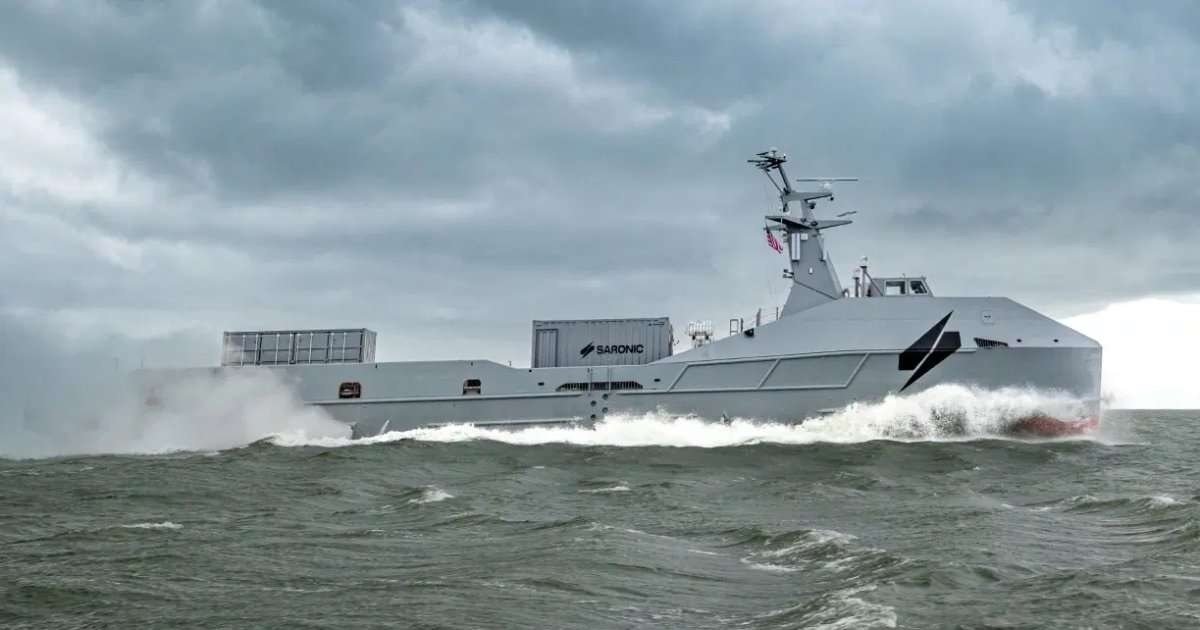
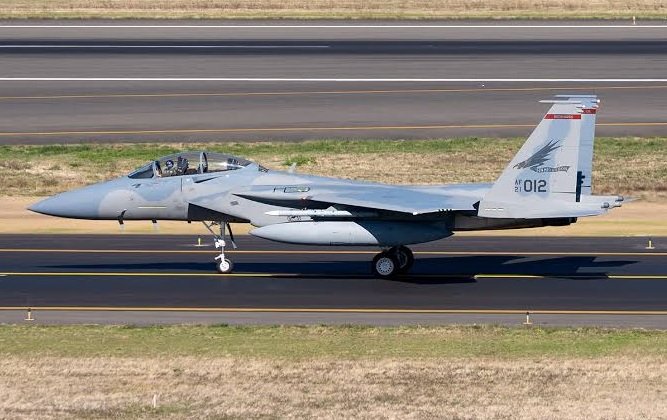
Operationally, the multi-domain capability allows a single missile design to support a range of mission profiles. Ground-launched variants can be configured for area defense, direct fire, or anti-armor roles. Sea-based configurations may be used for vessel self-defense, anti-surface warfare, or shore attack. Air-launched versions, which are currently under development, are intended for air-to-air engagements, counter-drone operations, and potentially air-to-ground or anti-ship missions depending on the selected seeker and warhead configuration.
Technical Characteristics of the Mark I
The Mark I is a compact, precision-guided interceptor primarily designed for counter-unmanned aerial vehicle (C-UAV) missions. The missile measures approximately 660 millimeters in length, has a diameter of 60 millimeters, and weighs less than 2 kilograms at launch.
It is powered by a solid-fuel rocket motor and carries a 0.5-kilogram high-explosive fragmentation warhead equipped with a proximity fuse and a self-destruct mechanism. The system has an operational range of up to 2 kilometers and can engage targets at altitudes reaching 1,500 meters.
The missile operates on a fire-and-forget principle, using an electro-optic seeker capable of functioning in both daylight and low-light conditions. The guidance system incorporates artificial intelligence-based targeting algorithms designed to improve engagement accuracy against small and maneuvering aerial threats.
Frankenburg has stated that the Mark I can achieve high-subsonic speeds exceeding 1,000 kilometers per hour, enabling rapid interception within short engagement windows typical of counter-drone scenarios.
Development Timeline and Industrial Partnerships
Frankenburg Technologies has progressed the Mark I from initial concept to prototype testing within a 13-month development cycle. The program has conducted more than 50 test firings to date, including ground-based and live-fire evaluations.
The company has secured funding to support the transition to mass production and has entered into a framework agreement with Polska Grupa Zbrojeniowa (PGZ) for long-term cooperation on the missile’s development and manufacturing.
In parallel, Frankenburg has collaborated with Airbus Defence and Space to integrate the Mark I onto the “Bird of Prey” interceptor drone. On March 30, 2026, the system completed a live demonstration flight in northern Germany, during which the drone autonomously detected and engaged a one-way attack drone using the Mark I missile. The platform, based on the Do-DT25, carried four missiles in the test configuration, with future variants expected to carry up to eight.
Production and Next Steps
Frankenburg has not disclosed detailed timelines for the next phase of airborne testing in the air-to-air configuration. However, the current ground test campaign is intended to complete risk reduction activities required before advancing to live aerial trials.
Production of the ground-launched variant of the Mark I is scheduled to begin in May 2026, with initial deliveries planned for July 2026. The company has indicated that additional flight tests, including those involving live warheads, are planned throughout the remainder of 2026 to further validate the system for operational deployment.
Market Context and Operational Drivers
Frankenburg Technologies is entering a precision munitions market traditionally dominated by large defense contractors. Its development strategy emphasizes affordability, rapid production, and multi-domain flexibility.
Recent conflicts, including the war in Ukraine, have highlighted significant shortages in precision-guided munitions and exposed limitations in existing production capacity. Armed forces have increasingly relied on high-cost interceptor missiles to counter low-cost aerial threats such as loitering munitions, creating cost asymmetries in air defense operations.
The Mark I’s compact design and use of commercially available components are intended to support scalable manufacturing while addressing this cost imbalance. By enabling a single system to operate across multiple domains, the program also seeks to reduce procurement and sustainment burdens for military users.
Frankenburg and its partners plan to continue iterative testing and integration activities through 2026 as the Mark I progresses toward broader deployment within allied defense frameworks.
——— End of Article ———