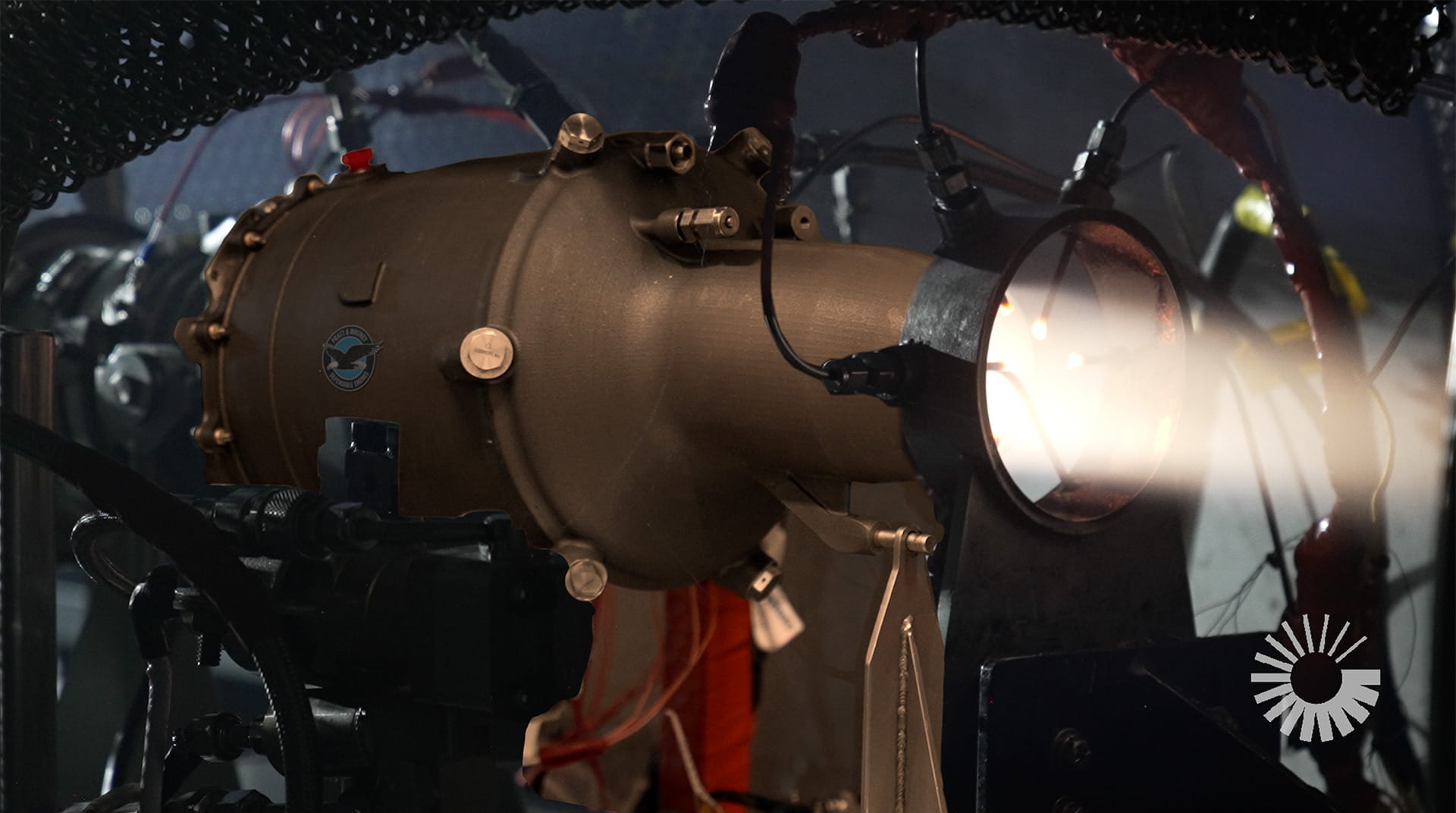
Space News - Leading Chinese launch startup, Galactic Energy, has successfully secured $154 million in funding to advance the development of its revolutionary Pallas-1 rocket. The funding, announced in the C and C+ rounds on December 18, will primarily support research and development efforts focused on the Pallas-1 medium-lift rocket and its associated infrastructure.
The funding rounds were spearheaded by Ziyang Heavy Industry Fund, with participation from key investors including Bengbu Investment Group, Langfang Linkong, Founder Hesheng Investment, Jintuo Capital, and undisclosed backers, as outlined in the company official statement.
Despite economic challenges and intense competition within the space industry, this funding announcement underscores the resilience of financial support for Chinese commercial launch ventures. Recent developments also suggest that lucrative national contracts are in the pipeline for commercial launch service providers, opening new avenues for revenue.
Pallas-1, a 42-meter-long kerosene-liquid oxygen launcher, is designed with a targeted capacity of 5,000 kg to low Earth orbit (LEO) or 3,000 kg to a 700 km sun-synchronous orbit (SSO). Galactic Energy aims to conduct the inaugural Pallas-1 flight in Q3 of the following year, with plans to recover the first stage using landing legs by 2025.
In addition to its immediate plans, Galactic Energy is eyeing a triple-core variant of the Pallas-1, poised to lift an impressive 14,000 kg to LEO, with a projected launch date as early as 2026. The company is strategically positioning itself to secure contracts for launching satellites for China national satellite internet megaconstellation, Guowang, which aims to deploy approximately 13,000 satellites into LEO, in response to global constellations like SpaceX Starlink.
Galactic Energy also emerges as a potential contender for cost-effective cargo missions to the Tiangong space station, aligning with China human spaceflight agency recent call for cargo spacecraft and launch solutions in the 4 to 6-ton range to LEO.
This funding round follows closely on the heels of Galactic Energy successful return-to-flight with the 11th Ceres-1 four-stage solid rocket launch on December 4, reestablishing its reliability after a setback in late September.
Established in February 2018, Galactic Energy has positioned itself as a leader in the competitive Chinese commercial launch sector, marked by successful launches and even a milestone launch from a mobile sea platform. This $154 million funding marks the company second significant funding round, building on the $200 million raised in early 2022.
While Galactic Energy has achieved notable success with the Ceres-1, competing with larger, reusable rockets presents challenges. Rivals like Landspace Zhuque-2, which can carry 1,500 kilograms to a 500-kilometer sun-synchronous orbit, have already achieved successful launches. Landspace plans for a larger Zhuque-3, capable of lifting up to 18,300 kg to LEO, pose further competition with a target launch date in 2025.
The year 2023 has proven to be a breakthrough for Chinese commercial launch entities, with Galactic Energy, iSpace, Landspace, Space Pioneer, and state-owned spinoffs CAS Space and Expace collectively accounting for 17 out of China 62 orbital launches. This includes the maiden successful launches of Chinese commercial liquid-propellant rockets into orbit, marking a significant stride in the nation space exploration endeavors.
——— End of Article ———