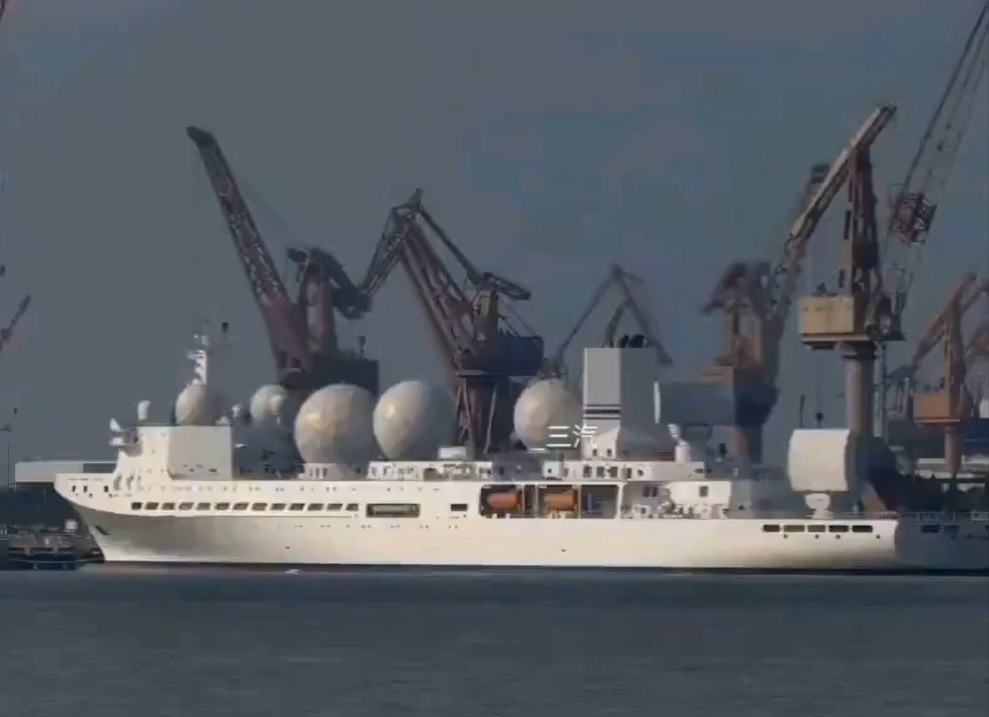
MUSCAT, Oman — March 8, 2026 : A Chinese People’s Liberation Army Navy intelligence-gathering vessel, Liaowang-1, has been operating off the coast of Oman in the Gulf of Oman and the northern Indian Ocean, according to regional defense analysts and maritime monitoring data. The ship is assessed to be conducting extensive electronic and signals intelligence collection while monitoring United States and Israeli naval and air operations in the region.
Analysts indicate that the vessel’s deployment allows China to map the electromagnetic environment across the Gulf of Oman and surrounding waters, potentially enabling the collection of radar emissions, communications signals, and other electronic signatures from military platforms operating in the area. Some defense observers assess that the gathered information could be relayed to Iranian defense networks, potentially improving Tehran’s situational awareness regarding allied movements.
The deployment occurs amid continued U.S. and Israeli military activity across the broader Middle East, where naval task groups, reconnaissance aircraft, and strike platforms are operating in proximity to the Persian Gulf and Arabian Sea.
Dongdiao-Class Intelligence Platform
Liaowang-1 is part of the Dongdiao-class auxiliary general intelligence ship series, commonly identified as the Type 815 family of vessels operated by the People’s Liberation Army Navy. Ships of this class are designed specifically for electronic intelligence (ELINT), signals intelligence (SIGINT), and telemetry collection during missile tests and military exercises.
The vessel is visually recognizable due to the large spherical and cylindrical radomes mounted across its superstructure. These structures house sensitive antenna arrays, radar receivers, optical tracking equipment, and communications interception systems used to monitor electronic emissions across wide operational areas.
Key vessel specifications include:
-
Length: approximately 130 meters (430 feet)
-
Beam: 16.4 meters (54 feet)
-
Draft: about 6.5 meters (21 feet)
-
Displacement: roughly 6,000 tonnes
-
Maximum speed: around 20 knots
The ship carries only limited defensive armament. Typical equipment includes twin 37-millimeter and 25-millimeter anti-aircraft guns, along with close-in weapon systems (CIWS) and anti-submarine torpedo launchers intended for self-protection rather than offensive combat operations.
Electronic and Signals Intelligence Capabilities
The primary operational role of Liaowang-1 is the interception and analysis of electronic emissions from military systems operating within its detection range. The ship’s onboard systems can detect radar signals, communication transmissions, and electronic signatures produced by aircraft, naval vessels, and missile systems.
Defense analysts note that these capabilities allow the vessel to record detailed electronic profiles of foreign military assets. Such data can later be used to identify specific platforms, monitor operational patterns, and analyze electronic warfare characteristics.
The sensor suite reportedly enables monitoring of advanced Western aircraft operating in the region, including the F-35 Lightning II, the F-22 Raptor, and the EA-18G Growler. Even when operating in low-observable configurations, these aircraft still produce electromagnetic emissions through radar, communications, and electronic warfare systems that can potentially be detected and analyzed by specialized intelligence platforms.
Beyond aircraft monitoring, Dongdiao-class vessels are frequently used by the PLAN to track ballistic missile launches and gather telemetry data during missile tests. The ship’s systems can record missile trajectories and flight characteristics, information that can later be used for scientific analysis or weapons development.
Integration With China’s Satellite Networks
Liaowang-1 also functions as a maritime node within China’s broader space-based tracking and navigation architecture. Through integration with the BeiDou Navigation Satellite System, the vessel can transmit collected intelligence data to command centers and other military platforms.
This connectivity allows the ship to contribute to a real-time operational picture covering the Gulf of Oman, northern Arabian Sea, and surrounding areas. By combining satellite inputs with locally collected electronic signals, the vessel can help generate a detailed tactical map of regional air and maritime activity.
Analysts assess that this capability allows long-range monitoring of aircraft flights, naval deployments, and missile activity across large areas of the Middle East and northern Indian Ocean.
Operational Impact in the Region
The presence of the Chinese intelligence ship has implications for the operational environment in the region. By mapping radar frequencies and electronic signatures, such platforms can potentially reduce the effectiveness of surprise military operations by allowing adversaries to anticipate incoming aircraft or naval movements earlier than would otherwise be possible.
If the information collected by the vessel were shared with Iranian defense authorities, it could improve the ability of Iranian air defense networks to detect approaching aircraft or missile launches before they reach Iranian airspace.
Defense analysts note that intelligence-gathering ships are commonly deployed by major naval powers during periods of heightened military activity to observe exercises, track missile launches, and monitor communications patterns.
Constraints on Direct Military Action
Despite the intelligence advantages created by the vessel’s presence, direct military action against Liaowang-1 is considered highly unlikely. The ship is operating in international waters, where maritime law permits surveillance and intelligence collection activities conducted by naval vessels.
Any attack against a Chinese-flagged ship would constitute a direct military strike on Chinese sovereign assets, potentially escalating tensions between major powers.
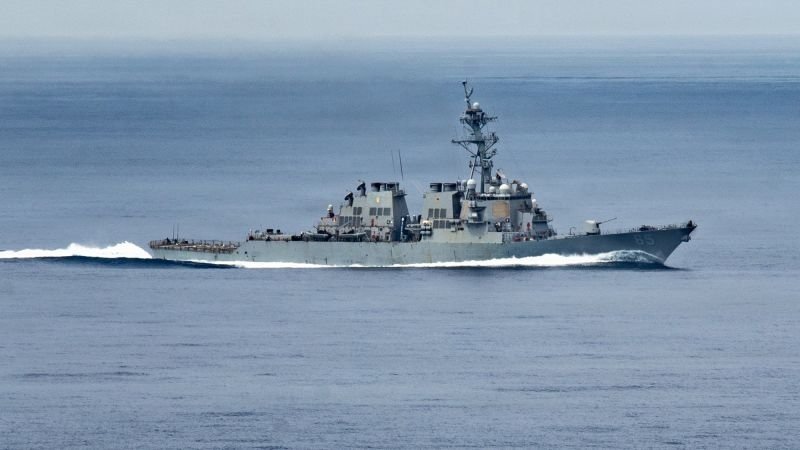
Additionally, regional monitoring suggests that the vessel may not be operating alone. Reports indicate that a Chinese naval surface action group is present in the wider area, including a Type 055 destroyer and a Type 052D destroyer. These warships are equipped with advanced air-defense and anti-ship missile systems capable of providing layered protection for high-value support vessels.
Broader Chinese Naval Activity
The deployment of Liaowang-1 is consistent with China’s expanding naval presence across the Indian Ocean and adjacent maritime regions. Over the past decade, the People’s Liberation Army Navy has regularly dispatched intelligence ships and research vessels to monitor missile tests, military exercises, and naval movements conducted by other powers.
Such operations reflect Beijing’s increasing emphasis on global maritime awareness and long-range intelligence collection as part of its broader naval modernization strategy.
Chinese authorities have not issued an official statement regarding the mission of Liaowang-1 near Oman, and U.S. military officials have not publicly commented on the vessel’s presence. Maritime tracking data indicates the ship continues to operate in international waters off Oman’s coastline while conducting its surveillance activities.
——— End of Article ———