Beijing / Washington / Taipei, December 29 — China has launched its most expansive military maneuver around Taiwan in years at a moment many analysts describe as a rare alignment of global conditions favoring Beijing. With a record number of U.S. Navy ships deployed to the Caribbean and Venezuela region, Chinese military planners appear to be testing whether Washington’s divided naval focus creates an opportunity to intensify pressure in the Taiwan Strait.
From December 29, the PLA Eastern Theater Command began dispatching Army, Navy, Air Force and Rocket Force units for a large-scale joint exercise codenamed “Justice Mission 2025.” The drills span the Taiwan Strait and maritime and airspace zones north, southwest, southeast and east of Taiwan, forming what regional security experts describe as an all-direction operational ring around the island.
Chinese state media said the exercise includes live-fire elements and high-intensity joint operations, with forces moving into position starting tomorrow. Analysts note that the geographic spread and force mix go beyond routine signaling, resembling a practical rehearsal for blockade, access denial and rapid escalation control.
Strategic Messaging Beyond Maneuvers
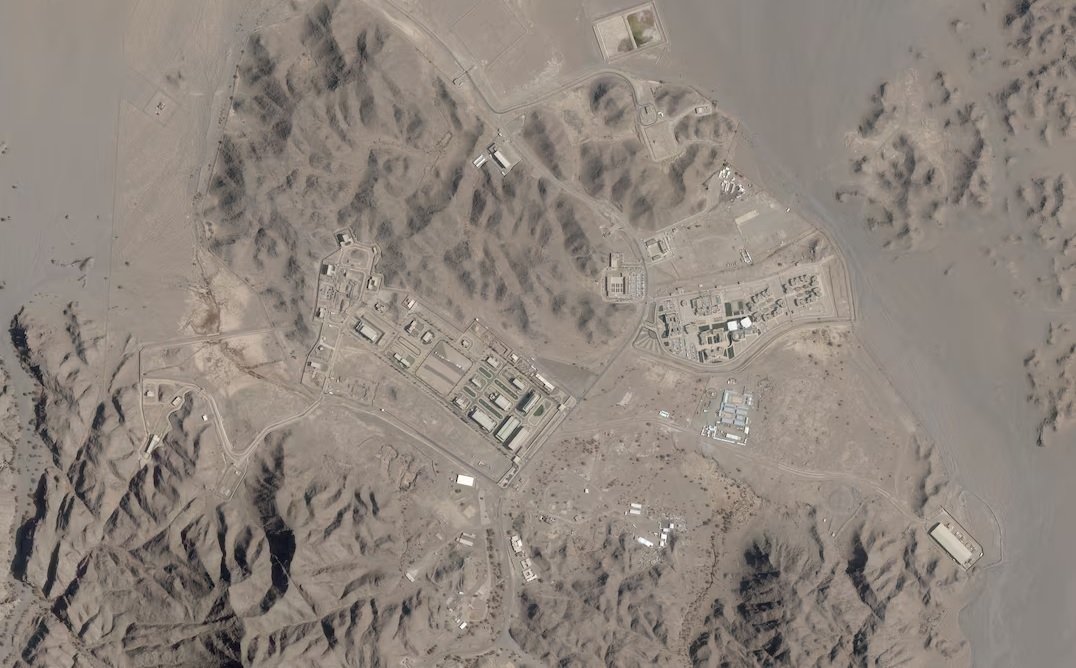
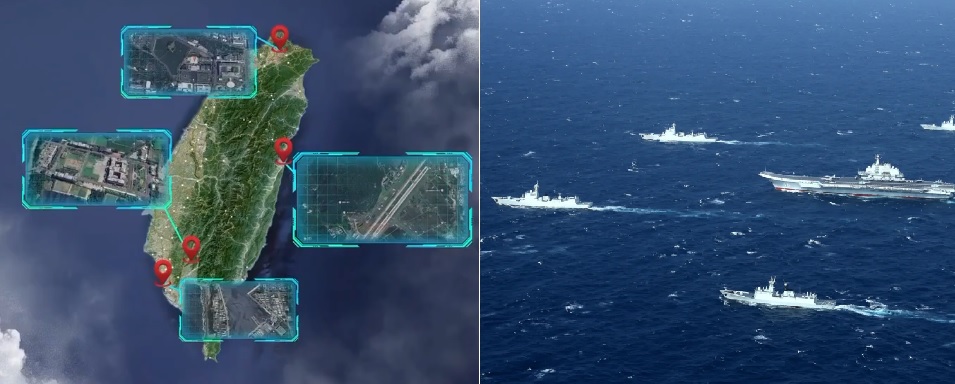
On Monday, China reinforced the signal by releasing an official video of the exercise titled “Clearly Visible.” The footage features satellite imagery of Taiwan’s military installations, highlighting air bases, ports and other key facilities. Analysts say the video is intended to underscore PLA intelligence, surveillance and reconnaissance reach, while sending a psychological message that critical targets are mapped, tracked and vulnerable in any future contingency.
“The imagery is as important as the missiles,” said a regional security expert. “It tells Taipei and its partners that China’s situational awareness is comprehensive and persistent.”
U.S. Naval Distraction and Strategic Calculations
The timing has drawn particular attention in defense circles. According to open-source naval tracking and Pentagon disclosures, the United States has surged an unusually high number of naval assets toward the Caribbean, linked to security concerns surrounding Venezuela. While U.S. officials maintain that Indo-Pacific deterrence remains intact, Chinese military commentators argue that global naval dispersion inevitably affects response timelines.
“China does not need total U.S. absence,” wrote one Chinese defense analyst in a state-affiliated journal. “It only needs enough uncertainty to complicate intervention planning.” In this view, the Venezuela deployment represents not weakness but strategic distraction, lowering the immediate risk of a rapid U.S. naval concentration near Taiwan.
‘Justice Mission 2025’ and All-Domain Signaling
The structure of Justice Mission 2025 reinforces that assessment. PLA naval formations are practicing coordinated surface and subsurface operations, while air force units are conducting multi-axis sorties to contest airspace. The inclusion of the Rocket Force signals the ability to hold targets at risk across the theater, a critical element in deterring external involvement.
Chinese officials have framed the drills as a stern warning against “Taiwan independence” forces and foreign interference, calling them a legitimate and necessary action to safeguard sovereignty and national unity. The language mirrors Beijing’s long-standing position but is delivered alongside an unprecedented level of operational activity.
Taipei and International Response
In Taipei, defense authorities have activated heightened surveillance measures, confirming sustained PLA activity on multiple approaches to the island. Taiwanese officials say the pattern of maneuvers is designed to normalize PLA presence and erode traditional buffers east of Taiwan, long viewed as a strategic fallback area.
Internationally, reactions have been cautious. U.S. and allied officials have reiterated calls for restraint, while emphasizing freedom of navigation in the Taiwan Strait. Some Western analysts argue that U.S. naval movements to the Caribbean do not significantly diminish American capabilities in East Asia. Others counter that perception itself can drive escalation, particularly if Beijing believes current conditions reduce the political and military costs of action.
A Calculated Escalation
As Justice Mission 2025 continues, experts see it as part of a broader Chinese strategy to probe limits without crossing into open conflict. The convergence of U.S. naval commitments elsewhere and China’s expanding joint-force capabilities, they say, has created what Beijing may regard as a “perfect moment” to advance pressure on Taiwan.
Whether this episode marks a temporary surge or a lasting shift in the regional security environment will depend on how long the PLA sustains its operations — and how decisively Washington and its partners signal their readiness to respond.
——— End of Article ———