BEIJING — April 24, 2026 : China’s Ministry of Commerce on Friday announced the addition of seven European Union–based entities to its export control list, imposing an immediate ban on the export of dual-use items to the companies over their alleged links to Taiwan-related defence cooperation.
The decision, effective April 24, 2026, prohibits Chinese exporters from supplying dual-use goods, technologies, or services to the listed entities. It also extends to foreign organisations and individuals, who are now barred from re-exporting China-origin dual-use items to the same companies. All ongoing transactions and related activities must cease immediately, according to the official statement.
Targeted European Entities
The seven entities named by Beijing span Germany, Belgium, and the Czech Republic, and operate across defence, aerospace, and advanced technology sectors. They include:
- HENSOLDT AG (Germany)
- FN Herstal / Fabrique Nationale de Herstal (Belgium)
- FN Browning (Belgium)
- OMNIPOL a.s. (Czech Republic)
- EXCALIBUR ARMY spol. s r.o. (Czech Republic)
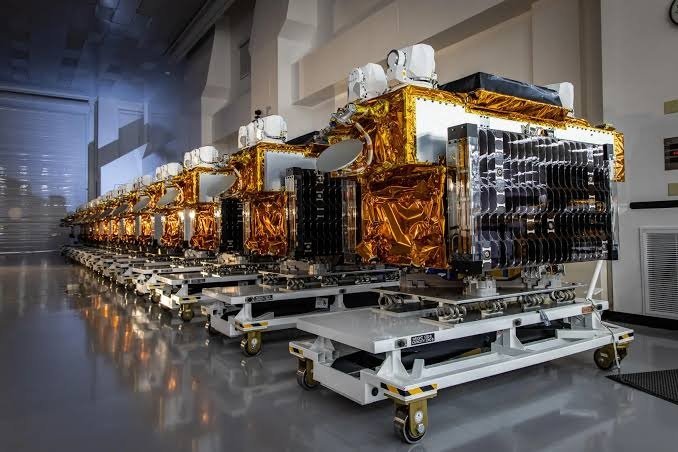
- SPACEKNOW INC., odstepny zavod s.r.o. (Czech Republic)
- VZLU AEROSPACE a.s. (Czech Republic)
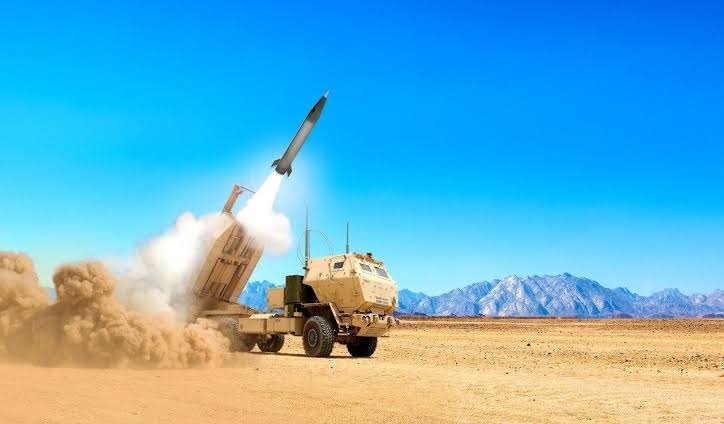
China’s Commerce Ministry stated that these entities have either participated in arms sales to Taiwan or engaged in cooperation with Taiwanese authorities.
Scope of Export Restrictions
Under the new controls, “dual-use items”—defined as goods, software, and technologies with both civilian and military applications—are subject to a blanket export prohibition. These include advanced electronics, semiconductor-related components, specialised materials, aerospace systems, and certain rare earth-related inputs.
The directive also explicitly blocks third-party transfers, meaning companies outside China cannot supply Chinese-origin components to the listed entities. This provision is aimed at tightening enforcement across global supply chains.
While the ministry noted that exceptional approvals could be granted on a case-by-case basis if transactions are deemed necessary, it emphasised that a general halt to all related exports is required.
Rationale and Official Position
A spokesperson for the Ministry of Commerce described the action as “necessary and limited,” stating it is intended to safeguard China’s national security and interests while fulfilling international non-proliferation obligations.
The ministry further clarified that the measures target “a small number” of EU military-related entities and do not affect normal trade and economic exchanges between China and the European Union. It added that law-abiding European businesses need not be concerned.
Chinese authorities also confirmed that the European Union had been informed in advance through an existing bilateral export control dialogue mechanism.
Background on Taiwan Links
The move marks a rare instance of China applying Taiwan-related export restrictions directly to European entities. Beijing claims Taiwan as part of its territory and routinely opposes foreign military cooperation with the island.
Taiwan continues to receive the majority of its military equipment from the United States, while European involvement has historically been limited, particularly regarding major platforms such as fighter aircraft or naval vessels.
However, Taiwan has increasingly sourced specialised subsystems and technologies from European firms, including radar components, sensor systems, and advanced materials. For example, HENSOLDT AG previously confirmed the delivery of two TRML air defence radar units to Taiwan in 2024, according to statements made by then-CEO Thomas Mueller during an analyst call.
Central and Eastern European countries, particularly the Czech Republic, have shown growing openness toward cooperation with Taiwan in recent years, influenced in part by shifting geopolitical dynamics following Russia’s 2022 invasion of Ukraine.
Broader Geopolitical Context
The announcement comes one day after the European Union adopted its 20th sanctions package against Russia on April 23, 2026. That package included measures targeting entities in third countries—including several in mainland China and Hong Kong—accused of supplying dual-use goods to support Russia’s military-industrial base.
The proximity of the two developments highlights the increasing use of export controls and dual-use technology restrictions as instruments of geopolitical policy by both China and the European Union.
Industry and Diplomatic Response
As of April 24, 2026, neither the European Union nor the listed companies had issued comprehensive official responses.
Initial reactions indicate that companies are assessing the implications. HENSOLDT AG stated it is reviewing the situation, while EXCALIBUR ARMY spol. s r.o. indicated it does not rely directly on Chinese dual-use imports and expects limited operational impact.
Czech Foreign Minister Petr Macinka confirmed that diplomatic channels have been activated, with the Czech embassy in Beijing seeking clarification regarding the inclusion of four domestic firms.
Supply Chain Implications
The immediate effect of the restrictions is expected to prompt affected companies—and potentially the wider European defence sector—to reassess supply chains, particularly for components and materials sourced from China.
The prohibition on third-party re-exports adds an additional compliance burden, requiring firms globally to ensure that Chinese-origin inputs are not indirectly supplied to the listed entities.
No further details have been released regarding specific product categories or technical thresholds covered under the dual-use classification beyond the general prohibition.
——— End of Article ———