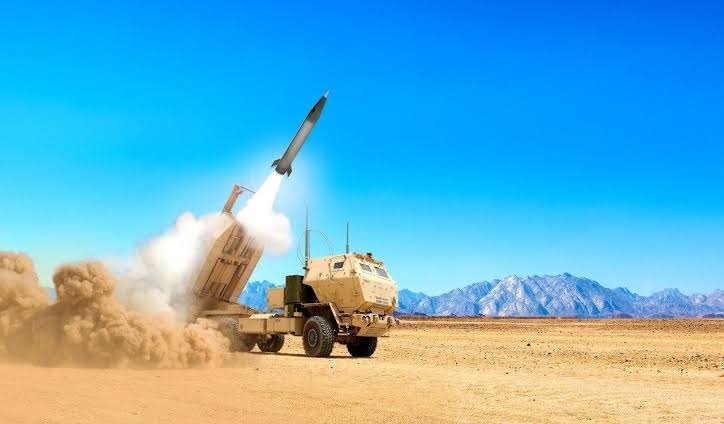
CANBERRA, —April 27, 2026 : The Australian government has approved a A$2.3 billion investment to expand the Army’s long-range strike capability, selecting additional High Mobility Artillery Rocket Systems (HIMARS) and Precision Strike Missiles (PrSM) for a second long-range fires regiment to be based in South Australia. The procurement decision was taken under Project LAND 8113 Phase 2 following an evaluation that included a domestically developed alternative known as StrikeMaster.
The new regiment will be integrated into the 10th Fires Brigade, headquartered near the Edinburgh Defence Precinct. The formal announcement is expected on Tuesday as part of a broader expansion of Australia’s long-range fires program aligned with the National Defence Strategy.
Program Expansion and Acquisition Background
The Phase 2 decision builds on earlier commitments under Project LAND 8113. Australia had previously agreed to acquire 42 HIMARS launchers, with the United States approving a further request for 48 systems in September 2025. An earlier 2023 agreement had also covered an initial batch of 20 truck-mounted launchers, reflecting a phased approach to capability development.
The additional systems will support the establishment of a second regiment, complementing existing capabilities within the 10th Brigade, which has already conducted multiple live-fire exercises using HIMARS and PrSM, including participation in Exercise Talisman Sabre 2025.
Evaluation of StrikeMaster Alternative
During Phase 2, the Department of Defence assessed HIMARS equipped with PrSM against the Australian-designed StrikeMaster system. StrikeMaster integrates two Norwegian Naval Strike Missiles (NSM) mounted on a Thales Australia Bushmaster protected mobility vehicle.
The system, developed by Kongsberg Defence Australia in partnership with Thales Australia, underwent successful live-fire testing in Norway in October 2025. It was positioned as a lower-cost and sovereign option, with proponents highlighting its potential to involve more than 150 Australian suppliers and its suitability for land-based maritime strike roles using an existing vehicle platform already in service.
Despite these factors, the government selected HIMARS to maintain interoperability with United States forces and to support integrated operations under the AUKUS partnership framework.
Capability and Operational Range
HIMARS currently provides an operational strike range exceeding 500 kilometres when using Guided Multiple Launch Rocket System (GMLRS) munitions. The PrSM, which remains under development, is expected to extend strike distances beyond 1,000 kilometres once fully operational.
The system has demonstrated operational effectiveness in recent conflicts, including use by Ukrainian forces, and is designed to deliver precision fires at extended ranges with high mobility.
Domestic Production and Supply Chain Measures
The acquisition decision comes amid concerns that the United States Department of Defense could impose export restrictions on missile systems due to supply pressures linked to the ongoing Iran conflict. In response, Australia is accelerating domestic manufacturing efforts to reduce reliance on external supply chains.
Defence Industry Minister Pat Conroy stated that Australian HIMARS systems will use missiles assembled domestically. A memorandum of understanding signed between Australia and the United States in June 2025 covers production, sustainment, and follow-on development of the PrSM, enabling Australian industry participation in the supply chain.
A key milestone in this effort was achieved on April 8, 2026, when the first Australian-assembled GMLRS missile was successfully test-fired from a HIMARS launcher at the Woomera Test Range in South Australia. The missile was produced by Lockheed Martin Australia at a dedicated facility opened at Port Wakefield in December 2025.
Strategic Context and Force Structure Reforms
Defence Minister Richard Marles said the investment supports the objectives of the National Defence Strategy, which emphasizes the ability to defend Australia at distance through enhanced deterrence and denial capabilities.
The long-range fires program forms part of broader force structure reforms aimed at strengthening Australia’s position in the Indo-Pacific region. The expansion is intended to provide increased operational reach and integration with allied forces.
Further details, including the exact number of additional launchers and missiles as well as delivery and integration timelines, are expected to be released following the government’s formal announcement.
——— End of Article ———