CANBERRA / MELBOURNE — April 21, 2026 : The Australian Government has allocated up to $7 billion over the next decade to develop and deploy counter-drone capabilities within the Australian Defence Force (ADF), as part of the 2026 National Defence Strategy and the Integrated Investment Program (IIP) released on April 16, 2026. The funding more than doubles previous investment levels in this sector and forms a central element of Australia’s shift toward distributed and cost-effective defence systems.
Defence Industry Minister Pat Conroy announced the funding on April 21, 2026, outlining that the initiative is designed to strengthen sovereign industrial capability while addressing the growing operational role of uncrewed aerial systems (UAS) observed in conflicts such as Ukraine and the Middle East.
Initial Contracts Under Mission Syracuse
The first phase of implementation is being executed through the Advanced Strategic Capabilities Accelerator (ASCA) under Mission Syracuse, launched in May 2025. The program focuses on developing sovereign effector solutions capable of countering small and medium-sized drones and integrating them into the ADF’s wider defence architecture.
Two initial contracts, valued at approximately $31.7 million, have been awarded to Australian companies:
AIM Defence has received $21.3 million to advance the Fractl high-powered laser system.
SYPAQ Systems has been awarded $10.4 million to develop the Corvo Strike interceptor drone.
These contracts represent the first awards under Mission Syracuse, with further contracts and milestones expected as the program progresses.
Fractl Directed-Energy System
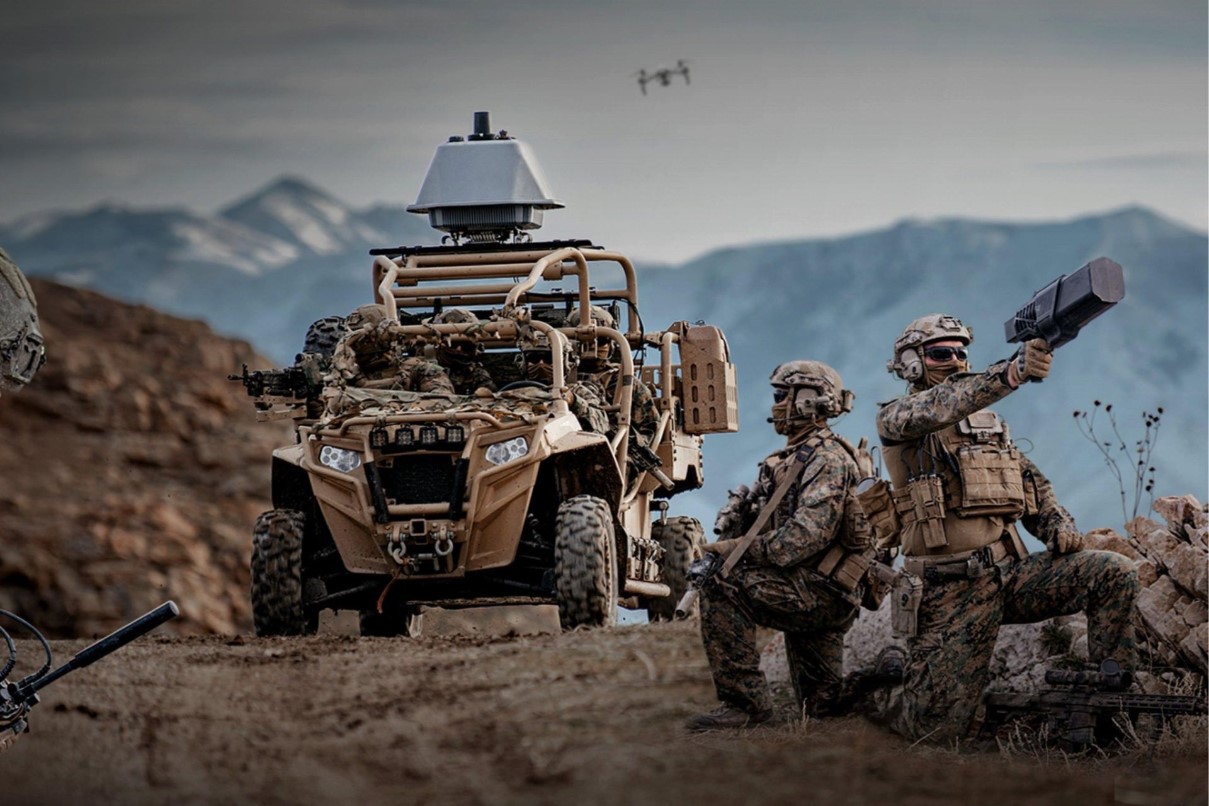
The Fractl system, developed by Melbourne-based AIM Defence, is a portable high-energy laser designed for counter-drone operations. The suitcase-sized, battery-operated platform is capable of tracking objects as small as a 10-cent coin moving at speeds exceeding 100 kilometres per hour at a distance of one kilometre.
The system uses artificial intelligence-based tracking with positional accuracy of plus or minus one millimetre. It offers multiple engagement modes, including:
- Sensor dazzling at distances up to three kilometres
- Sensor disabling at distances up to two kilometres
- Hard-kill capability at distances up to one kilometre
Fractl is capable of burning through steel and engaging both individual drones and coordinated swarms. The system has previously been supplied to the ADF under earlier contracts and is now being further developed for expanded operational deployment.
Corvo Strike Interceptor Drone
The Corvo Strike, developed by SYPAQ Systems, is a quadcopter interceptor drone designed to track, target, and destroy larger uncrewed aerial vehicles. The system is intended to counter threats comparable to Iranian-designed Shahed-class drones used in contemporary conflicts.
The platform builds on SYPAQ’s Corvo family of low-cost uncrewed air vehicles, which have previously been used for logistics and precision payload delivery. The Strike variant introduces a kinetic interception capability, including a warhead designed to physically neutralise airborne targets.
Integration Under LAND 156 Program
Both the Fractl and Corvo Strike systems will be integrated into the ADF’s broader counter-UAS architecture under the LAND 156 program. This program provides a layered and distributed defensive framework that includes detection, tracking, identification, and neutralisation of aerial threats.
ASCA will oversee the integration of these systems into existing command and control networks to ensure interoperability with other defence assets and sensors.
Broader Investment Framework
The $7 billion counter-drone allocation forms part of a wider commitment of up to $22 billion over the next decade for drone, counter-drone, and autonomous systems under the 2026 Integrated Investment Program. This represents a significant increase from the $13 billion allocated for similar capabilities in the 2024 Integrated Investment Program.
The expanded funding reflects a strategic shift toward “small, smart, and many” systems aimed at improving the cost-effectiveness of air defence. Government assessments indicate that traditional missile-based interception can cost several million dollars per engagement, while emerging counter-drone systems are expected to operate at significantly lower per-engagement costs, potentially in the tens of thousands of dollars.
Strategic Rationale and Statements
Minister Pat Conroy stated that the investment is intended to strengthen Australia’s defence industry and ensure operational readiness against evolving aerial threats.
“The Albanese Government is building a stronger and more resilient defence industry through investing in Australian innovation, skills and disruptive technologies that will keep Australians safe,” he said. “Record investment in drone and counter-drone capabilities will ensure Australia can respond to threats to its security.”
He added that lessons from ongoing conflicts demonstrate the increasing use of uncrewed systems, making sovereign counter-drone capability essential for detection, assessment, and response.
Major General Hugh Meggitt, Head of ASCA, stated that Mission Syracuse will leverage Australian expertise in kinetic and directed-energy technologies to “find, fix, track, target and engage” uncrewed aerial vehicles.
Domestic and Operational Applications
In addition to battlefield applications, the government indicated that counter-drone systems developed under this program may also be deployed to protect domestic critical infrastructure and major events, including the 2032 Brisbane Olympics.
The government has emphasised that both Fractl and Corvo Strike are Australian-designed and manufactured systems, supporting national supply chain resilience and reducing reliance on foreign defence technologies.
——— End of Article ———