PARIS — March 25, 2026 : Arabelle Solutions, a subsidiary of the EDF Group, has been selected by Naval Group to design and manufacture the propulsion turbines for France’s next-generation nuclear-powered aircraft carrier, France Libre. The vessel will replace the current flagship Charles de Gaulle and is scheduled to enter service with the French Navy in 2038.
The contract forms a central component of the Porte-Avions de Nouvelle Génération (PANG) programme and secures a fully domestic industrial supply chain for the carrier’s high-power nuclear propulsion system, reinforcing France’s long-standing policy of strategic autonomy in defence manufacturing.
Industrial Scope and Contract Details
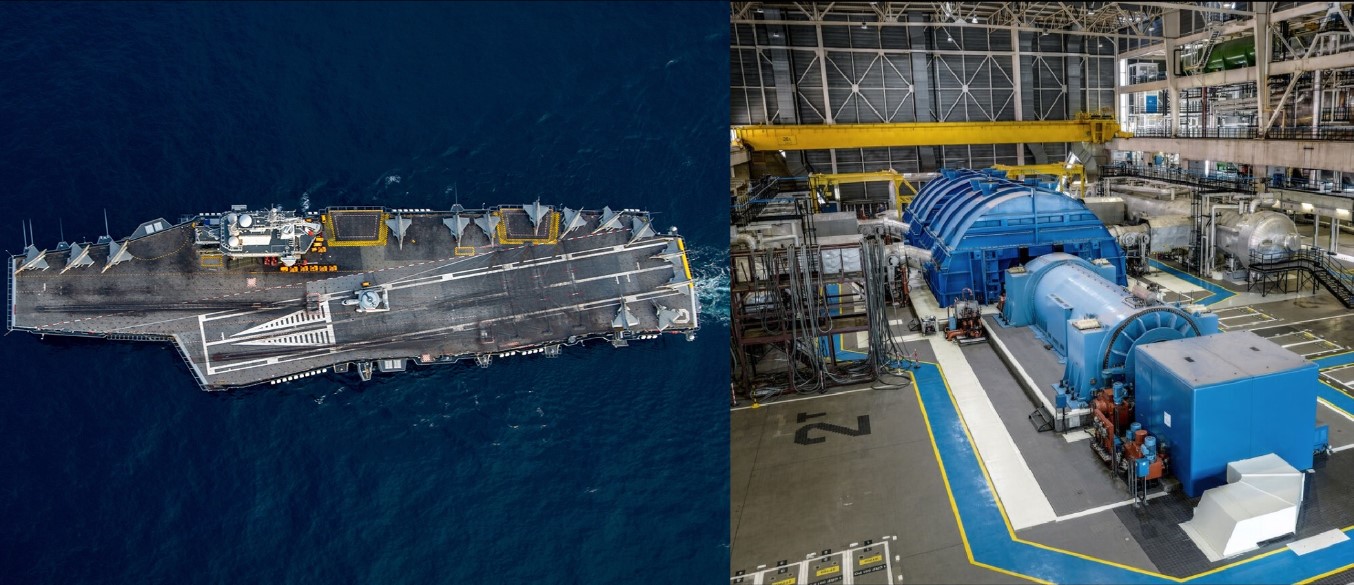
Under the agreement, Arabelle Solutions will deliver critical elements of the ship’s propulsion architecture. The scope includes the design, manufacturing, and delivery of four steam turbines along with their associated speed control systems, as well as four high-speed moisture separator reheaters (MSRs). These systems are essential for converting nuclear-generated steam into mechanical energy to drive the carrier’s propulsion shafts.
All equipment is scheduled for delivery by 2030, aligning with the broader programme timeline that targets sea trials beginning in 2036. Manufacturing activities will be carried out at the company’s established industrial facilities in Belfort and La Courneuve.
The selection of Arabelle Solutions consolidates French industrial capabilities in nuclear propulsion. The turbine technology, historically associated with Alstom and later General Electric’s steam power division, returned to French ownership following EDF’s acquisition of Arabelle assets in 2024. The company currently supports steam turbine and generator systems used in approximately one-third of the world’s nuclear power plants.
Catherine Cornand, Chief Executive Officer of Arabelle Solutions, stated that the programme reflects continuity in the company’s role in supporting the French Navy, following its earlier contribution to the propulsion system of Charles de Gaulle.
Programme Structure and Industrial Participation
The France Libre programme is managed by MO Porte-Avions, a joint venture between Naval Group and Chantiers de l’Atlantique. The project also involves TechnicAtome, which is responsible for the design and integration of the nuclear reactors.
The programme is expected to involve approximately 800 suppliers and support up to 14,000 jobs across France. More than 90 percent of procurement is planned to be sourced domestically, further strengthening national industrial capacity in naval and nuclear engineering sectors. The total estimated cost of the aircraft carrier is approximately €10 billion.
Design and Technical Specifications
The France Libre represents a significant increase in size and capability compared to its predecessor. The carrier will measure approximately 310 metres in length, with a beam of 90 metres, and will displace around 80,000 tonnes at full load—nearly double the displacement of the 42,000-ton Charles de Gaulle.
Propulsion will be provided by two TechnicAtome K22 pressurised water reactors, each generating approximately 220 megawatts of thermal power. The reactors will support three shaft lines, enabling a maximum speed of approximately 27 knots while providing extended endurance and operational range.
The ship is designed for a service life of 40 to 50 years and will incorporate modern digital systems for ship management, combat operations, and maintenance.
Aviation Systems and Air Wing
The flight deck, covering approximately 17,200 square metres, will be equipped with three Electromagnetic Aircraft Launch Systems (EMALS) and three Advanced Arresting Gear (AAG) systems. These technologies are being procured from the United States through a Foreign Military Sales (FMS) arrangement and will enable the launch and recovery of a broader range of aircraft, including heavier and future platforms.
The carrier is designed to operate an air wing of approximately 30 combat aircraft. Initial operations will feature the Dassault Rafale M in its F5 configuration, with a planned transition to the Next Generation Fighter (NGF) being developed under the Future Combat Air System (FCAS) programme.
In addition to fighter aircraft, the air wing will include up to three Northrop Grumman E-2D Advanced Hawkeye airborne early warning aircraft, up to six NH90 Caïman helicopters, and provisions for unmanned aerial vehicles, including future unmanned combat aerial systems.
The ship will also incorporate two side elevators with a lifting capacity of 40 tonnes each and munitions storage designed to sustain high-intensity operations for more than seven days. Daily sortie generation is projected to reach approximately 60 sorties under high-tempo operational conditions. The total complement, including the air wing, is expected to be around 2,000 personnel.
Construction Timeline
Construction of the hull is scheduled to begin at the Chantiers de l’Atlantique shipyard in Saint-Nazaire between 2031 and 2032. Following initial assembly, the vessel will be transferred to the naval base in Toulon around 2035 for final outfitting and nuclear fuel loading.
Sea trials are planned for 2036, leading to formal commissioning into service in 2038.
Strategic Context
The naming of the carrier as France Libre, announced by President Emmanuel Macron on March 18, 2026, departs from the traditional French practice of naming aircraft carriers after historical figures and instead references the Free France movement of the Second World War.
The programme ensures continuity in France’s capability to operate a nuclear-powered aircraft carrier, maintaining its position as the only European country with such a capability. It also supports the long-term operational readiness of the French Navy’s carrier strike group and aligns with broader national initiatives in nuclear energy and defence, including the ongoing development of EPR2 nuclear reactors.
The selection of Arabelle Solutions ensures that critical propulsion technologies remain under national control while sustaining expertise in naval nuclear propulsion for future generations of French naval platforms.
——— End of Article ———