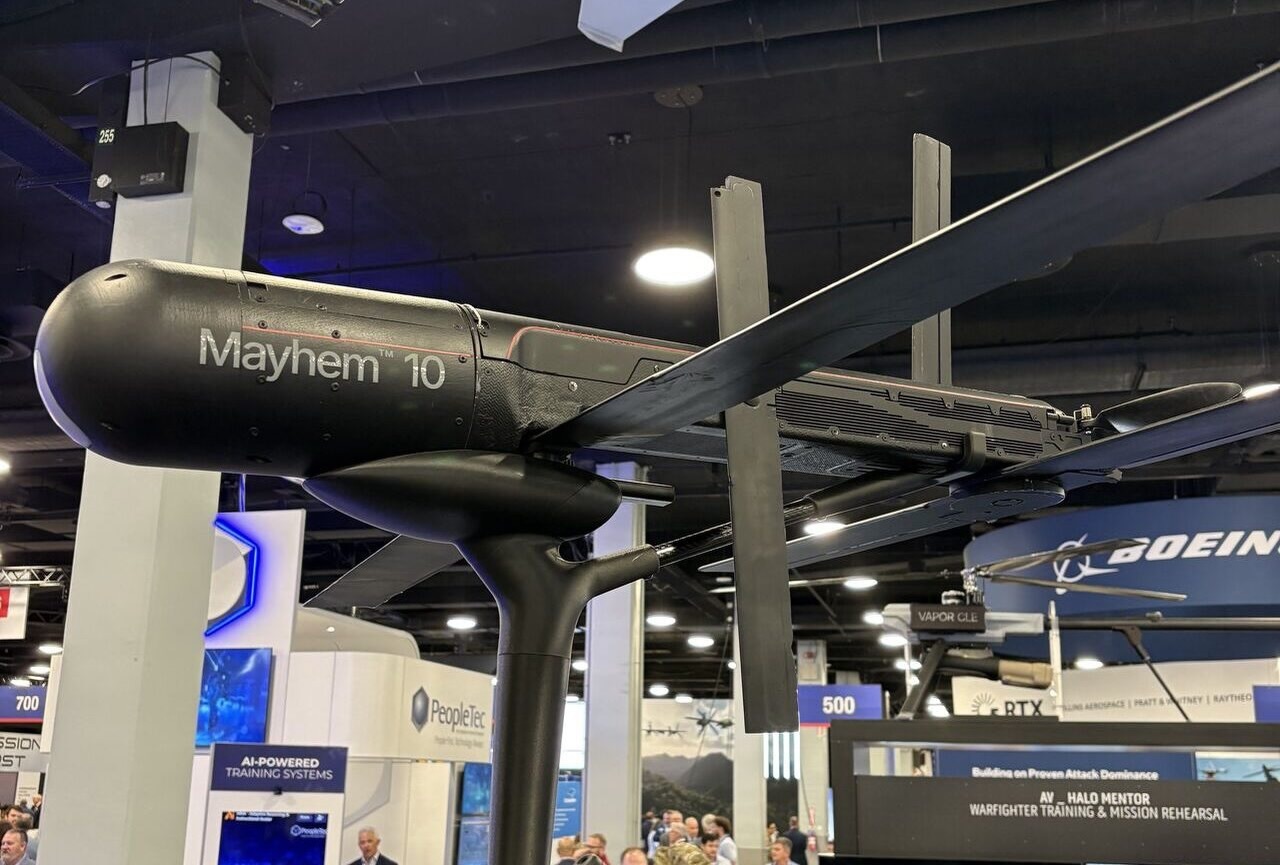
ARLINGTON, Va. — April 19, 2026 : On April 15, 2026, AeroVironment, Inc. (NASDAQ: AVAV) has introduced the MAYHEM 10, a new autonomous multi-role launched effects system designed for deployment across air, ground, and maritime platforms. The system was formally unveiled during the 2026 Army Aviation Association of America (AAAA) Mission Solutions Summit.
The MAYHEM 10 builds on the company’s two-decade experience with its Switchblade family of loitering munitions and is classified as a Group 2 unmanned system. It is engineered to operate in contested environments and supports both independent and coordinated operations.
Modular Payload and Mission Flexibility
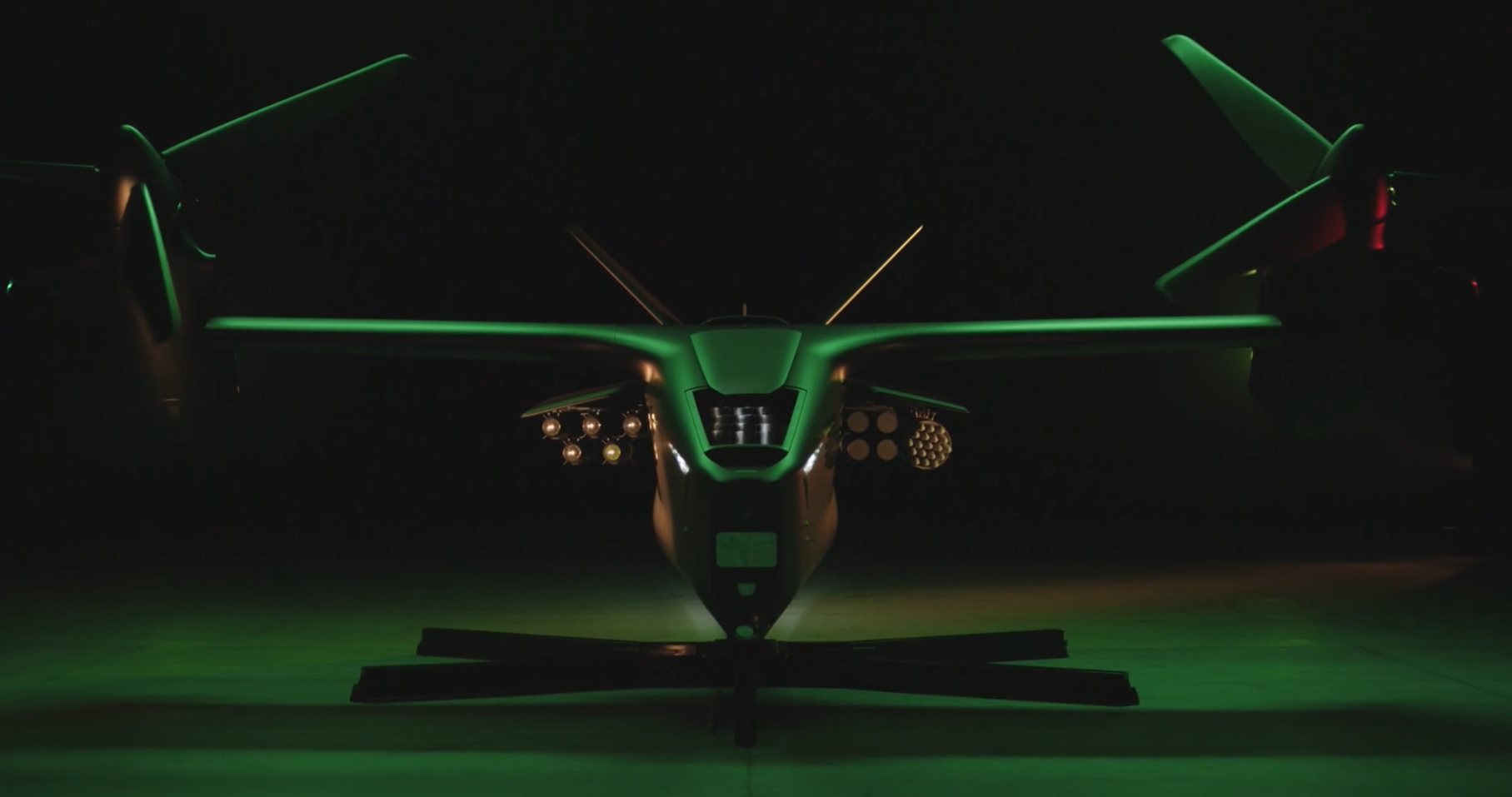
The platform features a modular payload capacity of up to 10 pounds (4.5 kilograms), enabling rapid reconfiguration between lethal and non-lethal roles without requiring changes to launch systems. Supported mission profiles include intelligence, surveillance, and reconnaissance (ISR), electronic warfare, communications relay, and deception or decoy operations, alongside precision strike capabilities. The system can also integrate munitions such as a Javelin multi-purpose warhead for anti-armor applications.
A removable forward payload bay supports a Modular Open Systems Approach (MOSA), allowing integration of third-party payloads and facilitating future upgrades.
Performance and Deployment Characteristics
The MAYHEM 10 has an all-up round (AUR) weight of 42 pounds (19 kilograms), with a base system weight of approximately 29 pounds. It offers an operational range exceeding 100 kilometers and an endurance of more than 50 minutes. The system cruises at 80 mph (128 km/h) and can reach a dash speed of 120 mph (193 km/h).
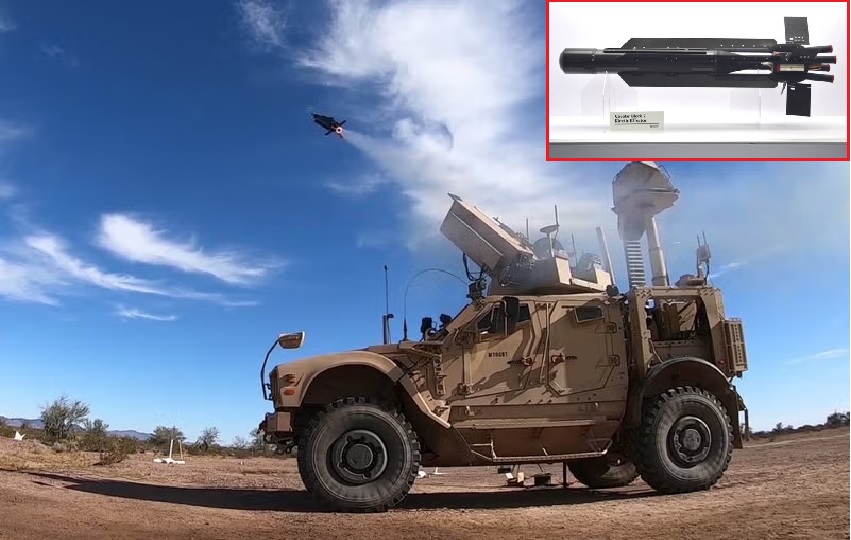
Designed for rapid deployment, the system can be assembled and made launch-ready in under five minutes. It uses a self-contained launcher compatible with dismounted, vehicle-mounted, mobile ground, and air-launched configurations, extending operational standoff distances beyond 100 kilometers.
Autonomy, Navigation, and Networking
The system incorporates an AI-driven processor that enables continued operation in GPS-denied, jammed, or spoofed environments. Navigation and communications rely on M-Code GPS and a Silvus datalink, while a MANET secure mesh network provides command-and-control connectivity over distances of 25 to 40 kilometers.
Operators control the system using AeroVironment’s Tomahawk Grip controller and AV_Halo COMMAND interface, supporting distributed and scalable operations.
Swarm Operations and System Integration
The MAYHEM 10 is designed to operate either individually or as part of coordinated swarms. This capability allows multiple systems to execute simultaneous effects, including surveillance, electronic warfare, and strike missions across a distributed battlespace. AeroVironment collaborated with Applied Intuition to develop and test the platform’s autonomy and swarming functions.
According to Wahid Nawabi, Chairman, President, and Chief Executive Officer of AeroVironment, the system integrates advanced autonomy and multi-domain payload capabilities to support operations in contested environments while reducing risk to personnel and high-value assets.
Brian Young, Senior Vice President of Loitering Munitions, stated that the system enables collaborative employment at scale, allowing operators to expand coverage and execute synchronized effects without increasing force concentration.
Production and Acquisition Outlook
AeroVironment has not disclosed the unit cost of the MAYHEM 10. The company confirmed it is establishing a dedicated production line with a capacity of up to 2,000 units per year and is initiating low-rate initial production (LRIP). Materials are being procured in advance of expected demand, although no formal orders have been announced.
The U.S. Army has been identified as the primary intended customer, with the U.S. Marine Corps also expected to be a potential operator.
The MAYHEM 10 is the first system in AeroVironment’s new MAYHEM family of launched effects, positioned as part of the company’s broader portfolio supporting multi-domain autonomous operations.
——— End of Article ———