Space News -
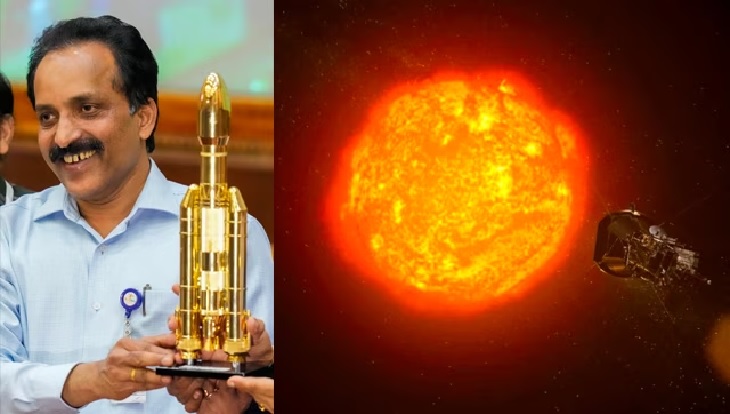
India inaugural solar mission, Aditya-L1, is poised to reach its
destination at Lagrange Point 1 in the early weeks of January 2024,
according to Union Minister Jitendra Singh announcement on Monday.
Concurrently,
the Indian Space Research Organisation (ISRO) is gearing up to execute a
series of tests in the coming year associated with Gaganyaan, India
first human space mission, as revealed by Singh.
The minister
attributed these advancements to the transformation of India space
sector, now open to private entities. This policy shift has sparked an
enthusiastic response from startups and industries, creating a conducive
environment for breakthroughs.
Jitendra Singh emphasized the
impact of unlocking space technology, enabling the general public to
witness monumental space events like the launches of Chandrayaan-3 and
Aditya. The Aditya launch alone drew the attention of more than 10,000
spectators.
In the ongoing financial year from April to December
2023, India has seen investments exceeding Rs 1,000 crore in space
startups, showcasing the sector robust growth, according to Singh.
Highlighting
the remarkable evolution, he noted that from a single space startup
four years ago, India now boasts almost 190 private space startups, with
many of the early ones transitioning into successful entrepreneurs.
Singh
acknowledged the delayed initiation of the Indian Space program, which
started around the time other leading spacefaring nations were racing to
the Moon. However, he underscored that India is now at the forefront of
global space exploration, with Chandrayaan-3 capturing worldwide
anticipation with its landing in the unexplored South Polar region of
the Moon.
During Prime Minister Modi visit to Washington, Singh
mentioned that NASA proposed sending an Indian astronaut to the
International Space Station (ISS), a prospect likely to materialize next
year. He emphasized the pervasive impact of space research, asserting
that it now touches every person life in some way.
Singh drew
parallels with NASA, noting that a significant portion of its projects
relies on private funding. He disclosed plans for the Anusandhan
National Research Foundation (NRF), set to receive about 70% funding
from non-government sources, paving the way for a public-private
partnership (PPP) model in India science and technology objectives.
To
achieve global standards, Singh stressed the importance of aligning
parameters and yardsticks with global benchmarks. The minister sees the
NRF as instrumental in propelling India toward its scientific and
technological goals through a collaborative and globally competitive
approach.
——— End of Article ———