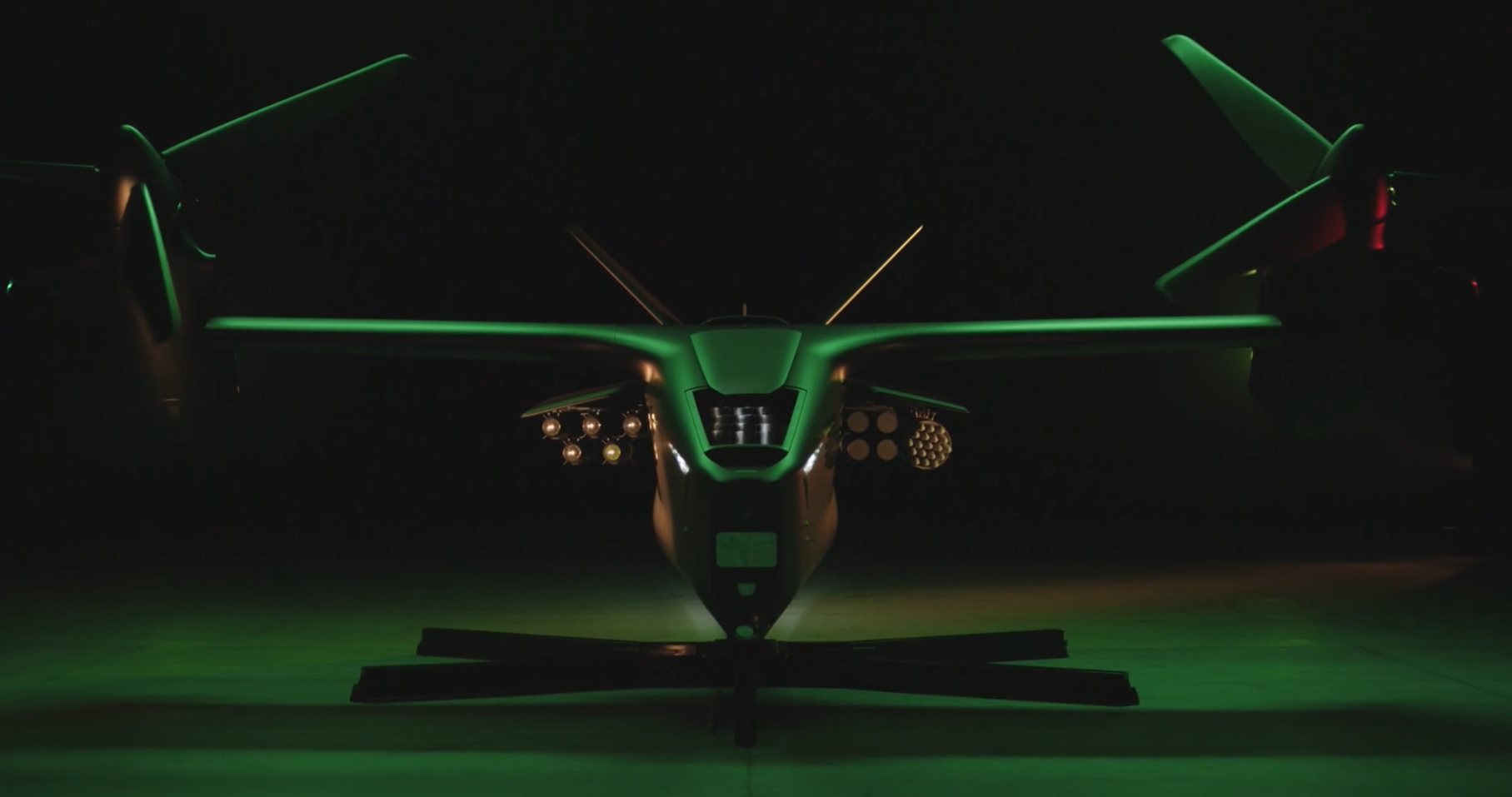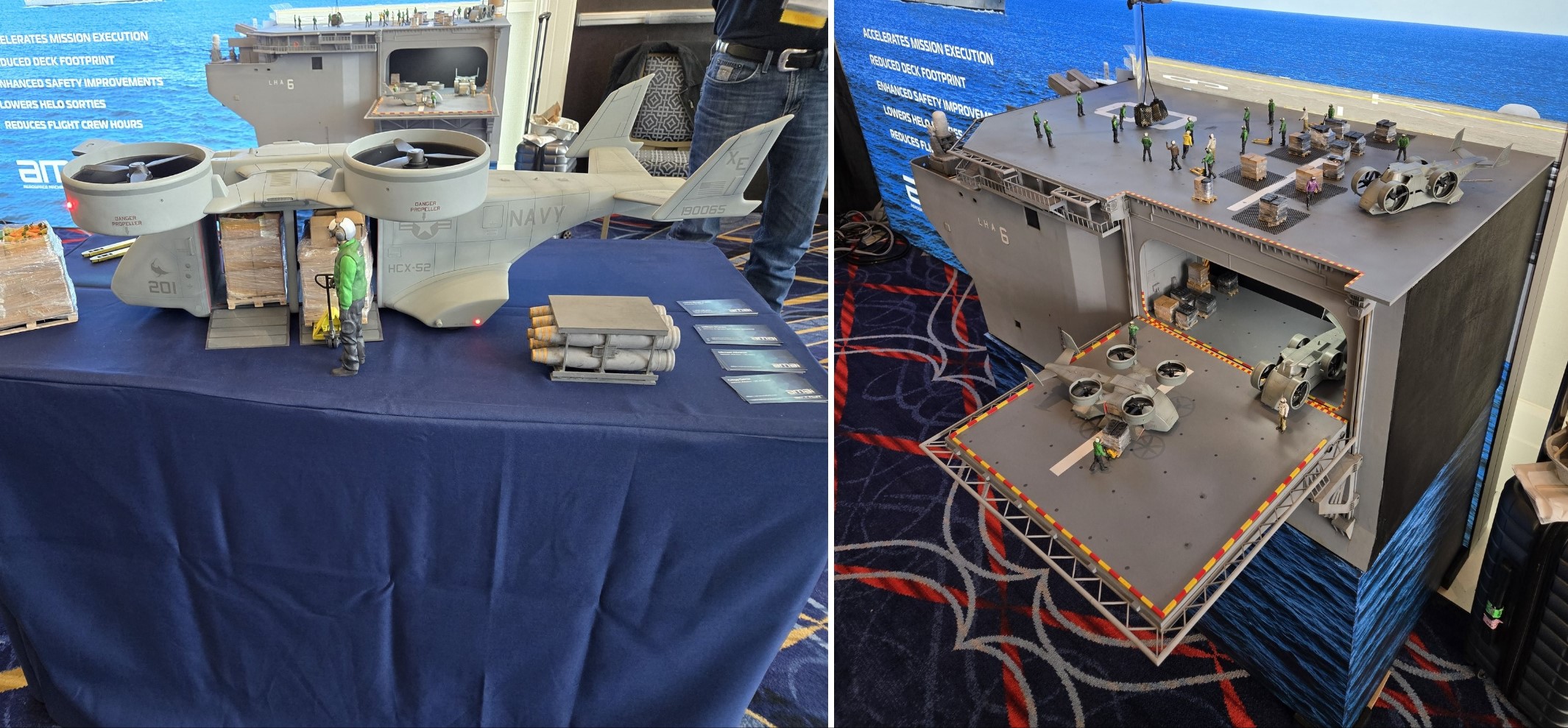
NATIONAL HARBOR, Md., — April 23, 2026 : Tacoma-based Aerospace Machining & Assembly Inc. (AMAI) has unveiled a new autonomous maritime logistics concept, the Marlin HCX-52, during the Sea-Air-Space 2026 held on April 19–22, 2026 at the Gaylord National Resort & Convention Center. The platform is designed as a fully autonomous, all-electric Vertical Replenishment (VERTREP) system intended to support future logistics requirements of the United States Navy.
The Marlin HCX-52 is positioned as a purpose-built unmanned cargo delivery platform capable of conducting ship-to-ship and ship-to-shore resupply missions without onboard crew. According to information released at the company’s exhibition booth, the system is being engineered to carry a payload of 2,500 to 3,000 pounds (1,133 to 1,360 kilograms). This capacity is aligned with standard military logistics requirements, including palletized cargo, provisions, and essential munitions.
Transition in Naval Logistics Operations
Current VERTREP operations within the U.S. Navy rely primarily on manned rotary-wing aircraft such as the MH-60S Knighthawk. These platforms are routinely used to transfer supplies between combat logistics force vessels and carrier strike groups. While effective, their use for routine cargo movement allocates high-value aviation assets to non-combat roles and exposes aircrew to operational risks.
The Marlin HCX-52 concept reflects a shift toward automated logistics systems. By removing onboard personnel requirements, the platform is intended to reduce operational risk while enabling more efficient allocation of manned aviation resources for missions such as anti-submarine warfare, search and rescue, and combat support.
Platform Design and Technical Overview
AMAI has outlined key baseline characteristics of the Marlin HCX-52, although the system remains at the concept stage. The platform is designed for maritime durability and operational compatibility with existing naval infrastructure.
- Platform Name: Marlin HCX-52
- Manufacturer: Aerospace Machining & Assembly Inc. (AMAI)
- Primary Role: Vertical Replenishment (VERTREP) and Maritime Logistics
- Operation: Fully Autonomous
- Propulsion System: All-Electric
- Target Payload Capacity: 2,500–3,000 lbs (1,133–1,360 kg)
- Target Operator: United States Navy
The system incorporates corrosion-resistant materials to support long-term deployment in maritime environments. According to the company, the design does not require structural modifications to existing naval vessels, enabling integration with current shipboard logistics procedures.
Electric Propulsion and Operational Efficiency
The Marlin HCX-52 utilizes an all-electric propulsion architecture. This approach is intended to reduce acoustic and thermal signatures compared to turbine-powered helicopters, which may have implications for operations in contested or sensitive environments. Additionally, electric propulsion is expected to lower maintenance requirements and reduce operating costs per flight hour.
The absence of traditional aviation fuel requirements for the platform itself also simplifies aspects of the logistics chain, although broader operational integration details have not been disclosed.
Development Background and Industry Collaboration
The platform has been developed by a team with more than 80 years of combined commercial aviation experience, working in collaboration with industry partners. AMAI stated that the design emphasizes reliability, sustainability, and compatibility with naval operational requirements.
Bill Boyer Jr., CEO and Founder of Aerospace Machining & Assembly Inc., stated during the event that the system is intended to improve safety and cost efficiency in vertical replenishment operations by enabling autonomous cargo transfer between vessels.
Strategic and Operational Context
The introduction of the Marlin HCX-52 aligns with the U.S. Navy’s broader adoption of Distributed Maritime Operations (DMO), a concept focused on dispersing fleet elements across wider operational areas. This approach increases the importance of flexible and resilient logistics networks capable of sustaining distributed forces.
Unmanned VERTREP platforms are being evaluated as potential enablers for maintaining supply lines without exposing personnel to risk, particularly in contested environments. The Marlin concept places AMAI within a growing segment of defense industry efforts focused on autonomous logistics and electric vertical takeoff and landing (eVTOL) systems.
Potential Commercial Applications
Although primarily developed for military use, AMAI has identified potential commercial applications for the Marlin HCX-52. These include cargo transport in geographically constrained regions, such as the Hawaiian Islands, where conventional aviation access may be limited. The platform’s vertical lift capability and autonomous operation could support logistics in remote or infrastructure-limited environments.
Program Status and Future Outlook
The Marlin HCX-52 is currently presented as a concept model. No detailed information has been released regarding system range, endurance, dimensions, or specific power system architecture. Additionally, AMAI has not disclosed development timelines, prototype testing schedules, acquisition costs, or any procurement contracts associated with the platform.
As of April 2026, the system remains in the conceptual phase, with further evaluation and development expected before any operational deployment decisions by the U.S. Navy or other potential users.
——— End of Article ———