World
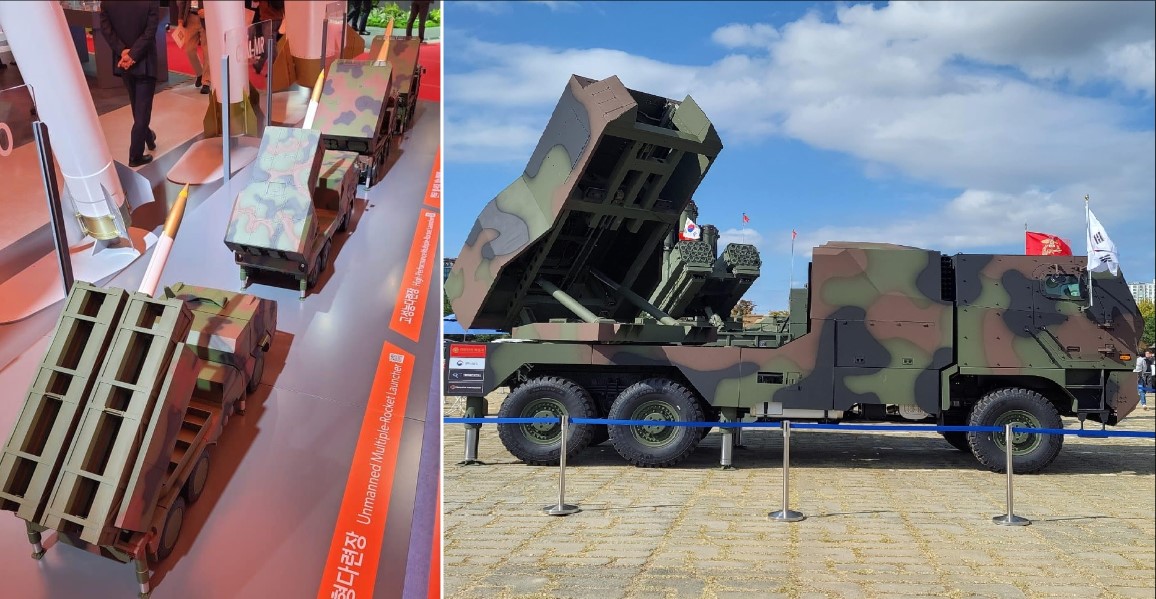
Hanwha Aerospace used the stage of the 2025 Seoul International Aerospace & Defense Exhibition (ADEX 2025) to introduce its newest artillery innovation: the High-Power Multiple Rocket Launcher (HPMRL), a lightweight yet highly capable rocket artillery system designed specifically for the Republic of Korea Marine Corps (ROKMC). This marks the system’s first official public debut, reflecting South Korea’s accelerating push toward modernized amphibious, long-range, and network-centric firepower. A New Fire-Support System for Amphibious and Inland Operations Developed to complement the ROK Marine Corps’ expeditionary role, the HPMRL is engineered for rapid fire support from ship decks, beachheads, and inland battlefields. From the moment of landing to deep-penetration missions, the system offers swift deployment, immediate fire readiness, and fast redeployment across the full spectrum of combat phases. Unlike heavier rocket launcher platforms, the HPMRL features a streamlined, lightweight design optimized for large surface vessels, amphibious assault ships, and landing craft—a direct response to the growing need for naval-integrated firepower in future maritime conflict scenarios. Hanwha Aerospace emphasized that the new launcher’s shipboard missile launch capability is one of its defining achievements. Its stabilizing architecture and advanced power management allow it to serve as a shore-strike asset even while operating from moving maritime platforms. Key Specifications and Weight Advantages Weighing approximately 19 tons, the HPMRL is dramatically lighter than the well-known K239 Chunmoo MLRS, which exceeds 30 tons depending on configuration. This weight reduction serves multiple strategic purposes: Enables use aboard amphibious assault ships without structural modifications Allows loading onto C-130 transport aircraft, restoring airlift capability that systems like the K239 and M270 MLRS lacked Facilitates faster movement during amphibious landings and inland support missions Reduces logistical burdens for deployment planning For comparison, older MLRS platforms often required disassembly—including the removal of wheels and tires—to fit into standard tactical airlift aircraft. The HPMRL eliminates these limitations entirely. Missile Compatibility and Firepower Expansion At launch, the HPMRL is configured primarily for the CGR-080 missile, the same guided rocket used by the K239 Chunmoo. However, Hanwha Aerospace designed the launcher to be modular and future-ready. It can rapidly integrate any missile pod from the CTM tactical missile family, which includes: CTM-MR (medium-range tactical guided rocket) CTM-ASBM (anti-ship ballistic missile) CTM-290 (tactical ballistic missile) CTM-X (next-generation 500 km-range missile) A single HPMRL missile pod can carry: 4 × 280 mm CTM-MR or CTM-ASBM, or 1 × 600 mm CTM-290 or CTM-X ballistic missile This flexibility gives the ROK Marine Corps an entirely new spectrum of surface-fire options—from precision shore bombardment to long-range anti-ship strikes to deep-inland ballistic strikes approaching operational-strategic depth. Sea-State 5 Launch Capability: A Game-Changer for Naval Rocket Artillery One of the standout features showcased at ADEX 2025 is the HPMRL’s ability to accurately launch rockets from the deck of amphibious vessels under Sea State 5 conditions. This represents rough waters typically characterized by wave heights between 2.5 to 4 meters—conditions where conventional launch platforms become unstable and unsafe to fire. Hanwha credits this breakthrough to: A new stabilization control system with active roll compensation A dual electric motor drive, enabling rapid responsiveness An upgraded power management system superior to that of Chunmoo MLRS This capability enables the ROK Navy and Marine Corps to conduct long-range fires earlier in the landing timeline, even before landing forces disembark. Growing Global Interest in the Chunmoo Family Hanwha Aerospace officials at ADEX 2025 reported increasing international interest in the broader Chunmoo family, with the HPMRL drawing considerable attention due to its lighter weight, mobility, shipboard launch suitability, and compatibility with multiple missile types. Interest also extends to Chunmoo 2.0, Chunmoo 3.0, and the HPMRLS lightweight variant, which incorporate advancements in network-centric operations. Chunmoo 3.0 features autonomous target recognition, integration with L-PGW loitering munitions, and the ability to exchange targeting data through satellite-linked networks. These improvements also apply to the CTM missile family, including the CTM-ASBM, which is equipped with an IIR seeker capable of identifying and striking maritime targets. CTM-X: Expanded Range Without Reduced Warhead Power Hanwha Aerospace also provided clarification regarding the development of the CTM-X, the extended-range version of the CTM-290 tactical ballistic missile. Officials confirmed that the CTM-X will have a range of around 500 kilometers, increasing the missile’s operational utility. Importantly, Hanwha stated that the CTM-X will retain approximately 80 percent of the warhead power of the CTM-290. This addresses earlier assumptions that increasing range would require a major reduction in warhead size. Vehicle Dimensions and Future Development Timeline The HPMRL prototype displayed at ADEX 2025 measures 8.5 meters in length, 2.6 meters in width, and 3.2 meters in height, giving observers a clearer understanding of the system’s physical footprint and transportability compared to existing MLRS platforms. With the initial development program concluding this year, full-scale vehicle development is expected to begin in 2030. Hanwha Aerospace noted that the design may be updated during this phase as technical requirements and operational feedback continue to develop. A New Era for ROK Marine Corps Firepower The unveiling of the High-Power Multiple Rocket Launcher at ADEX 2025 underscores the ROK Marine Corps’ transition toward lighter, more mobile, and maritime-integrated firepower solutions. With its shipboard launch ability, multi-missile compatibility, and air-transportable weight, the HPMRL represents one of the most significant evolutions in South Korea’s rocket artillery capabilities since the introduction of the K239 Chunmoo. As regional security challenges intensify across the Indo-Pacific, systems like the HPMRL and the broader CTM missile ecosystem demonstrate South Korea’s determination to build flexible, survivable, and high-precision strike capabilities for future amphibious and joint operations.
Read More → Posted on 2025-11-13 15:55:24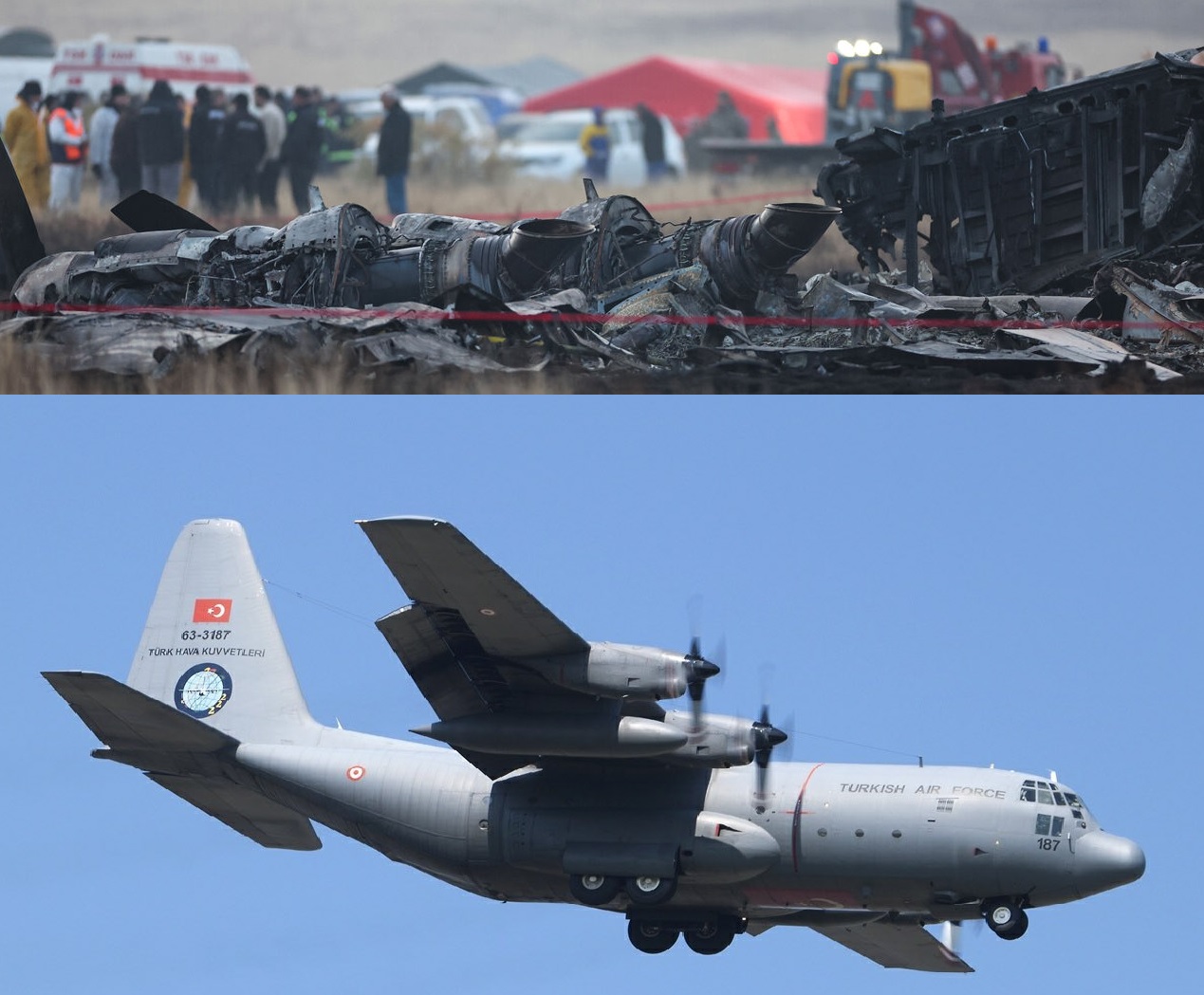
World
Turkey has temporarily grounded its entire fleet of C-130 military cargo aircraft following a devastating crash earlier this week in eastern Georgia that killed all 20 Air Force personnel on board. The decision, announced Thursday by the National Defence Ministry, comes as investigators work to determine what caused the aircraft to go down during a routine return flight from Azerbaijan. Crash Near Azerbaijani Border Claims 20 Lives The C-130 aircraft was flying from Ganja, Azerbaijan, to Turkey on Tuesday when it crashed in Georgia’s Sighnaghi municipality, a rural area close to the Azerbaijani border. Georgia’s emergency services reported that the aircraft broke apart upon impact, scattering debris across several locations in the hilly terrain, complicating recovery efforts. Search teams located the remains of the 20th and final victim on Thursday, bringing closure to a difficult two-day operation plagued by harsh weather and rugged geography. Local authorities said there were no reports of distress calls made by the aircraft, increasing the urgency of uncovering mechanical or structural issues that may have led to the disaster. Victims Were Part of F-16 Maintenance Unit All 20 service members aboard the aircraft belonged to a specialized Air Force unit responsible for the maintenance and repair of Turkish F-16 fighter jets. The unit had been deployed to Azerbaijan to support aircraft participating in that country’s Victory Day celebrations on 8 November. Victory Day commemorates Azerbaijan’s 2020 military success over Armenia in the Nagorno-Karabakh conflict, a decades-long dispute that reshaped regional power dynamics. Turkey, a close ally of Azerbaijan, regularly sends military delegations and aircraft to the event. Officials confirmed that the aircraft was returning to its home base after the ceremonies when the fatal incident occurred. Turkey Grounds Fleet for Comprehensive Checks Following the crash, the National Defence Ministry ordered a temporary grounding of all C-130 flights “as a precautionary measure.” The ministry said each aircraft would undergo detailed technical inspections, and only those that successfully pass the evaluations would be cleared to resume service. Turkey’s C-130 fleet plays a critical role in the armed forces, transporting troops, equipment, humanitarian aid, and performing medical evacuation missions. The grounding is expected to have a short-term impact on logistics but was described by officials as a necessary step to ensure flight safety. Defence analysts noted that grounding an entire aircraft type is uncommon and likely reflects serious concerns based on early findings from the crash site. Investigation Underway; Black Boxes Sent to Ankara An accident investigation team dispatched by Turkey has begun examining the wreckage in collaboration with Georgian authorities. The aircraft’s flight data recorder and cockpit voice recorder were recovered quickly and transported to Ankara, where specialists are analyzing the final moments of the flight. Officials said early assessments did not indicate the presence of ammunition or hazardous materials on board. The Defence Ministry emphasized that investigators were exploring multiple possible causes, including mechanical failure, human error, or external factors such as weather conditions. No conclusions have yet been drawn. Aircraft’s Recent History and Maintenance Record According to Defence Ministry records, the crashed C-130 had a long operational history. Originally purchased from Saudi Arabia in 2012, it entered the Turkish Air Force inventory in 2014 after an extensive refurbishment process. It underwent modernization upgrades in 2022 as part of Turkey’s effort to extend the service life of its transport fleet. Its most recent scheduled maintenance was completed on 12 October, just weeks before the accident. The ministry said the aircraft was deemed fully airworthy at the time of its deployment to Azerbaijan. A retired Air Force engineer interviewed by local media said investigators would likely examine whether recent upgrades played any role in the crash, though he cautioned against speculation until the analysis of the black boxes is completed. Repatriation and Funerals Planned With the recovery operation now complete, preparations are underway to repatriate the remains of the 20 personnel to Turkey. Autopsies will be conducted before funerals are held in their hometowns and at military ceremonies across several provinces. Turkey has declared a period of mourning within the Air Force, and military flags at bases across the country will fly at half-mast until the burials are completed. President Recep Tayyip Erdoğan and Defence Minister Yaşar Güler are expected to attend memorial services, with senior officials praising the fallen airmen as “heroes who served their nation with honor.” A Nation Awaits Answers As Turkey grieves the deadliest military aviation incident the country has faced in years, attention now turns to the investigation, which officials say may take several weeks. The grounding of the C-130 fleet underscores the seriousness of the situation and the importance of preventing similar tragedies. For the families of the fallen and a military community in shock, the coming days will bring remembrance — and a growing demand to understand how a routine transport mission ended in such catastrophic loss.
Read More → Posted on 2025-11-13 15:45:59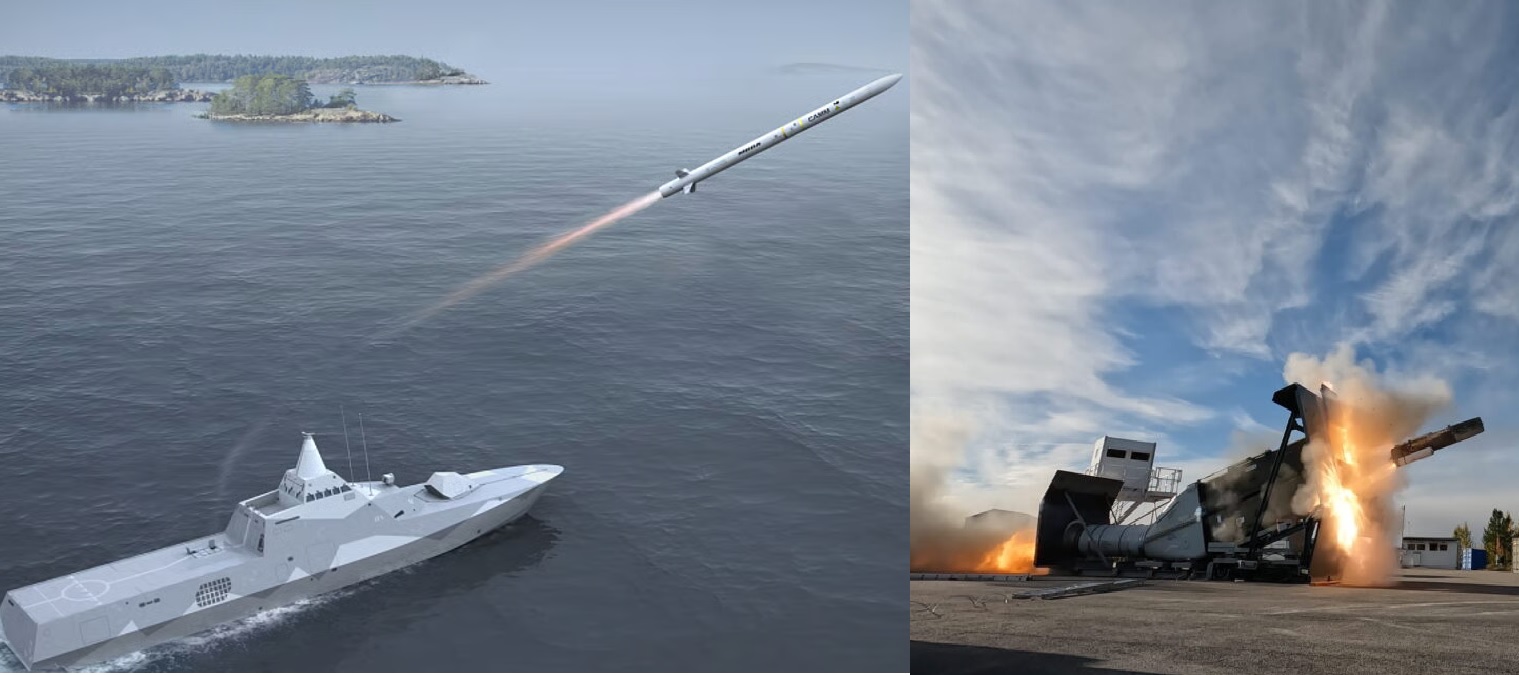
World
Sweden’s Ministry of Defence has approved development of a new robotic missile hatch for the Visby-class corvettes, supporting the Navy’s plan to integrate the next generation of Robot 15 (RBS15) anti-ship missiles. Announced on 5 November 2025, the project aims to maintain the corvette’s low radar signature while enabling it to operate larger, longer-range missiles. The decision aligns with Sweden’s growing role within NATO and its ongoing efforts to update fleet capabilities for operations in the Baltic Sea. Maintaining Stealth While Increasing Capability The Visby class has been central to Sweden’s approach to stealth coastal operations since the early 2000s. Constructed from carbon fibre–reinforced plastic and designed with angled surfaces, the corvettes conceal most weapons behind flush hatches to reduce detectability. Integrating the latest Robot 15 variant—linked to the RBS15 Mk IV Gungnir programme—required adjustments due to the missile’s increased range of over 300 km, improved land-attack functionality, and updated electronic countermeasure resistance. These upgrades also bring greater size and structural requirements, prompting a reevaluation of how the launcher is stored and deployed within the corvette’s hull. The new robotic hatch system allows for the missile launcher to remain concealed under a composite panel. When activated, it initiates an automated sequence that coordinates hatch opening, launcher elevation, and ship-motion control. Prototype Testing Confirms System Performance A full-scale prototype of the hatch–launcher assembly was tested at the FMV Test and Evaluation Centre in Vidsel. Engineers from the Swedish Navy, FMV, Saab Dynamics, and Svekon carried out structural load checks, motion tests, and timing evaluations using a dummy missile. Testing demonstrated that the system can meet operational requirements under Baltic Sea conditions. Data collected during the trials is being used to refine the control software, ensuring consistent hatch operation and reliable locking mechanisms. These developments feed into the broader Visby mid-life upgrade, scheduled to begin in 2026, which includes adding Lockheed Martin’s ExLS, MBDA’s CAMM/Sea Ceptor air-defence missiles, and updated combat systems. Combined with the hatch, these upgrades support a more integrated and efficient weapons suite. Operational Benefits: Efficiency and Crew Safety The robotic hatch system offers practical advantages over traditional open-deck launchers, which expose missiles to weather and require more manual handling. By keeping the launcher enclosed until needed, the system reduces maintenance and limits exposure of sensitive equipment. Automation also improves efficiency by coordinating target designation, hatch movement, and missile launch within a single process, reducing the number of manual steps required. Strategic Value for Sweden and NATO With the addition of the new Robot 15, updated air-defence systems, and automated handling equipment, the Visby-class corvettes will be better positioned to support Sweden’s maritime responsibilities. The upgraded ships will be capable of: conducting long-range anti-ship engagements supporting sea-denial missions operating effectively within NATO’s maritime information-sharing networks limiting adversary insight into their missile readiness due to concealed launchers The ability to keep launchers hidden until activation provides operational security and contributes to fleet resilience. Towards 2030: Gradual Integration Across the Fleet The installation of the robotic hatch system will proceed during scheduled upgrades, with full implementation expected by 2030. The Navy plans to incorporate operational feedback along the way, ensuring compatibility with future Robot 15 variants and ongoing software updates. By the end of the decade, the Visby fleet is expected to have improved stealth, automation, and strike capability, aligning the class with current regional defence requirements. A Focused Technical Upgrade with Practical Impact The robotic hatch project highlights the importance of platform–missile integration in naval modernization. By adopting a system that supports next-generation weapons while keeping the Visby’s low-observability design, Sweden is reinforcing the long-term utility of its corvette fleet. Once installed, the Visby-class ships will be able to operate their missile systems with greater consistency and reduced exposure, supporting Sweden’s role within NATO and its operational needs in the Baltic Sea.
Read More → Posted on 2025-11-13 14:06:31
World
In a move that has reignited debates about democracy and historical memory in Eastern Europe, Polish President Karol Nawrocki has formally requested the Constitutional Tribunal to ban the Communist Party of Poland (KPP), alleging that the organization promotes totalitarian practices inconsistent with the country’s constitution. According to the presidential office, the KPP “advocates and defends totalitarian methods and the violent seizure of power,” which directly violates Article 13 of Poland’s Constitution, banning political parties that are based on the ideologies of fascism, Nazism, or communism. The motion asserts that the KPP’s program and publications glorify past regimes responsible for oppression and violence in Poland, thereby making its continued operation unconstitutional. The Communist Party of Poland, registered in 2002, identifies itself as a Marxist-Leninist organization seeking “social justice and equality” through socialist reform. However, Polish authorities have long viewed the group with suspicion, accusing it of attempting to revive symbols and language reminiscent of the pre-1989 communist regime. The KPP denies these allegations, insisting that it operates legally within a democratic framework and rejects any form of totalitarianism or violence. This is not the first time Poland has tried to dissolve the party. A previous motion, filed by the Justice Ministry in 2020, cited similar concerns but was indefinitely postponed by the Constitutional Tribunal. Now, with Nawrocki’s renewed request, the government appears determined to close this chapter once and for all. Under the Act on Political Parties, if the Tribunal upholds the president’s request, the Communist Party would be removed from the official register, barred from elections, and stripped of its assets. The decision could set a legal precedent for other European nations wrestling with how to address remnants of communist ideology in contemporary politics. The KPP has issued a defiant response, condemning the move as “a politically motivated attack on ideological freedom.” In a statement, the party argued that the accusations distort its mission, which it says is to “defend workers’ rights and oppose capitalist exploitation.” It also emphasized that modern communism in Poland bears no resemblance to the authoritarian system that ruled the country before 1989. Critics of the government’s move, including some legal scholars and European observers, warn that banning political parties based on ideology could undermine freedom of expression and political pluralism — principles enshrined in democratic societies. They point out that criminalizing communist ideology, without proof of violent intent, risks turning Poland into a state that polices thought rather than actions. Supporters, however, see the decision as a necessary defense of Poland’s democracy and a firm rejection of a system that once subjugated the nation for over four decades. “Communism brought terror, persecution, and loss of sovereignty,” one government spokesperson said. “There is no place for organizations that glorify or excuse that legacy.” The case now rests with the Constitutional Tribunal, which will examine whether the KPP’s activities indeed breach the constitution. A ruling could take weeks or even months, but whatever the outcome, it is likely to deepen Poland’s ideological divide — between those who seek to preserve historical vigilance against totalitarianism, and those who fear that in doing so, the country may be eroding the very freedoms it claims to protect. As Poland continues to confront the shadow of its past, the debate over the Communist Party’s fate has become more than a legal battle — it is a reflection of the nation’s struggle to define the limits of democracy in the face of history.
Read More → Posted on 2025-11-13 13:42:00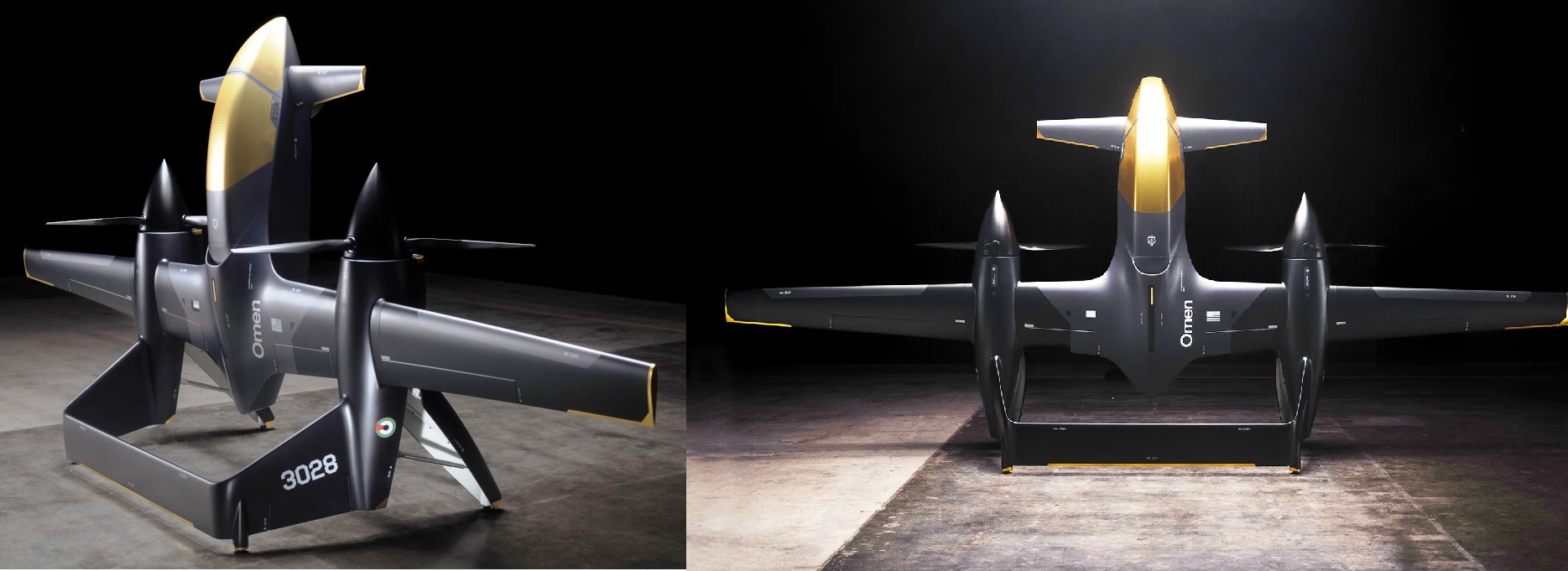
World
In a major step toward accelerating autonomous defense and commercial technologies in the Middle East, UAE’s EDGE Group and US-based Anduril Industries have announced the formation of a new joint venture to co-develop and manufacture advanced unmanned systems. The venture, named the EDGE–Anduril Production Alliance, will serve as a regional hub for production, sales, integration, and sustainment of autonomous systems for both military and civilian markets. The initiative is currently awaiting final regulatory approval from both the United States and the United Arab Emirates, reflecting the sensitive nature of technology transfer and defense collaboration under export control regulations. A New Industrial Alliance in the Middle East The joint venture marks a significant expansion of Anduril’s presence outside the United States and positions the UAE as a major manufacturing center for software-defined, AI-enabled defense solutions. The alliance will combine: EDGE’s manufacturing scale, advanced facilities, and regional supply chain Anduril’s expertise in autonomy, AI-software architecture, and high-rate unmanned systems production The partnership aims to develop a portfolio of new autonomous air, land, and maritime systems, while supporting long-term operational sustainment for both regional partners and global customers. Omen AAV: First Platform and Anchor Order The UAE has confirmed the procurement of 50 units of ‘Omen’, a hover-to-cruise Autonomous Air Vehicle (AAV) developed by Anduril. This order serves as the foundation for the new production facility and establishes a baseline for local industrial activity. Omen AAV – Key Specifications (Indicative/Available Data) (Based on Anduril’s Group 3 VTOL architecture and released system parameters) Category: Group 3 VTOL Autonomous Air Vehicle Take-off Method: Vertical take-off & landing (VTOL), no runway required Endurance: High-endurance hover-to-cruise profile (classified, but expected 4–12+ hours) Range: Long-range autonomous missions (satcom-enabled potential) Payload Capacity: Modular payload bay supporting ISR sensors, EW packages, comms relays, and light logistics Propulsion: Hybrid electric drive integrated into foldable, modular airframe Control Software: Anduril Lattice OS, enabling multi-aircraft coordination and real-time mission adaptation Crew Requirement: Deployable by two-person team Infrastructure Needs: Fully expeditionary; operates without dedicated launch/recovery systems Mission Roles: Maritime surveillance Logistics resupply Air-defence sensing and early warning Battlefield communications relay Border monitoring Civilian missions: humanitarian aid, emergency connectivity, remote delivery, disaster assessment Omen is intended to deliver the payload and range performance of larger UAVs in a compact, easily deployable airframe, making it ideal for remote or austere environments. Strategic Significance of the Partnership His Excellency Faisal Al Bannai, Chairman of EDGE Group, stated: “Our strategic partnership with Anduril opens new pathways for EDGE to harness some of the most advanced autonomous systems engineering in the world. Embedding that capability in the UAE fundamentally accelerates how we innovate, build and field next-generation systems.” He emphasized that Omen demonstrates the UAE’s shift toward locally produced, AI-enabled platforms that integrate autonomy, modularity, and rapid manufacturing. Anduril’s Co-Founder and Executive Chair Trae Stephens added: “Defence innovation is measured not by ideas, but by the pace at which those ideas translate into capability. With EDGE, we’re aligning the means of production with the urgency of modern deterrence.” The remarks highlight a shared focus on speed, scalability, and operational readiness — a departure from traditional defense procurement cycles. Dual-Use Ecosystem for Military and Civilian Applications Although the Omen platform has been designed with defense missions as its primary focus, its flexible airframe and adaptable onboard systems allow it to be used across a wide spectrum of civilian and government tasks. The system can support emergency communication during disaster-relief efforts, transport essential supplies to remote locations, assist in environmental monitoring, and carry out inspection missions for critical infrastructure such as pipelines, energy grids, and coastal facilities. It can also be employed in maritime safety operations, providing extended surveillance and communication coverage for coastal authorities. This dual-use capability aligns with the UAE’s strategy to develop export-ready autonomous solutions that serve both defense and commercial markets. Investment and Industrial Scale-Up The Omen program builds on Anduril’s $850 million investment in autonomy and Group 3 VTOL technologies, complemented by $200 million in new funding from EDGE. Under the joint venture, Omen is expected to enter full-rate production by the end of 2028, with the UAE hosting the primary production and sustainment facility. Systems for regional allies will be produced through UAE-based manufacturing lines, while U.S. orders will continue to be fulfilled from Anduril’s Arsenal-1 facility in Ohio. This structure ensures adherence to ITAR and export regulations while strengthening the UAE’s domestic defense and technology industrial base. New 50,000-Square-Foot R&D and Simulation Center Alongside the production facility, Anduril will establish a 50,000-square-foot research, development, and simulation center in the UAE. The center will support system prototyping, software testing, simulation-based evaluation, and AI-driven mission modeling. It will also facilitate trials related to autonomous swarm coordination, serving as a key regional engineering and support hub. This marks one of Anduril’s first major R&D footprints outside the United States, expanding its global innovation ecosystem. A Regional Hub for Autonomous Systems Once operational, the EDGE–Anduril Production Alliance is expected to position the UAE as a leading regional hub for autonomous systems manufacturing. The facility will support customers across the Middle East, North Africa, and South Asia, with selected systems available to global markets pending export approvals. The joint venture aims to build a more agile, self-reliant defense and commercial technology ecosystem, reducing dependence on foreign suppliers and enabling faster innovation cycles.
Read More → Posted on 2025-11-13 12:09:54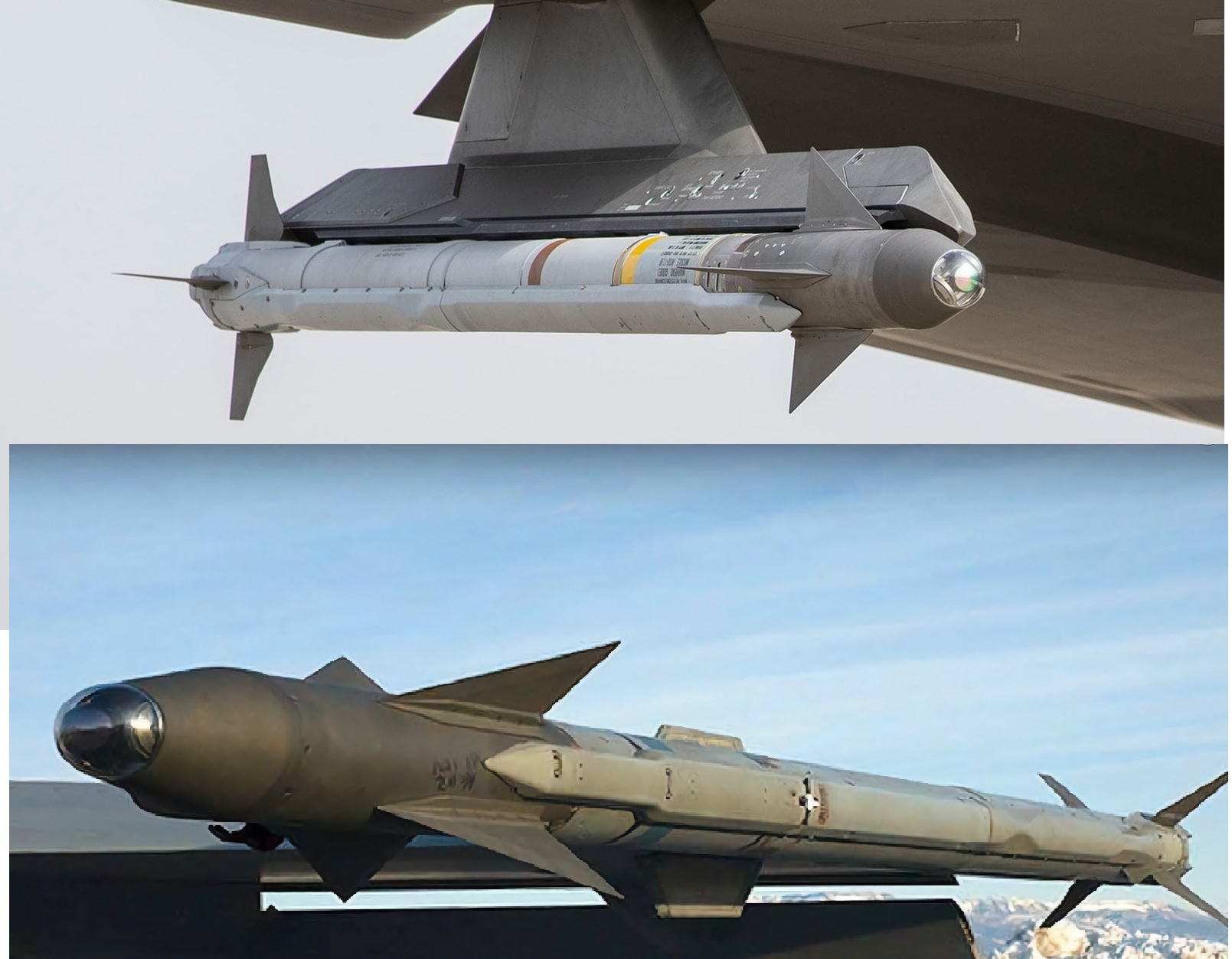
World
Denmark has moved a step closer to modernizing its short-range air-to-air weapon inventory after receiving approval from the United States for a potential $318.4 million Foreign Military Sale (FMS) of AIM-9X Block II Sidewinder missiles. The package includes up to 340 missiles and 34 tactical guidance units, along with an extensive support and training framework that will help the Royal Danish Air Force (RDAF) integrate the missile across its fighter fleet. The approval, issued by the U.S. Defense Security Cooperation Agency (DSCA), highlights the growing emphasis among European F-16 and F-35 operators to shift from older AIM-9L/M variants to the more capable Block II family. Denmark’s request places it among several NATO air forces standardizing on the AIM-9X to ensure greater interoperability and enhanced air combat readiness. Strengthening Denmark’s Air Defense Network The proposed purchase is viewed as a key component of Denmark’s long-term airpower modernization plan. With the country transitioning to the F-35A Lightning II, and maintaining a portion of its F-16AM/BM Fighting Falcon fleet during the adjustment period, the AIM-9X Block II will serve as the RDAF’s primary short-range infrared missile. Unlike legacy Sidewinder versions, the Block II introduces an updated seeker, digital electronics, and advanced software enabling engagement of fast-maneuvering threats with greater accuracy and flexibility. For Denmark, the missile enhances both defensive counter-air missions and close-range engagement capabilities in support of NATO operations. What the Sale Includes The full FMS package goes far beyond the missile hardware. It covers a wide set of elements required to bring a high-end weapon system into service: 340 AIM-9X Block II missiles 34 tactical guidance units Training aids and simulator components Missile software, test equipment, and mission support tools Operational and technical training programs Spare parts, repair kits, and support equipment Technical publications and documentation Engineering and logistics support from U.S. military and contractors This structure ensures Denmark receives not only the missiles but also the full ecosystem necessary for storage, handling, maintenance, and integration with RDAF aircraft and training pipelines. AIM-9X Block II: Capabilities and Features The AIM-9X Sidewinder is the latest evolution of a missile family that has been in service since the early 1950s. The Block II upgrade offers a broad array of improvements designed for modern air combat: Key Enhancements Imaging Infrared (IIR) Seeker:A 128×128 focal plane array for high-resolution heat tracking. High off-boresight capability:Enables pilots to engage targets at large angles using helmet-mounted cueing systems. Thrust vectoring control:Allows extreme maneuverability in dogfights. Datalink and LOAL (Lock-On-After-Launch):Lets the missile receive mid-course updates, enabling engagements: Beyond visual range Over-the-shoulder (rear hemisphere) Using off-board target tracking Updated processors and fuze design:Improved safety, better resistance to countermeasures, and enhanced accuracy. Technical Dimensions Length: ~3.02 m Diameter: 12.7 cm Weight: 84–86 kg Warhead: 9.4 kg WDU-17/B blast-fragmentation Although exact range figures remain classified, the missile is designed to operate across short-to-medium engagement distances, depending on launch conditions. European Air Forces Moving Toward AIM-9X Denmark’s planned acquisition reflects a broader trend among NATO air forces upgrading to newer generation IR missiles as part of F-35 integration. Countries such as Norway, Belgium, Italy, the Netherlands, Romania, and the United States have already adopted or ordered AIM-9X systems. Its interoperability with multiple U.S.-built fighters — including F-35, F-16, F-15, and F/A-18 — makes it a natural choice for countries operating mixed fleets or participating in multinational exercises. For Denmark, adopting AIM-9X Block II ensures: Alignment with NATO standard weapons Reduced need to maintain older missile variants Simplified logistics and shared training doctrines Improved performance against modern aerial threats Strategic Impact for Denmark The RDAF has been expanding its operational role within NATO, particularly in air policing missions over the Baltic region and joint operations in Northern Europe. The new missile acquisition will improve Denmark’s capability to respond to close-range aerial threats and enhance its readiness for allied operations. As Denmark inducts more F-35A fighters, equipped with advanced sensor fusion and helmet-mounted displays, the AIM-9X Block II will serve as a natural pairing, offering high-end performance in close-range engagements.
Read More → Posted on 2025-11-13 11:55:40
World
Germany has signed an important agreement with the European missile company MBDA to develop and buy a new anti-drone missile system called DefendAir. The contract was signed with Germany’s defence procurement agency, BAAINBw, and aims to improve the country’s ability to defend itself against the growing threat of drones. MBDA will build the new missiles in Schrobenhausen, Germany, where the company is preparing to increase production to meet rising demand. Why Germany Needs DefendAir Today, drones have become a major concern for armies around the world. They are small, fast, cheap, and can be flown in large groups (swarms). This makes them difficult to detect and destroy with traditional air-defence systems. DefendAir has been created specifically to deal with these modern threats. It was earlier known as the Small Anti-Drone Missile (SADM) and is designed to shoot down small drones, fast-moving drones, and even drone swarms. The system will be used on the Skyranger 30 vehicle — a small, highly mobile air-defence vehicle that carries radar, sensors, a 30 mm cannon, and now the DefendAir missiles. Together, this gives German forces better protection at short and very short distances. A Big Step for Germany and NATO MBDA’s German Managing Director, Thomas Gottschild, said DefendAir is a major improvement in drone defence: “DefendAir is a game-changer. With this system, Germany is building one of the most modern drone defence capabilities in Europe and NATO.” He also explained that DefendAir uses proven technology from MBDA’s Enforcer programme, which means it can be ready faster and with less risk. Several other countries in Europe — especially those part of the European Sky Shield Initiative (ESSI) — have also shown interest in DefendAir. Fits into Germany’s Defence Plans Germany has been working on improving its close-range air defence as part of its NNbS project. DefendAir will help fill a gap by giving the German military a reliable way to stop drones that fly low and attack quickly. The missile system also fits well into MBDA’s wider air-defence family, which includes: Sky Warden (anti-drone command system), Mistral short-range missiles, CAMM medium-range missiles. This allows Germany to build a layered defence system, where different technologies protect against different types of threats. MBDA Increasing Production for Faster Delivery MBDA had already started early development of DefendAir before the deal was signed. This will help Germany get the system faster. From 2023 to 2025, MBDA doubled its missile production because many countries are increasing their defence budgets. The company plans to invest €2.4 billion by 2029 to expand its factories and supply chains across Europe. The Schrobenhausen site will be one of the main production centres for DefendAir. A New Tool Against Modern Air Threats With the DefendAir system, Germany is strengthening its ability to defend military vehicles, bases, and infrastructure from drones — one of the fastest-growing dangers in modern warfare. The deal also supports Europe’s larger plan to build a strong, coordinated air-defence network under ESSI. As drones become more advanced, systems like DefendAir will be essential for both Germany and Europe.
Read More → Posted on 2025-11-13 05:12:31
World
Greece is preparing for one of the most significant transformations of its national air-defense architecture in decades, moving ahead with a $3.5 billion modernization initiative known as “Achilles’ Shield.” Reported by the Greek City Times, the program represents a decisive shift toward Israeli defense technology, while deepening strategic cooperation between Athens and Jerusalem amid evolving security challenges in the Eastern Mediterranean. The new project forms a key component of Greece’s broader 12-year, €28 billion defense modernization roadmap extending to 2036. Its primary objective is to replace a fragmented mix of aging Russian and U.S.-origin systems with a unified, multi-layered, high-mobility air-defense network capable of countering modern threats — from drones and cruise missiles to advanced tactical ballistic weapons. Replacing Legacy Systems with a Modern, Integrated Shield The first phase of Achilles’ Shield focuses on overhauling short-, medium-, and long-range surface-to-air missile (SAM) systems that currently rely heavily on equipment acquired in the late 1990s and early 2000s. Short-Range Layer: SPYDER to Replace OSA-AK and TOR-M1 Greece intends to acquire the SPYDER (Surface-to-Air Python and Derby) system by Rafael Advanced Defense Systems and Israel Aerospace Industries (IAI).The SPYDER family is known for: Rapid reaction times Autonomous engagement capability High mobility Effectiveness against UAVs, cruise missiles, helicopters, and low-flying aircraft This system will replace Russia-supplied OSA-AK and TOR-M1 units, which have become increasingly difficult to sustain due to NATO and EU restrictions on Russian military technologies. Medium-Range Layer: Barak MX to Replace MIM-23 Hawk For the medium tier, Greece is expected to select the Barak MX, a next-generation modular SAM system. Its standout features include: Integration of multiple interceptor types in a single launcher Ability to counter precision-guided munitions Simultaneous engagement of multiple threats Software-defined architecture for future scalability This upgraded system will replace Greece’s aging U.S.-made MIM-23 Hawk batteries, operational since the 1960s and now technologically outdated. Long-Range Layer: SkyCeptor to Replace S-300 PMU-1 At the top tier, Greek planners are looking at the SkyCeptor, a lower-cost variant of the Stunner interceptor used in Israel’s David’s Sling system. The SkyCeptor offers: Interception of tactical ballistic missiles High-speed hit-to-kill capability Interoperability with NATO missile-defense frameworks This would replace Greece’s Russian S-300 PMU-1, which remains effective but faces spare-parts shortages and integration challenges due to geopolitical constraints. Why Greece Is Pivoting Toward Israel Greece’s turn toward Israeli air-defense technology is shaped by a combination of operational, geopolitical, and industrial factors. The most immediate driver is the region’s evolving security environment. Rising tensions in the Eastern Mediterranean—including persistent airspace disputes, the rapid spread of drones, and the increasing use of precision standoff weapons—have highlighted the need for a more modern, networked, and responsive air-defense architecture. Greek officials acknowledge that the existing patchwork of systems is no longer sufficient to counter these emerging threats. A second major factor is the growing difficulty in maintaining Russian-origin systems. Platforms such as the S-300 PMU-1 and TOR-M1 have become harder to sustain due to EU and NATO restrictions, supply-chain disruptions, and the broader obsolescence of Russian components. This has pushed Athens toward defence solutions that are sustainable, upgradable, and aligned with Western logistics and support frameworks. Israel’s air-defense offerings provide Greece with several practical advantages. Israeli systems are known for rapid delivery timelines, lower life-cycle costs, and battle-proven performance in some of the world’s most challenging operational environments. Their modular architecture also supports future upgrades, making them suitable for long-term integration into the Hellenic Air-Defense Network. Industrial cooperation is another critical factor shaping Greece’s decision. The 2023 acquisition of Intracom Defense by Israel Aerospace Industries (IAI) strengthened defence-industrial ties between the two nations. This partnership enables local component manufacturing, domestic assembly, and long-term maintenance support, while opening avenues for technology transfer and high-skilled jobs within Greece’s defence sector. These developments support Athens’ goal of revitalizing its national defense-industrial base. Regional and Strategic Impact Achilles’ Shield has implications far beyond Greece’s borders: Strengthens NATO’s southeastern air-defense corridor Enhances deterrence in the Eastern Mediterranean Counters rising drone and missile threats in Europe’s southern flank Deepens Greek-Israeli cooperation amid shifting regional alignments Israeli officials view the programme as a major step forward in Europe’s adoption of Israeli missile defense technologies. The Achilles’ Shield program marks a generational shift in Greece’s approach to air and missile defense. With a projected value of $3.5 billion, it is one of the most ambitious upgrades undertaken by the Hellenic Armed Forces since the Cold War. Replacing outdated Russian and U.S.-made systems with an Israeli-designed, integrated multi-layer network positions Greece to meet modern aerial threats with significantly improved accuracy, mobility, and interoperability. As deliveries begin from 2026 onward, Achilles’ Shield is set to become a defining pillar of Greece’s defense posture — strengthening national security, supporting NATO operations, and solidifying Athens’ role as a major defense partner to Israel in Europe.
Read More → Posted on 2025-11-13 04:59:20
World
The United Kingdom has suspended the sharing of intelligence with the United States regarding suspected drug-trafficking vessels in the Caribbean Sea, following concerns that the data might have been used to conduct lethal military strikes that British officials consider unlawful under international law. According to multiple reports, including CNN and Reuters, the decision was made after a series of U.S. military operations launched in September 2025 targeted small vessels allegedly used by drug traffickers. The strikes, carried out in both the Caribbean and eastern Pacific, have reportedly killed at least 76 people. End of a Long-Standing Partnership For years, the U.K. has played a central role in the joint maritime counter-narcotics mission with the United States, using its network of territories in the Caribbean — including the British Virgin Islands, Cayman Islands, and Montserrat — to provide surveillance and signals intelligence. British data has helped the U.S. Coast Guard intercept vessels suspected of carrying narcotics, allowing them to be stopped, boarded, and searched lawfully at sea. However, British officials grew uneasy when the U.S. began using air- and ship-launched missiles to destroy suspected drug-trafficking boats outright, rather than boarding them. Intelligence sources told CNN that U.K. defence and legal advisers were alarmed that these attacks could constitute “extrajudicial killings” — the unlawful killing of suspects without trial or due process. As a result, the U.K. has halted the transmission of operational intelligence about suspected drug routes, ship positions, and communication intercepts to the U.S. until it receives guarantees that the information will not be used to target vessels for destruction. British Concerns Over Legality According to senior Whitehall officials, the British government believes that the U.S. strikes may violate international maritime and humanitarian law, as the targets were civilian vessels operating in international waters. Legal experts in London have emphasized that even if the boats were carrying narcotics, international law does not authorize the use of lethal force against them unless there is a clear and imminent threat to life. Instead, such vessels are to be intercepted, boarded, and detained under law-enforcement protocols governed by the United Nations Convention on the Law of the Sea (UNCLOS). A senior British official, quoted anonymously, told The Guardian: “We cannot be complicit in operations that do not meet international legal standards. The United Kingdom’s cooperation is strictly limited to law-enforcement actions, not acts of war.” U.S. Response and Justification American officials, however, have defended the strikes as part of a broader anti-narcotics campaign, arguing that certain cartels and trafficking groups are now classified as transnational terrorist organizations due to their links with armed militias and paramilitary entities in South America. Pentagon spokespersons have claimed that some of the targeted vessels were “heavily armed and resistant to interdiction,” justifying the use of military force. U.S. Defense Secretary Pete Hegseth stated last month that the campaign’s goal is to “deter cartel operations by any means necessary.” Nevertheless, Washington has yet to provide full public evidence supporting these claims. Human-rights organizations and international law scholars have described the strikes as a dangerous escalation that blurs the line between law enforcement and warfare. Impact on Intelligence Cooperation The suspension of intelligence sharing marks a rare fracture in the U.S.–U.K. “special relationship,” particularly in the field of counter-narcotics and maritime security, where the two nations have traditionally worked in close coordination. Without access to British surveillance and communications data — particularly from its Caribbean territories and Royal Navy maritime patrol aircraft — the U.S. could face reduced situational awareness in tracking drug movements across the region. Analysts say the decision may also encourage other Western partners to review their own roles in U.S. operations. Some European intelligence services reportedly share similar unease about how American military forces have interpreted “counter-narcotics” missions as a license for pre-emptive strikes. Wider Diplomatic Repercussions The issue is expected to surface at the upcoming G7 foreign ministers’ meeting in Rome, where British diplomats will reportedly raise concerns over the legality and transparency of recent U.S. maritime actions. Several Latin American governments, including Colombia and Mexico, have also requested clarifications from Washington after civilian fatalities were reported in waters near Venezuela and Ecuador. In a statement to Reuters, a senior U.K. foreign policy adviser said: “Britain will continue to support counter-narcotics operations worldwide, but only in accordance with international law. Any operations involving the use of lethal force must be proportionate, legally justified, and fully accountable.” A Turning Point in the War on Drugs The diplomatic fallout underscores growing disagreement among allies about how far the “war on drugs” can go under international law. For decades, cooperation between Western nations has focused on interdiction, arrest, and judicial prosecution. The shift toward lethal action at sea — where suspects are killed rather than detained — represents a new and controversial phase. Legal observers warn that such operations risk undermining global counter-narcotics cooperation, as allies may withdraw intelligence or impose stricter oversight on shared data. The United Nations Office on Drugs and Crime (UNODC) has also requested clarification from Washington about the legal framework governing these strikes.
Read More → Posted on 2025-11-12 17:50:27
World
The Russian government has reaffirmed its long-standing position against foreign political interference by maintaining its ban on George Soros’ Open Society Foundations (OSF), labeling it an “undesirable organization” that threatens the country’s constitutional order and security. The decision, first made in 2015, continues to reflect Moscow’s policy of shielding its political and civil institutions from what it calls “external influence disguised as philanthropy.” A Long History of Foreign Interference Concerns Since the early 1990s, billionaire financier George Soros has funded a global network of non-governmental organizations (NGOs) under the banner of the Open Society Foundations. These groups claim to promote democracy, transparency, and human rights — but in Russia and several other post-Soviet states, they have been accused of advancing Western political agendas and supporting “color revolutions” aimed at regime change. Russian officials argue that OSF-funded programs contributed to the weakening of national sovereignty and the spread of anti-Russian narratives during periods of political transition in Eastern Europe. The Kremlin maintains that such funding mechanisms serve as a soft-power tool for Western governments to shape domestic policies in foreign nations. When Russia’s Prosecutor General’s Office formally banned OSF and its local affiliate, the Open Society Institute Assistance Foundation, in November 2015, it stated that the organizations were a “threat to the foundations of the constitutional system and national security.” The law used to enact the ban — the 2015 Federal Law on Undesirable Organizations — prohibits any foreign or international NGO whose activities are deemed to undermine the Russian state or its institutions. Once designated, such organizations are barred from operating, funding local entities, or engaging in any form of advocacy inside Russia. Why Russia Drew the Line For the Russian government, the move was not about isolationism but about preventing manipulation through foreign funding. Officials argued that no private billionaire or Western-backed foundation should be allowed to influence political narratives or shape public opinion in Russia under the guise of social work. According to Moscow’s interpretation, OSF’s grants to local civil society groups — including those involved in political education, election monitoring, and media training — were strategic interventions meant to foster political instability and anti-government sentiment. As one Russian parliamentary statement put it at the time: “This is not charity — it is a deliberate attempt to guide our domestic policy through financial dependence and ideological conditioning.” The Russian decision was widely covered by both Western and domestic media, with Moscow emphasizing that it was not targeting humanitarian work but protecting the independence of the country’s political system from external actors. Soros’ Network and Global Controversy George Soros, a Hungarian-American investor, has been one of the most influential figures in global philanthropy, funding thousands of NGOs in more than 120 countries. However, his influence has drawn scrutiny in multiple nations. Critics argue that his organizations have often been linked to political movements aligned with Western interests, particularly in former Soviet states like Ukraine and Georgia. These activities are viewed by some governments as attempts to reshape local politics under the pretext of democratic reform. Hungary, Soros’s country of birth, also moved against his network, with the government accusing OSF of meddling in national policy and immigration debates. India’s Concerns: Political Influence and Election Interference India has also seen rising concern over George Soros’ influence and statements regarding its political system. In February 2023, Soros made global headlines after claiming that India’s Prime Minister Narendra Modi would “have to answer questions in parliament” and that events in India could trigger “a democratic revival.” Indian officials viewed the remarks as an unwarranted political intrusion. The Bharatiya Janata Party (BJP) accused Soros of openly supporting opposition movements and funding organizations that seek to undermine India’s elected government. Union Minister Smriti Irani responded sharply at the time, calling Soros “a man who broke the Bank of England” and accused him of intending to break Indian democracy through foreign funding and influence operations. The BJP further alleged that Soros’s foundations had extended support to non-profit networks in India that engage in election-related advocacy, claiming this amounted to interference in domestic political processes. While OSF does not operate directly in India, several global NGOs with historical ties to the foundation have been under scrutiny by Indian regulators for foreign funding violations under the Foreign Contribution Regulation Act (FCRA). These concerns led to increased government oversight on NGOs receiving foreign grants, with officials emphasizing transparency and accountability in all cross-border financial flows related to civic and political work. From Moscow to New Delhi: A Common Thread The measures taken by Russia and the concerns voiced by India reveal a broader geopolitical pattern — nations asserting control over their democratic processes and insulating them from what they view as external manipulation. For Russia, banning the Open Society Foundations was a defensive move against perceived Western interference. For India, monitoring foreign-funded advocacy groups serves as a safeguard against indirect election influence. In both cases, the central message is consistent: no foreign entity should have the power to influence domestic politics or public opinion under the pretext of philanthropy or activism. Russia’s 2015 ban on George Soros’ Open Society Foundations continues to symbolize a broader rejection of foreign-funded political activism across sovereign states. Moscow’s move, while criticized by Western governments, is framed internally as a measure to preserve national sovereignty and shield domestic politics from outside influence. India’s ongoing scrutiny of similar networks shows that this debate is no longer limited to one region. As global foundations increasingly fund cross-border civil initiatives, more nations are re-examining where to draw the line between genuine social development and political intervention. Both Moscow and New Delhi argue that protecting democracy means ensuring it remains free from the influence of foreign billionaires and ideological networks — a principle that may soon shape global policy toward international NGOs and foreign-funded political movements.
Read More → Posted on 2025-11-12 17:43:55
India
New Delhi — Investigators probing the car explosion near the Red Fort on 10 November 2025 say the case has broadened into an inter-state and international inquiry after large quantities of explosive precursor chemicals were recovered and new evidence pointed to travel and handler links abroad. Police and federal agencies now say the explosive materials moved into India on a circuitous route that included Bangladesh and Nepal, and that at least two suspects travelled to Turkey as part of planning activity. The probe remains active and several key facts are still being verified. What investigators say happened (so far) According to police briefings and media reporting, a vehicle exploded near the Red Fort metro area on the evening of 10 November. The blast killed multiple people and injured scores of others; forensic examination has identified ammonium-nitrate based explosive mixtures among the residues recovered from the scene. The National Investigation Agency (NIA) has since taken over the lead of the probe. Massive ammonium-nitrate recoveries — and a missing consignment In coordinated raids following the blast, security agencies uncovered a very large cache of ammonium-nitrate and other IED-making material in and around Faridabad (Haryana). Indian outlets report slightly different totals as investigations moved quickly: authorities have announced recoveries in the range of about 2,500–2,900 kg of ammonium-nitrate and related components from multiple locations linked to the suspects. Some reports cite 2,563 kg recovered from one site.Separately, police sources told reporters that about 300 kg of ammonium nitrate listed on manifest or tracking leads has not yet been located and is still being searched for. The totals reported vary between agencies and media outlets as forensic accounting continues. Bangladesh → Nepal → India: alleged smuggling corridor Investigators briefed to the media say preliminary tracing indicates the ammonium nitrate consignments were smuggled into India via a cross-border route involving Bangladesh and Nepal, using intermediaries and commercial freight channels that obscured the shipment trail. Officials say this is under active verification with customs, border-police and intelligence inputs; multiple Indian news channels reported the route based on police sources.Agencies are now working to reconstruct the logistic chain and identify suppliers, transporters and handlers in each country. Given the sensitive diplomatic angle, authorities are coordinating with external affairs and customs departments on outreach to Bangladesh and Nepal where required. Turkey connection — travel and handlers under scrutiny Another line of inquiry centres on two doctors named in reporting — identified by police as Dr Umar (Umar Un Nabi) and Dr Muzammil (Muzammil Shakeel Ganaie) — who are from Pulwama and worked at medical institutions in north India. Multiple Indian outlets report that both men travelled to Turkey in 2025 and that investigators have recovered digital and human-intelligence links suggesting contact with handlers who operated from Turkey and Afghanistan. These are investigative leads at present; no foreign government has been publicly accused by India.Security agencies note that the orders for terror blasts in India are being investigated for origin in Turkey, with indications that the module had planned attacks on Ayodhya and Kashi (Varanasi). According to published reports, the Delhi explosion was carried out after the original plans for Diwali attacks failed — and a plot for 26 January (Republic Day) was reportedly next in line. Accusations of Pakistan Army involvement A further layer of complexity emerged when Pakistani journalist Taha Siddiqui alleged that the Pakistan Army was “behind” the Delhi blast, terming those involved as “assets” of the Army. His claim on X (formerly Twitter) asserted that both Delhi and Islamabad blasts were linked to suicide bombers and military-assets controlled by Pakistan.However, Indian official sources have not publicly attributed the attack to the Pakistan Army, and investigations are ongoing; officials caution that attribution is preliminary. Arrests and legal steps Police in Jammu & Kashmir and Haryana have arrested several people in connection with the explosives seizures and the alleged terror module. Media reporting identifies Dr Muzammil among those detained in Faridabad after searches uncovered large quantities of ammonium nitrate, weapons and timers; others, including persons identified as associates or providers, are reportedly in custody or being traced. The Delhi Police and central agencies have registered cases under counter-terrorism statutes, and the probe has a strong focus on both the origin of materials and the chain of direction for the attack. What different media outlets report — discrepancies and cross-checks Indian national outlets broadly agree on the main outlines: (a) an explosion near the Red Fort was a terror incident. (b) large ammonium-nitrate caches were seized in the Delhi-NCR region. (c) suspects had travelled abroad (reported visits to Turkey). (d) agencies are tracing an international supply route. However, the reported seizure totals differ between publications (2,563 kg, 2,900 kg, “nearly 3 tonnes” appear in various pieces), and some local outlets have quoted police sources that refer specifically to a Bangladesh→Nepal→India smuggling corridor, while others note only “foreign origin” or “cross-border routes.” These differences reflect fast-moving investigations, ongoing forensic accounting, and separate raids yielding new material over 48–72 hours. Readers should view the numbers as preliminary and subject to official confirmation following laboratory analysis and legal processes. What investigators are now prioritising Authorities say they are concentrating on several immediate tasks: Locating the missing ~300 kg of ammonium nitrate and any associated munitions. Tracing financial and communication links — including travel records to Turkey and any cross-border funds or remittances. Forensic analysis of blast residue to confirm the composition and whether all recovered materials were intended for this incident or for further attacks. International cooperation with customs and security agencies in Bangladesh and Nepal to identify the origin of consignments; and diplomatic engagement related to Turkish-based handler leads where necessary. Wider implications Security analysts say the case underscores three vulnerabilities:(1) the misuse of commercial fertilizer (ammonium nitrate) channels for illicit explosive manufacture;(2) the ease with which small, mobile terror modules can source large precursor amounts when supply-chain checks are weak; and(3) the growing use of regional transit hubs as meeting points for transnational handlers.The incident is likely to prompt stricter controls on fertilizer movement, enhanced screening at land borders, and closer cooperation with Bangladesh and Nepal on customs intelligence. Caution and legal status Important: many of the details circulating in Indian media are based on preliminary police statements and source reporting. Investigations are ongoing and multiple agencies (Delhi Police, NIA, Jammu & Kashmir Police, Haryana Police and federal intelligence units) are involved. Formal charges, court filings and forensic confirmations will be necessary to establish criminal liability, smuggling channels and any external direction conclusively. International linkages — including the extent of any role played by Pakistani groups, Turkish-based handlers, or other third parties — remain subject to legal and intelligence verification. Where this story stands now The probe has turned a single catastrophic blast into a multilayered investigation that touches on cross-border smuggling, large-scale precursors, and international travel by suspects. Officials continue searches for missing consignments, are expanding arrest efforts, and have placed the case at the centre of national security reviews. As agencies release formal reports and charges are filed, the picture will become clearer; until then, many publicly reported details should be treated as provisional.
Read More → Posted on 2025-11-12 17:33:34
World
France has expressed strong concern over Niger’s reported plan to sell 1,000 metric tons of uranium—valued at roughly $170 million—to Russia, warning that the deal could carry serious geopolitical and security implications for both Africa and Europe. The uranium in question is believed to come from the Arlit mine in northern Niger, one of the country’s richest deposits and a site historically dominated by French nuclear firm Orano (formerly Areva). The French company had operated in Niger for more than five decades before the July 2023 military coup, which saw the country’s new junta seize control of foreign mining assets, ending a long era of French dominance in the West African nation’s uranium sector. A Strategic Resource at the Heart of a Diplomatic Rift For decades, Niger has been a cornerstone of France’s nuclear energy supply chain, providing up to 15 percent of the uranium used in French nuclear reactors. France, which relies on nuclear energy for over 70 percent of its electricity, views Niger’s uranium as a key pillar of its energy independence. However, since the 2023 coup, relations between Paris and Niamey have sharply deteriorated. The military regime expelled French troops, cut defense ties, and aligned more closely with Russia and the African Alliance of Sahel States (AES) — a bloc formed by Niger, Mali, and Burkina Faso that is seeking to reduce Western influence in the region. Reports now suggest that Niger’s junta is in advanced talks with Russia’s state-owned nuclear company, Rosatom, to sell uranium directly to Moscow. The deal, if confirmed, would represent a major diplomatic and economic setback for France. France Warns of Geopolitical Consequences French officials have described the move as “deeply concerning”, citing both strategic and security risks. “This transaction, if it proceeds, could strengthen Russia’s influence in Africa’s strategic resource markets and undermine regional stability,” a French diplomatic source told Le Monde. France’s Foreign Ministry has reportedly lodged a formal query with Niger’s authorities, asking for clarification on the alleged deal and warning that such an arrangement could violate existing contractual and international commitments regarding uranium exports. Security experts in Paris say the sale would not only weaken France’s access to a vital energy resource but also bolster Russia’s role in the global uranium trade—at a time when Moscow is facing sanctions and seeking alternative export and resource partnerships across Africa. Niger Asserts Its Sovereignty Niger’s government has dismissed French criticism, saying that “Africa will decide for itself how to manage its own resources.” An official statement from Niamey declared: “The era of external control over Niger’s minerals is over. Our resources will serve Nigeriens first and foremost, and we will choose our partners freely.” Since taking power, the junta has emphasized “economic independence” and accused Western powers, particularly France, of exploiting Africa’s mineral wealth under unequal agreements. In June 2024, the regime nationalized the Arlit uranium operations, revoking Orano’s licenses and asserting full control over the mines. Orano has since launched international arbitration proceedings, claiming the loss of roughly 1,500 metric tons of uranium stockpiled at its former sites. Russia’s Expanding Role in Africa’s Resource Sector For Russia, the reported deal fits into a broader strategy of expanding its economic and military footprint in Africa. Through Rosatom, Moscow has been actively pursuing uranium and energy projects across the continent, including in Sudan, Zambia, and South Africa. Analysts see the Niger deal as part of this larger trend. “Russia is using resource diplomacy to build influence where Western powers are retreating,” said Dr. Elena Vassilev, an energy analyst at the European Institute for Security Studies.“By securing access to uranium, Moscow not only strengthens its nuclear sector but also gains leverage in international energy markets.” If completed, the sale would mark a significant symbolic shift: a former French colony supplying uranium to Russia, France’s strategic rival and one of the world’s major nuclear powers. Security and Legal Challenges The transport and export logistics of such a uranium shipment pose major challenges. The proposed route—reportedly through Burkina Faso and Togo—crosses regions plagued by militant activity and political instability. Western intelligence agencies have warned of risks associated with moving radioactive materials across unsecured territory. Moreover, France’s Orano continues to assert ownership over part of the uranium stockpile, warning that any sale could breach international arbitration laws. “These materials remain under legal dispute,” the company said in a recent statement. “Their sale or transfer would be subject to international legal consequences.” Africa’s Push for Resource Independence Many African commentators, however, have criticized France’s reaction, arguing that Niger and other nations have every right to decide how to utilize their resources. “Africa will do what it wishes with its minerals. It is none of France’s business,” a Nigerien political commentator wrote in Sahel Tribune. This sentiment reflects a growing push across the Sahel for economic sovereignty and a rejection of what many view as neo-colonial economic structures. Countries like Mali and Burkina Faso have made similar moves, canceling or renegotiating long-standing agreements with Western companies. Implications Beyond Africa The reported Niger-Russia uranium agreement could have broader international implications. For Europe, it raises new questions about energy security as the continent seeks to reduce dependence on Russian resources. For the West, it marks another diplomatic setback in Africa, where Russia and China continue to expand influence through resource deals and military cooperation. For Niger, the deal represents both opportunity and risk — a chance to assert sovereignty and gain new revenue, but also a potential confrontation with Western allies and international legal systems. France’s alarm over Niger’s uranium deal with Russia underscores a deepening realignment in Africa’s geopolitical landscape. Once seen as a reliable French partner, Niger is now emerging as a key player in Moscow’s resource diplomacy. As the details of the reported transaction continue to unfold, the dispute reflects a larger truth: Africa’s strategic resources are becoming the new front line in global power competition, where sovereignty, security, and economics are increasingly intertwined.
Read More → Posted on 2025-11-12 17:11:04
Space & Technology
In an incident highlighting the growing danger of space debris in Earth’s orbit, China’s Shenzhou-20 return capsule—docked at the Tiangong Space Station—was reportedly damaged by U.S.-origin space debris, delaying the scheduled return of its three astronauts. According to China’s Manned Space Agency (CMSA), the impact occurred last week, causing “non-critical structural damage” to the craft’s outer module. The crew, however, remains safe aboard the Tiangong Station, and all life-support systems are functioning normally. While the capsule’s integrity is not compromised for habitation, officials stated that re-entry at this stage would be unsafe due to weakened thermal shielding. As a result, China is now preparing Shenzhou-22, an emergency rescue spacecraft, to be launched from the Jiuquan Satellite Launch Center in the coming days. The Incident: A Collision That Could Have Been Worse Initial assessments from China’s National Space Debris Monitoring and Mitigation Center indicate that the debris fragment was traced to an American Delta rocket stage, launched in the early 2000s. The object was part of an identified debris cluster catalogued by U.S. Space Command but not deemed an active collision risk at the time of the incident. Telemetry data showed that the debris, roughly 10 centimeters in diameter, struck the Shenzhou-20 return capsule’s aft thermal protection panel at a relative velocity of over 10 kilometers per second. The collision caused superficial cracking and sensor malfunction, forcing mission control to halt the scheduled deorbit sequence. China’s space agency immediately conducted a damage inspection using Tiangong’s robotic arm and external cameras, confirming that while the station itself remains fully operational, the Shenzhou-20’s ability to safely endure atmospheric re-entry was “compromised beyond acceptable thresholds.” Astronauts Safe, But Return Postponed The three Chinese taikonauts—part of the Shenzhou-20 mission launched in June—were scheduled to return to Earth this week after completing a six-month rotation aboard Tiangong. Officials have confirmed that the astronauts are in good health and are not in immediate danger. CMSA spokesperson Ji Qiming stated that “crew safety is paramount,” adding that the rescue spacecraft Shenzhou-22 is being rapidly prepared for launch. “Our mission principle remains unchanged: life above all, safety first,” he said at a press briefing. Shenzhou-22 is expected to launch within two weeks, depending on weather and technical readiness. Once docked, it will either ferry the current crew back to Earth or serve as a backup escape vehicle until further repairs can be made in orbit. Space Junk: A Growing Threat in Earth Orbit The incident has reignited an international debate over space debris management, a long-standing issue that experts say has reached a critical stage. According to data from the European Space Agency (ESA), there are more than 36,000 trackable pieces of debris larger than 10 centimeters, and millions of smaller fragments that could destroy a satellite or spacecraft on impact. Over 70 percent of this debris, according to long-term orbital records, originates from the United States and the former Soviet Union, the two dominant space powers of the Cold War era. Decades of missile tests, failed satellite launches, and uncontrolled rocket explosions have left behind a hazardous environment that now threatens every nation operating in low Earth orbit. The U.S. alone accounts for over 25,000 catalogued debris objects, many of which stem from early rocket programs such as Delta, Atlas, and Pegasus, as well as debris generated by anti-satellite tests and collisions. Even as private American companies deploy thousands of new satellites into orbit under projects like Starlink and Kuiper, concerns persist about the lack of a comprehensive global mechanism to prevent further orbital congestion. China’s Push for Responsible Space Management While Western media frequently spotlight China’s own space activities, Beijing has consistently emphasized the importance of debris mitigation and the safe use of orbital resources. Unlike many spacefaring nations, China has invested in active debris-removal technologies, turning concept into reality. The Shijian-21 satellite, launched in 2021, demonstrated successful capture and repositioning of defunct satellites, towing an inactive spacecraft into a graveyard orbit. The Long March rocket series now incorporates automatic deorbit systems to ensure spent stages don’t linger in orbit as floating hazards. Ongoing research led by the China Academy of Space Technology (CAST) includes laser-based and robotic debris-removal systems, capable of nudging or vaporizing smaller debris fragments through precise targeting. China’s officials have frequently called for international cooperation on orbital sustainability, arguing that debris control should be treated as a global commons issue, not a domain of blame or political posturing. International Reactions and Calls for Accountability Although the U.S. Space Command has not officially commented on the latest incident, experts say that debris ownership and accountability remain legally ambiguous under current international space law. Dr. Elena Valdes, a space policy analyst at the European Institute for Orbital Governance, told The Global Tribune that “the Tiangong incident underscores the urgent need for a binding framework on debris responsibility. Right now, nations can identify debris sources, but legal recourse is practically nonexistent.” China’s Foreign Ministry, in a brief statement, urged all countries to “take concrete steps to prevent space debris hazards and ensure the long-term sustainability of outer space.” A Growing Risk for All Nations The near-miss with Tiangong highlights a broader issue confronting all spacefaring countries: the increasing vulnerability of human missions and satellites in congested orbital environments. Even a small piece of debris can deliver destructive energy equivalent to an explosive device due to orbital velocity. Space agencies around the world—including NASA, ESA, Roscosmos, and CNSA—have stepped up tracking networks, but monitoring does not equal prevention. Without proactive debris removal or mandatory deorbit mechanisms, experts warn that collisions will become more frequent, potentially triggering cascading “Kessler syndrome” events that could make some orbits unusable for decades. A Wake-Up Call for Global Space Governance The Shenzhou-20 collision serves as a stark reminder that space safety is a shared responsibility. While China moves quickly to rescue its crew and assess the damage, the incident underscores the long-term consequences of unregulated space activity. As nations race to deploy more satellites and extend their presence in orbit, international cooperation on debris management is no longer optional—it is essential. The safety of astronauts aboard Tiangong today may well depend on the choices made decades ago. The question now is whether the world’s leading space powers will finally take collective action to ensure that the next generation of explorers won’t be stranded among the ruins of our own making.
Read More → Posted on 2025-11-12 17:01:12
World
New Delhi, November 13, 2025 — A crucial delivery of three AH-64E Apache attack helicopters for the Indian Army has been unexpectedly delayed after Turkey denied airspace clearance to a U.S. cargo aircraft carrying the helicopters. The move has not only disrupted India’s defense logistics but also exposed a growing pattern of Ankara’s political maneuvering aimed at projecting influence and favoring Pakistan, its long-time ally. The Incident An Antonov An-124 heavy-lift cargo aircraft, carrying the latest batch of Apache AH-64E helicopters from Boeing’s Mesa, Arizona facility, was en route to India when it became stuck in England for nearly a week. The aircraft, operated by a Russian logistics company, had stopped for refueling at East Midlands Airport before it was scheduled to fly toward India via the Middle East. However, the flight never proceeded further. Sources confirmed that Turkey refused to grant overflight clearance, effectively blocking the aircraft’s transit route. With no alternate permission secured in time, the aircraft was forced to return to the United States, halting India’s scheduled helicopter induction. Neither the U.S. Department of Defense nor Boeing has publicly named Turkey, but both cited “external logistical issues” as the cause of the delay. Indian defense sources, however, have expressed clear frustration, viewing the incident as a politically motivated act aimed at creating a diplomatic irritant between New Delhi and Washington. The India–U.S. Apache Deal India signed a deal in 2020 for six AH-64E Apache attack helicopters for the Indian Army, valued at approximately USD 600 million. The Army’s Apaches are separate from the 22 helicopters already operated by the Indian Air Force, which were delivered under an earlier 2015 agreement. First Batch: Three Apaches were successfully delivered in July 2025, and have since been inducted into the Army Aviation Corps, deployed at Jodhpur Air Base. Second Batch: The remaining three helicopters were scheduled to arrive in India by November 2025, completing the Army’s first dedicated Apache squadron. The AH-64E variant is the most advanced version of the Apache, featuring upgraded sensors, weapon systems, and networking capabilities. It is designed for both anti-armor and close air support missions, giving the Indian Army a crucial edge in high-altitude operations along the country’s northern borders. Why Turkey’s Move Matters From an Indian perspective, Turkey’s decision to block the delivery flight is more than an airspace issue — it is a deliberate political gesture with regional and ideological undertones. Over the past few years, Ankara has aligned itself closely with Pakistan, both diplomatically and strategically. Turkish President Recep Tayyip Erdoğan has consistently backed Pakistan on the Kashmir issue, raising it in international forums such as the UN General Assembly and the Organisation of Islamic Cooperation (OIC), often echoing Islamabad’s narrative. Analysts say this airspace denial fits into a larger pattern of Turkey’s subtle opposition to India’s growing defense ties with the United States and Israel — two nations Erdoğan frequently criticizes. “Turkey’s refusal was not accidental; it was a symbolic act,” says a senior Indian strategic affairs expert. “By obstructing a defense delivery to India, Ankara sought to please Pakistan and demonstrate its influence in regional geopolitics, especially within the Islamic world.” Turkey’s Affinity for Pakistan Turkey’s political and military friendship with Pakistan is deeply rooted in a shared Islamic identity and mutual strategic interests. Under Erdoğan, this bond has expanded through defense cooperation, joint training exercises, and arms trade. Turkey has supplied corvettes, drones, and electronic warfare systems to Pakistan in recent years. Beyond material cooperation, Erdoğan has cultivated a strong ideological affinity with Pakistan, driven by his ambition to emerge as a leader of the Muslim world. Through his outreach to Muslim-majority nations, Erdoğan seeks to revive Turkey’s influence reminiscent of its Ottoman past and to position himself as a counterweight to traditional Arab powers like Saudi Arabia and the UAE. By taking such actions — even small symbolic ones like blocking a defense flight to India — Turkey aims to: Show solidarity with Pakistan, its closest ally in South Asia. Undermine India’s image as a rising strategic power aligned with the U.S. and Western partners. Project itself as a vocal champion of Muslim causes, hoping to attract the loyalty of other Islamic nations. An Indian diplomat familiar with the matter remarked, “Ankara is using opportunities like this to make political statements — not because it affects India militarily, but because it serves Erdoğan’s narrative of Muslim leadership and independence from Western pressure.” Strategic and Diplomatic Implications for India For India, the incident is a reminder of how global politics can impact defense logistics, even when the transaction involves a trusted partner like the United States. The immediate consequence is a delay in Apache induction, but the broader concern lies in logistical reliability for future deliveries. Defense officials are now exploring alternative routes for heavy cargo flights, likely bypassing Turkish and other politically sensitive airspaces. Possible new delivery corridors include: The southern route via Italy, Egypt, and the Arabian Peninsula, avoiding Turkey altogether. The transatlantic route through Africa and the Indian Ocean, though longer and costlier. Maritime transport, using disassembled helicopters shipped by sea to India for reassembly — slower but politically safer. Meanwhile, Washington is expected to raise the issue diplomatically. The U.S. may either protest Turkey’s action through NATO channels or quietly reroute future defense cargo through alternative partners. India’s Perspective and Future Outlook New Delhi views this episode as part of Turkey’s increasingly adversarial posture. Over the past few years, Ankara has: Opposed India’s UN Security Council membership bid, Backed Pakistan’s stance on Kashmir, and Built deeper ties with China, another country at odds with India. Turkey’s obstruction, therefore, is not seen as an isolated event but as a continuation of a pattern — one where Ankara attempts to assert its global influence by targeting India’s strategic moves and aligning itself with Pakistan’s interests. However, Indian defense officials have downplayed the operational impact, emphasizing that deliveries will resume soon through revised routes. “The delay is temporary,” one official said. “India’s cooperation with the U.S. and Boeing remains strong. These helicopters will reach India shortly, even if they have to take a longer route.” Turkey’s refusal to grant airspace for India’s Apache helicopter delivery may seem procedural, but its symbolism runs deep. It reflects Erdoğan’s effort to assert Turkey as a global Islamic power, show loyalty to Pakistan, and signal independence from Western-aligned blocs — even at the cost of antagonizing India. For New Delhi, this episode reinforces the importance of strategic autonomy, logistical resilience, and multi-route defense planning in an increasingly fragmented global order. The Apaches will eventually arrive, but the message from Ankara is clear: Turkey’s geopolitical ambitions and its “brotherhood” with Pakistan are now shaping its actions — even in matters as routine as an aircraft’s flight path.
Read More → Posted on 2025-11-12 16:11:44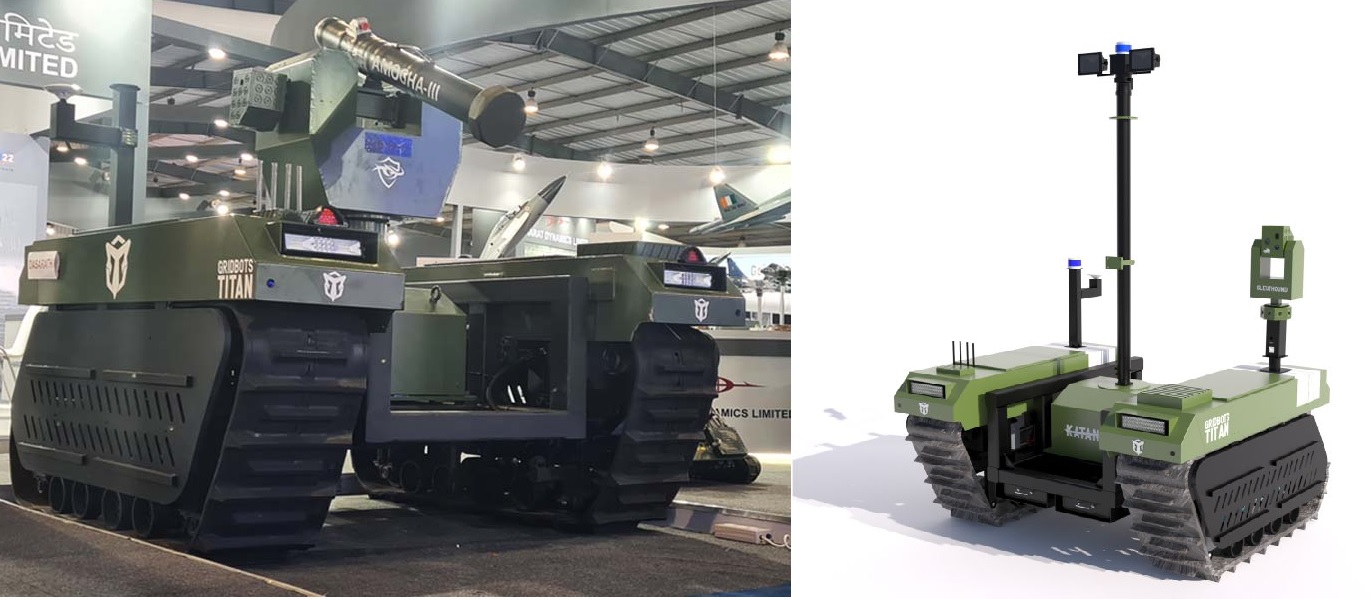
India
Gridbots Technologies Pvt. Ltd., an Ahmedabad-based robotics firm, has developed the ‘Titan Fortifier’, described as the world’s first fully autonomous anti-tank (AT) minelaying robot. The system is designed to carry up to 50 brick mines weighing a total of around 600 kilograms and can deploy them over a range of 50 kilometers on a single charge. A New Step in Automated Engineering The Titan Fortifier is a heavy-duty unmanned ground vehicle (UGV) developed for automated mine deployment in defensive operations. It can navigate and lay mines independently using onboard sensors, mapping systems, and AI-based route planning. Once programmed with a mission path, it can move through uneven terrain, identify suitable areas, and place mines according to pre-set instructions — all without direct human control during operation. The system aims to improve the speed and safety of minefield deployment, reducing the need for human personnel in hazardous areas. According to Gridbots, the robot can also return to base or relocate after completing its mission, making it suitable for repetitive engineering tasks in field conditions. Technical Overview The Titan Fortifier is based on Gridbots’ Titan UGV platform, which has been used for industrial and defense applications. Its main features include: Payload capacity: Up to 600 kg, allowing the transport of approximately 50 AT brick mines. Operational range: Around 50 km per battery charge. Autonomy: Equipped with LiDAR, GPS, and vision-based navigation for pathfinding and obstacle avoidance. Deployment module: Automated mechanism for precise mine placement at programmed intervals. The system’s chassis and suspension are designed for off-road terrain, allowing it to operate in desert, mountain, or semi-urban environments. Global Context While autonomous mine-clearing robots have existed for years, fully autonomous mine-laying systems are still rare. Globally, most systems remain semi-automated or remotely operated. Russia has fielded engineering vehicles like the Uran-6 (for mine-clearing) and Uran-9 (for combat roles), but not fully autonomous minelayers. China has reportedly tested UGVs capable of limited mine deployment under human supervision. Ukraine and Turkey have experimented with remotely controlled engineering UGVs for minefield setup, but these are not autonomous. This makes the Titan Fortifier one of the first publicly known systems to perform autonomous anti-tank mine deployment. Operational Use and Implications In defense operations, mine deployment is often time-consuming and dangerous, requiring engineers to work close to potential combat zones. The Titan Fortifier is designed to reduce that risk by performing these tasks autonomously. The system could be useful for: Area denial and border defense, especially in remote or rugged terrain. Rapid fortification in defensive positions. Support to engineering corps where manpower or access is limited. The robot can also be integrated into battlefield management systems, enabling synchronized operation with surveillance drones or reconnaissance vehicles for coordinated defensive planning. Legal and Safety Aspects Mine deployment remains a sensitive area in international law. While anti-personnel mines are banned under the Ottawa Treaty, anti-tank mines remain permitted for defensive purposes under regulated conditions. Gridbots has indicated that the Titan Fortifier is designed for compliance with international standards and can be equipped with self-neutralizing or self-deactivating mines, depending on operational requirements. Such features help reduce long-term risks associated with unexploded ordnance. India’s Role in Defense Robotics Gridbots has worked on several automation and robotics projects for defense, nuclear, and industrial applications. The company specializes in developing robotic platforms for hazardous environments, including bomb disposal robots, inspection crawlers, and industrial automation systems. The Titan Fortifier expands Gridbots’ Titan series of UGVs, which includes platforms for logistics, surveillance, and reconnaissance. Its development aligns with India’s goals of enhancing indigenous defense production and adopting AI-driven automation in field operations. The Titan Fortifier represents a significant step in automated military engineering. With its ability to carry a heavy payload, operate autonomously over long distances, and lay mines accurately, it introduces greater efficiency and safety to mine deployment tasks. While similar systems are in early stages elsewhere, the Titan Fortifier stands out as one of the most advanced and field-ready platforms of its kind. Its development underlines how autonomous robotics are steadily becoming part of modern defense infrastructure — designed to make military operations safer, faster, and more reliable.
Read More → Posted on 2025-11-12 15:01:40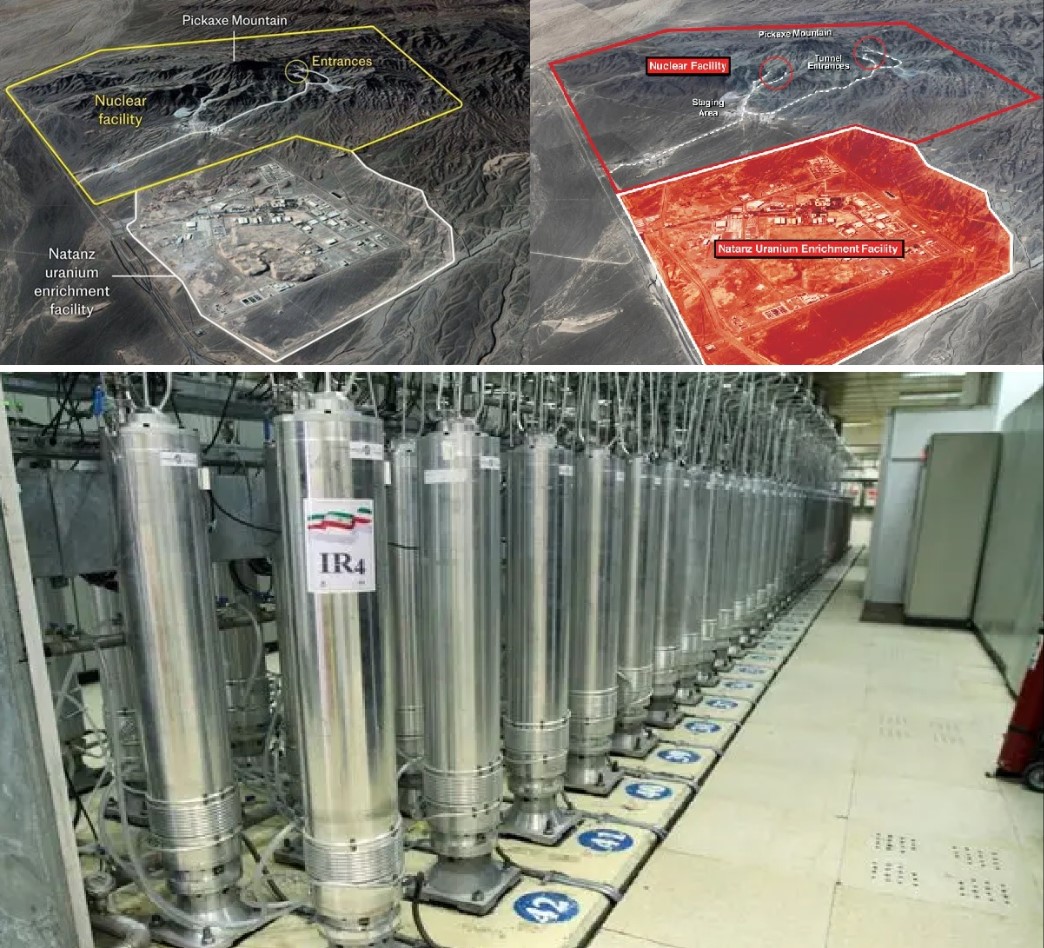
World
In a development that could further destabilize the Middle East’s fragile balance, intelligence sources and satellite imagery have revealed that Iran has constructed a new, heavily fortified uranium enrichment facility codenamed “Kirk Mountain”, located near the country’s primary nuclear site at Natanz. The underground complex, buried deep within Pickaxe Mountain, is reportedly inaccessible to international inspectors and marks a significant escalation in Tehran’s nuclear ambitions. According to recent reports, Iran has refused to grant the International Atomic Energy Agency (IAEA) permission to visit the site, sparking widespread concern that the Islamic Republic is preparing to enrich uranium to weapons-grade levels beyond the limits imposed by the 2015 Joint Comprehensive Plan of Action (JCPOA). Satellite imagery of the area, shown above, highlights the new underground tunnels and access points carved into the mountain north of the Natanz uranium enrichment facility — a site that has been the target of multiple cyberattacks and sabotage incidents over the past decade, most notably the Stuxnet operation attributed to the U.S. and Israel. A New Generation of Underground Nuclear Infrastructure Experts say the “Kirk Mountain” facility represents a new phase in Iran’s nuclear strategy — one designed not only for continuity of operations under attack, but also for concealment from airstrikes and cyber intrusion. Unlike the older Natanz and Fordow sites, which were relatively shallow and vulnerable to precision munitions, the new facility is reportedly built deep into the rock face, with reinforced tunnels believed to descend several hundred meters underground. Analysts from multiple intelligence services estimate that even the U.S. Air Force’s GBU-57 Massive Ordnance Penetrator (MOP) — the largest bunker-buster in the American arsenal — might struggle to destroy the complex without multiple strikes. Iranian engineers are said to have constructed three main tunnel entrances with heavy blast doors, while ventilation shafts and secondary exits are camouflaged to prevent detection. The facility’s codename, “Kirk Mountain”, is believed to reference a term used internally by Iran’s Revolutionary Guard Corps (IRGC) Aerospace Division for hardened nuclear and missile complexes. Tehran’s Missile Factories in Overdrive Simultaneous intelligence leaks suggest that Iran’s missile production lines are now operating at full capacity, producing a new generation of solid-fuel short- and medium-range ballistic missiles. The goal, according to regional defense analysts, is to prepare for a mass retaliatory strike against Israel in the event of a preemptive attack on Iranian nuclear facilities. Reports indicate that IRGC-controlled facilities in Isfahan, Shiraz, and Khorramabad are engaged in round-the-clock production of Fateh-110, Zolfaghar, and Dezful missiles, with assembly plants working continuously to stockpile thousands of projectiles. Sources close to Western intelligence assessments claim Iran’s strategic plan, internally referred to as “Operation Ashura,” envisions launching thousands of missiles simultaneously, overwhelming Israel’s multilayered defense systems — Iron Dome, David’s Sling, and Arrow-3 — in one massive barrage rather than staggered waves. If executed, such an attack would represent one of the most intense missile bombardments in modern history. Strategic Context: The Shadow War Between Iran and Israel The revelation comes amid an escalating shadow conflict between Iran and Israel, fought across multiple fronts — from covert cyber operations to drone strikes and proxy warfare in Syria, Iraq, and Lebanon. Over the past year, Israel has intensified its surveillance of Iranian nuclear sites, reportedly sharing intelligence with Western partners that Tehran’s enrichment capacity has exceeded 60 percent purity — just short of the 90 percent threshold required for weapons-grade uranium. For Israel, which views a nuclear-armed Iran as an existential threat, the construction of Kirk Mountain may represent a red line. Defense Minister Yoav Gallant recently stated that Israel “will not allow Iran to bury its nuclear program deep enough to escape justice,” hinting at possible preemptive military action. In parallel, Iran’s leadership — including Supreme Leader Ali Khamenei and IRGC Commander Hossein Salami — has issued statements warning that any Israeli strike will be met with “an immediate and massive response.” The Natanz Connection: Lessons From the Past The choice of Natanz for the new site is not coincidental. The original Natanz enrichment facility was both the heart of Iran’s nuclear program and the epicenter of its vulnerabilities. It suffered multiple incidents — from the Stuxnet cyberattack in 2010, which crippled thousands of centrifuges, to mysterious explosions in 2020 that Iranian officials blamed on Israeli sabotage. By embedding the new complex under Pickaxe Mountain, Iran appears to be applying those lessons, seeking to create a site immune to aerial bombardment and cyber disruption. The construction of a parallel underground plant also ensures redundancy — allowing Iran to continue uranium enrichment even if Natanz or Fordow were neutralized. Analysts suggest that this dual-facility approach signals Tehran’s intent to reach nuclear breakout capability while maintaining plausible deniability. Global Implications and the Risk of Escalation The revelation of Kirk Mountain’s existence comes at a sensitive geopolitical moment. Negotiations to revive the JCPOA remain frozen, while tensions between Iran and Western powers have spiked over Tehran’s drone supplies to Russia and alleged support for regional militant groups. If verified, the new enrichment facility would represent a direct violation of IAEA inspection protocols and could push the United States and Israel closer to coordinated military planning. An Israeli air campaign against Iran would likely trigger regional conflagration — drawing in Hezbollah in Lebanon, Shiite militias in Iraq, and possibly Houthi forces in Yemen. In response, Iran’s arsenal of precision-guided missiles and drones could target critical Israeli infrastructure, U.S. bases in the Persian Gulf, and shipping routes in the Strait of Hormuz. For the international community, the crisis presents a dual threat: a potential nuclear breakout and the risk of regional war. Analysis: A Harder-to-Reach Iran Strategically, the “Kirk Mountain” facility demonstrates that Iran has entered a new phase of nuclear hardening — one that combines deep-buried infrastructure, rapid missile production, and asymmetric deterrence. This approach mirrors North Korea’s strategy of dispersing and concealing nuclear assets, ensuring survival through redundancy and retaliation. For Israel and the West, it complicates military options: even advanced bunker-busters or stealth aircraft like the F-35I Adir may find it difficult to neutralize Iran’s fortified network without prolonged campaigns. If Iran’s goal was to raise the cost of attack, it has succeeded. The construction of Kirk Mountain signals to Israel that any strike will invite a massive and possibly uncontrollable regional escalation.
Read More → Posted on 2025-11-12 14:30:16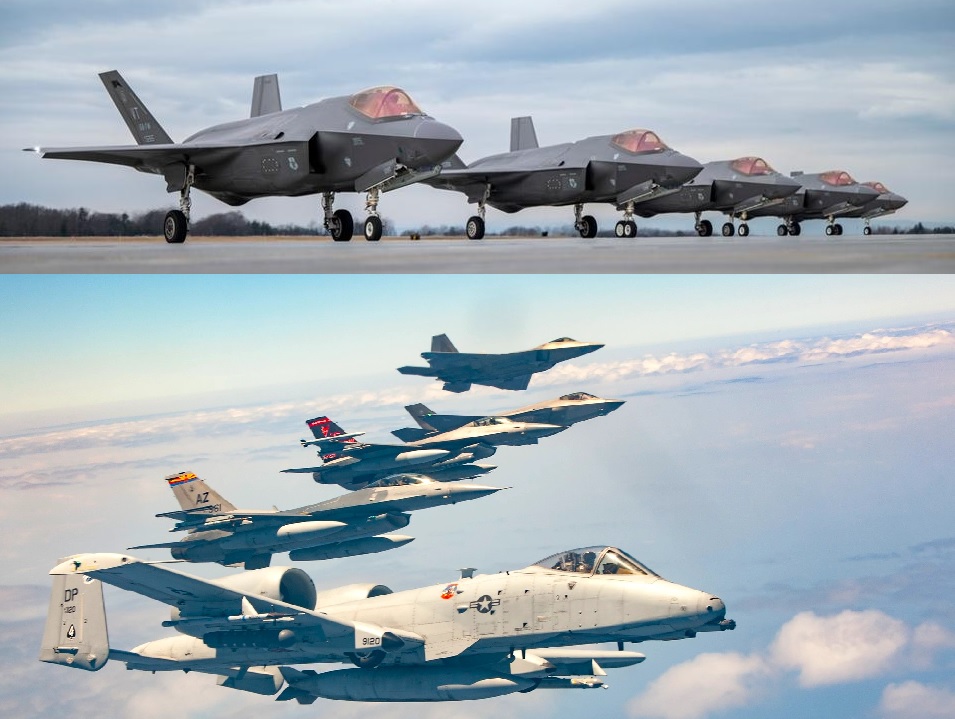
World
The U.S. Air Force (USAF) is preparing for a slow but deliberate evolution of its fighter inventory over the next decade, according to a new fighter roadmap submitted to Congress. The document, finalized in August and released in October, outlines a strategic transition period marked by modest F-35 fleet growth, planned retirements of aging aircraft, and a temporary dip in overall fighter numbers before a recovery begins near the end of the decade. The roadmap, which serves as the most comprehensive outlook on U.S. fighter modernization in years, indicates that the Air Force’s total fighter force will continue to shrink through 2028, reaching its lowest point before gradually expanding again by 2030 as new aircraft deliveries accelerate. Modest Growth for the F-35A Lightning II The report shows that the Air Force expects only incremental expansion of its F-35A fleet through the decade, contrary to earlier ambitions of rapid buildup. The projected fleet count stands at 344 aircraft in FY2026, increasing to 383 in FY2027, 401 in FY2028, 433 in FY2029, and 472 in FY2030. However, the Air Force clarified that these numbers do not represent fixed procurement goals, but rather the desired “possessed inventory” available for operations. The service emphasized that procurement plans will continue to depend on funding levels, industrial capacity, and the ongoing modernization cycle. Notably, the roadmap confirms that the Air Force does not intend to purchase more than 48 F-35As per year through 2030 — the same number it acquired in FY2024. This figure is far below the earlier aspiration of 70–72 jets annually, proposed in the early 2010s when the F-35 program was expected to reach full production. Technology Refresh Bottlenecks and Modernization Delays A key factor limiting procurement is the delay in the Technology Refresh 3 (TR-3) and Block 4 upgrade programs, which are crucial for integrating the F-35’s next-generation capabilities, including improved sensors, computing power, and electronic warfare systems. The roadmap highlights that F-35s still using the older TR-2 hardware “will fall behind in mission capability and overall fleet utility.” This gap could render early-production aircraft less viable for future combat operations, forcing eventual replacement or extensive retrofits. According to the Air Force, earlier decisions to slow F-35 purchases in the mid-2010s were deliberate — aimed at avoiding costly retrofits of older airframes once the Block 4 standard became available. However, persistent software and integration challenges have delayed the TR-3 rollout by more than a year, further constraining fleet expansion. As a result, the Air Force’s FY2026 budget request includes only 24 new F-35As, a steep reduction from past years. Unlike previous budget cycles, Congress did not increase this figure, despite adding funding for other programs such as the F-15EX Eagle II and the classified F-47 fighter initiative. Fighter Inventory: Decline Before Recovery The Air Force’s total fighter inventory currently stands at around 1,271 aircraft. The roadmap forecasts a dip to 1,215 in FY2028, driven by planned retirements of legacy aircraft, before rebounding to approximately 1,304 by FY2030. The service aims to grow to 1,558 fighters by 2035, a target deemed achievable only if production lines can reach maximum output — specifically, 100 F-35s per year and 36 F-15EX jets annually. In the near term, the Air Force faces an aging fleet and logistical strain as parts availability declines for platforms such as the F-15E Strike Eagle and early-lot F-35s. The report warns that “recapitalization of aging platforms due to early lot obsolescence and diminishing parts availability” will be a key driver of future acquisitions. The Fate of Legacy Fighters The roadmap outlines an aggressive plan to retire older aircraft while ramping up deliveries of new-generation fighters. A-10 Thunderbolt II: The last A-10s will be retired by the end of 2027, marking the end of nearly five decades of close-air-support operations. F-15C/D: The aging air-superiority fighters will fall from 42 in 2026 to just 21 in 2029, with a handful of upgraded “Platinum Eagles” retained for homeland defense into the early 2030s. F-15E Strike Eagle: The multi-role Strike Eagle fleet will shrink sharply, from 133 aircraft in 2026 to 78 by 2028, as older airframes reach the end of their service life. F-15EX Eagle II: The replacement program continues to grow steadily, with 27 aircraft in 2026 and an expected 111 by 2030, filling roles vacated by the F-15C/D fleet. F-22 Raptor: The Air Force plans to retire 32 of its oldest Raptors, retaining 134 aircraft through the 2030s, focused on homeland defense and limited air dominance missions. F-16 Fighting Falcon: The F-16 fleet remains stable at around 488 aircraft, serving as the backbone of the Air Force’s fighter force until next-generation platforms arrive. F-47 Program: Details of the classified F-47 fighter remain withheld, with numbers “still being determined.” Defense analysts believe the F-47 could refer to a sixth-generation platform being developed under the Next Generation Air Dominance (NGAD) initiative. A New Metric: Combat-Coded Total Aircraft Inventory The report introduces a new accounting standard — the Combat Coded Total Aircraft Inventory (CCTAI) — which measures the entire fighter fleet, including aircraft in testing, training, and maintenance. This replaces the older Primary Mission Aircraft Inventory (PMAI), offering a broader picture of fleet health and readiness. By using this more inclusive metric, the Air Force hopes to align its modernization plans with real-world operational availability, accounting for maintenance downtime, depot-level modifications, and modernization cycles. Collaborative Combat Aircraft: The Coming Addition Interestingly, the roadmap clarifies that Collaborative Combat Aircraft (CCAs) — the Air Force’s planned autonomous wingmen drones — are not included in fighter counts. The service stated that CCAs will be “additive to the inventory,” meaning they will supplement, rather than replace, crewed fighters once introduced later this decade. CCAs are expected to expand overall combat capacity, offering low-cost, high-risk mission capabilities alongside platforms like the F-35A, F-15EX, and the future NGAD fighter. A Decade of Transition The new fighter roadmap paints a picture of strategic patience rather than rapid expansion. The Air Force appears to be balancing short-term readiness with long-term modernization, prioritizing the arrival of fully capable Block 4 F-35As and advanced F-15EX fighters over sheer numbers. By 2030, the Air Force envisions a more digitally integrated, mixed-generation fighter force, combining stealth platforms with upgraded legacy aircraft and AI-enabled unmanned systems. Yet, the path to that future will involve temporary downsizing, modernization bottlenecks, and production constraints. In the words of one senior defense official, “This is a necessary transition period. We’re trading quantity today for quality tomorrow — ensuring that when the next fight comes, the U.S. Air Force will fly not just more jets, but smarter, more survivable, and more connected ones.”
Read More → Posted on 2025-11-12 13:13:07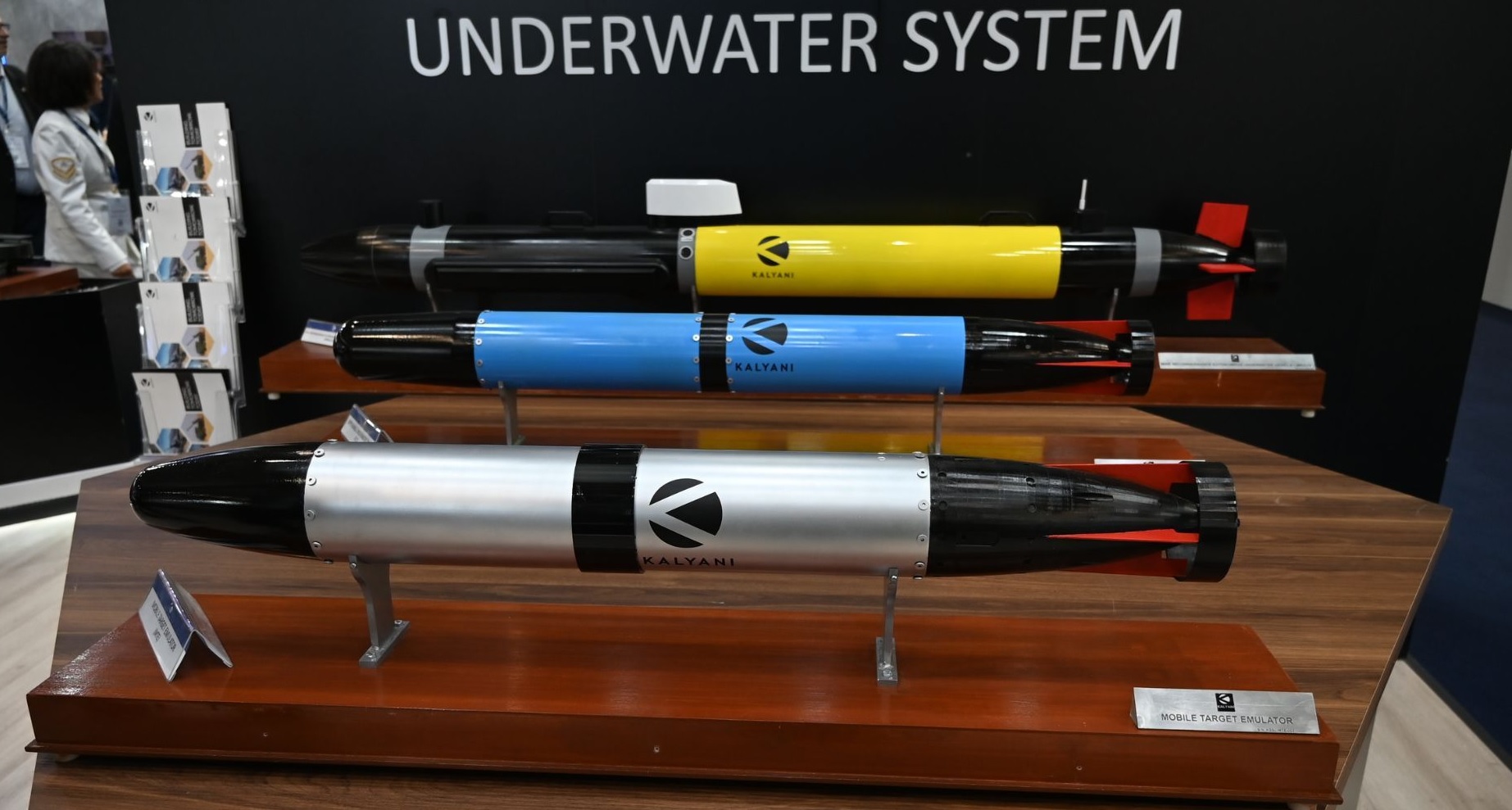
India
In a significant boost to India’s naval modernization efforts, Kalyani Strategic Systems Ltd. (KSSL) — a wholly owned subsidiary of Bharat Forge Ltd. — has been awarded contracts worth over ₹2,500 million by the Indian Ministry of Defence (MoD) for the supply of advanced underwater systems. The agreement, signed on November 10, 2025, mandates delivery within a year — by November 2026 — under the Ministry’s Fast Track Procurement (FTP) procedures. The new contracts mark a major milestone in India’s growing emphasis on indigenous defense manufacturing, especially in the underwater domain, which is emerging as a strategic frontier for naval warfare and surveillance. Expanding India’s Underwater Warfare Capabilities According to the company’s announcement, the awarded projects involve cutting-edge underwater systems designed to enhance the Indian Navy’s situational awareness, surveillance, and autonomous operations. These systems are expected to form part of India’s expanding fleet of unmanned and autonomous underwater vehicles (AUVs) — a domain where KSSL has built strong competencies over the past five years. KSSL has been instrumental in the design, development, and production of unmanned marine and autonomous underwater vehicles, several of which are already operational within the Indian Navy. These vehicles are used for missions such as reconnaissance, mine countermeasures, and underwater inspection, allowing the Navy to extend its reach into deeper and more challenging environments. Strategic Focus on Naval and Marine Systems KSSL’s latest contracts underline the company’s long-term strategy to become a key player in India’s underwater and maritime defense ecosystem. Beyond underwater systems, KSSL has been actively investing in naval gun systems, marine equipment, and advanced platform integration, aligning its roadmap with the Navy’s future warfare requirements. In its press release, KSSL stated: “The underwater domain is a key focus area for KSSL, along with naval guns and marine equipment. We are ramping up our capabilities to align closely with the Indian Navy’s urgent and mission-critical requirements. We remain committed to ensuring timely delivery of these advanced solutions.” The company emphasized its ability to rapidly execute complex defense contracts, reflecting the advantages of the Fast Track Procurement framework — a process designed to speed up acquisitions for critical operational needs without compromising quality or oversight. A Subsidiary of Bharat Forge’s Expanding Defence Vision Kalyani Strategic Systems Ltd. functions as the defense arm of Bharat Forge Ltd., a company with a market capitalization of ₹67,018.46 crore and a rich legacy in engineering, metallurgy, and manufacturing. Over the years, Bharat Forge has transformed from a global leader in automotive and industrial forging into a major defense manufacturer supporting India’s “Atmanirbhar Bharat” (self-reliant India) initiative. KSSL has emerged as Bharat Forge’s flagship defense subsidiary, driving the group’s entry into high-technology defense segments, including artillery systems, armored vehicle platforms, aerospace structures, and unmanned systems. Its strong design and manufacturing ecosystem, supported by Bharat Forge’s global facilities and R&D network, allows KSSL to deliver complex defense products at competitive costs and within tight timelines. The company’s Pune-based defense campus has been steadily expanding its production lines for naval and underwater systems, incorporating AI-enabled navigation, acoustic sensors, and autonomous control technologies — elements that are shaping the next generation of naval operations. Industry Implications and Strategic Importance The new contracts further strengthen KSSL’s position as one of India’s leading private defense manufacturers contributing to the indigenization of critical naval technologies. As India continues to counter increasing underwater activity in the Indian Ocean Region (IOR), self-reliant development in underwater warfare systems becomes strategically crucial. Defense analysts note that the underwater space is now one of the most competitive areas in modern naval strategy, covering anti-submarine warfare, intelligence gathering, and mine countermeasures. KSSL’s role in this ecosystem enhances India’s capability to operate more autonomously across multiple maritime zones.
Read More → Posted on 2025-11-12 12:44:22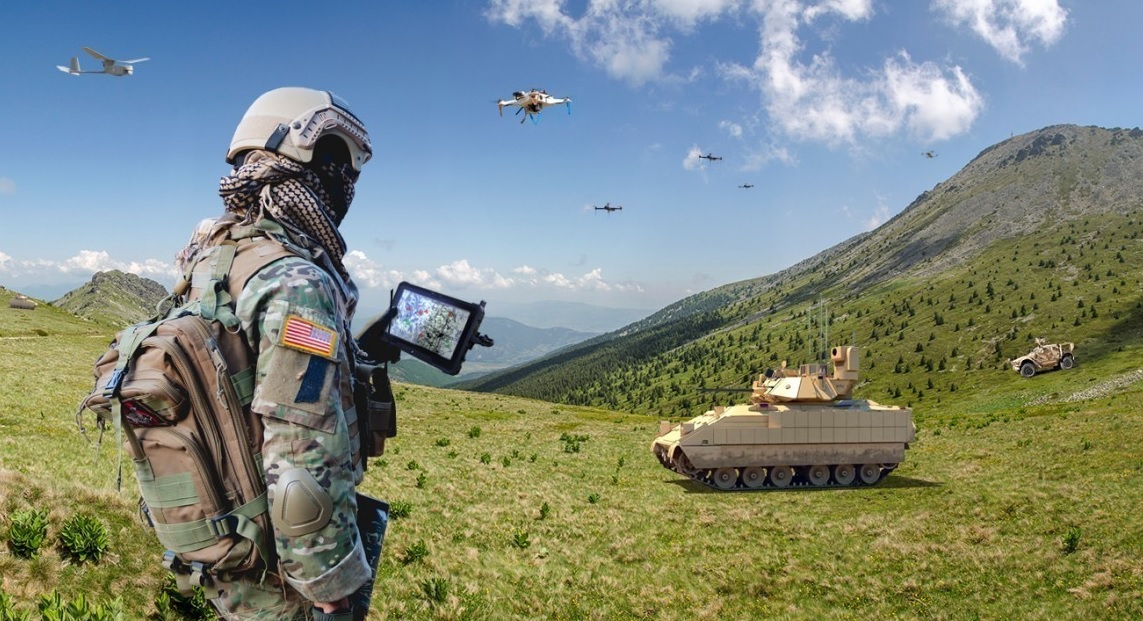
World
The U.S. Army has entered a defining phase in its digital warfare transformation with the Next Generation Command and Control (NGC2) initiative — a program that aims to fuse artificial intelligence (AI), automation, and battlefield awareness into a unified command structure. During the ongoing Ivy Sting 2 exercise led by the 4th Infantry Division at Fort Carson, Colorado, the Army is testing an AI-powered target recognition system designed to revolutionize how soldiers identify, engage, and destroy enemy assets. This effort is not merely a technology trial; it’s a blueprint for how the Army envisions future command and control — faster, smarter, and more autonomous. Reimagining Command and Control At the core of this experiment is an AI-assisted target recognition tool that can autonomously identify “hulks”, or non-operational vehicles used for target practice. The system has been trained using real battlefield imagery, allowing it to detect shapes, silhouettes, and heat signatures characteristic of tanks and armored vehicles. Once the AI identifies a potential target, it can initiate a fire mission within seconds, drastically shortening what military planners call the “sensor-to-shooter loop.” Traditionally, target identification, confirmation, and fire coordination require several manual steps — each taking valuable time. The new AI system automates much of that process, allowing data from sensors, drones, and radars to flow directly to a command center and then to the firing unit. Army officials describe the new approach as “human-on-the-loop” rather than “human-in-the-loop,” meaning humans still make final decisions but AI accelerates detection and recommendation — compressing what once took minutes into mere seconds. The Ivy Sting 2 Exercise: A Live Testbed for AI The Ivy Sting 2 exercise serves as a live environment for testing how AI can integrate into command operations at multiple levels. Unlike previous trials, this one brings together six C2 (command-and-control) nodes, linked through a distributed digital network that can function even under degraded communications — a likely scenario in modern, contested environments. Maj. Gen. Patrick Ellis, Commander of the 4th Infantry Division, emphasized that the project isn’t just about automating current processes but redefining how the Army operates in multi-domain warfare. “We’re not just trying to optimize how we already fight,” Ellis explained. “We’re using these new technologies to fundamentally change how our formations sense, decide, and act.” The test environment allows the Army to evaluate how effectively AI can assist soldiers in identifying targets during high-stress combat simulations, while also testing the resilience of digital networks and data-sharing frameworks under simulated electronic jamming and cyberattack conditions. Transforming the Sensor-to-Shooter Chain The Army’s concept of Next Generation Command and Control (NGC2) focuses on linking sensors — such as drones, radar systems, and satellites — with weapons and decision nodes in a seamless digital loop. In the traditional model, intelligence from the field passes through multiple layers of analysis before being acted upon. This structure, while thorough, slows the response time in fast-moving battle scenarios. NGC2 aims to flatten that hierarchy, empowering soldiers and commanders to act with real-time situational awareness. By combining AI target recognition with advanced data fusion, the Army hopes to create a self-healing, networked combat architecture — one that continues to operate even if certain nodes are destroyed or jammed. Col. Richard Bartholomew, one of the officers overseeing the trial, described it as “a move from a command structure to a command web.” “This network is meant to be resilient. Even if one node goes down, others can take over instantly — and AI helps us maintain that flow of information,” he said. AI on the Battlefield: Promise and Caution The Army’s AI-driven targeting capability is being hailed as a major step forward, but it also introduces ethical and operational challenges. Ensuring that AI systems correctly identify friend from foe, and that humans maintain ultimate control over lethal decisions, remains a top priority. Army engineers are spending extensive time training and validating AI models using thousands of battlefield images, weather variations, and terrain data to minimize false positives. Even so, officials acknowledge that AI’s speed must be balanced with human judgment. “We’re learning how to trust the machine — but not surrender to it,” said one project engineer during the trial. Toward Multi-Domain Dominance The Army’s AI experiments are part of a broader modernization push aimed at achieving multi-domain dominance — the ability to coordinate operations seamlessly across land, air, sea, cyber, and space. Under this vision, AI and automation act as force multipliers, enabling smaller units to make faster, more informed decisions. The NGC2 initiative is expected to feed directly into Project Convergence, the Army’s flagship modernization campaign that integrates AI, robotics, and autonomous systems across joint forces. Future iterations of the Ivy Sting exercises will scale up to division-level operations under a program called Ivy Mass, incorporating real-time data from aircraft, sensors, and artillery networks. Defense industry partners such as Anduril Industries and Northrop Grumman are also contributing to the NGC2 program, providing modular software and AI frameworks adaptable to different battlefield scenarios. A Glimpse Into the Future of Warfare If successful, the AI-powered target recognition system could redefine how the U.S. Army fights in the next decade. By reducing the time from detection to engagement, commanders could neutralize threats before the enemy can react, a decisive advantage in conflicts where milliseconds matter. More importantly, the initiative reflects the Army’s shift from platform-centric warfare — focused on individual weapons — to data-centric warfare, where networks, sensors, and algorithms become the true enablers of combat power. As one senior defense official noted: “We’re no longer fighting with just soldiers and machines. We’re fighting with data — and whoever moves data faster will win the next war.” The Ivy Sting 2 exercise and its AI-driven target recognition trials mark a pivotal moment in the U.S. Army’s modernization journey. By embracing artificial intelligence at the tactical edge, the Army is transforming how it perceives, decides, and acts in battle. While challenges remain in refining algorithms and ensuring ethical use, the direction is unmistakable — the future battlefield will be AI-enhanced, data-driven, and lightning-fast. In this emerging digital warfighting environment, the sensor-to-shooter chain is no longer just a process — it’s a weapon.
Read More → Posted on 2025-11-12 12:14:33
World
In a significant boost to Indo-Russian strategic cooperation, Russia is developing the technical specifications for a new nuclear power plant in India that will be powered by VVER-1200 reactors, one of the most advanced nuclear technologies currently in commercial operation. The move underscores both nations’ commitment to expanding clean, reliable, and high-capacity nuclear energy as a cornerstone of their long-term energy partnership. Indo-Russian Nuclear Collaboration Officials from Rosatom, Russia’s state nuclear corporation, confirmed that discussions are underway with India’s Department of Atomic Energy (DAE) to finalize the framework for the new project. The upcoming power plant, expected to feature VVER-1200 Generation III+ reactors, will mark a major technological upgrade over the VVER-1000 units currently operational at the Kudankulam Nuclear Power Plant (KNPP) in Tamil Nadu. This collaboration represents a natural progression of decades-long cooperation between the two countries in the field of civil nuclear energy. Kudankulam’s first two units (1,000 MW each) are already supplying power to the Indian grid, while four more units are in various stages of construction. The new plant, featuring the VVER-1200, could either form an extension of Kudankulam or be established as a separate site altogether. What is the VVER-1200? The VVER-1200 (Water-Water Energetic Reactor) is Russia’s flagship Generation III+ pressurized water reactor (PWR) and one of the most advanced civilian nuclear reactors currently deployed worldwide. It represents an evolution of the proven VVER-1000 design but incorporates significant upgrades in safety, efficiency, and operational lifespan. Developed under the AES-2006 project by Rosatom, the VVER-1200 delivers 1,200 megawatts of electric power (MWe) — a 20% increase over its predecessor — while operating with enhanced thermal efficiency and reduced fuel consumption. Key Features and Specialties The VVER-1200 has been designed to meet the highest international safety standards, with a special focus on passive safety mechanisms that can function even in the event of a complete power failure. Its key specialties include: Passive Cooling Systems: The reactor can automatically remove residual heat from the core without operator intervention or external power for up to 72 hours, a feature designed after lessons from incidents such as Fukushima. Core Catcher Technology: A built-in device that safely contains molten core material in the unlikely event of a core meltdown. Double Containment Structure: Enhanced resistance to both external impacts (such as aircraft crashes) and internal overpressure. Seismic and Environmental Safety: Designed to withstand earthquakes up to magnitude 8 and adapted for various climatic conditions. Extended Lifespan: Operational life of up to 60 years, extendable to 80 years with mid-life upgrades. Load-Following Capability: The VVER-1200 can adjust its output to meet grid demands, enabling it to work in tandem with renewable sources like solar and wind. How It Differs from the Older VVER-1000 The VVER-1200 represents a generational leap forward from the VVER-1000 reactors used at Kudankulam. While both belong to the same family of Russian pressurized water reactors, the new model offers a range of technical and operational advantages: Feature VVER-1000 VVER-1200 Electrical Output 1,000 MWe 1,200 MWe Reactor Type Gen III Gen III+ Safety Systems Active (requires power) Passive & Active (self-operating) Operational Life 40 years 60–80 years Thermal Efficiency ~32% ~37% Manpower Requirement High 30% lower Accident Tolerance Limited Designed to handle extreme scenarios In essence, the VVER-1200 combines Russian reactor reliability with cutting-edge automation and safety redundancy, making it one of the most mature Generation III+ designs currently in global operation — alongside Western systems like France’s EPR and the U.S. AP1000. Global Success and Operational Record Rosatom has already deployed VVER-1200 units in several countries, including Belarus, Turkey, China, Bangladesh, and Egypt. The design has accumulated over 100 reactor-years of safe operation. Plants like Novovoronezh-II and Leningrad-II in Russia have demonstrated strong performance records, with average availability factors exceeding 90%. The VVER-1200 is also the first Russian reactor to fully comply with the IAEA’s Generation III+ safety requirements, giving it a strong position in global export markets. Strategic and Economic Significance for India For India, adopting the VVER-1200 design offers multiple strategic advantages: Higher Power Output: Each unit will add around 1.2 GW of base-load capacity, significantly increasing India’s clean energy portfolio. Technology Transfer & Localisation: The new deal is expected to expand domestic manufacturing under the “Make in India” initiative, involving Indian suppliers in the reactor’s construction and component production. Enhanced Safety Standards: The inclusion of Generation III+ safety systems aligns with India’s strong emphasis on nuclear safety and regulatory transparency. Reduced Carbon Footprint: Each reactor unit can prevent approximately 5–6 million tonnes of CO₂ emissions annually compared to coal plants. Energy Security: Nuclear power provides India with a stable, low-carbon energy source independent of fossil fuel imports. India aims to triple its nuclear power capacity by 2047, and partnerships like this with Russia are central to that goal. Russia’s Broader Nuclear Diplomacy For Russia, the collaboration reinforces its global leadership in nuclear exports and technology partnerships. Rosatom remains one of the few companies capable of delivering a “full-cycle” nuclear solution — from reactor design and construction to fuel supply, maintenance, and decommissioning. By advancing the VVER-1200 project in India, Russia strengthens its long-term presence in South Asia’s energy landscape while countering Western and Asian competitors in the global nuclear market.
Read More → Posted on 2025-11-12 11:57:58Search
Top Trending in 24 Hours
-
 Unitree Unveils H2-X ‘Kung Fu Legend: Guardian’ Humanoid Robot for Security and Rescue
-
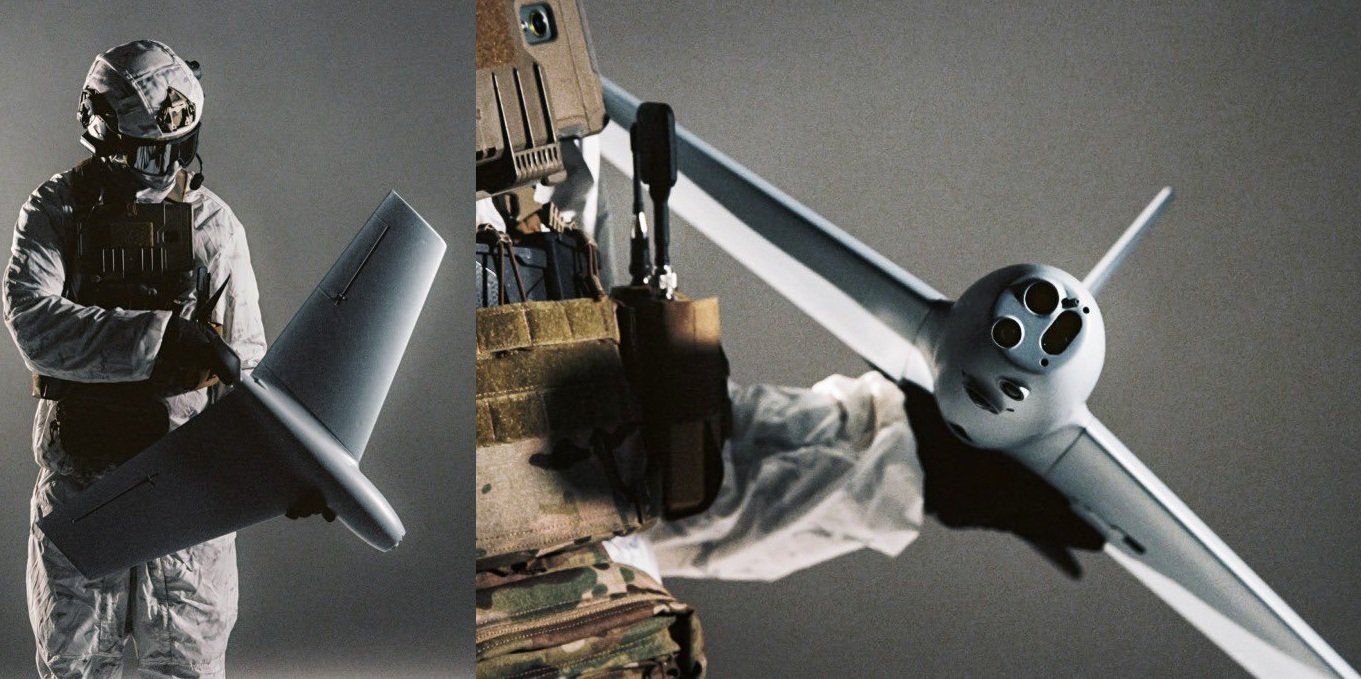 US Firm Heaviside Unveils 2.3-Kg TYR Loitering Munition With 40-Km Range at AUSA 2026
-
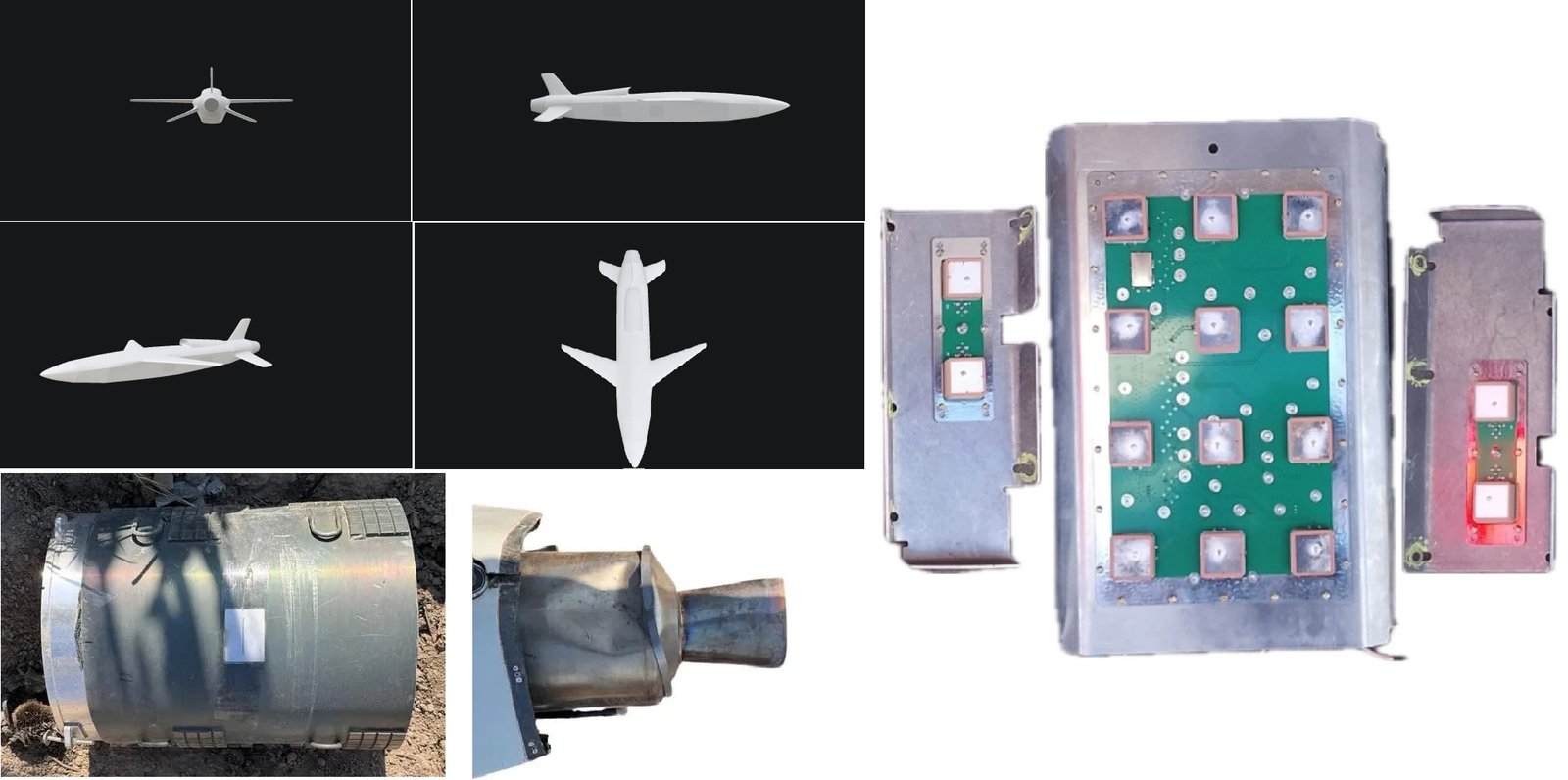 Ukraine Reveals Technical Details of Russia’s New Filin Cruise Missile
-
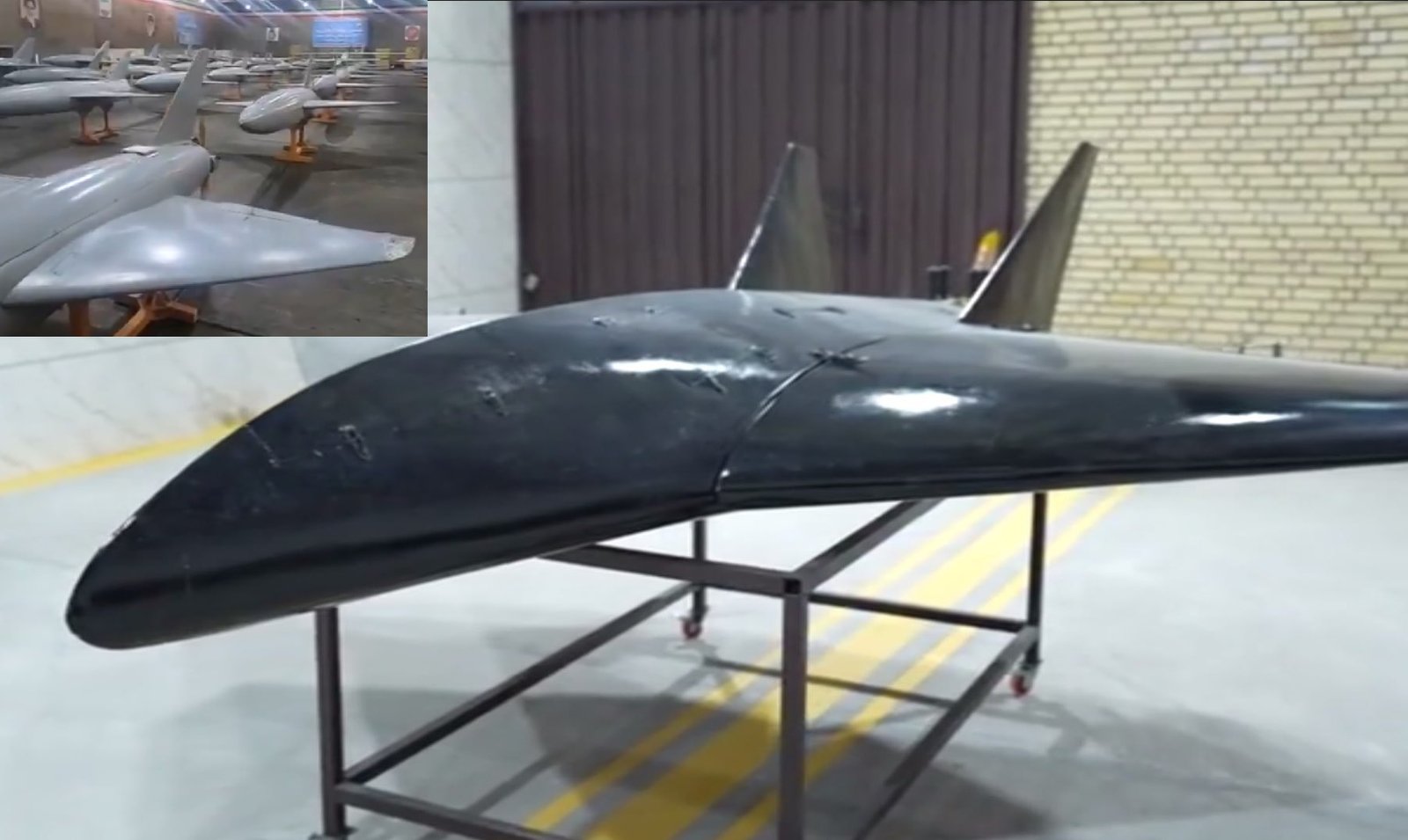 Iran Showcases Upgraded Arash-3 Drone with 100 kg Warhead, AI Targeting and GPS-Independent Navigation
-
 U.S. Air Force Tests SpaceX Starfall Capsule for Rapid Global Military Cargo Delivery
-
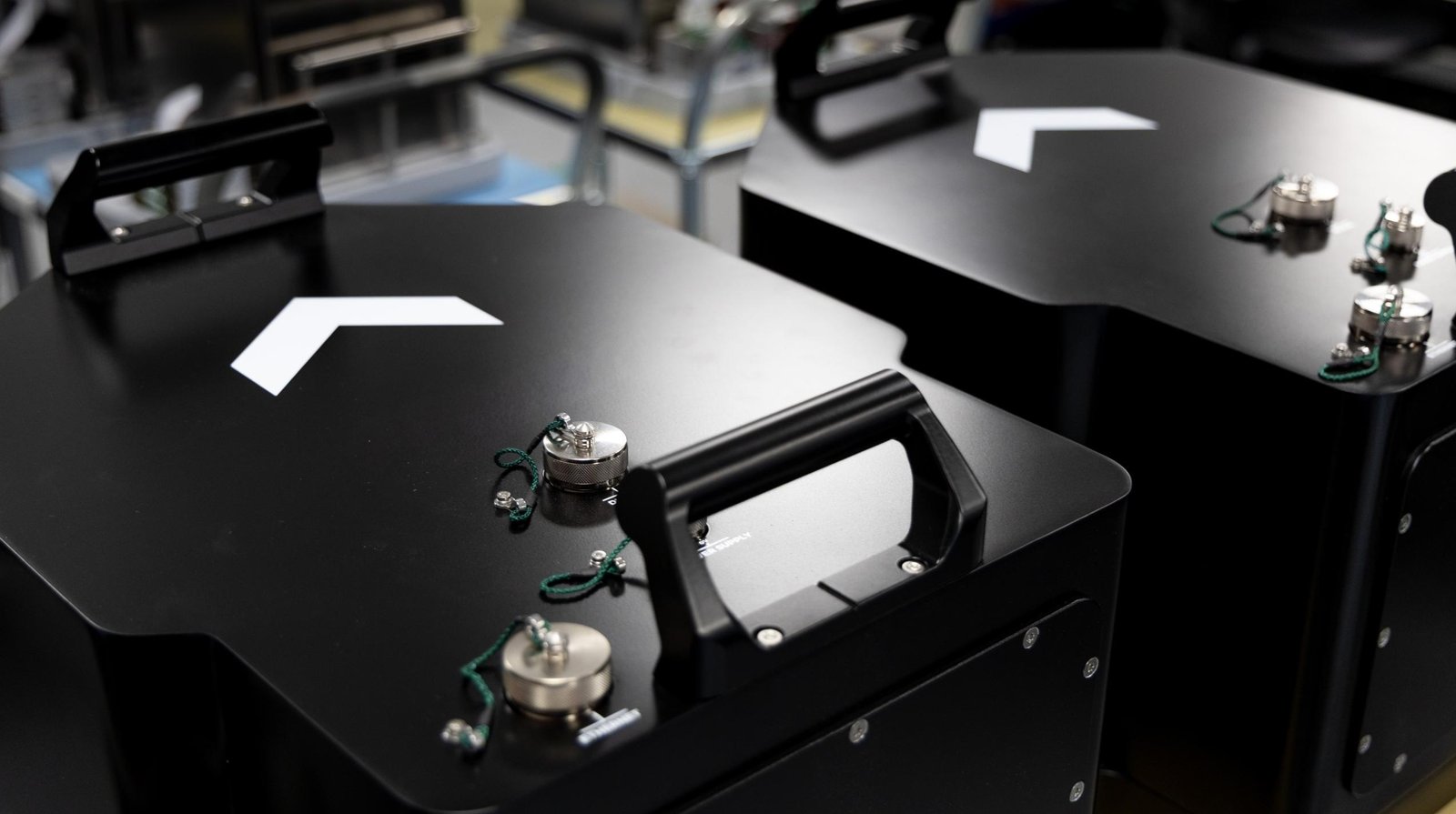 Exail Wins Major Contract to Equip Entire Fleet of Uncrewed Surface Vessels with Marins Inertial Navigation Systems
-
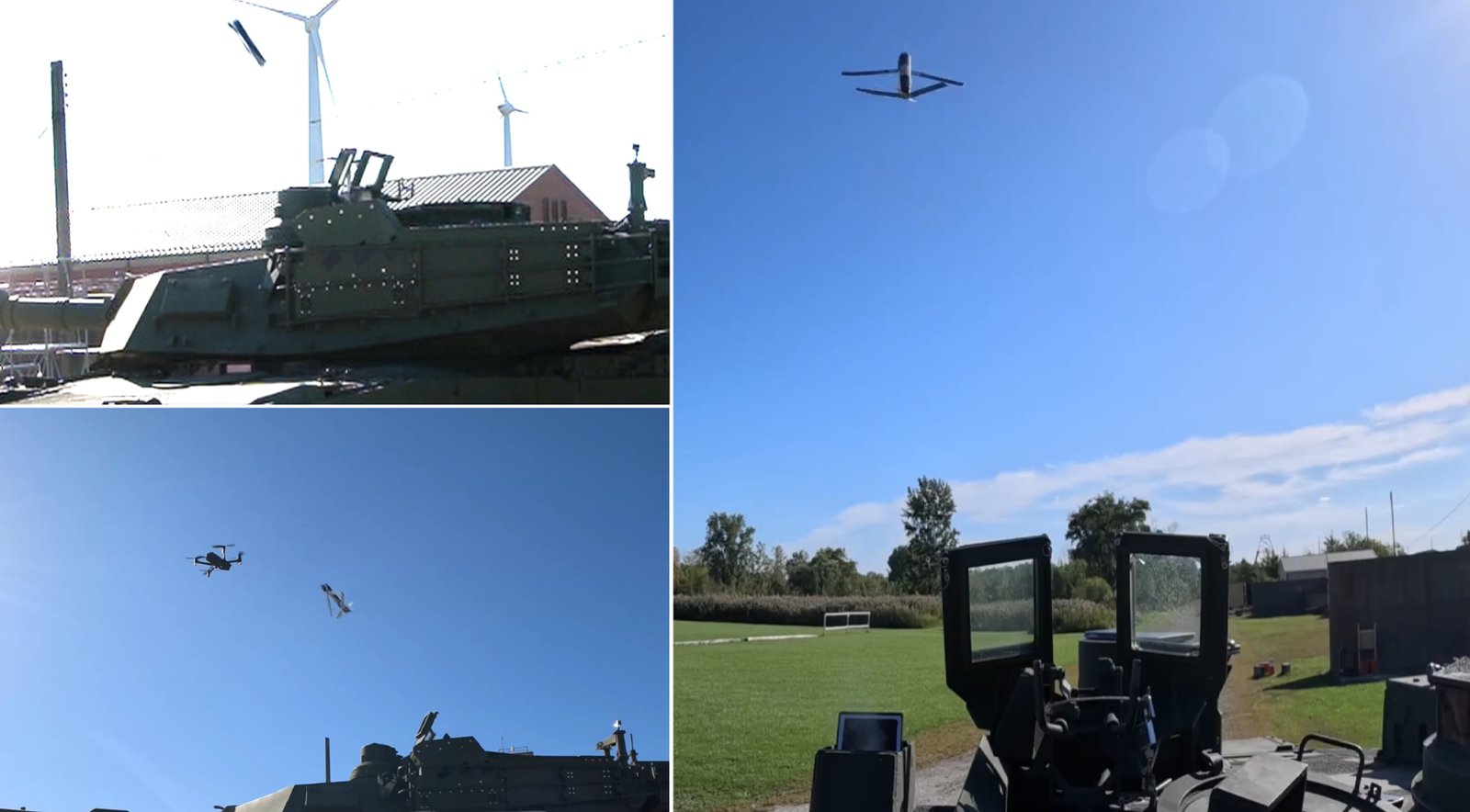 General Dynamics Unveils PERCH 2.0 Drone System for Abrams Tanks and Stryker Vehicles
-
 Voyant Demonstrates Satellite-Free Navigation Technology for UK Ministry of Defence
Top Trending in 4 Days
-
 NASA Sets New Artemis Milestones as SpaceX and Blue Origin Target Moon Landings in 2027–2028
-
 US Weighs Strikes on Iran’s Kharg Island Oil Hub Ahead of Midterm Elections
-
 U.S. Air Force Awards HII Subsidiary Enlighten IT $332.8 Million Cyber Defense Contract
-
 Four NASA Volunteers Mark One Year in Simulated Mars Habitat
-
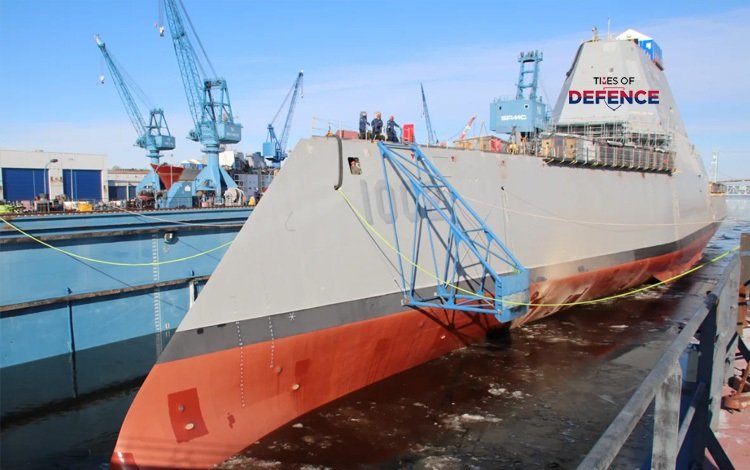 U.S. Navy Awards HII $99.1 Million Contract Modification for Zumwalt-class Destroyer USS Lyndon B. Johnson Sea Trials
-
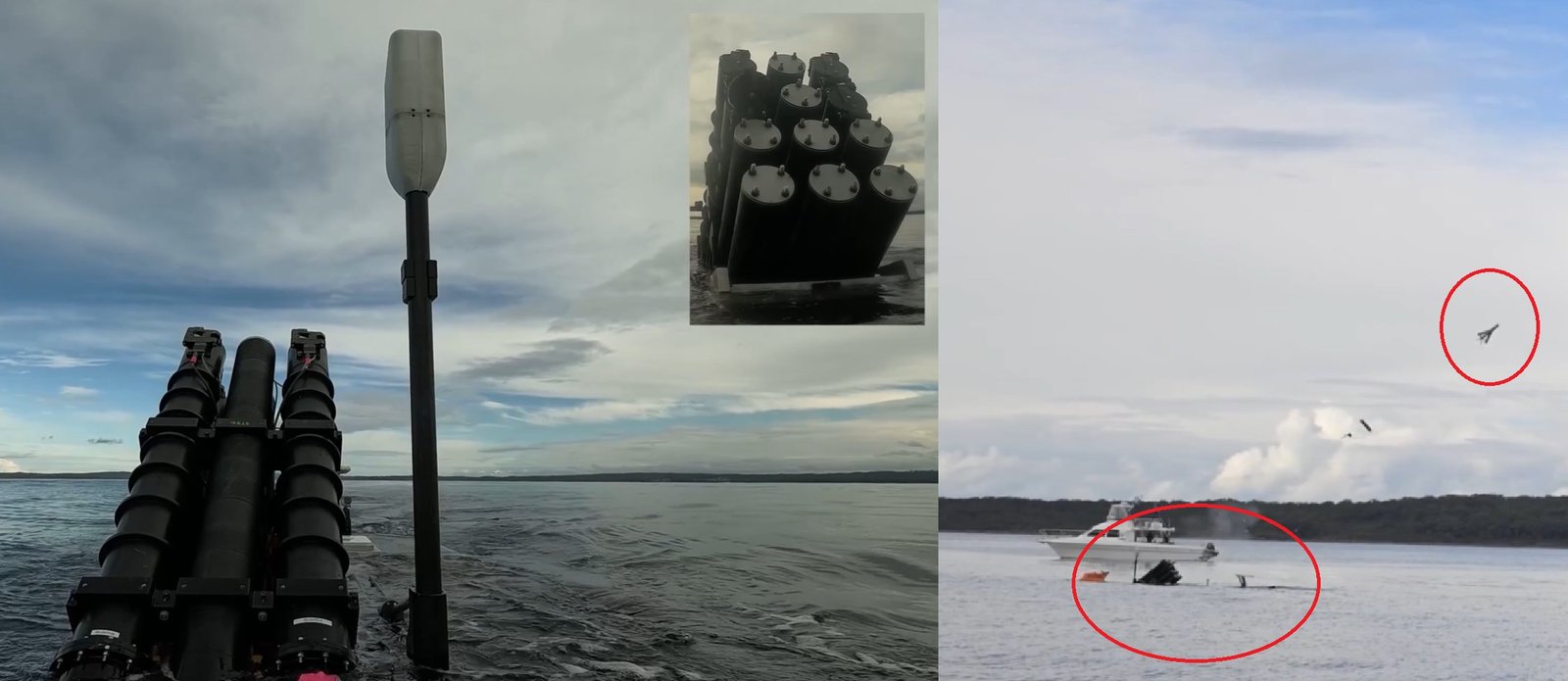 Australia Unveils Ghost Shark Autonomous Submarine’s Mine, Drone and Logistics Capabilities
-
 L3Harris Opens ‘Arsenal of Freedom’ Rocket Motor Plant in Arkansas to Double Production Capacity
-
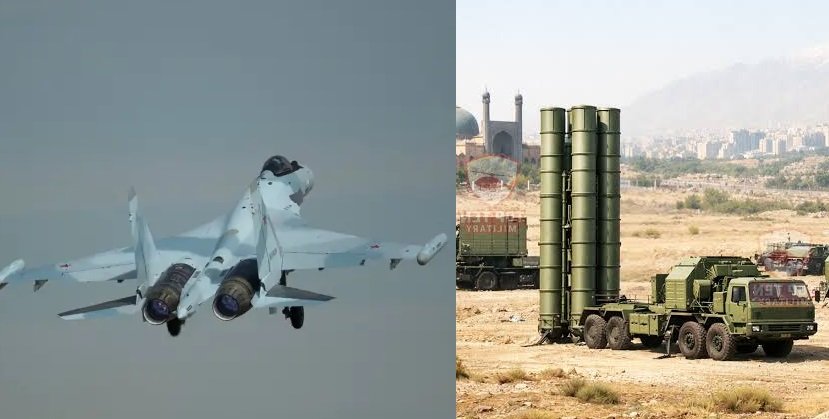 Russia Reportedly Offers Su-35 Fighters and S-400 Air Defence System to Protect Tehran
