India
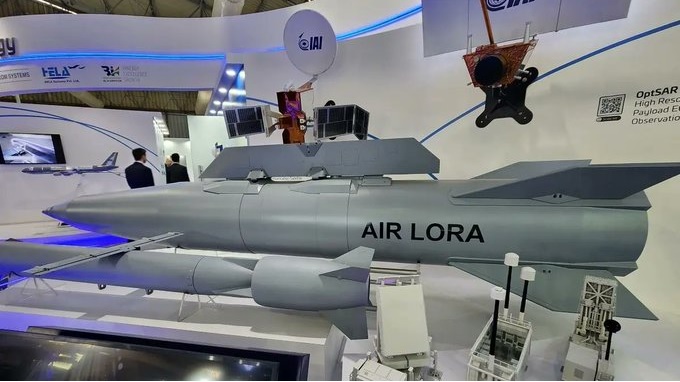
In a historic breakthrough for India’s defense modernization and self-reliance goals, the Ministry of Defence (MoD) has finalized a complete technology transfer (ToT) agreement with Israel for two next-generation missile systems — the Air LORA quasi-ballistic missile and the Ice Breaker smart cruise missile. This unprecedented deal grants India full access to source codes, blueprints, seeker technologies, and production methodologies, marking one of the most comprehensive defense technology transfers ever achieved with a foreign partner. According to defense sources, a confidential Indian delegation recently concluded high-level meetings in Tel Aviv, sealing the foundation for indigenous production of both systems. The agreement is set to significantly bolster India’s precision-strike capabilities while reinforcing the ‘Atmanirbhar Bharat’ (self-reliant India) initiative in defense manufacturing. Strategic Partnership and Domestic Production Under the new framework, Bharat Electronics Limited (BEL) and Hindustan Aeronautics Limited (HAL) will jointly lead domestic production efforts, supported by the Defence Research and Development Organisation (DRDO). BEL will oversee production of seekers, avionics, composite structures, and the guidance electronics for both systems. HAL will manage aircraft integration, test validation, and system optimization for India’s current and future combat platforms, including the LCA Tejas Mk1A, Su-30MKI, and TEDBF (Twin-Engine Deck-Based Fighter). DRDO will assimilate the transferred knowledge into indigenous missile programs such as the Next-Gen Cruise Missile (NGCM) and Pralay-ER initiatives. Air LORA: Quasi-Ballistic Precision Weapon Developed by Israel Aerospace Industries (IAI), the Air LORA (Long Range Artillery) is a precision quasi-ballistic missile designed for deep-strike missions and hardened target destruction. Its advanced guidance suite allows it to perform terminal maneuvers with extremely high accuracy — making it a deterrence-class weapon for India’s future strategic arsenal. Key Specifications – Air LORA: Range: 400+ km Warhead: 570 kg high-explosive or penetration-type Speed: Approx. Mach 4.5 Circular Error Probable (CEP): <10 meters Launch Platform: Air-launched from Su-30MKI, Rafale, and future AMCA aircraft Guidance: INS/GPS hybrid with terminal electro-optical seeker Flight Profile: Quasi-ballistic trajectory with in-flight retargeting capability The Air LORA’s unpredictable flight path and high terminal velocity make interception by enemy missile defenses extremely difficult. Its integration into the Indian Air Force’s strike fleet will provide India with the ability to neutralize enemy radar installations, bunkers, and C4ISR nodes deep behind enemy lines. BEL’s upcoming “Missile Electronics Integration Complex” in Bengaluru is expected to handle the production of the Air LORA’s composite airframe, precision guidance units, and terminal seekers. Ice Breaker: AI-Powered Multi-Role Cruise Missile Complementing Air LORA’s ballistic punch, the Ice Breaker — developed by Rafael Advanced Defence Systems — is an AI-enabled multi-role cruise missile built for precision strikes across land and sea domains. A successor to the proven Sea Breaker, the Ice Breaker uses machine learning algorithms for target recognition and flight optimization, allowing it to operate in GPS-denied and electronically jammed environments — a vital capability in modern warfare. Key Specifications – Ice Breaker: Range: 300+ km Weight: ~400 kg Speed: High subsonic Warhead: 150 kg multi-purpose blast/penetration Guidance: INS + EO/IR + AI-based image recognition Navigation: GPS-independent with data-link for real-time control Launch Platforms: LCA Tejas, Jaguar, Su-30MKI, TEDBF, and naval surface vessels The Ice Breaker’s low radar cross-section, adaptive flight profile, and stealth shaping make it one of the most survivable cruise missiles in its class. It can autonomously loiter, identify, and engage moving or static targets, making it ideal for complex anti-ship and ground-strike missions. HAL will integrate the Ice Breaker with Indian combat aircraft, leveraging experience gained from the Astra and BrahMos-A integration programs, while BEL will domestically produce electronic subsystems and targeting sensors. Strengthening Deterrence on Both Fronts The missile acquisition comes amid a shifting regional balance of power. China’s deployment of layered air defense systems along the Line of Actual Control (LAC) and Pakistan’s increasing use of GPS jamming and EW capabilities have accelerated India’s need for precision, long-range, and jam-resistant strike systems. During Operation Sindoor (May 2025), Israeli-made Rampage air-launched missiles demonstrated exceptional performance despite GPS interference — directly influencing India’s decision to pursue the Air LORA and Ice Breaker under a full-technology framework. These systems will not only serve as force multipliers for the Indian Air Force and Navy but will also reinforce India’s second-strike capability and strategic depth across both its northern and western theaters. Economic and Industrial Impact The overall procurement and ToT framework is estimated to be part of a $20 billion aerospace modernization package, to be submitted for Cabinet Committee on Security (CCS) approval by mid-2026. The production model envisions a secure ecosystem of public and private suppliers, ensuring no dependency on foreign manufacturing nodes. Once full-scale production stabilizes, India aims to export both missile systems to friendly Indo-Pacific and African nations, expanding its footprint as a trusted defense exporter. This approach aligns with India’s broader strategy under the ‘Make in India – Defence’ initiative, encouraging indigenous design, production, and intellectual property development. A Leap Toward Strategic Autonomy The Air LORA and Ice Breaker technology transfer marks a watershed moment in Indo-Israeli defense cooperation. Unlike earlier limited-licensing models, this agreement represents a full-spectrum ToT, enabling Indian engineers to independently replicate, modify, and innovate upon the acquired technologies. For India’s defense industry, the deal signifies a transition from dependency to capability — a move from being a buyer of systems to a producer of technologies. It also strengthens India’s long-term missile development roadmap under Mission Shakti 2.0, which seeks to create an indigenous portfolio of next-gen strike and defense platforms. The full technology transfer for the Air LORA and Ice Breaker missiles signals the emergence of India as a global missile power, capable of designing, producing, and exporting advanced precision-strike weapons. It demonstrates Israel’s strategic trust in India’s technological ecosystem and highlights how geopolitical partnerships are evolving beyond procurement into deep industrial collaboration. As production begins under BEL, HAL, and DRDO leadership, these systems will not only enhance India’s deterrence posture but also propel its defense manufacturing ecosystem into a new era of self-reliant innovation and global competitiveness.
Read More → Posted on 2025-11-11 15:29:57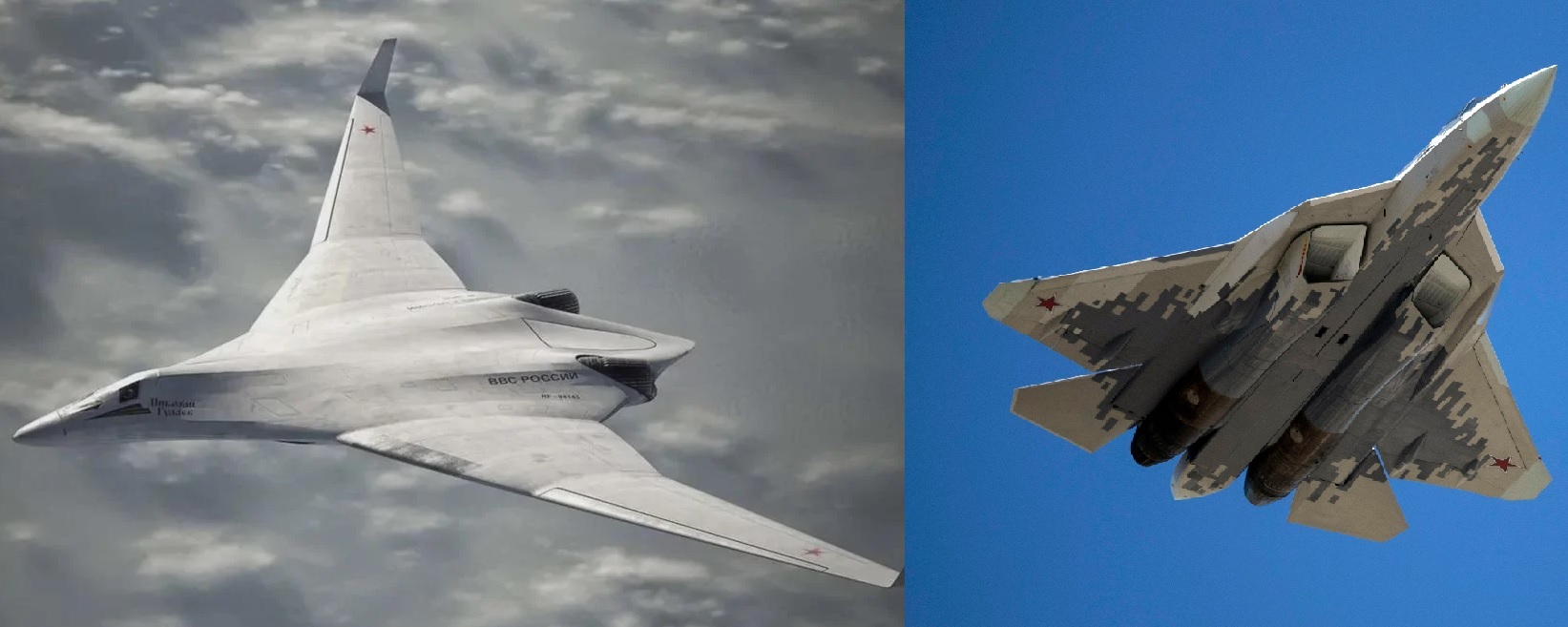
World
Russia’s top-secret PAK DA stealth bomber program — meant to replace its old Tu-95 and Tu-160 bombers — is facing serious delays. New leaked documents, reviewed by the group InformNapalm, show that Russian engineers are reusing parts from the Su-57 stealth fighter jet to keep the project alive. The leaks also reveal that Western sanctions and a shortage of modern manufacturing tools are slowing the aircraft’s progress. Production targets have now been pushed back to 2027, several years later than originally planned. Leaked Evidence of Shared Components The files, originating from OKBM, a key Russian manufacturer of aircraft hydraulic and mechanical subsystems, describe the integration of hydraulic actuators and geared hinges labeled 80RSh115 and 80RSh. These mechanisms — used to open and close internal weapon bays — are nearly identical to those developed for the Su-57 stealth fighter. In the PAK DA, these systems serve a similar purpose: operating the bomber’s large internal weapon bays while minimizing noise and radar signature. The documentation confirms a direct design lineage between fighter and bomber hardware, reflecting Moscow’s effort to standardize subsystems across platforms amid mounting resource limitations. The leak, published on November 4, 2025, also reveals that the program’s development has been slowed by European Union sanctions imposed on October 23 against OKBM, which further restricted access to precision machine tools and specialized materials. Sanctions and Tooling Bottlenecks Russia’s aviation industry has been under increasing strain since the 2022 sanctions wave that cut off access to Western industrial machinery. According to InformNapalm’s analysis, OKBM remains dependent on foreign-made CNC machines and grinding tools for precision actuator assembly. The EU’s 19th sanctions package, which blacklisted OKBM and related subsidiaries, has now severed imports of even basic metalworking accessories. This has caused production schedules for hydraulic and hinge assemblies to slide further, with the earliest subsystem readiness pushed to 2027. Insiders within Russia’s aerospace sector privately acknowledge that the lack of modern five-axis machining tools has forced manufacturers to rely on older Soviet-era equipment, resulting in slower throughput and higher defect rates. A Moscow-based aerospace analyst, speaking on condition of anonymity, said: “The sanctions are biting at the deepest level — production tooling. Without precision machining, you can’t build stealth-quality airframes. The PAK DA is suffering the same bottlenecks as the Su-57: an elegant design stuck inside an outdated industrial ecosystem.” A Project Decades in the Making The PAK DA (short for Perspektivny Aviatsionny Kompleks Dalney Aviatsii, or “Prospective Long-Range Aviation Complex”) has been under development since the late 1990s as Russia’s answer to the American B-2 Spirit and B-21 Raider stealth bombers. Initially conceived as a supersonic replacement for the Tu-160 and Tu-95MS, the project evolved in the 2010s into a subsonic flying-wing design, prioritizing range, payload, and radar invisibility over speed. The aircraft is being developed by Tupolev, with prototype assembly ongoing at the Kazan Aviation Plant. The bomber’s configuration features: A flying-wing airframe built with composite materials and radar-absorbent coatings. Two NK32-02 engines derived from the Tu-160M2, producing around 14,000 kg of thrust each in non-afterburning mode. An internal payload capacity of up to 35 tonnes, including nuclear and conventional standoff missiles such as the Kh-101, Kh-102, Kh-BD, and potentially future Kh-95 hypersonic weapons. An estimated range of 12,000–15,000 kilometers and endurance approaching 30 hours, allowing for intercontinental operations without refueling. Shared DNA with the Su-57 The reuse of Su-57 components is more than a cost-saving measure — it reflects the growing integration of Russia’s aerospace programs under industrial duress. Both aircraft rely on similar design philosophies: low observability, internal weapons storage, and modular subsystems that can be adapted across platforms. The Su-57’s internal weapon bay mechanisms, originally designed to reduce radar cross-section during missile deployment, were deemed compatible with the PAK DA’s stealth requirements. Engineers adapted the smaller fighter components into scaled-up actuator assemblies capable of handling the bomber’s significantly heavier bay doors. This convergence of design and production may simplify logistics and testing but also suggests limited innovation capacity, as existing technology is being repurposed instead of newly developed. Delays Stretch Toward 2027 The leaked files confirm that the testing phase for critical flight subsystems — including bay actuators, structural hinges, and thermal control systems — has been rescheduled through late 2026, with prototype integration planned for 2027. Originally, Russian officials hinted that the first PAK DA prototype would be ready for ground testing by 2023 and achieve a maiden flight by 2025. Those goals are now unrealistic. Insiders say that pre-production tooling, materials procurement, and component certification are lagging well behind schedule. The situation has been compounded by labor shortages across Russia’s defense industry, as skilled technicians are drawn to ongoing programs such as the Su-57 fighter and the Tu-160M2 modernization line. A Comparison with Western and Chinese Projects When compared to its Western counterpart, the U.S. B-21 Raider, the PAK DA faces a clear disadvantage. The B-21 benefits from an automated and diversified industrial base, while Russia’s program relies on a handful of specialized suppliers, all vulnerable to sanctions. China’s H-20 stealth bomber also presents competition in the same class — a flying-wing, subsonic platform optimized for endurance and low observability. While both the H-20 and PAK DA share design philosophy, China enjoys greater access to modern electronics and composite manufacturing, giving it a potential edge in development speed. Nonetheless, the PAK DA is expected to carry a larger payload and offer longer range, if Russia can overcome its production hurdles. Industrial Dependency: The Achilles’ Heel At the heart of the delays lies Russia’s dependence on precision manufacturing — an area still reliant on Western equipment. InformNapalm’s review of OKBM documents revealed contracts listing foreign machine tools from Hartford, Johnford, and Grindex brands as essential to the actuator production line. These machines were used to fabricate tight-tolerance hinge assemblies and hydraulic systems necessary for stealth operation. The sanctions regime now effectively blocks access to spare parts, software updates, and maintenance services for these tools, creating cascading disruptions across the production chain. Even with domestic support programs, Russia’s ability to scale production remains limited. The files conclude that industrial capacity — not design readiness — is the decisive factor affecting PAK DA’s timeline through the mid-2020s. A Stealth Bomber in Limbo The leaked files paint a sobering picture of Russia’s stealth bomber ambitions. While the PAK DA program continues to make incremental progress, it is constrained by technological isolation, manufacturing bottlenecks, and an overstretched defense industrial base. By reusing Su-57 fighter jet components, Moscow may have found a temporary workaround to sustain development. But the deeper reality remains: without access to advanced precision tooling and materials, Russia’s dream of fielding a next-generation stealth bomber before the end of the decade faces a turbulent flight path. In the words of one Russian defense insider: “The PAK DA is an impressive concept trapped in an outdated workshop. The design belongs to the 21st century — but the tools belong to the last one.”
Read More → Posted on 2025-11-11 12:37:24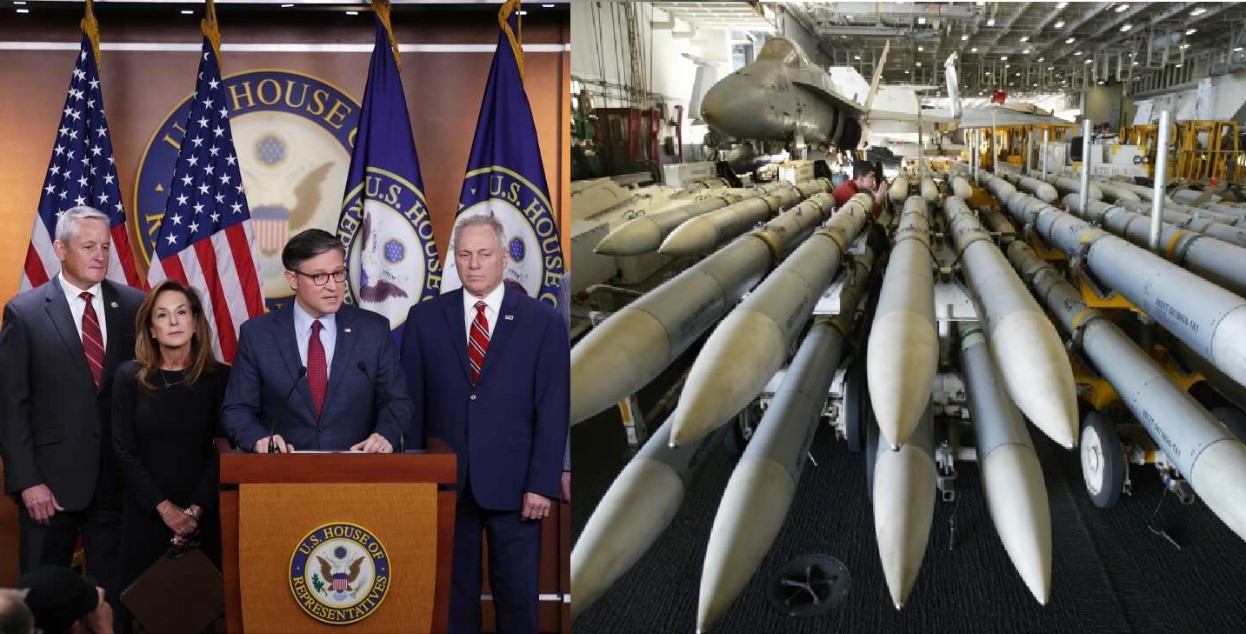
World
The ongoing U.S. government shutdown has brought parts of the American defense export machine to a standstill, delaying more than $5 billion worth of arms sales to key allies. According to an internal State Department estimate shared with Axios, dozens of major Foreign Military Sales (FMS) and Direct Commercial Sales (DCS) cases are now frozen — including shipments of AIM-120 AMRAAM air-to-air missiles, Aegis Combat Systems, and M142 HIMARS rocket launchers. The shutdown’s effect is being felt far beyond Washington. Buyers such as Denmark, Croatia, Poland, and Ukraine are among the countries facing delivery setbacks, raising fresh concerns about how domestic political gridlock in the United States can reverberate through global defense supply chains and frontline readiness. The Bottleneck at the State Department At the center of the disruption is the Bureau of Political-Military Affairs (State PM) — the key office responsible for reviewing and approving U.S. defense exports. Axios reports that the bureau is currently operating at just 25% of its normal staffing level, leaving it unable to process new export licenses or advance congressional notifications for pending FMS cases. The impact has been severe. Since October 1, only one new FMS case has been publicly disclosed — a modest military construction services package for Singapore. Normally, the bureau reviews multiple FMS and DCS proposals every week. FMS cases are jointly managed by the Department of Defense (DoD) and the State Department, but the imbalance in funding has deepened the shutdown’s impact. While the Defense Security Cooperation Agency (DSCA) — which administers FMS cases — is funded largely through administrative fees that keep part of its workforce operational, the State PM office depends on direct appropriations. When those appropriations stop, so does the work. In the case of Direct Commercial Sales, the situation is even more critical. DCS export licenses are entirely managed by State PM, meaning commercial contracts between U.S. defense manufacturers and foreign customers are effectively frozen. The $5 Billion Freeze: What’s Being Delayed The $5 billion in delayed sales reportedly includes a mix of new contracts awaiting approval and existing programs now stuck in administrative limbo. Among the affected systems are: AIM-120 AMRAAM missiles, essential for NATO air forces including those of Denmark and Croatia, as part of their fleet modernization efforts. Aegis Combat Systems, key to Poland’s naval modernization and missile-defense integration plans. M142 HIMARS launchers, among the most sought-after battlefield systems since the war in Ukraine began. These programs were expected to enter active delivery or congressional review during the current fiscal quarter. With the shutdown halting case development, production schedules may now shift by several months — potentially impacting training timelines and interoperability planning across multiple NATO militaries. Impact on Ukraine and NATO Allies The timing of the freeze could not be worse for Ukraine and its European partners. Many of the FMS and DCS programs affected are tied to NATO’s eastern defense posture — including indirect support packages for Ukraine’s armed forces. While official U.S. military aid to Kyiv is technically funded through separate appropriations, the broader shutdown has slowed new transfers, spare-parts deliveries, and maintenance approvals. Defense industry sources told Breaking Defense that several logistics contracts related to HIMARS ammunition resupply and radar components are “on pause until funding is restored.” For Poland, the delays could also affect its ambitious rearmament program, which relies heavily on U.S. technologies to expand its missile-defense coverage and integrate with the Aegis Ashore system. Denmark and Croatia, meanwhile, may face gaps in air-to-air weapon integration training if AMRAAM deliveries slip past the winter training cycle. How the Shutdown Paralyzes Defense Trade A U.S. government shutdown doesn’t simply freeze political negotiations — it halts the mechanics of defense trade at multiple layers: Staff Furloughs: Thousands of civilian staff within the State and Defense Departments are sent home, halting case management, licensing, and compliance review processes. Contractor Oversight: The Defense Contract Management Agency (DCMA) — which oversees contractor shipments and testing — cannot accept new materials during a shutdown, even when products are ready for delivery. Congressional Notification: New arms-sale cases above certain value thresholds require congressional notification before approval. With few staff working, these notifications are stalled indefinitely. Export Licensing: The State PM’s Directorate of Defense Trade Controls (DDTC) handles all DCS export licenses. Without its personnel, U.S. defense companies cannot legally deliver even pre-approved hardware abroad. In essence, the world’s largest defense export apparatus — responsible for over $80 billion in annual global arms transfers — is running at a fraction of its capacity. Ripple Effects Beyond U.S. Borders The shutdown’s impact extends beyond the immediate delays. NATO allies and Indo-Pacific partners are growing concerned about Washington’s reliability as a defense supplier, especially as geopolitical flashpoints intensify in Eastern Europe, the Middle East, and the South China Sea. European diplomats, speaking anonymously to Reuters, described the slowdown as “a wake-up call” about over-dependence on U.S. bureaucratic channels for defense cooperation. One senior defense attaché said, “If the United States cannot process arms sales due to political gridlock, it raises questions about the stability of alliance supply chains. The consequences go beyond paperwork — they affect deterrence.” Uncertain Future It remains unclear whether the $5 billion estimate covers only new cases awaiting approval or also existing shipments blocked from fulfillment. However, defense officials acknowledge that every additional week of shutdown compounds the backlog. Even after the government reopens, the State Department will need time to clear the administrative jam, meaning deliveries and contract negotiations could remain delayed well into early 2026. For now, defense manufacturers, U.S. allies, and partner militaries must wait — while Washington’s internal stalemate threatens to undercut its image as the world’s most dependable arsenal.
Read More → Posted on 2025-11-11 12:13:01
India
Washington D.C., November 11, 2025 — In a major diplomatic and economic announcement, U.S. President Donald Trump declared that the United States will cut tariffs on Indian goods by 50%, signaling what he described as a “much fairer” trade arrangement between the two nations. Speaking to reporters at the White House, Trump said Washington and New Delhi are “getting close” to sealing a new deal that will reshape bilateral trade ties strained in recent years. “We’re making a deal with India — a much different deal than we had in the past,” Trump said. “So right now, they don’t love me, but they’ll love us again. We’re getting a fair deal — just a fair trade deal. We had pretty unfair trade deals before, but we’re getting close.” Trump revealed that India’s high tariffs — which were imposed during earlier trade tensions — are being substantially reduced, partly due to India’s decision to scale back its purchases of Russian oil, which had earlier drawn U.S. scrutiny. “Right now, the tariffs on India are very high because of Russian oil,” Trump explained. “But they’ve been reduced very substantially. Yes, we are going to bring the tariffs down… At some point, we will bring them down.” A New Chapter in U.S.–India Trade Relations The announcement represents a turning point after years of economic friction between the two democracies. Relations cooled during Trump’s first term when the U.S. revoked India’s preferential trade status under the Generalized System of Preferences (GSP) in 2019, citing market access barriers. The decision affected billions in Indian exports, leading to retaliatory tariffs and a noticeable decline in bilateral trade momentum. Since then, both nations have been working to rebuild trust. The new deal — which Trump described as “a fair and balanced arrangement” — is expected to roll back some of the tariff measures and open new avenues for cooperation in energy, manufacturing, and digital trade. According to officials familiar with the negotiations, the framework could include mutual tariff reductions, expanded agricultural trade, and greater access for U.S. technology and medical equipment firms to India’s markets. Link Between Tariffs and Russian Oil The U.S. decision to ease tariffs reportedly follows India’s gradual reduction of Russian crude imports, which had surged after Western sanctions on Moscow in 2022. Washington had previously viewed India’s purchases of discounted Russian oil as a challenge to its sanctions regime. By early 2025, however, New Delhi began diversifying its oil imports, increasing supplies from the U.S., Saudi Arabia, and the UAE. Trump acknowledged this shift in his remarks, calling India’s adjustment “a positive move that strengthens our energy cooperation.” “They’ve cut Russian oil imports very substantially. That’s a big step in the right direction. So yeah, we will be bringing the tariffs on India down,” he said. This linkage underscores how geopolitics, trade, and energy have become deeply intertwined in U.S.–India relations — where strategic alignment often translates into economic incentives. Economic and Strategic Implications Analysts view the tariff reduction as more than a trade gesture — it’s a strategic recalibration aimed at reinforcing India’s position as a key U.S. partner in the Indo-Pacific. Dr. Elaine Parker, an international trade expert at the Atlantic Policy Institute, noted, “This is not just about economics. It’s about consolidating alliances. Trump’s administration sees India as central to counterbalancing China’s economic and military influence. Lower tariffs could boost U.S.–India trade by as much as 30% over the next two years.” India is currently the ninth-largest trading partner of the United States, with bilateral trade expected to exceed $200 billion in 2025. A 50% tariff cut could sharply increase exports in textiles, pharmaceuticals, auto components, and electronics — sectors where India has been seeking greater U.S. access. The deal is also expected to encourage American investments in Indian manufacturing, aligning with Prime Minister Narendra Modi’s “Make in India” and “Atmanirbhar Bharat” initiatives, which aim to position India as a global manufacturing hub. Remaining Challenges Despite the positive tone, several hurdles remain before a final deal is signed. Washington continues to press India for: Stronger intellectual property protections for U.S. companies, Market access reforms in agriculture and dairy, and Regulatory transparency in digital trade and e-commerce sectors. Meanwhile, New Delhi seeks easier visa rules for Indian professionals and relief from duties on steel, aluminum, and IT exports. Sources in both capitals say negotiators are working to finalize a phased tariff reduction roadmap, likely to be announced early next year, following consultations with business and trade representatives. A Political and Diplomatic Win For Trump, the announcement also carries political weight. Amid global concerns over trade wars and inflation, a breakthrough with India allows his administration to demonstrate progress in expanding U.S. markets while improving ties with a major Asian democracy. For India, the development is equally significant. It offers a boost to exports, reduced trade friction, and a reaffirmation of strategic trust with Washington — especially important as both nations deepen defense and technology cooperation under the Quad alliance. “It’s a fair deal for both sides,” Trump said confidently. “India will be happy, and the U.S. will be happy. We’re working on something that benefits both nations — something very big.” The U.S. decision to cut tariffs on India by half could mark the start of a new phase in one of the world’s most important bilateral relationships. What began as a transactional negotiation over trade imbalances has evolved into a strategic partnership anchored in shared economic and security interests. If the proposed agreement moves forward as signaled, it could redefine U.S.–India trade relations for the next decade — replacing friction with cooperation, and protectionism with partnership. For now, both Washington and New Delhi seem aligned on a common goal: rebuilding trust, boosting trade, and proving that diplomacy and economic pragmatism can still triumph in a divided world.
Read More → Posted on 2025-11-11 11:58:04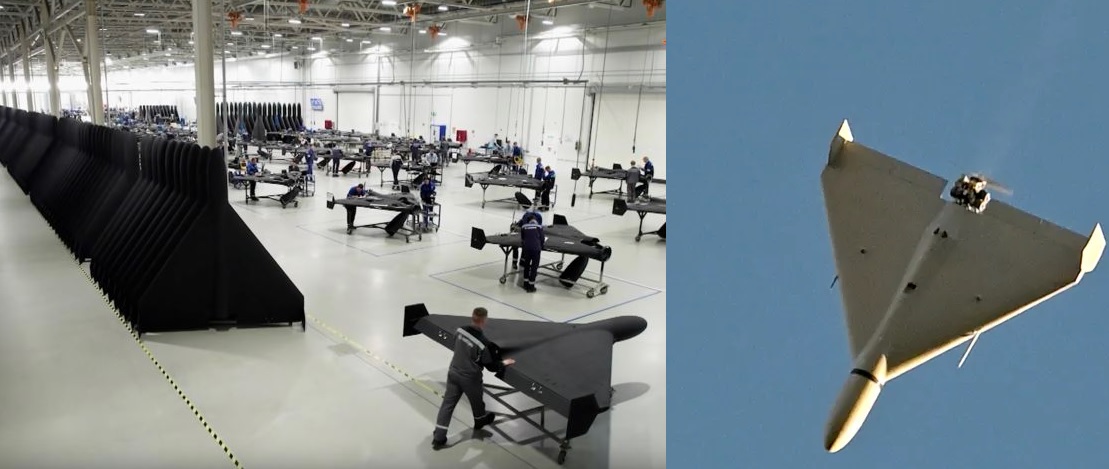
World
Russia’s ongoing war in Ukraine has entered a new technological and industrial chapter. What began as limited use of Iranian-supplied loitering munitions has now evolved into a vast, factory-driven campaign. Moscow is producing over 6,000 Shahed-type “Geran” drones every month, transforming the drone war into a high-volume, low-cost assault strategy designed to exhaust and overwhelm air defenses. The shift marks a turning point in modern warfare — where quantity, cost efficiency, and automation are proving as decisive as traditional firepower. Factories of War: Russia’s Drone Assembly Lines Much of this production surge is centered around the Alabuga Special Economic Zone in Tatarstan, which has become the core of Russia’s domestic drone manufacturing effort. Once reliant on Iranian imports, Moscow has now localized production of the Shahed-136, known in Russian service as the Geran-2, assembling thousands each month with an expanding network of suppliers. According to open-source intelligence, Russia has reached industrial output levels comparable to traditional weapons factories — building airframes, engines, and guidance systems on a near-continuous 24-hour cycle. Ukrainian officials estimate that by late 2024, output exceeded 6,000 drones per month, while newer data suggests Moscow could soon scale to 8,000 units monthly if supply chains remain stable. This industrialization allows Russia to unleash massive swarms of drones, sometimes exceeding 700 launched in a single night, saturating Ukrainian radar systems and forcing defenders to deplete costly interceptor stocks. The Cost Imbalance: $20,000 vs $3 Million The economics of this drone war are brutally one-sided. Each Shahed-type drone reportedly costs between $20,000 and $70,000 to produce — depending on its configuration and imported components. In contrast, the Patriot missile system, one of the West’s main defensive tools, uses interceptor missiles costing over $3 million each. The math is devastating: destroying a single drone can cost up to 150 times more than building it. Even less expensive interceptors, such as NASAMS or IRIS-T missiles, remain far pricier than the drones they target. For Russia, this imbalance is strategic. The goal is not only to strike physical targets but also to drain the financial and logistical endurance of Ukraine’s air defense network — a war of attrition fought as much through economics as through firepower. How Russia Built Its Drone Machine Russia’s journey to this industrial scale began in 2022, when it imported large quantities of Iranian Shahed-131 and Shahed-136 drones. Over time, engineers reverse-engineered the systems, adapting the design to local manufacturing capabilities. The Alabuga drone complex now functions as a hybrid assembly and innovation hub, staffed by thousands of workers — including engineers, technicians, and even students under defense training programs. The facility reportedly produces all core components domestically, except for a few imported microelectronics. Reports indicate Russia is also developing improved Shahed variants — with longer range, enhanced navigation systems, and smaller radar signatures. The drones’ modular construction allows for fast adaptation and simplified logistics, reducing the cost and time needed to repair or replace lost units. Overwhelming Defenses by Design The tactic behind these mass drone launches is simple but effective: saturation. By launching hundreds of drones simultaneously from different vectors, Russia aims to overload radar coverage, confuse targeting systems, and drain missile stocks. Even when many are intercepted, the volume ensures some reach their targets. Ukraine’s power infrastructure, logistics hubs, and ammunition depots have been repeatedly hit despite layers of air defense. The damage may be limited per strike, but the psychological and logistical toll accumulates nightly. A Ukrainian air defense officer recently described the problem bluntly: “For every Shahed we shoot down, we lose thousands of dollars. For every one we miss, we lose infrastructure. There’s no winning equation.” The Industrialization of Attrition What Russia has built is not just a drone program — it’s an industrial attrition model. By mass-producing cheap but effective weapons, Moscow can maintain constant pressure at minimal strategic cost. The economic asymmetry mirrors the Cold War’s quantity-over-quality doctrine, but with modern digital precision. Russia’s drone factories can deliver sustained firepower without draining its missile stockpiles, allowing it to preserve high-value munitions like Kalibr and Iskander for strategic strikes. Meanwhile, Ukraine and its Western partners must spend billions replenishing expensive interceptors. NATO officials privately admit that the drone war is forcing a rethink in air defense economics, with new urgency on developing low-cost anti-drone systems, from laser weapons to electronic jammers. Global Implications Russia’s industrial drone strategy is reshaping global military thinking. Its success demonstrates how cheap, mass-produced drones can challenge even the most sophisticated air defense networks. The implications go far beyond Ukraine: India, Israel, and European nations are reassessing their defense postures, recognizing that future conflicts may rely on sheer volume of unmanned systems. The Middle East and Asia are witnessing a surge in drone production programs inspired by this model — prioritizing cost-efficiency and scalability over high-end precision. Even NATO nations are shifting funding toward counter-drone research, realizing that traditional missile defense systems are too costly to sustain against swarm tactics. What Comes Next Analysts believe Russia will continue to refine its drone designs, integrating AI-assisted navigation, stealth coatings, and autonomous targeting to improve accuracy and survivability. Meanwhile, the West faces a strategic dilemma: whether to continue expending high-value interceptors or invest heavily in laser-based systems, micro-missiles, and drone-on-drone defenses to close the cost gap. As one European defense official noted, “Russia has made the drone what the tank once was — cheap, mass-produced, and devastating when used in numbers.”
Read More → Posted on 2025-11-11 11:47:14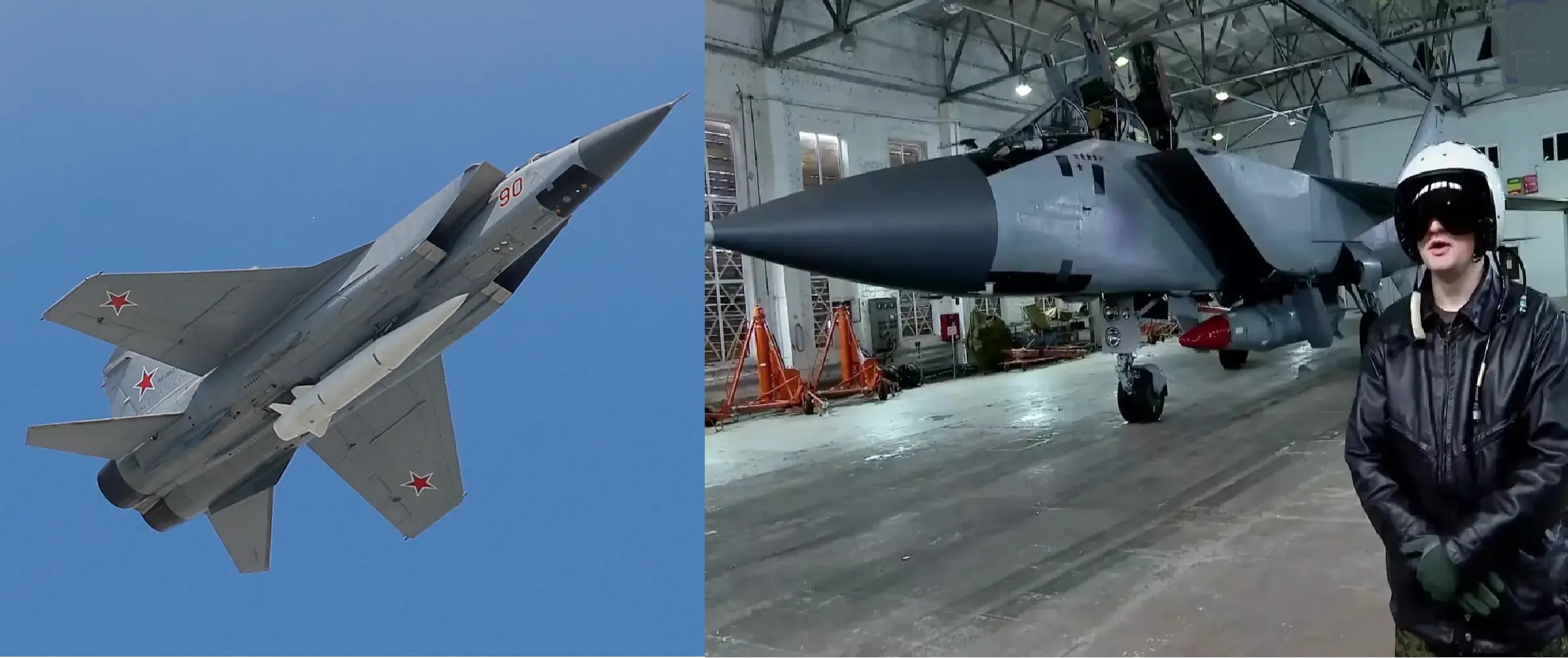
World
Russia’s Federal Security Service (FSB) claims to have thwarted an elaborate espionage operation allegedly orchestrated by Ukrainian and British intelligence agencies to hijack a MiG-31 interceptor jet equipped with a Kinzhal hypersonic missile, according to reports by RIA Novosti and other state media. The FSB stated that the operation was designed as a “large-scale provocation” that would have seen a Russian pilot fly the hijacked aircraft to a NATO airbase in Constanța, Romania, for a reward of $3 million and a promise of Western citizenship. Russian authorities said the plan was ultimately foiled before it could be executed, preventing what they called “a serious escalation attempt” by foreign intelligence services. The Alleged Plot According to the FSB’s report, Ukrainian military intelligence, allegedly backed and assisted by British operatives, sought to recruit an active Russian Air Force pilot who had access to MiG-31 aircraft stationed in central Russia. The pilot was reportedly approached through encrypted channels and promised $3 million in cash if he successfully defected with the aircraft and its missile system intact. The FSB claimed that the plan included explicit instructions for the pilot to fly toward Romania’s Black Sea coast, where he would land at a NATO airbase in Constanța. Russian media outlets said that Western planners expected the jet would likely be shot down by NATO air defenses, creating a spectacle that could be used to embarrass Moscow and frame Russia as unstable or internally divided. In a statement carried by RIA Novosti, the FSB said: “The measures taken have thwarted the Ukrainian and British intelligence services’ plans for a large-scale provocation. The intent was to steal a combat-ready MiG-31 aircraft equipped with a Kinzhal hypersonic missile and deliver it to a NATO country.” Evidence and FSB Footage Russian state television broadcast what it claimed were audio recordings, screenshots, and text messages between the recruited pilot and a man allegedly acting as a go-between for Ukrainian and British intelligence. In one clip, the intermediary could be heard discussing financial transfers and offering assistance in obtaining European citizenship once the mission was completed. The FSB did not reveal the pilot’s name, citing operational security, but said he had immediately reported the approach to his superiors. According to Russian officials, the communications were tracked, leading to the exposure of “foreign handlers operating under diplomatic and non-official cover.” What Makes the MiG-31 and Kinzhal Valuable Targets The MiG-31 “Foxhound” is one of Russia’s most capable long-range interceptor aircraft, capable of flying at speeds above Mach 2.8 and operating at altitudes exceeding 60,000 feet. Its ability to carry the Kh-47M2 Kinzhal, a nuclear-capable hypersonic missile, makes it a key part of Russia’s strategic deterrence arsenal. The Kinzhal missile, which Moscow says can travel at up to Mach 10, is designed to evade enemy radar and missile defenses while delivering precision strikes at distances of up to 2,000 kilometers. It has been used in limited numbers during Russia’s campaign in Ukraine, although Western analysts debate its “hypersonic” classification and performance claims. Given the sensitivity of the system, the successful defection of a MiG-31 equipped with a Kinzhal would have represented one of the most significant intelligence coups of the war — potentially giving NATO and Ukraine access to classified radar, propulsion, and guidance data. The Political and Strategic Context The FSB’s announcement arrives amid escalating accusations between Moscow and Western governments over covert operations and espionage. Russia has repeatedly accused Britain of directing sabotage missions, drone attacks, and cyber intrusions in support of Kyiv. For its part, London has portrayed the allegations as part of a broader Russian disinformation campaign, insisting that Moscow’s invasion of Ukraine is an “unprovoked act of aggression.” The British government has frequently warned of Russian intelligence operations aimed at destabilizing Europe, spreading propaganda, and intimidating Western allies. The alleged plot, if true, underscores the deepening intelligence shadow war between Russia and NATO — one that increasingly focuses not just on battlefield reconnaissance but also on psychological and symbolic operations capable of influencing global perception. Questions of Verification International observers have been cautious in assessing the FSB’s claims. Reuters, which cited Russian state media, noted that it could not independently verify the details of the alleged plot or the authenticity of the communications shown on Russian television. Neither Ukraine’s Defense Intelligence Directorate (GUR) nor the British Ministry of Defence has publicly commented on the accusation. Analysts say that while such recruitment attempts are plausible — given the precedent of previous defection operations during the Cold War — the story also serves Russia’s narrative of portraying Western nations as aggressors seeking to destabilize its military. Whether entirely accurate or partly propagandistic, the FSB’s announcement marks the latest chapter in an intensifying intelligence confrontation between Russia and the West. If genuine, the alleged operation would represent one of the boldest covert efforts since the start of the Ukraine war — the attempted theft of a MiG-31 interceptor armed with a Kinzhal hypersonic missile. If fabricated or exaggerated, it still achieves a powerful political effect: reinforcing Moscow’s message that Western powers are not merely backing Kyiv but directly orchestrating espionage operations inside Russia. Either way, the episode highlights a growing reality — that in today’s conflict, battles for aircraft and missiles are often preceded by battles for minds, loyalty, and information.
Read More → Posted on 2025-11-11 11:34:33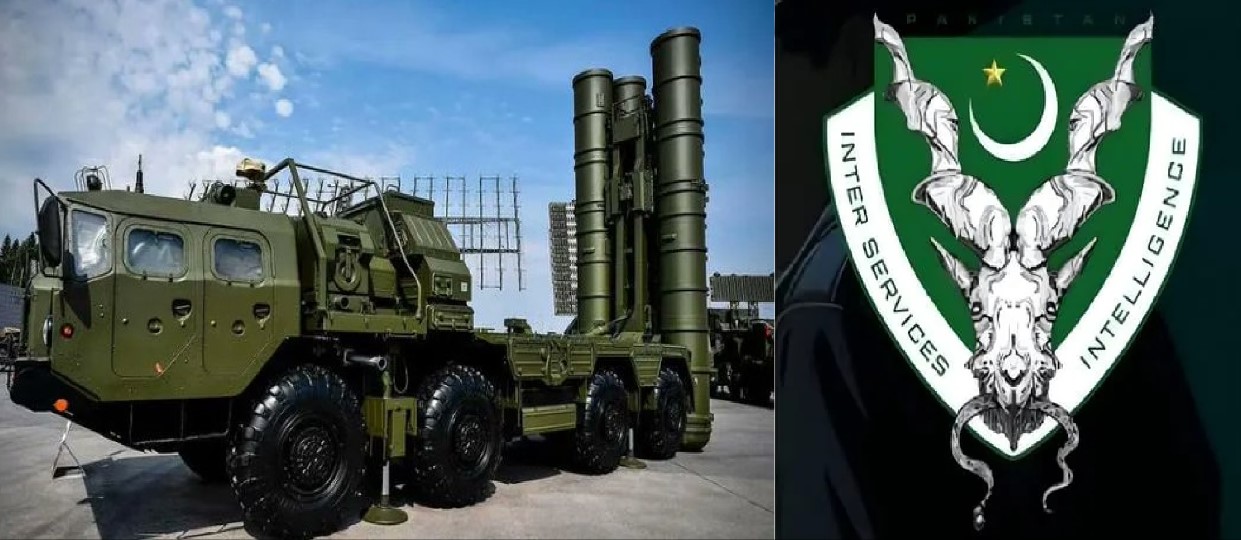
World
In a major counterintelligence breakthrough, Russia’s security agencies have dismantled a spy network linked to Pakistan’s Inter-Services Intelligence (ISI), accused of attempting to smuggle classified Russian military technologies to foreign actors. The arrest of a Russian national in St. Petersburg has brought to light a sophisticated espionage attempt targeting the S-400 air defense system and the Mi-8AMTShV/VA military transport helicopters — two of Russia’s most advanced and strategically sensitive defense assets. Espionage Uncovered in St. Petersburg According to the Federal Security Service (FSB), the suspect — a Russian national whose identity has not been publicly disclosed — was caught trying to exfiltrate secret technical documents from a defense enterprise in St. Petersburg. Investigators say the files contained blueprints, component specifications, and operational data for Russia’s next-generation Mi-8AMTShV helicopter series and the S-400 Triumf long-range air defense missile system. The Mi-8AMTShV, a modernized derivative of the legendary Mi-8 platform, is built for assault, transport, and special operations, while the Mi-8AMTShV (Arctic variant) features enhanced insulation, de-icing systems, and extended-range fuel tanks for operations in sub-zero conditions. The S-400, on the other hand, is a cornerstone of Russia’s air defense network, capable of intercepting aircraft, drones, and ballistic missiles at ranges up to 400 kilometers. The FSB said the documents were being prepared for illicit transfer to a foreign intelligence service, and early investigations have traced the coordination back to contacts linked with Pakistan’s ISI. A Wider Web of Espionage Russian media reports suggest this is not an isolated incident but part of a wider intelligence-gathering effort targeting Russia’s high-end defense programs. Investigators are probing whether ISI operatives were working directly or serving as intermediaries for a third country — possibly China or the United States — seeking to acquire S-400 technical data through proxy networks. Security analysts believe Pakistan’s ISI may have been acting as a cut-out — a middle channel for relaying intelligence to a more powerful state actor with strategic interest in Russia’s systems. The S-400, in particular, is of high interest to both China, which already operates a variant of the system, and to Western agencies, which are eager to study the radar and missile guidance architecture used to defeat stealth aircraft. A senior Moscow-based defense analyst told Kommersant that “this operation bears the hallmarks of multi-tier espionage — where smaller nations’ agencies are used to collect data that later flows into the hands of larger intelligence ecosystems.” Why the S-400 Is a Prime Target The S-400 Triumf is among the most powerful surface-to-air missile systems ever produced. It can track up to 300 aerial targets simultaneously and engage multiple threats at various altitudes. The system’s ability to detect and engage low-observable (stealth) aircraft and hypersonic targets has made it one of Russia’s most valuable exports. India, China, and Turkey have all procured variants of the S-400, making its protection a top priority for Moscow. Any breach of its classified data could compromise air defense operations globally, especially for India, which relies on the system to protect its northern borders against aerial incursions. If even partial design data or radar codes were to fall into foreign hands, adversaries could develop countermeasures to reduce the S-400’s effectiveness — a potential game-changer in modern air defense strategy. How the Operation Was Exposed According to reports from TASS and Defenseworld.net, the FSB had been monitoring unusual communications between a Russian defense employee and foreign entities for several months. The suspect allegedly used encrypted channels and offshore email accounts to coordinate with handlers abroad. When security agents intervened, they recovered digital storage devices, schematics, and transmission logs prepared for smuggling. The FSB described the operation as a “preventive strike” that stopped classified data from leaving the country. The suspect now faces charges under Article 275 of the Russian Criminal Code — “High Treason by Espionage” — which carries a sentence of up to 20 years in prison. Growing Threat to Defense Supply Chains The attempted theft highlights a broader concern within Russia’s security establishment — the growing global competition for advanced military technology. With the rapid modernization of military systems, espionage efforts increasingly focus on digital blueprints, software, and radar algorithms, rather than physical equipment. Russia’s defense supply chains, particularly those linked to export-grade systems like the S-400 and Su-30MKI, have become frequent targets for cyber and human intelligence operations. Analysts warn that such activities pose a risk not only to Russian national security but also to partner nations such as India, which rely on Russian systems for their strategic deterrence. A senior researcher from the Moscow Centre for Strategic Technologies noted, “If adversarial networks gain access to even fragments of the S-400’s electronic warfare or radar configuration, it could undermine the system’s battlefield integrity. This is not just an attack on Russia’s defense industry — it’s an attack on a shared defense ecosystem.” Implications and Aftermath Following the arrest, the Russian Ministry of Defence has reportedly tightened access protocols at several key defense production facilities, especially those linked to export contracts. India’s Defense Ministry is also monitoring developments closely, given the potential link between the targeted data and its deployed S-400 regiments. Meanwhile, Moscow’s intelligence community is exploring whether foreign agencies encouraged ISI involvement to avoid direct attribution. Some experts believe this reflects a new era of proxy espionage, where smaller intelligence services act as conduits for powerful nations seeking plausible deniability. The foiling of Pakistan’s ISI-linked spy network represents one of Russia’s most significant counterintelligence victories in recent years. By intercepting the attempted theft of classified data on the S-400 air defense system and Mi-8AMTShV helicopters, Moscow has not only safeguarded its defense secrets but also exposed the global shadow war over military technology. Whether the ISI acted independently or under the influence of a larger intelligence consortium remains under investigation. But one thing is clear — the race to access and exploit next-generation defense systems has escalated into a new front of espionage, where stolen blueprints may prove as dangerous as stolen missiles.
Read More → Posted on 2025-11-10 17:10:21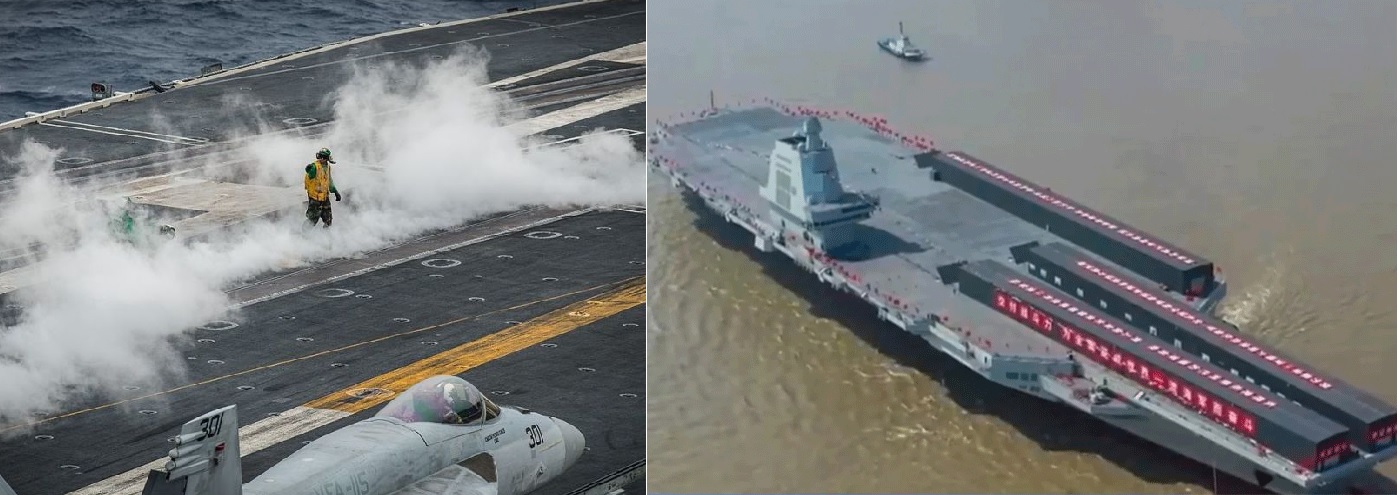
World
For over six decades, steam catapults have been the defining feature of American aircraft carriers. They have launched everything from F-4 Phantoms to F/A-18 Hornets, reliably flinging thousands of aircraft from the decks of supercarriers across the world’s oceans. Yet, as the 21st century ushered in a new era of naval technology, the U.S. Navy began developing what many considered the future of carrier aviation — the Electromagnetic Aircraft Launch System (EMALS). However, despite the initial excitement, the United States has not yet adopted electromagnetic catapult systems across its entire carrier fleet. In fact, only the USS Gerald R. Ford (CVN-78) currently uses EMALS, while the rest of the Navy’s carriers still rely on tried-and-tested steam catapults. The reasons behind this are complex, combining technical hurdles, integration challenges, financial pressures, and political oversight. The Promise of EMALS At its core, EMALS was designed to replace steam catapults with a far more efficient and modern alternative. Instead of relying on high-pressure steam, EMALS uses linear induction motors — long tracks of electromagnetic coils that create a controlled magnetic field — to propel aircraft down the flight deck. The benefits were meant to be transformative. EMALS offers smoother acceleration, reducing stress on both the airframe and pilot. It can launch a wider range of aircraft, including light unmanned aerial vehicles (UAVs) and heavy next-generation fighters. It also eliminates the need for massive boilers, complex plumbing, and heavy maintenance required by steam systems. From a design perspective, EMALS was expected to improve sortie generation rates, reduce manpower, and allow future carriers to launch both manned and unmanned aircraft seamlessly. Why the U.S. Didn’t Abandon Steam Completely Despite the advantages, the transition from steam to electromagnetic launch systems has been far more difficult than expected. While EMALS was successfully built and installed on the Ford-class carriers, its early performance fell short of expectations — and the Navy decided to proceed cautiously before committing it fleet-wide. 1. Reliability Challenges The first and foremost issue was reliability. EMALS is an incredibly complex electrical system requiring precise synchronization between its motor components, energy storage systems, and power electronics. Early testing revealed frequent system failures and inconsistent performance, leading to delays in flight operations. According to internal test reports, EMALS initially suffered mean cycles between failure rates far below Navy targets. For a carrier designed to conduct hundreds of launches per day, even minor reliability issues can quickly escalate into operational disruptions. Steam catapults, though old-fashioned, are rugged, well-understood, and proven — making the Navy hesitant to take on unnecessary risks in combat operations. 2. Power System Integration EMALS is also extremely power-hungry. Unlike steam catapults that draw power from the ship’s boilers, electromagnetic systems require enormous amounts of electrical energy storage and rapid power discharge. The Ford-class nuclear reactors were specifically designed to provide this capability, but older Nimitz-class carriers were not. Retrofitting Nimitz-class ships with EMALS would require a complete redesign of their power generation and distribution systems — an effort costing billions and requiring years in dry dock. In practical terms, it simply isn’t worth the expense or the downtime for ships already halfway through their service life. 3. Cost and Schedule Overruns EMALS became a high-profile part of the Ford-class cost overruns, with its development and integration contributing to budget escalations and schedule delays. The program became a lightning rod for criticism in Congress, where lawmakers demanded accountability for the Navy’s ambitious technology programs. Under such scrutiny, Navy leadership prioritized stabilizing performance and reducing risk before moving forward with additional EMALS-equipped carriers. The result was a slower, more conservative rollout rather than a wholesale shift. 4. Political Oversight and Public Criticism While no formal political decision stopped EMALS, Congressional oversight created strong pressure on the Navy to “prove it works before expanding it.” Lawmakers, defense analysts, and watchdog groups questioned whether it was wise to introduce multiple untested systems (EMALS, advanced arresting gear, dual-band radar) on the same ship class. The Navy, already facing criticism for delays in Ford’s readiness, decided to consolidate efforts on making EMALS reliable on CVN-78 before expanding its use to future ships like USS John F. Kennedy (CVN-79) and USS Enterprise (CVN-80). Not Abandoned — Just a Slow Transition It’s important to note that the United States did not abandon EMALS. The system is operational aboard USS Gerald R. Ford, which completed its first deployment in 2023 and launched thousands of aircraft during trials. Subsequent ships in the Ford-class — including CVN-79 and CVN-80 — are also planned to feature EMALS once reliability metrics improve. In other words, EMALS is built and in use, but it’s still in the refinement stage, not yet mature enough to justify large-scale retrofits or rapid fleet integration. Why Steam Still Rules — For Now The steam catapult remains in use not because of nostalgia, but because of practicality. It’s proven, dependable, and deeply integrated into existing ship systems. As long as Nimitz-class carriers remain the workhorses of the U.S. Navy, steam will continue to serve. Furthermore, the Navy’s next-generation carrier strategy focuses on balancing innovation with operational reliability. It has learned from the Ford-class experience that introducing too many revolutionary systems simultaneously creates unnecessary risk. The service is now pacing its modernization efforts to ensure reliability, cost efficiency, and combat readiness come first. The Global Context: China’s Challenge Meanwhile, the People’s Liberation Army Navy (PLAN) has introduced its own electromagnetic catapult on the Fujian (Type 003) carrier, signaling China’s ambition to close the technology gap. Beijing’s adoption of an EM launch system has reignited debate in Washington over whether the U.S. should accelerate its own adoption timeline. However, while China’s progress is noteworthy, its system has not yet been tested in real carrier operations. The U.S. Navy, with decades of experience in carrier aviation, is taking a deliberate, data-driven approach — preferring proven reliability over rushed technological demonstration. The U.S. Navy’s cautious handling of EMALS reflects a broader truth about military innovation: revolutionary technology must earn its place through reliability and performance, not just promise. As the Navy works through EMALS’ remaining issues, the system’s long-term advantages — reduced maintenance, improved sortie rates, and support for next-generation UAVs — will likely ensure its place in future carriers. For now, however, steam catapults remain the backbone of American naval aviation — a 20th-century invention still launching the world’s most advanced aircraft, while the electromagnetic future slowly takes shape on the deck of the USS Gerald R. Ford.
Read More → Posted on 2025-11-10 17:02:05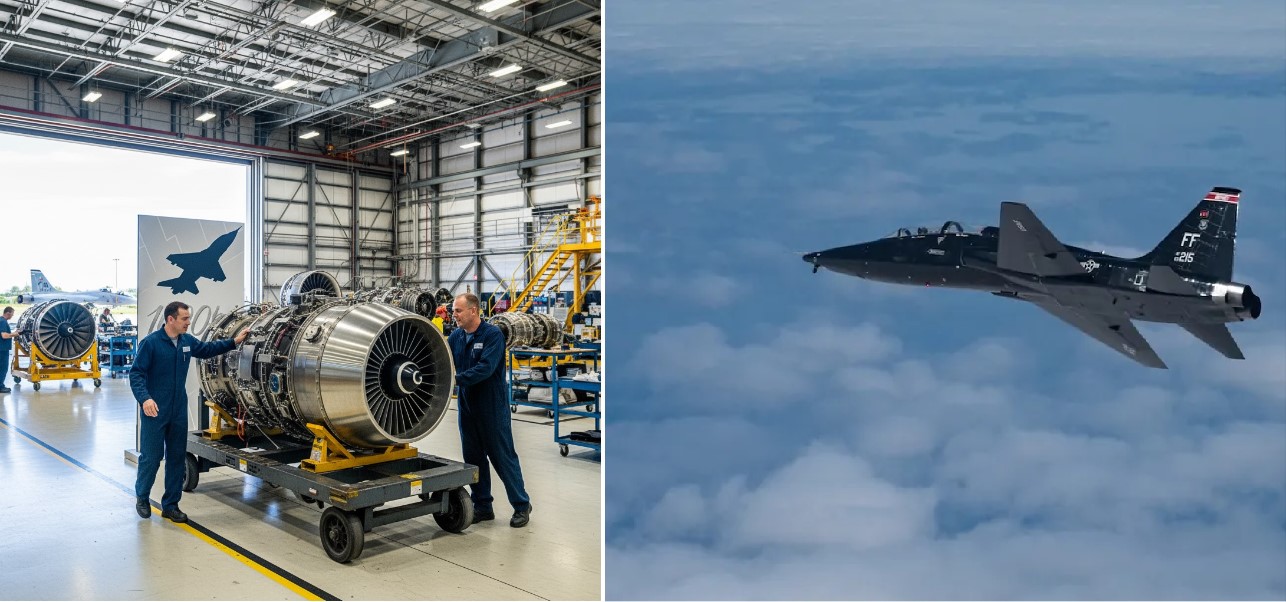
World
In a landmark achievement for American aerospace sustainment, StandardAero has announced the delivery of its 1,000th GE J85-5 turbojet engine to the United States Air Force (USAF). The milestone comes just five years after the company began supporting the engine under the Engine Regional Repair Center (ERRC) contract, marking a significant step in maintaining the readiness of the USAF’s T-38 Talon training fleet. The J85-5 engine powers the T-38, a twin-engine supersonic jet trainer that has been a vital component of U.S. and allied pilot training programs for more than six decades. Despite its vintage design, the aircraft remains the backbone of advanced pilot training, bridging the gap between basic flight instruction and modern fighter operations. A Milestone Rooted in Scale and Precision All J85-5 engines under this program are serviced at StandardAero’s Port San Antonio facility in Texas — a sprawling 810,000-square-foot site that handles five major military and commercial MRO (Maintenance, Repair, and Overhaul) programs. The facility has become one of the most capable and productive military engine repair centers in the country, with advanced tooling, digital workflow systems, and a growing workforce of skilled technicians. The company’s Aviation Mechanic Training Program, also located at Port San Antonio, trains over 200 mechanics annually, ensuring a steady stream of qualified professionals to support both military and commercial engine maintenance. This in-house capability not only bolsters the J85-5 program but also strengthens the broader U.S. aerospace sustainment workforce. Celebrating the 1,000th Engine To mark the occasion, StandardAero hosted a ceremony at the Tech Port Center in Port San Antonio. The event was led by Greg “Chappy” Chapman, Program Manager for the J85-5 line, and attended by production staff, USAF representatives, and local officials. Speaking at the event, Rick Pataky, Vice President and General Manager of StandardAero’s Military Division, emphasized the importance of the partnership: “Supporting the USAF pilot training mission is a tremendous honor. Delivering 1,000 engines in such a short timeframe is a testament to the dedication and collaboration of our entire team.” Marc Drobny, President of StandardAero’s Military, Helicopter, and Energy Division, highlighted the depth of cooperation between the company and the Air Force’s logistics and propulsion teams: “This milestone reflects the strength of our partnership with the USAF Propulsion Program Office, the Air Education and Training Command, and the 448th Supply Chain Management Wing. Together, we’ve built a resilient and transparent value chain that supports the entire J85-5 fleet, flight line, and national security.” A Legacy Engine with a Modern Role First designed in 1954 by GE Aerospace, the J85-5 remains one of the longest-serving military jet engines in continuous operation. Compact, powerful, and reliable, it originally powered aircraft such as the GAM-72 Green Quail decoy and the Northrop F-5 Freedom Fighter (N156F). Its commercial derivative, the CJ610, went on to power early Learjet models, cementing the engine’s place in both military and civilian aviation history. Despite its age, the J85-5 continues to play a crucial role in preparing new generations of fighter pilots. The engine’s service life is expected to continue well into the 2040s, with incremental upgrades and overhaul programs ensuring its performance and reliability remain at modern standards. Expanding MRO Footprint and Capabilities StandardAero’s work on the J85-5 is part of a broader engine support portfolio that includes the LEAP-1A and LEAP-1B commercial turbofan engines, serviced under the company’s status as a CFM LEAP Premier MRO Provider. The Port San Antonio site has expanded operations since March 2024, enhancing throughput and turnaround times for both military and commercial customers. Beyond Texas, the company’s Stockton, California facility handles other J85 variants, providing component repair support for the USAF J85 MISTR system since 2013. It also services the J85-21 engine for the U.S. Navy and Foreign Military Sales (FMS) partners — further underscoring StandardAero’s integral role in supporting legacy propulsion systems across multiple services. Strengthening the Air Force Training Backbone The delivery of 1,000 overhauled engines represents more than just a production milestone — it symbolizes the health of the U.S. military’s industrial base and its ability to sustain aging yet essential systems. The T-38 Talon remains central to USAF training programs, providing critical flight hours for student pilots before they transition to advanced platforms such as the F-15EX, F-16, and F-35. By maintaining a reliable pipeline of overhauled J85-5 engines, StandardAero ensures that the Air Force’s training missions continue without disruption. In an era when defense readiness increasingly depends on industrial speed and reliability, such partnerships between the private sector and the military are vital. StandardAero’s achievement highlights how legacy platforms can continue to serve effectively when supported by modern industrial practices, digitalized maintenance systems, and a dedicated workforce. As the U.S. Air Force gradually transitions to the Boeing-Saab T-7A Red Hawk, the T-38 Talon — and its J85-5 powerplant — will remain in service for at least another decade, bridging the gap between generations of training aircraft. For now, the delivery of the 1,000th J85-5 engine stands as a clear indicator that America’s aerospace sustainment ecosystem remains strong — ensuring that every aspiring pilot in the T-38 can take off with confidence, powered by an engine that has earned its place in aviation history.
Read More → Posted on 2025-11-10 16:47:04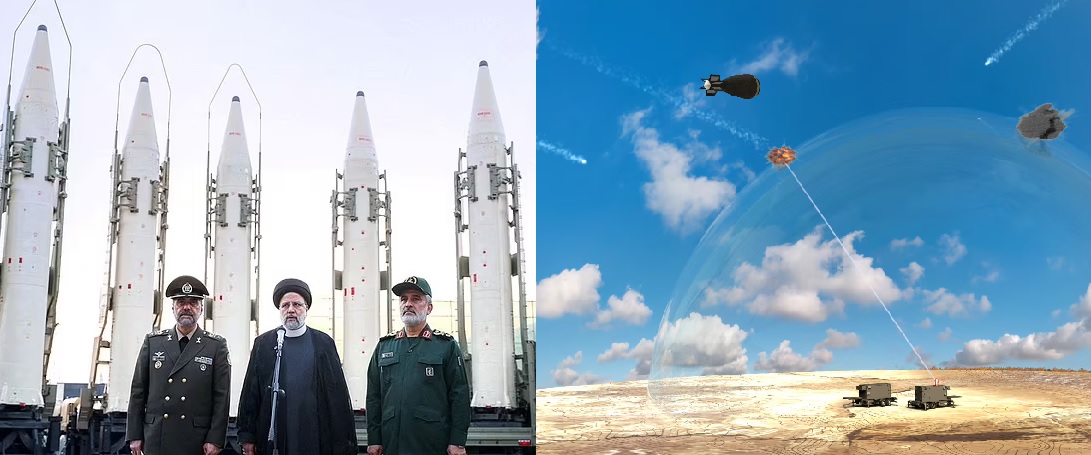
World
Tensions between Iran and Israel are once again reaching a dangerous peak. Intelligence reports cited by The New York Times warn that Tehran is preparing for a much larger and deadlier confrontation than before. Iran’s missile factories are working around the clock, and its military is reportedly building the ability to launch up to 2,000 missiles at once at Israel — a dramatic escalation compared to the 500 missiles fired over 12 days during the June 2025 clashes. This time, both countries are moving beyond ordinary military posturing. Iran is preparing for a fast, overwhelming strike, while Israel is strengthening its defenses — not only against ballistic missiles but also developing new systems to intercept hypersonic weapons, a threat that could soon enter the Middle East battlefield. Iran’s New Plan: Overwhelm, Not Contain Iran’s military planners appear to have drawn lessons from previous engagements. Instead of smaller, controlled retaliations, Tehran now aims to unleash a single, massive wave of missile fire designed to overwhelm Israel’s air defenses. The missiles Iran is producing — including Zolfaghar, Qiam, and Emad variants — have ranges of up to 2,000 kilometers, easily covering all of Israel. By launching them simultaneously, Iranian strategists hope to exhaust Israel’s interceptors and sensors, allowing some warheads to hit key targets such as military bases, energy facilities, and command centers. U.S. intelligence assessments also indicate that despite former President Donald Trump’s claim that he “destroyed” Iran’s nuclear program, most of Iran’s uranium stockpile survived and has been moved to secret underground facilities. These sites are now believed to be heavily fortified, suggesting Tehran expects airstrikes and is preparing to endure them. Israel’s Response: Stronger Shields and Smarter Weapons Israel is not waiting for the next attack to happen. The Israeli Defense Forces (IDF) have accelerated upgrades across their entire defensive network and expanded cooperation with U.S. and European partners on missile tracking and counter-hypersonic technology. The backbone of Israel’s defense remains its multi-layered air defense system, which includes: Iron Dome – intercepts short-range rockets and mortars. David’s Sling – targets medium-range ballistic and cruise missiles. Arrow 2 and Arrow 3 – intercepts long-range ballistic threats, even outside the atmosphere. After Iran’s missile attack in June 2025, Israel enhanced its radar coverage and improved coordination between defense layers. However, military officials acknowledged that a 2,000-missile salvo could test even the most advanced systems. That realization led Israel to unveil its newest weapon: Iron Beam — the first laser-based air defense system ever deployed for real-world protection. Iron Beam: The First Operational Laser Defense System The Iron Beam, developed by Rafael Advanced Defense Systems, has now entered active service, marking a historic milestone for Israel’s defense capabilities. Using a high-energy laser, the system destroys incoming rockets, mortars, drones, and short-range missiles by heating and disintegrating them mid-air. Unlike conventional interceptors, which cost thousands of dollars per missile, each Iron Beam shot costs only a few dollars of electricity. This makes it the perfect counter to the kind of mass-attack strategy Iran is preparing for — especially against cheap, numerous projectiles. Israel’s Defense Minister Yoav Gallant announced earlier this year that Iron Beam units are already deployed in southern Israel and will soon be stationed near major cities. It can neutralize threats within a 10-kilometer radius and will be upgraded to cover larger distances in future versions. “For the first time, Israel has a defense weapon that intercepts at the speed of light,” Gallant said.“Iron Beam will become a key layer in protecting the country against rockets and drones.” Next Step: Defending Against Hypersonic Missiles Beyond defending against traditional ballistic and cruise missiles, Israel is also developing systems to intercept hypersonic weapons — missiles that travel at more than five times the speed of sound (Mach 5) and can maneuver unpredictably. Iran, along with Russia and China, has shown growing interest in hypersonic technology. Iranian state media even hinted at the development of a prototype hypersonic missile in 2024. Though unverified, such announcements have alarmed Israeli and Western defense planners. In response, Israel Aerospace Industries (IAI) and the Defense Ministry’s Missile Defense Organization (IMDO) have started work on an advanced interceptor known as Arrow-4 and other classified projects aimed at tracking and neutralizing hypersonic threats. These new systems are being designed to react within seconds, combining next-generation radar sensors, AI-based tracking, and possibly laser-assisted interception. A senior Israeli defense scientist stated that Israel “cannot afford to wait” until hypersonic missiles appear in the region. “We are developing a shield for the threats of tomorrow — fast, maneuvering, and unpredictable weapons. Hypersonic interception is no longer science fiction for Israel.” If successful, Israel would become one of the first nations — after the U.S. — to possess operational hypersonic defense capability. Building a Multi-Layered Future Shield With Iron Beam now operational and hypersonic defense under development, Israel’s future air shield will consist of multiple, overlapping layers: Iron Dome and Iron Beam for short-range threats. David’s Sling for medium-range missiles. Arrow 2, Arrow 3, and the upcoming Arrow 4 for long-range and hypersonic threats. This setup is intended not only to protect against Iran but also to counter growing dangers from Hezbollah in Lebanon, militias in Syria and Iraq, and potential Houthi missile attacks from Yemen. The Countdown to Conflict Both Iran and Israel are racing toward a confrontation that many experts say is inevitable. Iran is producing more missiles and dispersing them in hidden silos, while Israel is responding with lasers, advanced interceptors, and preparations for preemptive strikes. Tehran believes that a massive missile attack can break Israel’s defenses. Israel believes that technology and speed will keep it safe. But as both sides continue to prepare, the risk of war grows by the day. As one Israeli official put it: “The next war will happen in minutes, not days — with hundreds or thousands of missiles in the air.” In the race between Iran’s missiles and Israel’s lasers, one thing is clear: the Middle East is standing at the edge of a new era in warfare — where the outcome will depend on who can strike faster and defend smarter.
Read More → Posted on 2025-11-10 16:39:02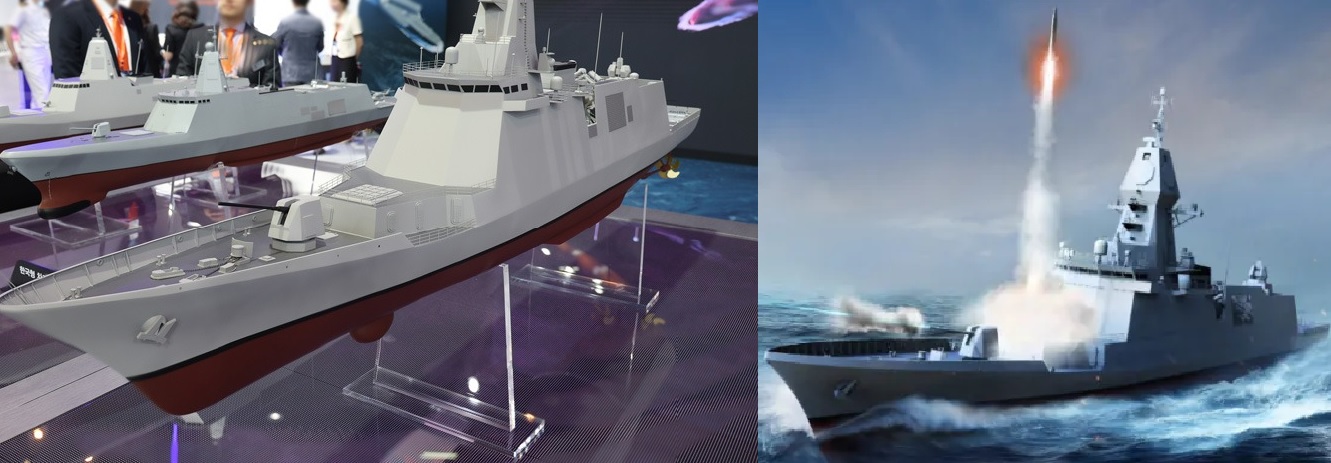
World
South Korean shipbuilder Hanwha Ocean made a major stride in its international defense outreach at the Defense & Security 2025 exhibition in Bangkok, Thailand. The company inked Memorandums of Understanding (MoUs) with three leading European defense firms — Naval Group, MBDA, and Cohort — marking a significant step toward its bid for the Royal Thai Navy’s (RTN) second-phase frigate acquisition program, expected in 2026. Strengthening the OCEAN-40F Frigate Program As part of the new MoUs, France’s Naval Group will provide its SETIS Combat Management System (CMS), while MBDA will deliver a range of naval missile systems for Hanwha Ocean’s OCEAN-40F design. The OCEAN-40F is the latest evolution of Hanwha’s export frigate lineup, specifically tailored to meet the operational needs of the Royal Thai Navy. During the same event, Hanwha Ocean also signed an MoU with British defense company Cohort, covering a comprehensive package that includes sonar systems, torpedo launcher systems, surveillance, targeting and fire-control systems, as well as communications management. This set of agreements demonstrates Hanwha’s growing willingness to integrate European technologies into its warship offerings, aiming to deliver a truly multi-domain combat platform capable of performing advanced maritime operations. A Rare Partnership: SETIS on a Non-French Hull It is relatively unusual for Naval Group to equip another shipbuilder’s vessel with its SETIS CMS. Traditionally reserved for Naval Group’s own designs, this collaboration underscores the flexibility and export-driven nature of the deal. However, there is a historical precedent — the Royal Norwegian Navy’s Skjold-class corvettes, built by Kvaerner/Umoe Mandal, also employed a Naval Group (then DCNS) CMS system, the SENIT 2000. According to defense industry sources, SETIS was chosen for Hanwha’s OCEAN-40F due to its compatibility with European missile systems, including MBDA’s VL Mica surface-to-air missiles, Simbad RC VSHORAD systems, and Exocet MM40 Block 3C anti-ship missiles. These weapons are already fully integrated with the SETIS ecosystem — unlike Hanwha Systems’ indigenous CMS, which would require extensive reconfiguration for such integration. Hanwha Ocean’s Statement: “Game Changer at Sea” In a statement released at the exhibition, Hanwha Ocean described its OCEAN-40F as the centerpiece of its naval portfolio under the theme “Game Changer at Sea – Unmatched Lethality, Seamless Combat Readiness.” “This model, proposed for the Royal Thai Navy’s second frigate program, builds upon the legacy of the 2018 delivery. The upgraded design expands from 3,750 tons to 4,000 tons, providing enhanced blue-water operational capability beyond coastal defense,”the company said in a press release. The OCEAN-40F reflects Hanwha’s extensive experience from delivering the HTMS Bhumibol Adulyadej, a DW3000-class frigate commissioned by the Royal Thai Navy in 2018. The upgraded design enhances stealth characteristics, endurance, and multi-domain adaptability. OCEAN-40F Frigate – Key Specifications Feature Details Displacement ~4,000 tons (full load) Length Approx. 124 meters Beam 14.4 meters Draft 4.3 meters Propulsion CODAG (Combined Diesel and Gas) Speed Up to 27 knots Range 5,000 nautical miles (estimated) Crew 120+ personnel Combat System SETIS CMS (Naval Group) Air Defense VL MICA surface-to-air missile system Close-In Defense Simbad RC VSHORAD system Anti-Ship Weapons Exocet MM40 Block 3C missiles Guns 76mm main gun, secondary CIWS Sensors Advanced AESA radar, electro-optical targeting, towed array sonar Other Features Integration with unmanned aerial and surface vehicles, advanced electronic warfare suite This configuration, featuring a proven European missile suite integrated through SETIS, gives the OCEAN-40F a strong balance of lethality, survivability, and situational awareness. The design also incorporates low-RCS (Radar Cross Section) architecture, a flush-deck profile, and an optimized mast structure to minimize radar and infrared signatures — aligning with global trends in next-generation stealth frigate design. Cohort Partnership: Expanding Undersea and Communication Capabilities The MoU with Cohort further reinforces Hanwha’s effort to create a complete, ready-to-fight naval ecosystem. Cohort brings decades of British expertise in sonar and torpedo launch systems, combat data handling, and communications integration. By including these systems, Hanwha aims to deliver a turnkey frigate that can operate seamlessly across surface, subsurface, and aerial domains, enhancing Thailand’s maritime surveillance and deterrence capabilities. Competing for Thailand’s Second Frigate Program Hanwha Ocean’s OCEAN-40F will compete against several major shipbuilders, including Navantia (Spain), HD Hyundai Heavy Industries (South Korea), and Turkey’s STM/TAIS consortium. Thailand’s second-phase frigate program, projected for 2026, is expected to select one design offering improved blue-water endurance, advanced sensors, and multi-role combat flexibility. Hanwha’s integration of European weaponry and combat systems, combined with Korean shipbuilding reliability, presents a compelling hybrid solution for the Thai Navy — balancing cost-effectiveness with top-tier capability. A Step Toward Global Expansion For Hanwha Ocean, these partnerships mark a turning point in its export strategy. Rather than focusing solely on indigenous technologies, the company is aligning itself with Western and European defense ecosystems, enhancing interoperability and widening its global market reach. The inclusion of the SETIS CMS and MBDA missile suite is expected to strengthen not only its Thai proposal but also future export campaigns in Southeast Asia, the Middle East, and beyond. Hanwha Ocean’s signing of MoUs with Naval Group, MBDA, and Cohort at Defense & Security 2025 underscores a strategic evolution in South Korea’s naval export approach — one that blends Korean engineering, European combat systems, and multi-domain integration. If selected by the Royal Thai Navy, the OCEAN-40F frigate could become a symbol of a new era in regional maritime partnerships — where cross-national collaboration defines the next generation of combat ships. As the competition for Thailand’s 2026 frigate program intensifies, Hanwha’s combined package of European precision and Korean shipbuilding excellence may well offer the decisive advantage.
Read More → Posted on 2025-11-10 15:43:53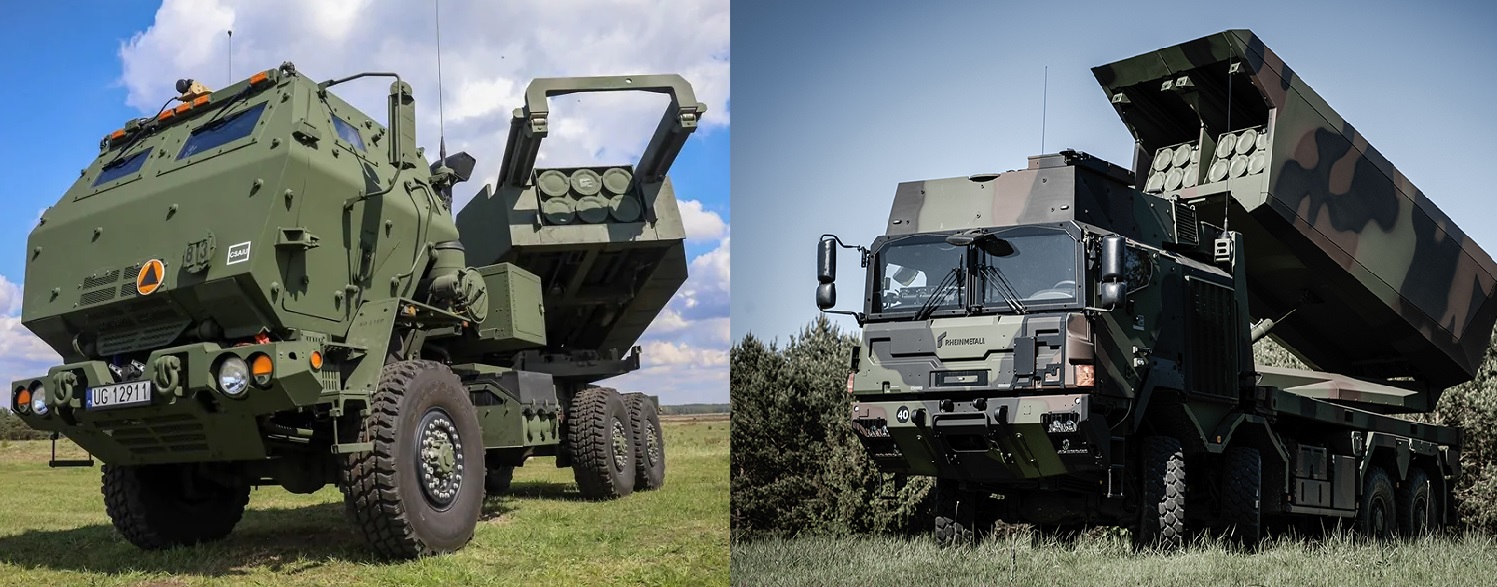
World
Lockheed Martin has announced the delivery of its 750th M142 High Mobility Artillery Rocket System (HIMARS) — a landmark achievement that underscores the system’s pivotal role in reshaping modern battlefield dynamics. The announcement, made on November 5, 2025, highlights both the pace of U.S. industrial expansion and the rising international appetite for long-range precision fires in an increasingly contested global environment. A Symbol of Modern Firepower The HIMARS launcher has become one of the defining symbols of modern precision warfare. Compact, wheeled, and deployable by aircraft, it provides the kind of “shoot-and-scoot” mobility that traditional artillery systems struggle to match. Developed by Lockheed Martin, HIMARS can fire a range of precision munitions, including the Guided Multiple Launch Rocket System (GMLRS), Extended Range GMLRS (ER GMLRS), and the Army Tactical Missile System (ATACMS). The launcher’s success lies in its adaptability — the same chassis and crew can deliver short, medium, or long-range effects depending on mission needs. The Camden, Arkansas production line, where HIMARS is built, has become the nerve center of this industrial resurgence. Over the past few years, Lockheed Martin has significantly expanded the facility, increasing output capacity to meet the U.S. Army’s demand while accommodating the growing list of international buyers. This milestone aligns with the Army’s broader Long Range Precision Fires (LRPF) modernization strategy, designed to ensure America and its allies maintain overmatch in long-range engagements. Evolving Munitions: From GMLRS to PrSM The GMLRS family remains the core of the HIMARS arsenal. Its GPS-aided and INS-stabilized rockets deliver consistent accuracy out to 70 kilometers, with options for unitary warheads against hardened targets or alternative-warhead payloads that saturate wider areas. The Extended-Range GMLRS (ER GMLRS), now entering full-rate production, stretches that reach to approximately 150 kilometers. Despite its longer range, it maintains the same precision and lethality, giving commanders a cost-effective way to strike deep targets like air-defense radars, logistics depots, and command nodes—well beyond the reach of traditional artillery. Complementing this is the new generation Precision Strike Missile (PrSM), which received Milestone C approval in July 2025, clearing it for production. PrSM replaces ATACMS as the U.S. Army’s primary theater-strike weapon, doubling launcher capacity to two missiles per pod and extending range beyond 400 kilometers. Built with a modular open-systems architecture, PrSM can be adapted for new seekers and targeting modes, including maritime and multi-domain strike options. This modularity ensures that every HIMARS launcher delivered today is a forward-compatible platform, ready to integrate future weapons as they mature. The ability to employ a wide range of effectors from a single vehicle is central to the system’s enduring appeal. Tactics and Mobility: The HIMARS Edge HIMARS’s mobility continues to be its defining tactical advantage. U.S. and NATO forces have refined High Mobility Artillery Rocket Insertion (HIRAIN) tactics — a strategy that involves airlifting HIMARS units into forward areas using C-130 or C-17 aircraft, executing precision strikes, and rapidly exfiltrating before enemy counter-battery fire can respond. These tactics have been regularly demonstrated in Europe, where HIMARS serves both as a deterrent and as a proof of the Army’s ability to conduct distributed, time-sensitive operations. The sealed pod system drastically shortens reload times, while advanced digital fire control integrates real-time data from drones, counter-fire radars, and joint sensors to generate firing solutions in seconds. In practice, this means a HIMARS battery can deliver a devastating salvo, blind enemy defenses, and disappear into the terrain — all before the adversary realizes where the attack came from. A Growing Global Footprint The HIMARS system’s reputation for reliability and precision has led to an unprecedented surge in international adoption. The system’s simplicity, interoperability, and scalability have made it a natural choice for countries seeking both deterrence and operational flexibility. Australia has already received the first of its 42 ordered systems and is pursuing an additional 48 under the LAND 8113 program, aligning HIMARS and PrSM with a land-based maritime strike role. Estonia, which took delivery of its first launchers earlier this year, has integrated HIMARS into a Baltic defense strategy emphasizing rapid fires and deception-based survivability. Taiwan has fielded initial batteries and conducted live-fire drills as part of a cross-Strait deterrence strategy, forcing the PLA to consider distributed strike threats across multiple axes. Poland continues to expand its Homar-A program, integrating HIMARS modules onto local Jelcz trucks and establishing domestic rocket production — a major step toward building Europe’s largest precision fires network. Each of these acquisitions reflects a broader trend: Allied nations are buying range, precision, and tempo, not just equipment. HIMARS offers them a scalable, interoperable platform to integrate with NATO and U.S. targeting architectures. Industrial Momentum and Strategic Impact Lockheed Martin’s Camden facility now anchors a broader push to rebuild Western industrial capacity for munitions and precision fires. Since 2022, annual launcher output has surged as part of a multinational rearmament cycle to replenish inventories depleted by ongoing conflicts and exercises. Alongside launchers, the same site produces ER GMLRS and PrSM, ensuring synchronized growth of both platforms and payloads. Every new launcher is not just a tactical tool—it’s a networked node in a global precision strike ecosystem. The modularity, connectivity, and sustained production pipeline ensure that HIMARS remains relevant for decades to come, capable of integrating AI-enhanced targeting, autonomous sensors, and future strike assets as warfare evolves.
Read More → Posted on 2025-11-10 15:35:26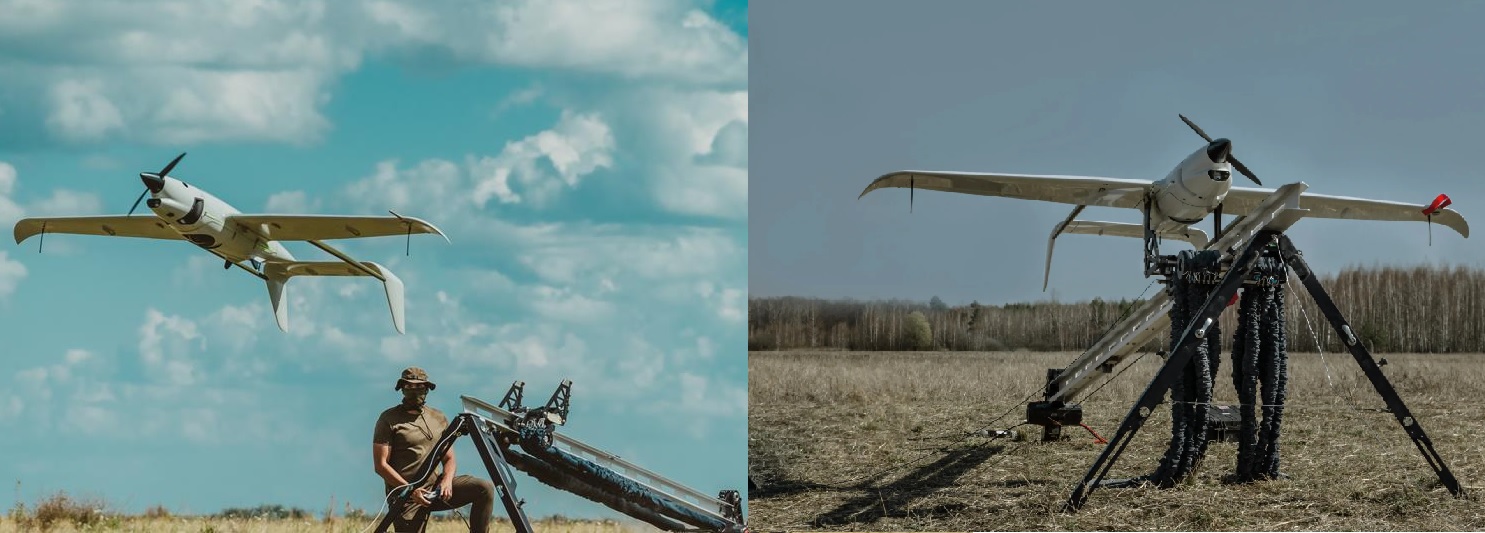
World
The British Army’s long-troubled Watchkeeper unmanned aerial system may soon have an unlikely successor — the Raybird, a combat-tested reconnaissance drone developed by Ukraine’s Skyeton company. According to Forces News reports on November 4, 2025, the Raybird is being actively promoted as a replacement for the Watchkeeper, which is set to retire in 2027. If adopted, this move could accelerate the UK’s Project Corvus program — a key effort to modernize and field affordable, long-endurance ISR (Intelligence, Surveillance, Reconnaissance) drones resilient to electronic warfare (EW). A Ready Solution for Project Corvus The UK’s Project Corvus aims to develop a new unmanned system under the Land Tactical Deep Find (LTDF) requirement — designed to locate and track enemy assets deep behind the frontline with minimal risk to personnel. Watchkeeper, once envisioned as the backbone of British Army reconnaissance, has faced recurring issues since its introduction in 2014, including technical faults, grounding incidents, and limited deployment utility. With Watchkeeper slated for retirement in 2027, the need for a replacement is urgent. Ukraine’s Raybird presents a ready and combat-proven alternative. Having logged more than 350,000 flight hours in wartime conditions, the drone has been extensively used for reconnaissance, artillery correction, and electronic warfare missions in Ukraine’s ongoing defense operations. The UK Ministry of Defence (MoD) is reportedly exploring whether Raybird could bridge the gap — offering a faster, cheaper, and more resilient capability than a new domestic development. Specifications and Technical Overview Despite its compact size, the Raybird packs advanced capabilities that align closely with the UK’s future ISR needs. Built for long-endurance missions, electronic warfare resilience, and rapid field deployment, the drone combines endurance with simplicity. Key Specifications: Manufacturer: Skyeton (Ukraine) Endurance: Up to 28 hours Maximum Range: Up to 2,500 kilometers (autonomous mode) Operational Altitude: Up to 5,500 meters Maximum Take-Off Weight: Approximately 23 kilograms Wingspan: Between 3 and 4.2 meters (variant dependent) Payload Capacity: Around 5 kilograms Communication Range: Up to 200 kilometers Deployment: Catapult-launched, parachute and airbag recovery Setup Time: 20–25 minutes Sensors: EO/IR gimbal, Synthetic Aperture Radar (SAR), and optional RF payloads for ELINT missions EW Resilience: Operable in GPS-denied or jammed environments These specifications make Raybird one of the few small UAVs capable of combining medium-endurance performance with the portability of a tactical drone. Why the Raybird Stands Out The appeal of the Raybird to the UK defense establishment lies in three major factors — combat performance, deployability, and cost efficiency. Firstly, the system has already proven its reliability in combat conditions. Ukrainian forces have relied on Raybird for years in some of the most electronically hostile airspaces in the world. This has provided invaluable data on its performance under jamming, harsh weather, and live-fire conditions — something few Western tactical drones can claim. Secondly, Raybird’s modular design allows operators to switch payloads quickly and launch with minimal infrastructure, suiting modern expeditionary warfare. Its ground crew requirement is minimal, and the system can be assembled and launched from a small open field. Thirdly, affordability plays a central role. With Western military budgets stretched and the demand for persistent ISR increasing, the Raybird presents an option that is mature, scalable, and significantly cheaper than many Western-built equivalents. The Industrial and Strategic Angle Behind the proposal is a joint UK-Ukraine venture involving Skyeton and British partner companies. The plan reportedly includes local assembly and maintenance in the UK, satisfying both operational and political requirements for domestic industrial participation. According to Janes Defence Weekly, the UK’s Land Tactical Deep Find requirement prioritizes affordability, rapid deployment, and EW survivability — all criteria that the Raybird meets. This makes it a realistic candidate for Project Corvus, which aims to deliver operational capability soon after Watchkeeper’s retirement. If the UK adopts the Raybird, it would also mark a significant deepening of defense-industrial cooperation with Ukraine — providing a pathway for Ukrainian aerospace technologies to enter the NATO market. Challenges and Unanswered Questions Despite its advantages, the Raybird faces several challenges before it could replace the Watchkeeper. Integration with the British Army’s C4ISR network (Command, Control, Communications, Computers, Intelligence, Surveillance, and Reconnaissance) would require new data links, software certification, and training. There are also concerns over airspace safety certification — an issue that long plagued the Watchkeeper program. Additionally, while Raybird has shown excellent performance in Ukraine, the UK’s operational demands and weather conditions could require adaptation. Moreover, questions remain about industrial sovereignty — whether the UK would prefer a domestically built drone or one with foreign origins, even if locally assembled. Competing systems from European or British manufacturers could also challenge Raybird’s bid. As the Watchkeeper nears retirement, the British Army cannot afford a capability gap in its tactical ISR assets. Project Corvus will likely award its first contracts in 2026, making the next year critical for testing and evaluation. Should Raybird prove its reliability, interoperability, and survivability, it could become the first Ukrainian-designed drone to enter frontline service with a NATO army — a landmark achievement for both nations. In an era where low-cost, long-endurance, and resilient ISR platforms are redefining modern warfare, Ukraine’s Raybird stands as a powerful example of how battlefield innovation can reshape the future of reconnaissance.
Read More → Posted on 2025-11-10 15:24:12
World
A powerful explosion near Gate No. 1 of Delhi’s Red Fort Metro Station on Monday evening sent shockwaves across the capital, killing and injuring several people. While local media reports claim at least 9 deaths, independent sources and eyewitnesses suggest that the casualty count could be higher. The blast, which occurred around 6:50 PM, originated from a parked car and set off a fire that rapidly engulfed nearby vehicles and shattered glass panels at the metro entry gate. The incident took place in the heart of Old Delhi’s Lal Quila–Chandni Chowk area — one of the city’s busiest market zones. Thick black smoke could be seen rising above the Red Fort complex as panic-stricken crowds fled the scene, fearing more explosions. The Incident According to initial reports, the explosion began in an illegally parked vehicle outside Gate No. 1 of the Red Fort Metro Station. The car erupted into flames following a massive detonation that echoed across the heritage zone. The fire spread to three other vehicles, causing secondary explosions as fuel tanks burst. Firefighters from the Delhi Fire Service rushed to the scene with seven fire tenders, battling flames for nearly 40 minutes before bringing them under control. However, several vehicles were completely destroyed, and parts of the metro station façade sustained structural damage. Eyewitnesses described scenes of chaos and confusion. “There was a huge blast. The entire area shook. I saw people running, screaming, some badly burnt,” said Mohammad Imran, a vendor near the metro gate. Another resident reported that metro station windows shattered, and debris was scattered across the road. Conflicting Death Toll Figures As of late Monday night, local Delhi media outlets have reported nine confirmed deaths and more than a dozen injured, some critically. However, independent sources, including rescue volunteers and hospital staff at LNJP Hospital and Aruna Asaf Ali Hospital, suggest that the fatality count could be significantly higher, possibly crossing a dozen victims once identification and recovery operations conclude. Authorities have not yet released an official death toll, citing ongoing search operations among the burnt-out vehicles. Officials fear that some victims may have been trapped inside the cars that exploded during the fire. Investigation and Security Response The Delhi Police Special Cell and forensic teams have taken charge of the investigation. The area remains sealed off, with a 30-meter security perimeter established around the blast site. Senior officials have confirmed that the cause of the explosion is still under investigation, but they are examining whether it was a mechanical malfunction, an accidental fire, or a terrorist act. CCTV footage from the surrounding market and metro premises is being reviewed to determine how the car was parked and if anyone was seen leaving it before the explosion. According to preliminary inputs, the car had been stationary for several hours, raising suspicions that it may have been deliberately planted. Delhi Police Commissioner Sanjay Arora stated, “We are not ruling out any angle. Our teams are collecting forensic samples, and we will know more after the chemical and explosive tests.” Possible Terror Connection Under Probe The explosion comes amid heightened national security concerns following recent arrests of terror suspects linked to Islamic State Khorasan Province (ISKP). Earlier this week, Jammu and Kashmir Police recovered 300 kilograms of RDX, an AK-47 rifle, and ammunition from Faridabad following disclosures by Dr. Saiyed, a radicalized medical professional allegedly plotting multiple blasts across Delhi and NCR. While officials have not confirmed any connection, security analysts are pointing to the similarity in timing and target selection — crowded public spaces with symbolic or historical significance. A senior intelligence source told reporters, “If the Red Fort blast is found to have any link to the Faridabad RDX module, it would confirm a larger network attempting coordinated attacks in the capital.” India’s new counter-terror doctrine stipulates that any terror strike with foreign support — particularly from Pakistan-based networks — will be treated as an act of war, allowing for retaliatory action beyond domestic counterterrorism measures. Delhi on High Alert The entire capital has been placed on high alert, with additional security deployment around metro stations, shopping complexes, and government buildings. The National Security Guard (NSG) and National Investigation Agency (NIA) are assisting with the blast site analysis. Traffic in Chandni Chowk, Daryaganj, and Jama Masjid areas has been halted, and market associations have voluntarily closed shops for the day. Metro services at Red Fort Station have been temporarily suspended, and the area remains heavily barricaded. Authorities have urged residents to remain calm but vigilant, warning against spreading unverified information on social media. Symbolism and Security Gaps The Red Fort — a UNESCO World Heritage Site and a symbol of India’s sovereignty — has been the site of major national celebrations, including the Independence Day address by the Prime Minister. A blast in its vicinity carries not only physical but also psychological and symbolic weight. Experts say the attack underscores Delhi’s vulnerability to soft-target assaults and the urgent need to tighten parking regulations, enforce vehicle screening, and install explosive detectors near sensitive sites. As investigators work overnight to piece together the sequence of events, Delhi stands tense and grieving. The official death toll remains unclear, with local channels reporting nine deaths but unofficial accounts suggesting more. Whether this was an accident or a deliberate act of terror, it has once again exposed the fragile security framework surrounding India’s most iconic monuments. Under flashing blue lights and amid the smell of smoke, the Red Fort area, once bustling with evening visitors, now lies silent — a chilling reminder of how quickly normalcy can turn into tragedy.
Read More → Posted on 2025-11-10 14:31:19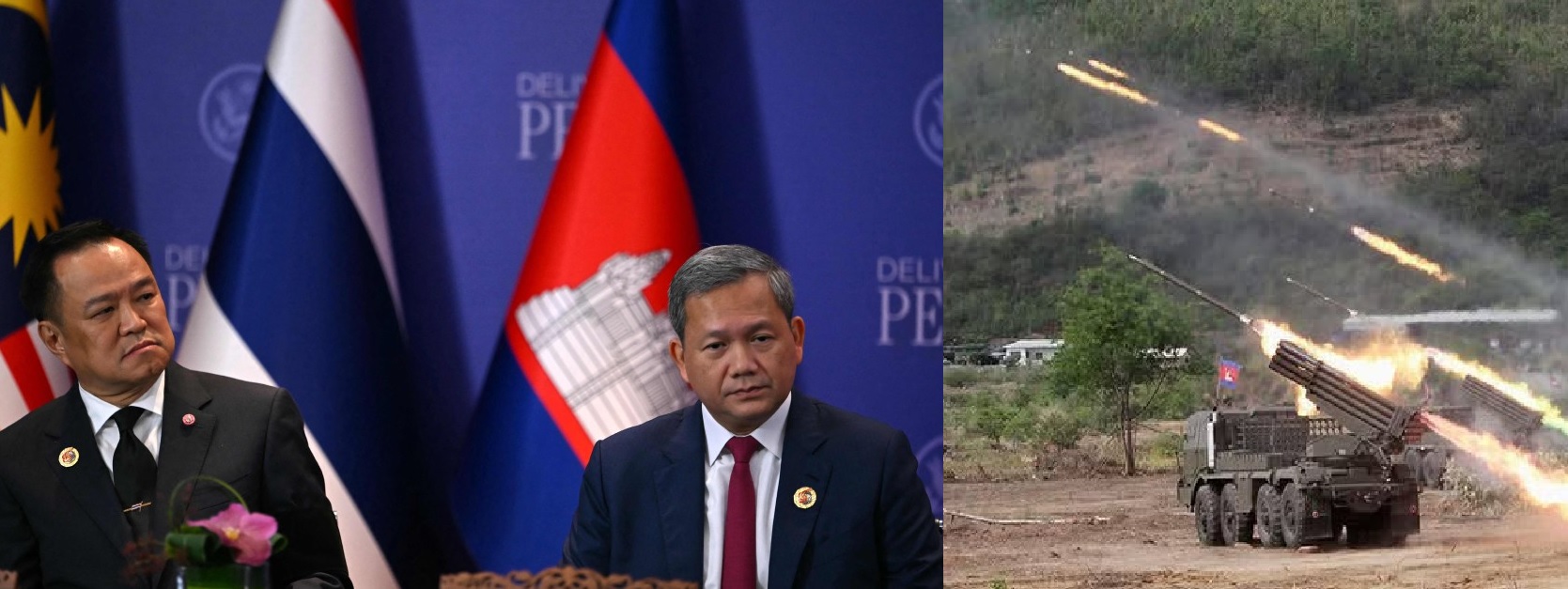
World
In a sharp reversal just two weeks after signing a peace accord, Thailand has suspended the implementation of its U.S.-brokered peace deal with Cambodia following a landmine explosion that injured two Thai soldiers along their disputed border. The move has reignited old tensions and raised concerns over whether the fragile truce can survive amid deep mistrust and decades of territorial disputes. The Incident That Sparked the Suspension The explosion occurred early Sunday morning in Sisaket Province, a region notorious for lingering landmines from past conflicts. According to the Royal Thai Army, a patrol team conducting a border inspection was caught in the blast, leaving one soldier with severe leg injuries and another with shrapnel wounds to the chest. The Thai government swiftly blamed Cambodian forces for violating the recent peace agreement, suggesting that the mine may have been newly planted rather than a remnant from older skirmishes. Prime Minister Anutin Charnvirakul announced later that day that Thailand would “suspend all commitments” under the peace accord until an investigation determines responsibility and “credible guarantees” are received from Phnom Penh. The Trump-Brokered Peace Deal The now-frozen deal — officially called the Kuala Lumpur Peace Accord — was signed on October 26, 2025, in Malaysia, witnessed by former U.S. President Donald Trump, who has been playing an informal mediation role in Southeast Asian conflicts since his departure from office. The agreement aimed to bring an end to recurring border clashes and called for: A ceasefire and withdrawal of heavy weapons from the frontier. A joint demining operation supervised by ASEAN observers. The release of prisoners of war and reopening of closed border checkpoints. The creation of a bilateral security council to resolve future disputes peacefully. At the time, both sides hailed the deal as a turning point. Thailand began pulling back tanks and artillery from forward positions, while Cambodia released six detained Thai border guards as a goodwill gesture. Why Thailand Suspended the Deal Bangkok claims the landmine attack is a “breach of the spirit and letter” of the accord, citing it as evidence that Cambodian forces have not halted aggressive activities. The Thai Defense Ministry stated that “the demining commitment was not honoured,” and that “no safety assurances can be made until Cambodia provides full transparency.” For now, Thailand has ordered all peacekeeping cooperation, prisoner exchanges, and border reopening talks to be frozen. The government also recalled its military liaison officers from joint coordination posts set up after the deal. Phnom Penh, however, denies responsibility, saying the explosion likely involved old mines from past conflicts and accusing Thailand of using the incident as a “political excuse” to delay parts of the agreement. Cambodian Prime Minister Hun Manet called the suspension “an overreaction” and urged Bangkok to return to dialogue rather than “reignite hostility.” What Both Sides Want Both nations are presenting starkly different demands in the aftermath of the incident. Thailand’s Demands: Complete removal of landmines along the border under neutral supervision. Full Cambodian cooperation in investigating the blast. Suspension of any cross-border military activity. Delayed prisoner release until “trust is restored.” Cambodia’s Position: Immediate resumption of the peace deal’s terms. Deployment of ASEAN observers to oversee demining operations. Reopening of trade checkpoints vital for cross-border commerce. Assurance that Thailand will not resume large-scale troop deployments. For now, neither side shows signs of backing down. ASEAN has called for “maximum restraint,” while the United States — the informal broker — has urged both sides to “honour the commitments made in Kuala Lumpur.” Historical Tensions Behind the Border The Thai-Cambodian border has been volatile for decades, with the most sensitive flashpoint being the Preah Vihear Temple area — a UNESCO World Heritage Site awarded to Cambodia by the International Court of Justice in 1962 but still claimed by Thai nationalists. Periodic clashes have killed dozens over the years, and both countries have accused each other of laying new mines even after signing the Ottawa Treaty, which bans their use. Analysts say the landmine blast underscores how deep-rooted distrust and unmarked boundaries continue to endanger any diplomatic breakthrough. Military Power Comparison Category Thailand Cambodia Active Military Personnel ~360,000 ~124,000 Defense Budget (2025) $5.7 billion $1.3 billion Main Battle Tanks 400+ ~200 Armored Vehicles & Artillery 1,200+ APCs, 2,600 artillery units ~480 artillery units Combat Aircraft ~112 (F-16, Gripen, Alpha Jet) Minimal operational aircraft Naval Fleet Frigates, submarines, aircraft carrier Coastal patrol fleet only Global Firepower Ranking (2025) 25th 95th Military analysts emphasize that while Thailand enjoys overwhelming firepower and a modernized command structure, Cambodia’s advantage lies in familiarity with terrain and the use of asymmetric tactics in border zones. Regional Repercussions The suspension risks destabilizing ASEAN’s peace efforts, especially as the bloc grapples with disputes in the South China Sea. Malaysia and Indonesia, which helped mediate the deal, have expressed concern that the move could “set back months of progress.” Economically, the freeze threatens cross-border trade worth over $2 billion annually, particularly affecting agricultural flow through provinces such as Sa Kaeo and Banteay Meanchey. What Lies Ahead Thailand’s suspension does not necessarily mean the peace deal is dead — but it has certainly placed it in deep freeze. Diplomats suggest Bangkok may be using the pause as leverage to push for stricter verification mechanisms and greater Cambodian accountability. Whether the two nations can rebuild confidence remains uncertain. What is clear is that without tangible progress in demining and border demarcation, the Kuala Lumpur Peace Accord risks joining the long list of failed ceasefire attempts between the two uneasy neighbours.
Read More → Posted on 2025-11-10 12:39:02
World
Efforts to revive dialogue between Afghanistan and Pakistan have collapsed once again, as negotiations between the two sides ended in deadlock. Sources familiar with the talks revealed that Pakistan’s delegation made unrealistic and politically untenable demands, effectively derailing the peace process before it could gain traction. At the heart of the disagreement lies Islamabad’s insistence that Kabul provide a guarantee of peace inside Pakistan — a demand that Afghan negotiators called “impossible and illogical,” given that Pakistan’s internal security and military operations are beyond Afghan jurisdiction. Pakistan’s Demands: Impossible Conditions for Peace During the most recent round of informal back-channel discussions, Pakistan reportedly demanded that the Afghan interim government ensure that no attacks are launched from Afghan soil by the Tehrik-i-Taliban Pakistan (TTP). But beyond this legitimate concern, Pakistan added two major conditions that Kabul outright rejected: A written guarantee of peace within Pakistan, essentially making Afghanistan responsible for Pakistan’s domestic security. The relocation of TTP fighters and families from Afghan territory to another country, preferably to a third location under international supervision. For Islamabad, these conditions were framed as prerequisites for restoring diplomatic trust. Pakistani officials have repeatedly claimed that TTP militants have found safe haven in Afghanistan after the Taliban’s return to power in 2021. However, Afghan negotiators found these proposals absurd, noting that Pakistan’s internal instability stems from its own long-standing policies of using extremist groups as instruments of regional influence — a policy that has now turned against it. Afghanistan’s Response: “Your Problems Are Made in Pakistan” The Islamic Emirate of Afghanistan responded sharply, rejecting Pakistan’s terms and calling them an attempt to shift blame for Islamabad’s failures. An Afghan representative, speaking on condition of anonymity, said: “They want us to guarantee peace in Pakistan while their own army cannot control its borders or its militants. That is not negotiation — that is escapism.” Kabul maintained that while it is committed to preventing cross-border attacks, Pakistan must also stop its airstrikes and military incursions into Afghan territory, which have repeatedly violated sovereignty and worsened tensions. The Afghan side emphasized that any solution must begin with dialogue between Pakistan and the TTP themselves, as both parties share a long history. Kabul, they argued, can facilitate, but not dictate, such talks. A Familiar Blame Game As the talks collapsed, Pakistan’s officials quickly reverted to their usual rhetoric — accusing Afghanistan of harboring terrorists and undermining regional security. But in Kabul’s view, Pakistan’s problems are self-inflicted. Decades of nurturing militant groups for strategic depth have now created an uncontrollable insurgent ecosystem that no longer obeys Islamabad’s commands. Afghan analysts have noted that Pakistan’s frontier tribal belt, once used as a launch pad for proxy operations, has become a breeding ground for resentment. The Pakistani state’s heavy-handed tactics, frequent displacements, and economic neglect have fueled TTP recruitment rather than curbed it. Even within Pakistan, security experts admit that the TTP insurgency is no longer purely Afghan-based. Instead, it has found renewed local support in Khyber Pakhtunkhwa and Balochistan, where civilians feel betrayed by Islamabad’s failed promises of stability. Past Policies Returning Home Afghan commentators have summed up the situation bluntly: “The monster Pakistan raised is now devouring its own house.” For years, Pakistan’s military establishment sought to manipulate militant factions for leverage against India and Afghanistan. Now, with the Taliban government refusing to act as Islamabad’s proxy, Pakistan finds itself facing the consequences of its own design. The Afghan side argues that true peace can only come from mutual respect and recognition of sovereignty, not coercion or blame. As one Afghan diplomat put it: “Pakistan must look inward. The chaos it faces is not imported from Afghanistan — it is the result of decades of short-sighted strategies.” A Cycle of Denial With talks now frozen and trust at its lowest, both countries face growing instability along their shared 2,600-kilometer border. Pakistan continues to launch raids and airstrikes across the Durand Line, while Afghanistan accuses Islamabad of aggression and hypocrisy. The breakdown of these negotiations marks yet another missed opportunity for regional peace. But it also exposes a deeper truth — that Pakistan’s crisis is not about Afghanistan’s refusal to cooperate, but about its own refusal to confront its past. Until Islamabad accepts responsibility for the forces it once empowered, its search for peace will remain trapped in a cycle of denial, blame, and bloodshed.
Read More → Posted on 2025-11-10 12:27:15
World
The United States faced its worst air travel chaos in years on Sunday, as more than 2,100 flights were canceled and around 7,000 more delayed nationwide. The main reason: the federal government shutdown and an FAA (Federal Aviation Administration) order to reduce air traffic because of staff shortages. The situation is now entering its third day of disruption and is spreading across the country, affecting millions of passengers. According to flight-tracking website FlightAware, this is the most severe day of flight cancellations since the FAA began ordering reductions last week. Why So Many Flights Were Canceled The trouble began when the government shutdown forced thousands of federal workers, including air traffic controllers, to work without pay. After weeks of going unpaid, many controllers have stopped showing up for work, creating a major shortage in one of the most critical jobs in aviation. To maintain safety in the skies, the FAA ordered airlines to cut their flight schedules. The cuts started at 4% on Friday and are expected to rise to 10% by November 14 — and possibly even 20% if more controllers stop working. This means that fewer flights are allowed to take off and land during the day, especially at busy airports between 6 a.m. and 10 p.m. Which Airports Are Most Affected Some of the country’s busiest airports have been hit the hardest. Atlanta’s Hartsfield-Jackson International Airport had the most cancellations Sunday, with 173 flights canceled. Newark Liberty International Airport in New Jersey followed with 115 cancellations. LaGuardia Airport in New York saw average delays of about 75 minutes, as staffing shortages slowed departures. Other airports, including Detroit Metropolitan Airport, were eerily quiet Sunday morning — not because of smooth travel, but because many flights simply never took off. What Officials Are Saying Transportation Secretary Sean Duffy warned that if the government shutdown continues into the Thanksgiving travel period, air travel could “slow to a trickle.” “As I look two weeks out, as we get closer to Thanksgiving, air travel could nearly stop as more controllers don’t come to work,” Duffy said on Fox News Sunday. He added that the FAA’s decision to cut flights was not political, but necessary for safety: “I needed to take action to keep people safe. I’m doing what I can in a mess that politics created.” Duffy also revealed that 15 to 20 controllers are retiring every day, worsening an already short-staffed system. The U.S. has struggled for years to train and retain enough controllers, and the shutdown has made the situation much worse. Airlines and Industry Impact The trade group Airlines for America said that air traffic control shortages have caused more than 3,000 hours of delays on Saturday alone — the worst single day so far. Since October 1, when the government shutdown began, controller shortages have disrupted over 4 million passengers. Airlines have been forced to cancel thousands of flights even before departure times, trying to adjust to FAA limits and avoid overloading already stressed airspace. The economic impact is growing too. Analysts say the travel chaos could cost the U.S. hundreds of millions of dollars a day, especially if it continues through the busy Thanksgiving season. What Passengers Should Do For travelers, the situation means uncertainty and long waits. Experts recommend: Check flight status early — Airlines are changing schedules frequently. Expect long delays and possible cancellations. Consider alternative airports or routes if your main hub is heavily affected. Look for travel waivers — most airlines are offering flexible rebooking and refunds during the shutdown period. What Happens Next If Congress fails to end the shutdown soon, the FAA may extend or deepen flight cuts. Officials warn that by mid-November, flight reductions could reach 20%, meaning one in every five flights could be canceled nationwide. Military air traffic controllers have offered to help, but it’s unclear whether they’re trained or certified to manage civilian airspace. For now, the outlook remains grim. With Thanksgiving just two weeks away, the combination of staff shortages, unpaid workers, and increased demand could create one of the most difficult travel seasons in modern U.S. history.
Read More → Posted on 2025-11-10 12:15:08
India
In a major counter-terror breakthrough in India, the Gujarat Anti-Terrorism Squad (ATS) has foiled what could have been one of the most catastrophic biological attacks in India’s history. Acting on precise intelligence, the ATS arrested three individuals — including a doctor with an MBBS degree (Dr. Ahmed Mohiyuddin Saiyed, who worked with Azad Suleman Sheikh and Mohammed Suhail Mohammad Saleem) — who were allegedly preparing the deadly toxin ricin, a biological agent that is nearly 6,000 times more lethal than cyanide and has no known antidote. The Arrest and Discovery The operation, conducted near Adalaj on the Ahmedabad–Mehsana highway, led to the arrest of Dr. Ahmed Mohiyuddin Saiyed, a 35-year-old medical graduate from Hyderabad who had earned his MBBS degree from China. Two accomplices from Uttar Pradesh were also taken into custody. Investigators revealed that the group had already carried out reconnaissance of sensitive sites in Lucknow, Delhi, and Ahmedabad, including religious and political buildings. During the raid, officials seized firearms, cartridges, chemical materials, and laboratory equipment used to extract ricin from castor beans. Digital evidence also linked the accused to Islamic State Khorasan Province (ISKP), an Afghanistan-based terror outfit. The suspects were reportedly in touch with a handler named “Abu Khadija”, who was providing operational guidance for the plot. What Is Ricin and Why It’s So Dangerous Ricin is a naturally occurring toxin derived from the waste product of castor bean processing — a plant commonly used to produce castor oil. While castor oil itself is harmless, the leftover material, called mash, contains ricin, which can be extracted and refined into a lethal biological poison. Once inside the body, ricin halts protein synthesis, killing cells and causing multi-organ failure. Symptoms of poisoning can vary depending on the exposure route — ingestion, inhalation, or injection — but generally include severe vomiting, bloody diarrhea, respiratory distress, and rapid organ shutdown. Even microgram quantities can be fatal, and there is no antidote. Treatment is limited to supportive care, making ricin one of the deadliest known biotoxins. The U.S. Centers for Disease Control and Prevention (CDC) lists ricin as a Category B bioterror agent, a classification for agents that can cause widespread illness and panic if released. A New and More Insidious Form of Terrorism Experts warn that this case reveals a new phase in terrorism — one moving beyond guns and bombs toward silent, mass-death weapons like biological and chemical agents. Unlike traditional bomb attacks, which cause instant destruction and are easily visible, biological or toxin-based attacks are stealthier, slower, and harder to trace. Victims may take hours or even days to show symptoms, during which they can unknowingly spread contamination or panic. Compared to older terror methods, this “new-generation attack” is far more dangerous: Invisible and delayed: No explosion or smoke; the damage unfolds silently. Difficult to detect: Ordinary security systems can’t identify toxins. Impossible to treat effectively: No antidote for ricin means high mortality. Psychological impact: The fear of an “unseen killer” spreads faster than the toxin itself. Minimal logistical requirements: Ricin can be extracted from everyday castor seeds, making it easy to obtain yet devastating in effect. Security analysts say terrorists are increasingly exploiting science and technology to bypass conventional defenses — blending chemistry, biology, and medical knowledge to create “next-generation” weapons of mass harm. Global Precedents: Ricin and Biological Attacks Worldwide While India has rarely faced a biological terror attempt, ricin and other toxins have been used or planned for use in attacks across the world, showing the global pattern of such threats. 1978 – The “Umbrella Assassination” (London):Bulgarian dissident Georgi Markov was assassinated on a London street after being injected with a ricin pellet via a modified umbrella, allegedly by the KGB. He died three days later from multiple organ failure. 2003 – Ricin Letter Attacks in the U.S.:Several letters containing ricin were mailed to the White House and the U.S. Senate. The toxin was crudely made but potent enough to kill if inhaled or ingested. 2013 – Ricin Letters to President Obama:Another series of ricin-laced letters were sent to then-U.S. President Barack Obama and other officials. Though intercepted, they highlighted how easy it was for individuals to attempt bioterrorism using simple substances. 1995 – Aum Shinrikyo Sarin Gas Attack (Tokyo):The Japanese doomsday cult Aum Shinrikyo released sarin nerve gas in the Tokyo subway, killing 13 people and injuring over 1,000. The cult had also experimented with ricin and anthrax, proving how non-state actors could weaponize science. 2018 – Ricin Attempt in Germany:German police foiled a plot by a Tunisian national who had produced enough ricin to kill thousands. He planned to use it in a public area before being arrested. 2020 – Ricin Envelope to the White House:U.S. law enforcement intercepted a ricin-laced envelope addressed to then-President Donald Trump, again underscoring the recurring use of biological toxins as terror weapons. These incidents, though geographically and politically varied, share a chilling theme — the accessibility of biological agents and the willingness of terrorists to use them for mass harm. How Catastrophic the Indian Plot Could Have Been If the Gujarat cell had succeeded in synthesizing and dispersing ricin, the results could have been devastating beyond imagination.A small quantity released in a crowded metro station, shopping mall, or religious gathering could have killed hundreds within hours and left thousands sick — with no immediate way to stop the spread. Because ricin acts silently, the initial symptoms could have been mistaken for food poisoning or viral infection, delaying medical intervention and increasing fatalities. The psychological and economic impact would have rivaled that of a major bomb attack — or worse. The Suspects and Their Links Investigations have revealed that Dr. Ahmed Mohiyuddin Saiyed was radicalized online and had been in close contact with operatives of ISIS-Khorasan (Islamic State Khorasan Province – ISKP), who guided him in preparing the deadly toxin Ricin. Communication records show that he used encrypted messaging platforms to receive detailed instructions from his handler, identified as Abu Khadija, a key figure within ISIS-Khorasan’s network operating from Afghanistan. Saiyed’s medical background made him particularly dangerous — he possessed the scientific understanding of toxicology, chemistry, and human anatomy, enabling him to handle and potentially weaponize biological substances with precision. His two accomplices were tasked with scouting potential targets across Ahmedabad, Lucknow, and Delhi, and procuring raw materials such as castor beans and chemical equipment needed for ricin extraction. The Gujarat ATS also seized foreign-made pistols, ammunition, and digital evidence, suggesting that the group intended to combine a biological attack with armed violence to maximize casualties and chaos. Preliminary findings further indicate that the module had links to Pakistan-based intermediaries who may have facilitated funding, logistics, or ideological indoctrination. Investigators believe the group was part of a wider ISIS-Khorasan-backed network attempting to establish sleeper cells inside India. The case has now been transferred to the National Investigation Agency (NIA) for a nationwide probe into the ISIS-Khorasan-linked ricin terror conspiracy, to trace all handlers, supporters, and cross-border connections involved. Lessons and Significance The Gujarat ATS operation represents a landmark success in Indian counter-terrorism. It exposed not just a terror cell but a new trend — the fusion of science, medicine, and terrorism into a weapon of silent destruction. The case also shows the importance of intelligence-led policing, digital surveillance, and inter-agency coordination. The ATS’s quick action prevented what could have been a mass-casualty event, saving countless lives. A Broader Security Wake-Up Call This incident serves as a wake-up call for global and Indian security agencies. The nature of terrorism is evolving — from bombs to biology. The next generation of terror threats may come not from explosions but from colorless, odorless, and invisible killers like ricin, anthrax, or nerve agents. India’s response now must focus on biosecurity, early detection, and rapid public health response systems. Training hospitals, emergency teams, and laboratories to recognize and contain chemical or biological attacks is essential to national preparedness.
Read More → Posted on 2025-11-10 04:52:12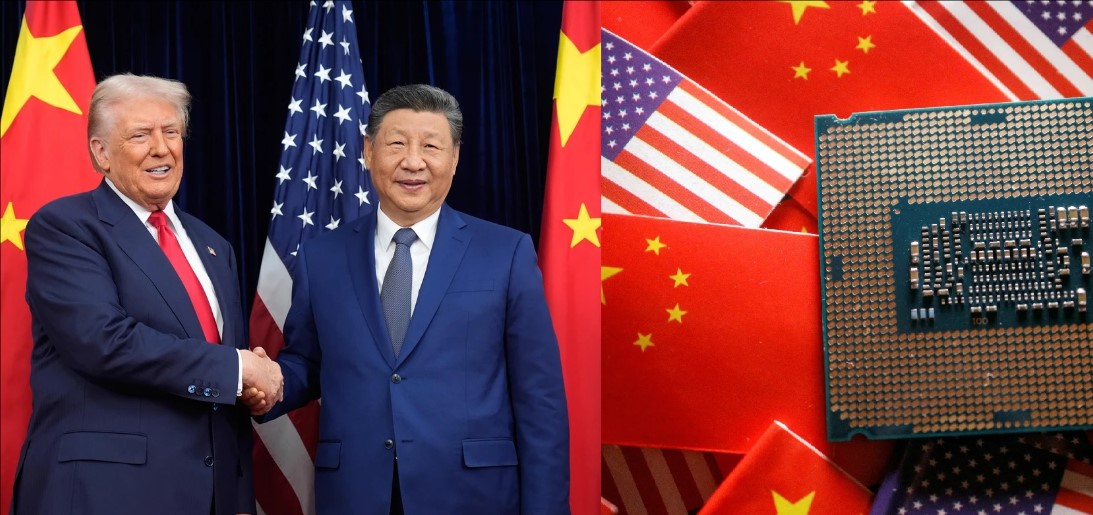
World
China has announced the suspension of its export ban on several dual-use materials to the United States, a move that reflects a gradual improvement in trade relations between the two countries. The Ministry of Commerce confirmed on Sunday that the suspension will apply to exports of gallium, germanium, antimony, and some super-hard materials, all of which are important for advanced manufacturing and defense technologies. Policy Adjustment After a Year of Restrictions The suspension reverses measures introduced in December 2024, when China imposed strict export controls on these materials. The earlier decision was widely viewed as a response to U.S. restrictions on advanced semiconductor equipment and chip technologies. Under the new announcement, China will allow exports of these materials to the United States through a regulated licensing process. The suspension will remain in effect until November 27, 2026, unless further changes are made. Reasons Behind the Decision The timing of the policy change follows a recent meeting between Chinese President Xi Jinping and U.S. President Donald Trump at the Busan Economic Forum in late October 2025. Both governments agreed to take steps to reduce trade tensions and improve communication on economic matters. According to Politico, U.S. officials described China’s move as “a positive development for market stability,” while Beijing characterized it as a “constructive step” in maintaining global supply-chain continuity. China produces a large share of the world’s supply of these materials — accounting for about 94% of global gallium production and a majority share of germanium and antimony. These materials are essential for semiconductors, solar panels, fiber optics, and military electronics. Economic and Industrial Impact For the United States, this policy change will ease supply pressures in several industries that depend on these elements. Gallium and germanium are essential for 5G equipment, infrared optics, and space systems, while antimony is used in batteries and flame retardants. U.S. manufacturers have faced higher costs and delays since the 2024 restrictions, as finding alternative suppliers proved difficult. The renewed access to Chinese exports is expected to stabilize prices and improve production planning across the technology sector. For China, the suspension offers flexibility without removing its ability to control exports in the future. The materials remain under a dual-use classification, allowing the government to monitor and, if necessary, adjust export policies for security reasons. Broader Context in Trade Relations The suspension comes at a time when both governments are trying to reduce trade-related uncertainties. While the U.S. continues to limit technology transfers involving advanced chips, both sides have shown interest in preventing further economic disruption. Chinese trade experts have described the latest decision as a technical adjustment rather than a major policy reversal. It reflects China’s interest in maintaining predictable trade flows while preserving tools to safeguard national interests. U.S. officials have also welcomed the move as a temporary improvement that could support further discussions on tariffs and technology exports. Global and Regional Effects The change in policy will also affect other economies linked to U.S. and Chinese supply chains. Countries such as India, Japan, and South Korea, which are developing semiconductor and electronics manufacturing capabilities, could benefit from a more stable supply of these materials. However, the suspension is time-limited and subject to review. If broader trade disputes resume or new restrictions are introduced, the export permissions could be tightened again. Industry observers believe that while this decision will help in the short term, both sides will continue to seek long-term solutions for supply-chain independence and technological security.
Read More → Posted on 2025-11-09 17:39:49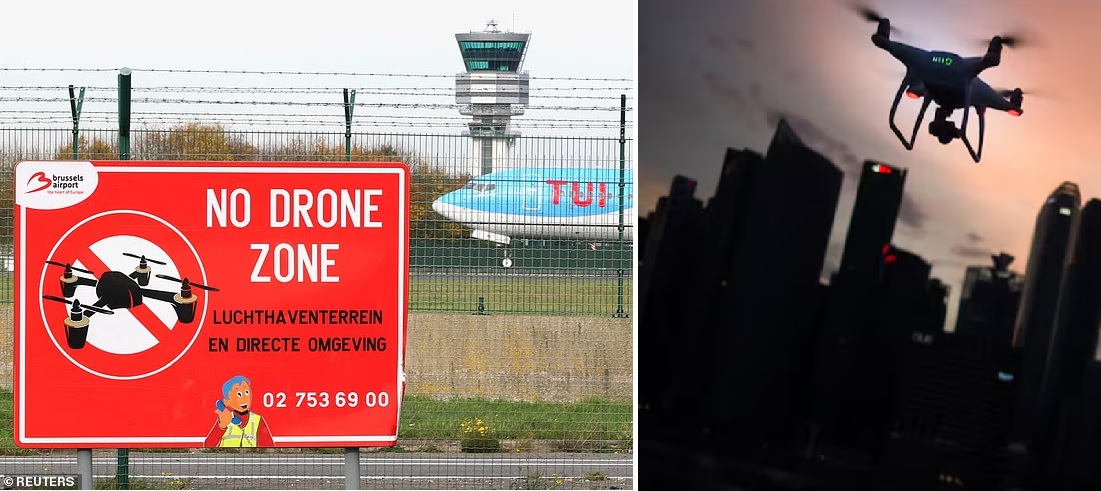
World
A growing series of drone incursions in Belgium has sparked serious security concerns across Europe, prompting the United Kingdom to send both personnel and specialized counter-drone equipment to assist Belgian authorities. The decision, confirmed by Air Chief Marshal Richard Knighton, marks one of the rare instances of a NATO member directly aiding another in responding to unexplained airspace violations during peacetime. Alarming Drone Activity Over Strategic Sites Over the past week, Belgium’s main international airport in Brussels and Liège Airport, one of Europe’s largest cargo hubs, were forced to suspend operations after repeated sightings of unidentified drones in restricted airspace. More concerning, the drones were also detected flying near Kleine-Brogel Air Base, a high-security installation believed to host U.S. nuclear weapons as part of NATO’s deterrence posture. The incidents have triggered widespread speculation about the motive and origin of the flights. Belgium’s Defence Minister Theo Francken told reporters that investigators suspect a coordinated spying operation, saying, “These incidents were not carried out by amateurs; they appear deliberate and technically advanced.” Britain Steps In In an interview with the BBC, Air Chief Marshal Knighton confirmed that the U.K. military had begun deploying teams and technology to Belgium following a formal request from Brussels. “We don’t yet know the source of those drones, and neither do the Belgians,” Knighton said. “But we will help them by providing our kit and capability, which has already started to deploy.” British personnel reportedly include members of the Royal Air Force’s specialist counter-UAS units, equipped with advanced drone detection and jamming systems. The U.K.’s deployment underscores a growing recognition that such incidents are not isolated but part of a wider European security challenge. Strategic Stakes for Europe Belgium’s importance extends far beyond its size. The country hosts the headquarters of NATO and the European Union, and it is home to the Euroclear financial clearinghouse, which manages tens of billions of euros in frozen Russian assets. Those assets have become a point of contention within the EU, with several countries pushing to use them to fund loans for Ukraine’s reconstruction, a move Belgium has so far resisted. Some analysts see the drone incursions as potentially linked to geopolitical pressure over this issue. Though Belgian officials have stopped short of blaming any specific actor, European intelligence sources have privately suggested that the pattern of activity resembles Russian hybrid operations, using drones and cyber tools to test Western vulnerabilities without triggering direct confrontation. Not an Isolated Problem Belgium is not alone in facing unexplained drone intrusions. Over the past few months, Germany, Sweden, and Poland have also reported similar incidents near airports, energy facilities, and military installations. In many cases, the drones appear to have been highly capable—able to loiter for extended periods, evade radar, and operate in no-fly zones. European security agencies have been scrambling to modernize airspace surveillance systems, including by integrating counter-UAS networks capable of detecting and neutralizing small drones. Belgium’s government recently announced plans to establish a national air security coordination centre by early 2026 and to invest in a dedicated anti-drone defense network. The Unknown Operator Despite multiple sightings, no drone has yet been captured or recovered, leaving investigators with few physical clues. The Belgian Air Force has scrambled interceptors on several occasions, but the drones reportedly disappeared before interception. Officials believe the aircraft are remotely controlled from beyond Belgian borders, possibly using satellite links or pre-programmed flight paths. Defence Minister Francken noted that the precision and persistence of the incursions suggest access to sophisticated technology, saying, “This is not a hobbyist with a drone bought online. Whoever is behind this knows exactly what they are doing.” NATO’s Quiet Response Though NATO officials have avoided public statements on the issue, alliance insiders acknowledge that the drone activity near a nuclear storage base has raised serious alarm. Discussions are reportedly underway about expanding NATO’s integrated air and missile defense system (NATINAMDS) to include small-drone detection and response capabilities. The United Kingdom’s rapid support is being viewed as both a symbolic gesture of solidarity and a practical test case for how allied forces can coordinate counter-drone operations across borders. A New Frontline in Hybrid Warfare The mystery over who is flying the drones may persist for weeks, but the strategic message is already clear: Europe’s skies are no longer secure from small, silent intruders. What began as temporary airport closures has now escalated into a trans-Atlantic security operation. Whether this represents probing, espionage, or an early stage of hybrid coercion remains uncertain — but for Belgium, the aerial chessboard has become a new front line. As Air Chief Marshal Knighton put it, “We’re working with our allies to make sure Europe’s airspace remains safe. Whoever is behind these incursions should know — we’re watching closely.”
Read More → Posted on 2025-11-09 17:35:12Search
Top Trending in 24 Hours
-
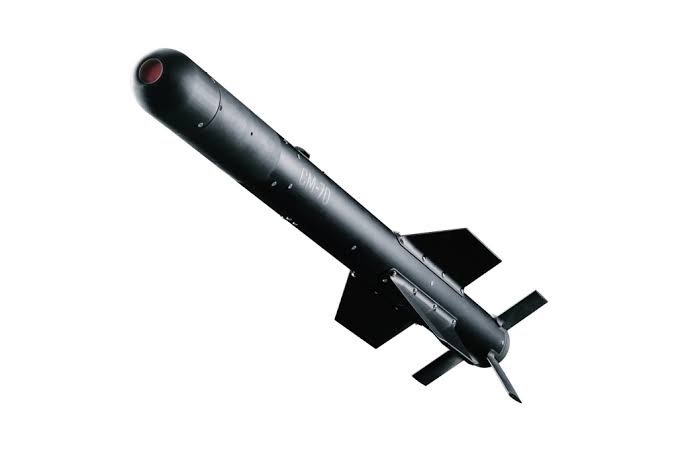 CSG and North Vector Dynamics Sign MoU to Explore European Production of CM-70 Counter-Drone Interceptor
-
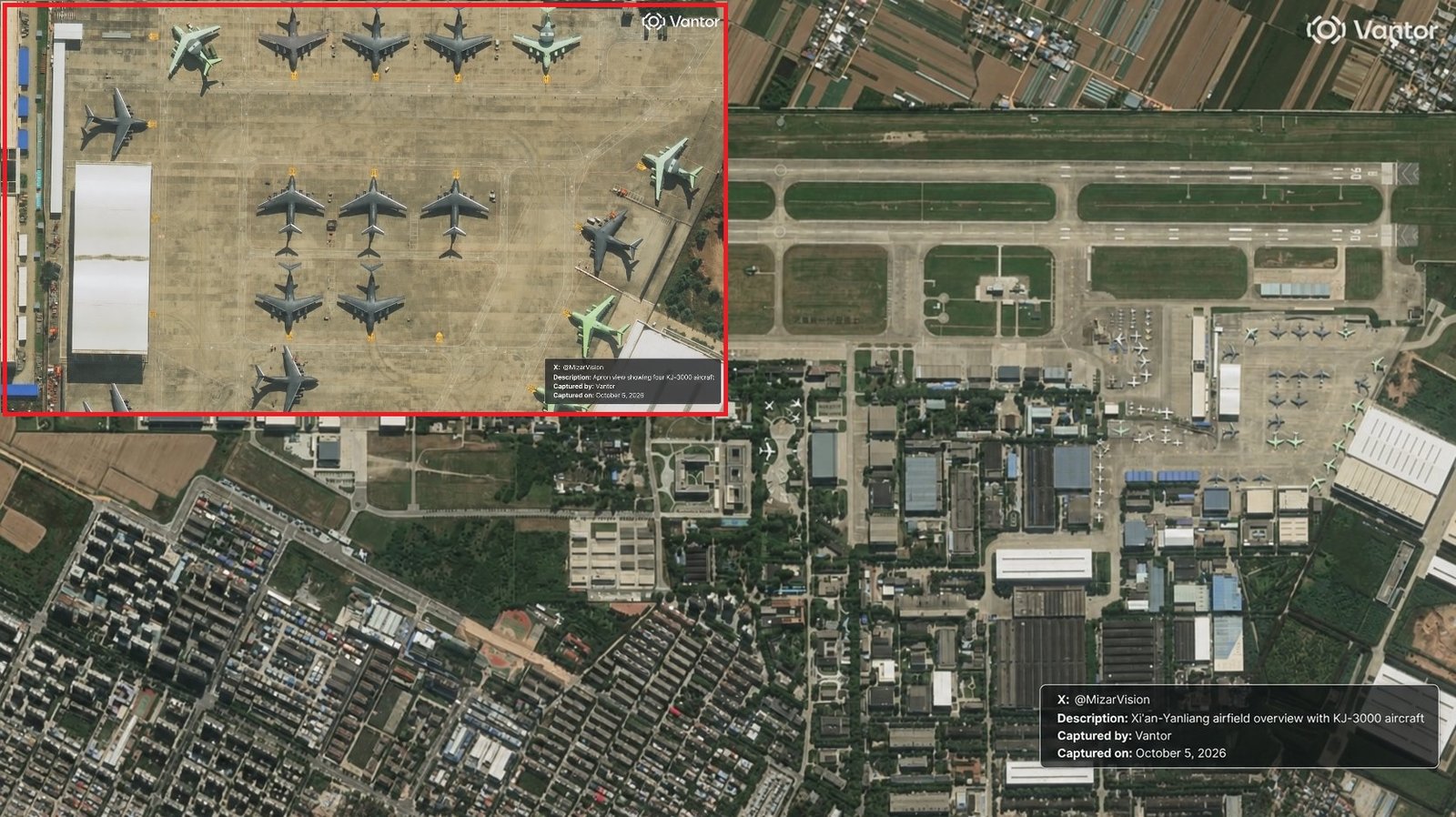 Satellite Images Reveal Four KJ-3000 AEW&C Aircraft at Chinese Aircraft Facility, Hinting at Possible Serial Production
-
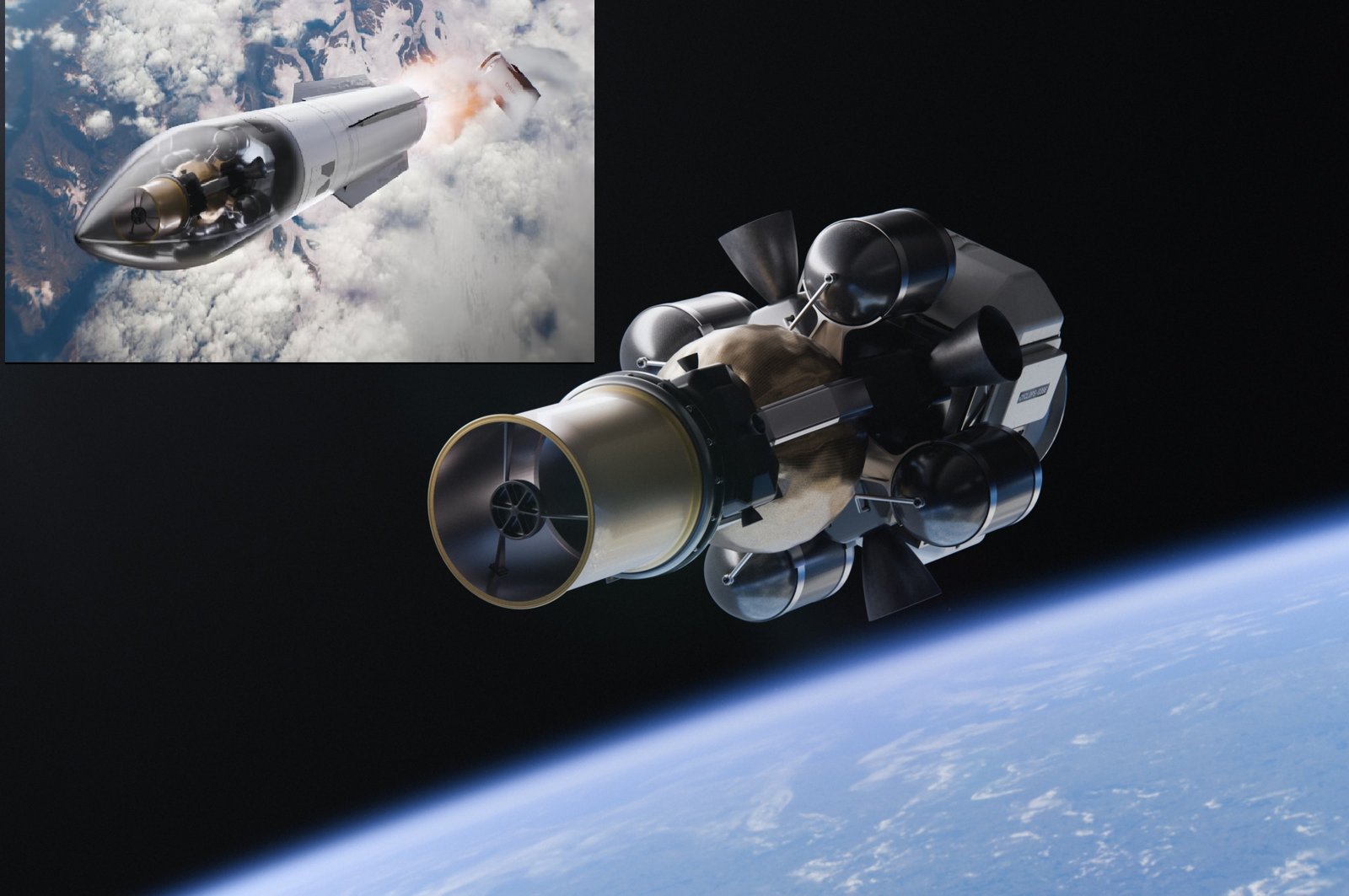 Long Wall Receives $75 Million MDA Award to Complete Cyclops Interceptor Flight Testing
-
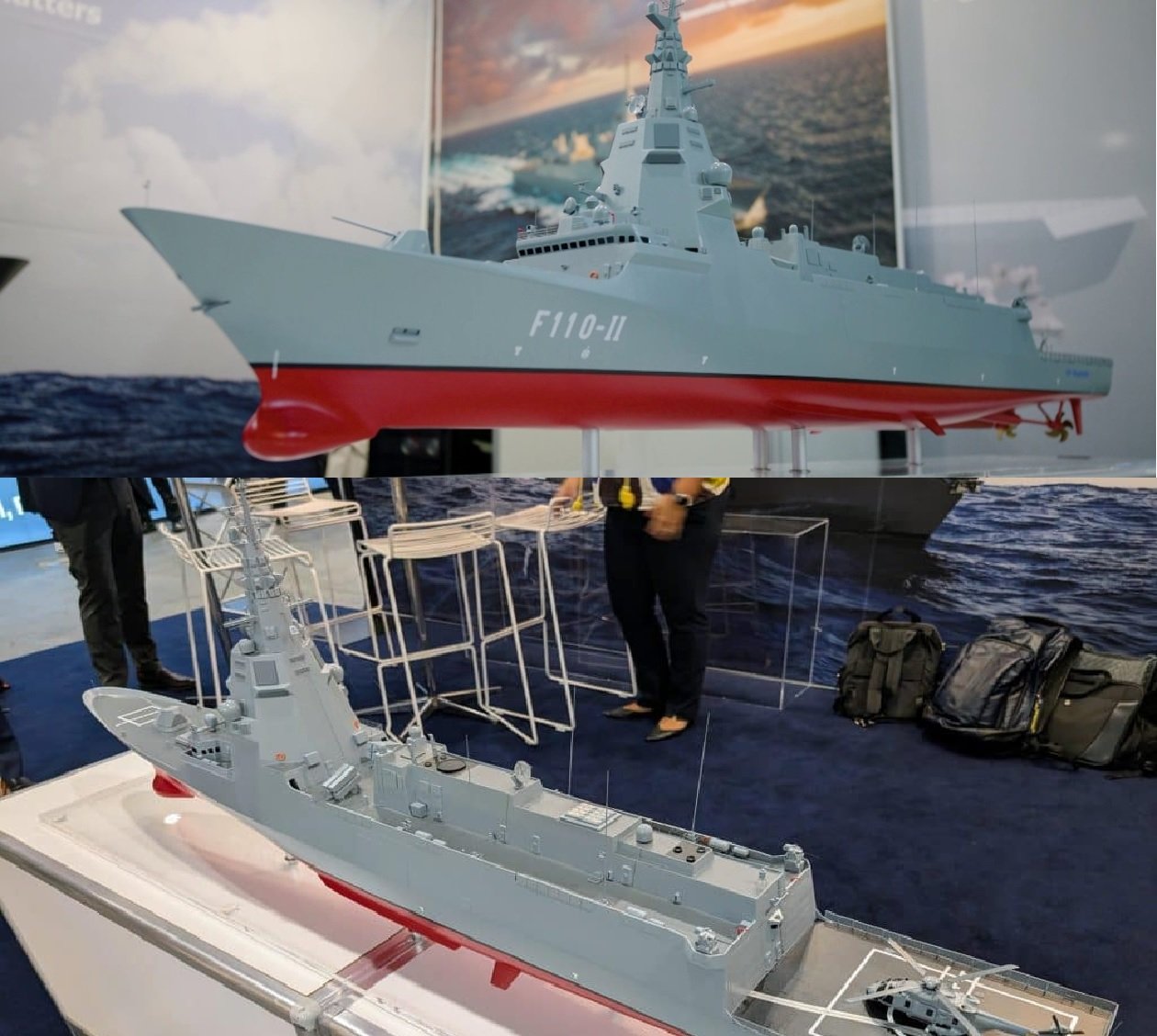 Spanish Navy and Navantia Advance F110 Frigate Design with Enhanced Air and Missile Defence
-
 Russia’s SJ-100 Superjet Flight Control System Enters Final Certification Stage After 1,500 Tests
-
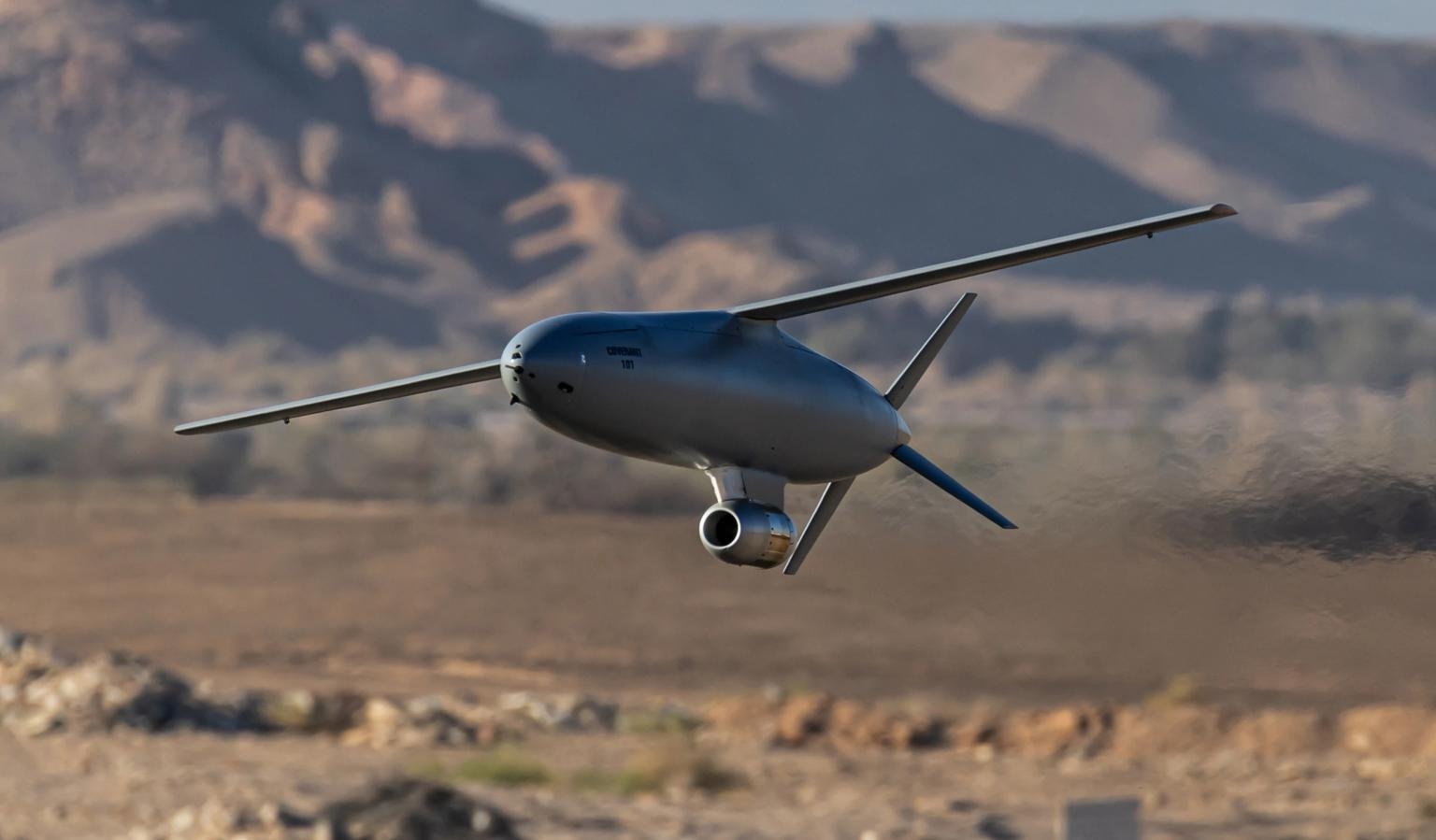 Denmark Acquires Anthem and Joint Strike Missiles in Major Long-Range Defense Overhaul
-
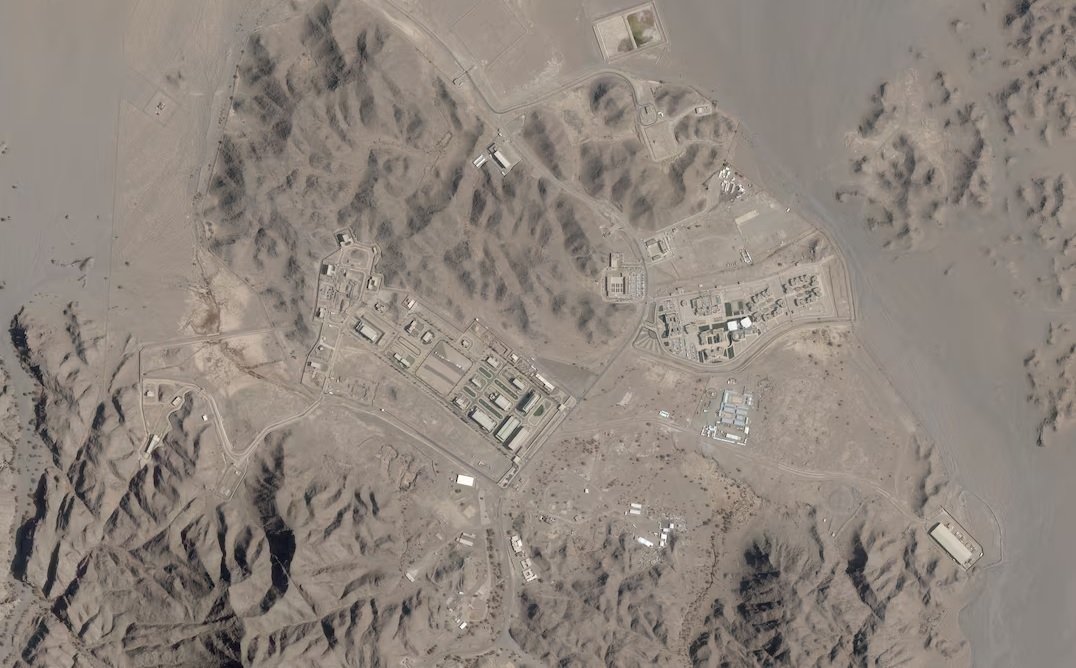 Saudi Arabia Expanding Ballistic Missile Facility for Larger Solid-Fuel Missiles, Satellite Analysis Shows
-
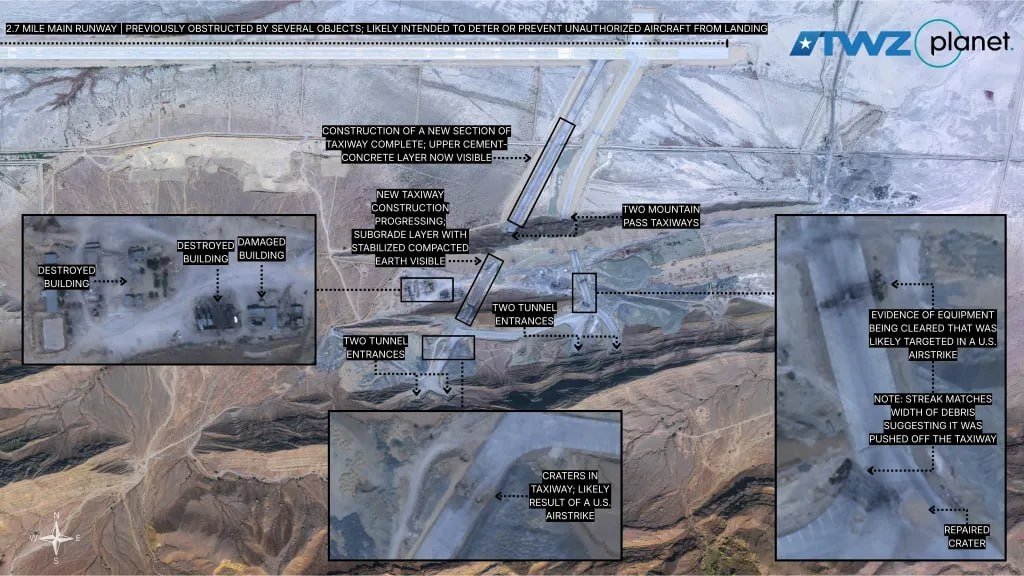 Satellite Images Reveal Iran Continues Restoration of Eagle 44 Underground Airbase After 2026 Strikes
Top Trending in 4 Days
-
 NASA Sets New Artemis Milestones as SpaceX and Blue Origin Target Moon Landings in 2027–2028
-
 U.S. Air Force Awards HII Subsidiary Enlighten IT $332.8 Million Cyber Defense Contract
-
 Four NASA Volunteers Mark One Year in Simulated Mars Habitat
-
 Australia Unveils Ghost Shark Autonomous Submarine’s Mine, Drone and Logistics Capabilities
-
 L3Harris Opens ‘Arsenal of Freedom’ Rocket Motor Plant in Arkansas to Double Production Capacity
-
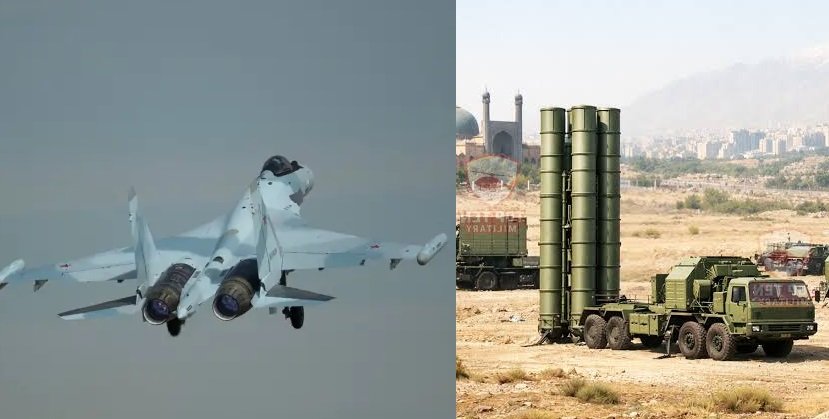 Russia Reportedly Offers Su-35 Fighters and S-400 Air Defence System to Protect Tehran
-
 Unitree Unveils H2-X ‘Kung Fu Legend: Guardian’ Humanoid Robot for Security and Rescue
-
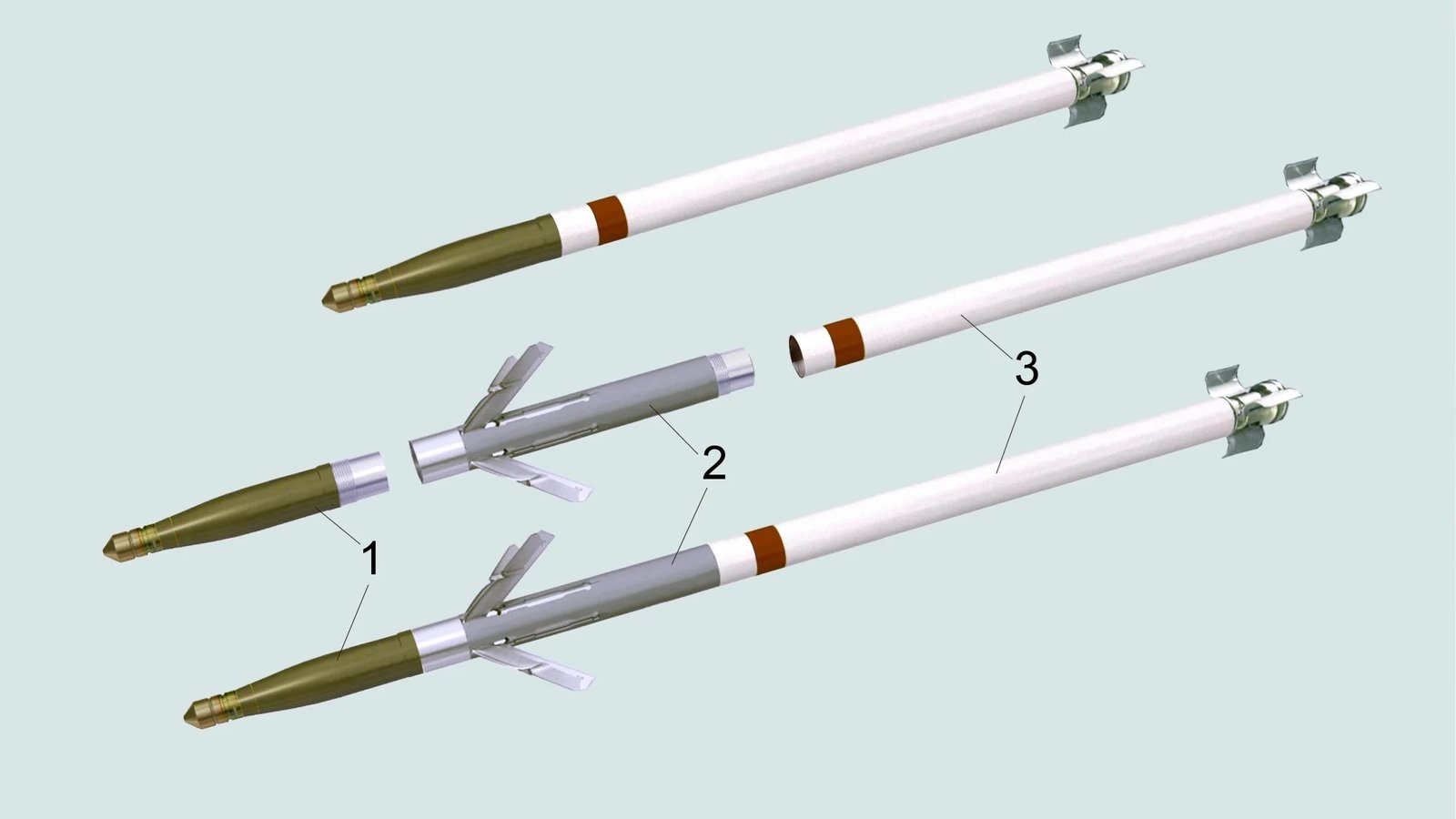 US to Buy Up to 25,000 APKWS Kits Annually, With Option to Increase to 35,000
