WASHINGTON — The U.S. Air Force has announced plans to acquire up to 11,200 Joint Air-to-Surface Standoff Missiles (JASSM) and Long-Range Anti-Ship Missiles (LRASM) over the next five to seven years, marking one of the largest planned procurements of these long-range precision weapons to date.
The plan was outlined in a notice of intent published on Friday. It covers JASSM Lots 27 through 33 and LRASM Lots 13 through 19 and represents a significant increase in the Pentagon's planned inventory of both missile families compared with previous publicly disclosed targets.
According to the notice, the procurement is part of broader efforts to rebuild missile inventories following recent military operations and to strengthen production capacity for future operational requirements, particularly in the Indo-Pacific region. The Pentagon is also encouraging defense suppliers to increase investments and expand manufacturing capacity to support higher production rates.
Procurement Includes Production, Sustainment and Software Support
The planned acquisition extends beyond missile production and includes several supporting elements designed to sustain the growing inventory. These include:
- Expanded missile sustainment and repair capacity
- Increased software support
- Higher production output at Lockheed Martin's manufacturing facilities in Orlando, Florida, and Troy, Alabama
Deliveries are expected to begin approximately 27 months after the contract is awarded.
Air Force officials stated that achieving the larger procurement targets will require a gradual manufacturing ramp-up and significant upfront investment. Government-owned production equipment is currently dedicated to fulfilling existing JASSM and LRASM contracts while Lockheed Martin continues expanding its supply chain and manufacturing capabilities.
Lockheed Martin Expands Manufacturing Capacity
Lockheed Martin said it has already invested heavily to increase production capacity for priority defense programs.
According to the company, it has invested more than $7 billion since the first Trump administration to expand production capacity across key systems. Of that amount, approximately $2 billion has been dedicated specifically to increasing munitions production.
The company said these investments include new facilities, production tooling, supplier expansion, and workforce development to support higher manufacturing rates.
Contract Covers Current and Future Missile Variants
The planned contract includes both current and future variants of the JASSM and LRASM missile families.
Among the newest versions are:
| Variant | Key Improvements | Primary Role |
|---|---|---|
| JASSM-XR | Advanced anti-spoofing technology and improved survivability | Long-range land strike |
| LRASM-ER | Extended range and upgraded sensor package | Long-range maritime strike |
| LRASM C-3 | Updated sensors and secured data link | U.S. Navy anti-surface warfare |
The JASSM-XR and LRASM-ER incorporate Lockheed Martin's latest anti-spoofing technology and enhanced survivability features designed to improve performance in contested environments.
For the U.S. Navy, the LRASM C-3 introduces upgraded sensors, increased range capabilities, and a secure data link intended to improve anti-surface warfare operations.
Recent Testing Demonstrates Expanding Capabilities
The JASSM family continues to serve as one of the Pentagon's primary long-range precision strike systems and features prominently in planning for potential large-scale operations.
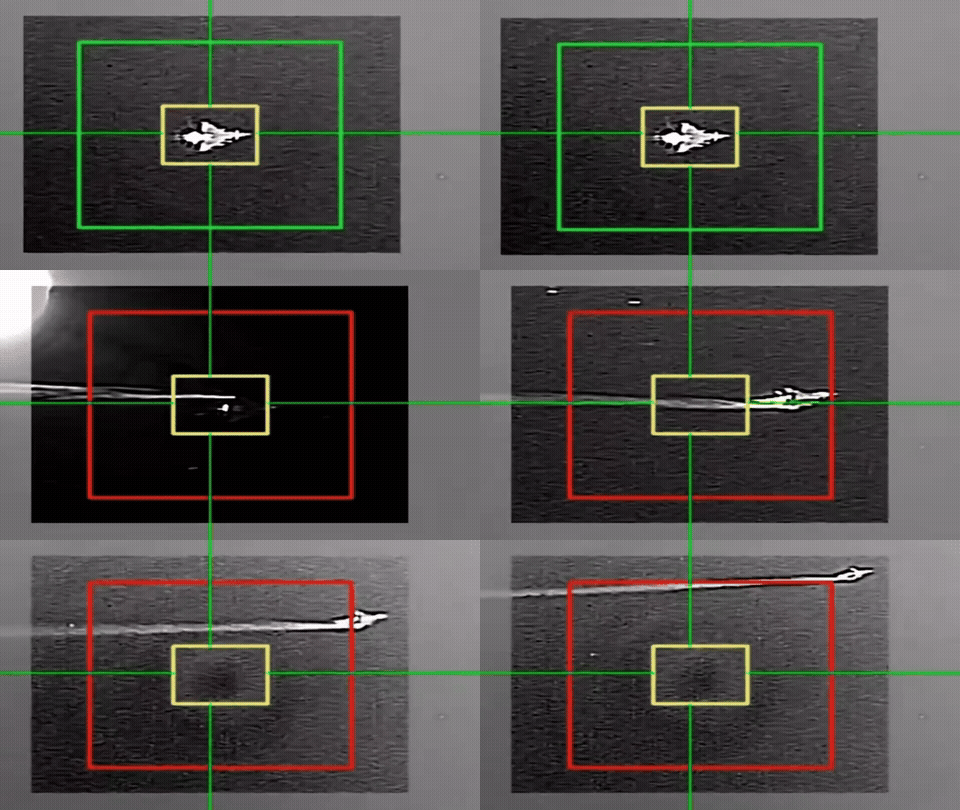
Recent testing has demonstrated the missiles' integration across multiple aircraft platforms.
On June 2, 2026, U.S. Airmen at Dyess Air Force Base, Texas, conducted a live validation test connecting an AGM-158C LRASM to a B-1B Lancer bomber. The event successfully verified communication between the missile and the aircraft's mission systems.
During the Valiant Shield 2026 exercise, a B-2A Spirit stealth bomber launched an AGM-158C LRASM against the decommissioned amphibious ship ex-USS Juneau during a sinking exercise (SINKEX), demonstrating another operational employment scenario for the missile.
Focus on Long-Range Precision Strike
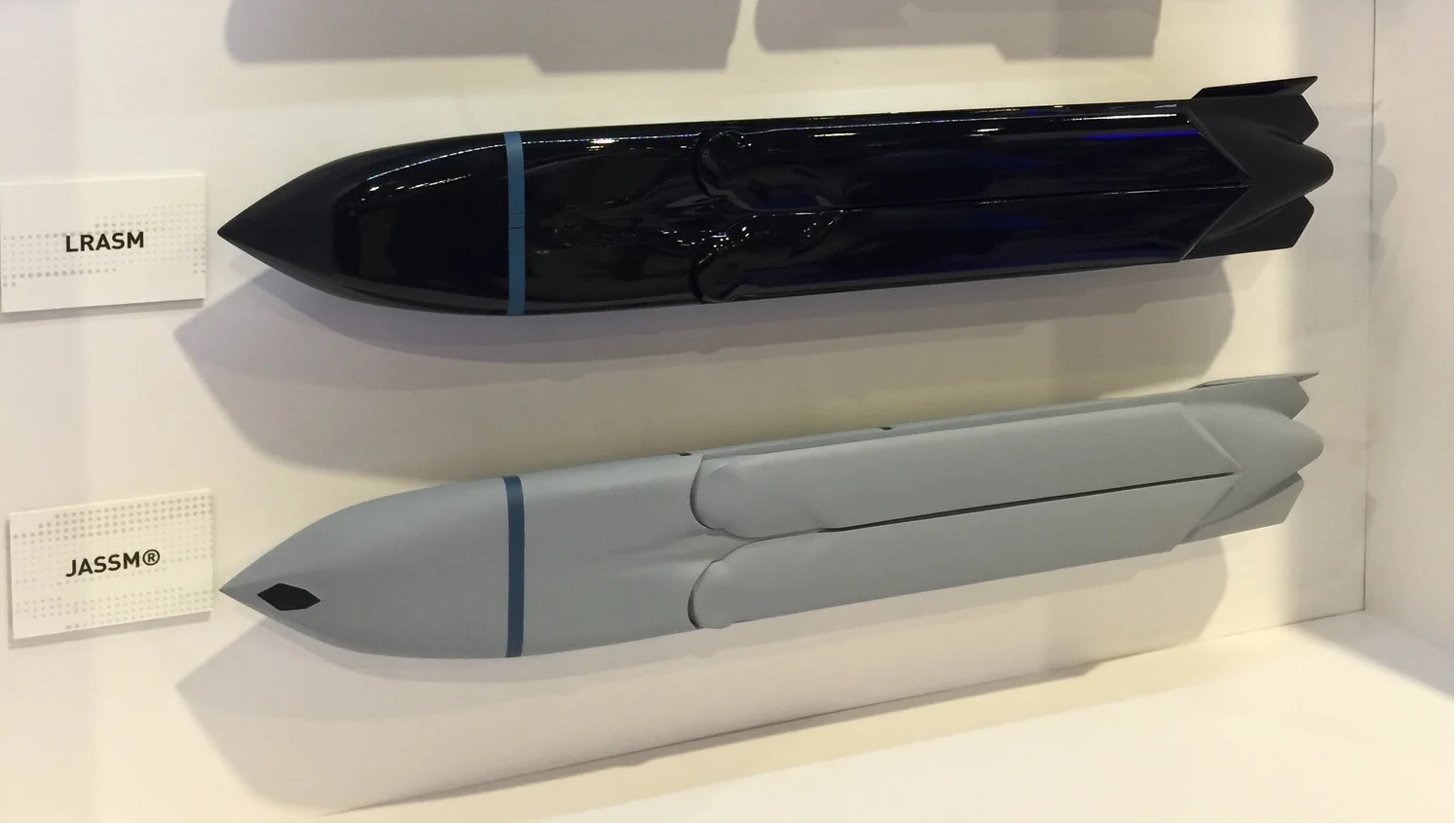
The AGM-158 JASSM is designed to strike heavily defended land targets from long stand-off ranges using low-observable characteristics and precision guidance. The LRASM is derived from the JASSM design and is optimized for engaging maritime targets using advanced autonomous targeting and seeker technology.
Because both missiles share a common airframe and many components, they simplify production, maintenance, and logistics while providing the U.S. military with long-range strike options against both land and naval targets.
The planned acquisition of up to 11,200 missiles significantly exceeds previous inventory objectives and reflects the Pentagon's broader effort to increase production of critical precision-guided munitions while expanding long-term readiness for potential high-intensity operations.
——— End of Article ———