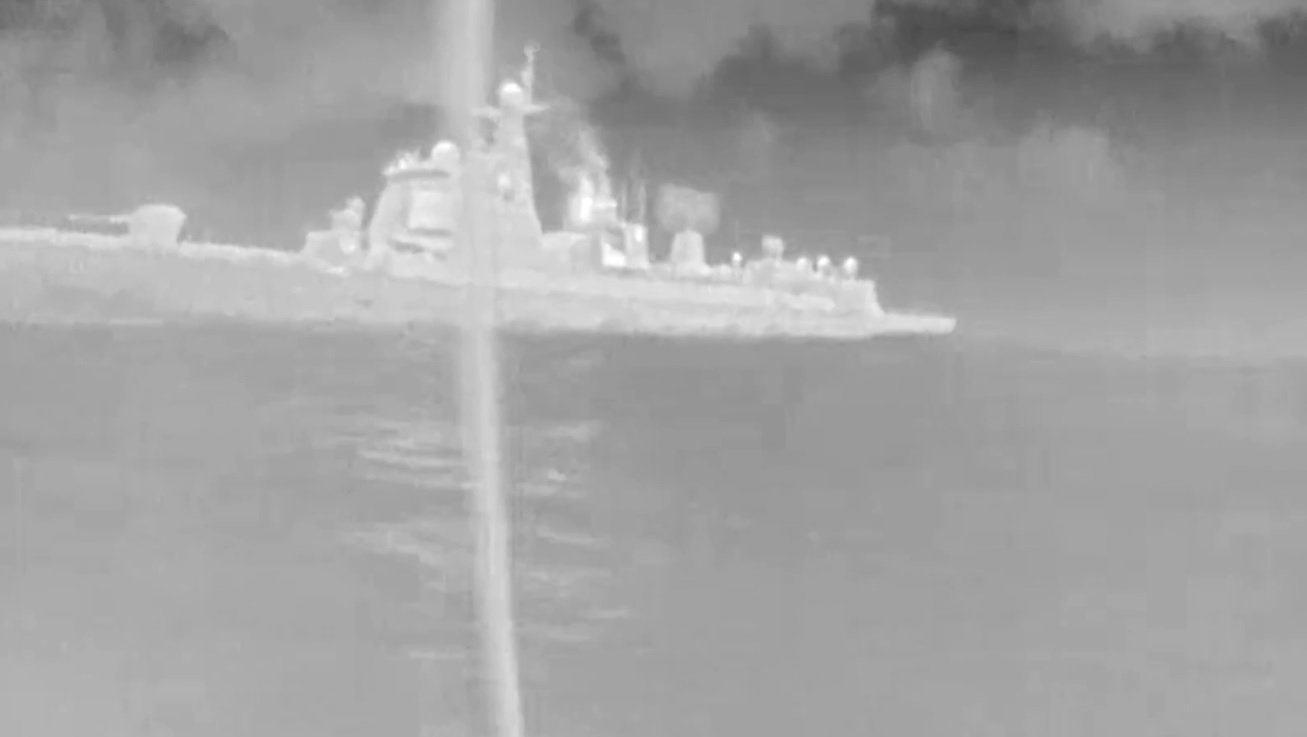
SAN DIEGO, California — A small autonomous sea drone developed by California-based startup Seasats captured close-range video and collected data on a Chinese People's Liberation Army (PLA) Navy Type 052D guided-missile destroyer in Philippine waters earlier this summer, highlighting the growing role of low-cost unmanned surface vessels in maritime surveillance.
According to Seasats, its Lightfish autonomous surface vessel approached the Chinese warship on June 16, approximately 105 kilometers (65 miles) northwest of Luzon Island, within the Philippines' Exclusive Economic Zone (EEZ).
The company shared the footage with Reuters, which independently verified its authenticity. Reuters confirmed the vessel as a PLA Navy Type 052D guided-missile destroyer by matching its deck layout, mast, crane, and superstructure with archived imagery. The news agency also verified the location using Seasats' navigation data and confirmed the date through the original file metadata.
The incident is believed to be the first publicly reported case of a private U.S. company releasing verified close-range footage of a Chinese warship recorded by one of its autonomous sea drones.
Low-Cost Drone Tracks Billion-Dollar Warship
The encounter highlights how relatively inexpensive autonomous vessels are increasingly being used for maritime surveillance.
The Lightfish drone costs about $240,000, while the Chinese Type 052D guided-missile destroyer is valued at roughly $1 billion.
Seasats CEO Mike Flanigan said the company successfully navigated the drone close to the destroyer and recorded extensive video and other data during the mission.
The Lightfish is the smallest vessel in Seasats' current lineup. It can be transported in the back of a standard pickup truck, deployed from a small boat or boat ramp, and launched or recovered within minutes by one or two operators.
The hybrid-powered vessel is designed for long-duration missions of up to six months and can operate in Sea State 6 conditions with waves reaching 20 feet (6 meters).
Equipped for Maritime Surveillance
Lightfish drones can carry a range of surveillance and sensing systems, including:
- Electro-optical cameras
- Infrared cameras
- Signals intelligence equipment
- Electronic warfare payloads
- Active sonar
- Passive sonar
These systems enable the vessel to collect visual, electronic, and underwater information during extended autonomous missions.
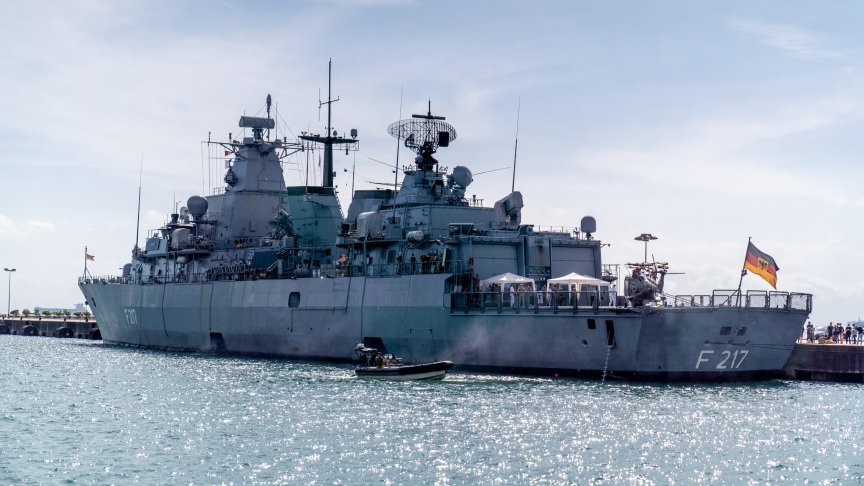
By comparison, the Type 052D destroyer is a major surface combatant measuring approximately 156 meters in length, with a full-load displacement of around 7,000 tons and a crew of about 280 personnel.
Previous Encounters With Chinese Naval Ships
Seasats said this was not its first encounter with Chinese naval vessels. The company stated that its autonomous surface drones have previously operated near Type 052 destroyers, Type 055 destroyers, and Type 056 corvettes during missions over the years.
According to the company, the drones' small size and low profile often allow them to operate without being visually detected. However, Seasats noted that both the drones and the naval vessels emit electronic signatures through their radar and other scanning systems.
Regional Tensions Continue
The encounter occurred against the backdrop of continuing territorial disputes in the South China Sea, where China maintains an extensive maritime presence despite the 2016 Permanent Court of Arbitration ruling that rejected its broad claims over much of the sea.
The Armed Forces of the Philippines recently reported monitoring 26 Chinese navy and coast guard vessels operating in key areas of the disputed waters. The Philippine Coast Guard has also reported an increased presence of Chinese maritime forces, including warships, in the area compared with 2024.
China and Philippines Respond
Asked about the June 16 footage, the Chinese Embassy in Washington said it had no information to provide and was unfamiliar with the incident.
Separately, China's Foreign Ministry defended the country's military activities, stating they are conducted in accordance with international law and international practices. Foreign Ministry spokesperson Mao Ning said relevant parties should avoid approaching Chinese naval vessels at close range, warning that such actions could increase the risk of accidental incidents at sea or in the air.
The Philippine Embassy said it would continue reminding all parties to avoid actions that could escalate tensions, particularly if found trespassing within the Philippines' Exclusive Economic Zone (EEZ).
Company Expands Production
Founded six years ago and based in San Diego, California, Seasats has raised more than $40 million in funding.
The company has also received more than $100 million in U.S. government contracts, including an $89.2 million U.S. Navy production award and a $24 million award under the Accelerate the Procurement and Fielding of Innovative Technologies program.
In addition to the Lightfish, Seasats is preparing to begin production of its larger Quickfish autonomous surface vessel, while a third platform, Heavyfish, remains in the design phase.
——— End of Article ———