OSLO, July 30, 2026 — According to Naval Analyses (@D__Mitch), which cited visual evidence, industry sources and defense procurement information, the Royal Norwegian Navy's Fridtjof Nansen-class frigates have been equipped with HENSOLDT's NESIS 4000 electronically steered, non-rotating Identification Friend or Foe (IFF) antenna system as part of an upgrade that has received little public attention. The analysis indicates that the modernization has been underway since 2019.
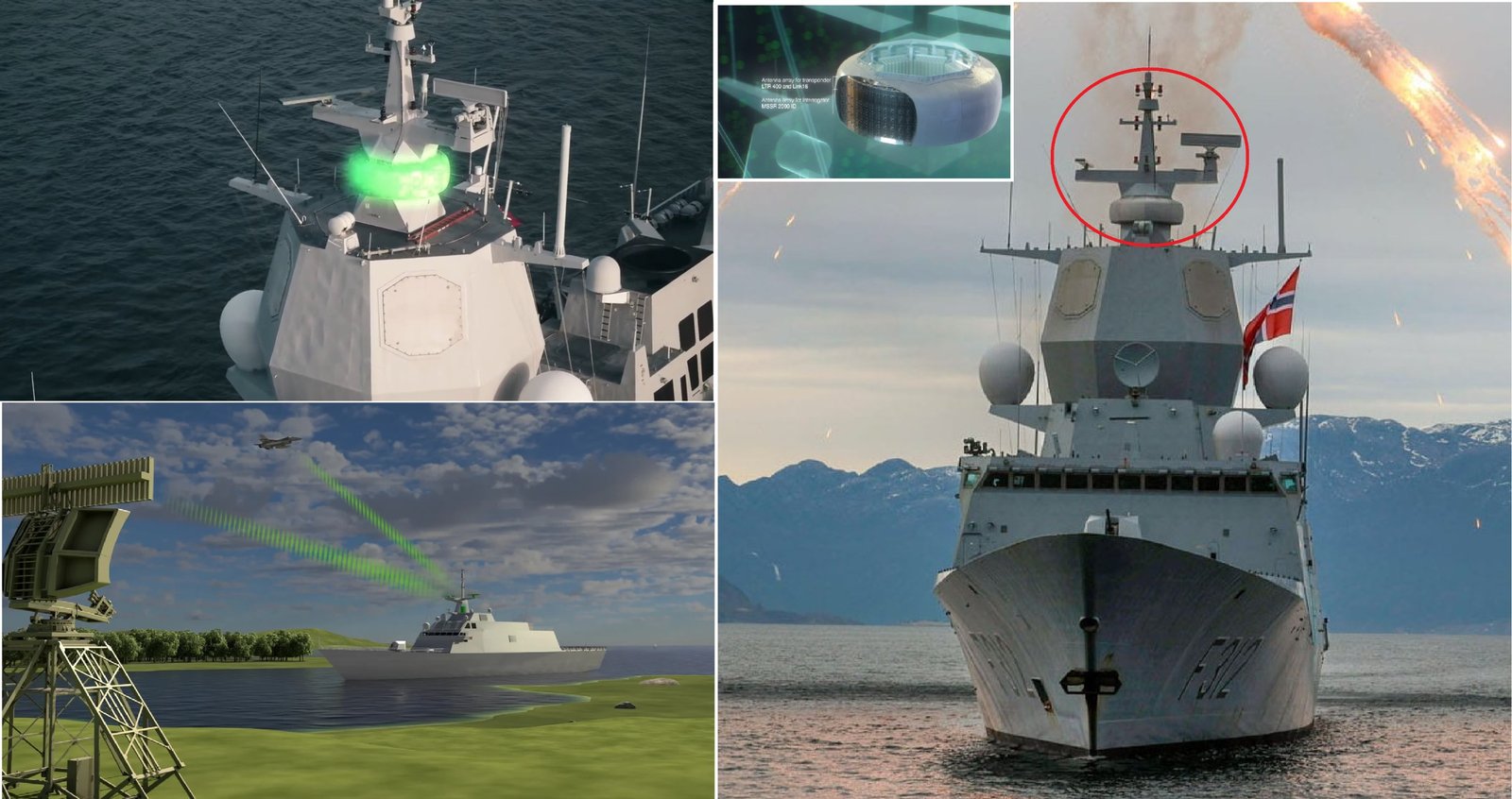
The upgrade replaces the traditional mechanically rotating IFF antenna with HENSOLDT's fixed, electronically scanned NESIS 4000 system. Comparisons between older and more recent photographs of the frigates show a clear change in the design of the ships' main masts. Earlier images display rotating antennas mounted at the masthead, while newer photographs show the circular, fixed mast structure associated with the NESIS 4000.
HENSOLDT, the German sensor specialist, introduced the NESIS 4000 in April 2019. The system is based on Active Electronically Scanned Array (AESA) technology and electronically steers interrogation beams instead of relying on a rotating mechanical antenna. The fixed, ring-shaped antenna can also be integrated lower within a ship's mast structure.
According to HENSOLDT, the electronically steered design enables faster identification of friendly and unknown contacts compared with conventional rotating systems. The NESIS 4000 provides continuous 360-degree coverage with an operational range of up to 200 nautical miles. The company also states that the system can track up to 2,000 targets simultaneously across its full coverage area.
The fixed design removes moving mechanical parts, reducing mechanical wear and maintenance requirements during service. Positioning the antenna lower within the mast also reduces the ship's radar cross-section (RCS) and infrared signature compared with a rotating antenna installed at the top of the mast.
The system supports real-time "lock-on track" operation and includes a fully passive operating mode. By using data links such as ADS-B and Mode 5 Level 2 reception, the frigate can monitor surrounding air and maritime activity without actively transmitting signals that could reveal its position.
Evidence that the system has entered operational service on Norwegian frigates has also emerged from industry sources. A LinkedIn post by a HENSOLDT-linked individual showed HNoMS Roald Amundsen fitted with the NESIS 4000 integrated into its mast. A company comment on the post described it as the first operational use of the new product on a frigate. The post dates to approximately 2022.
The Fridtjof Nansen class was built by Spain's Navantia and delivered to Norway between 2006 and 2011. Five frigates were originally constructed, with four remaining in service following the loss of HNoMS Helge Ingstad in 2018.
The frigates serve as the Royal Norwegian Navy's primary surface combatants and are equipped with the Aegis combat system and the Lockheed Martin AN/SPY-1F radar as their primary sensor. Additional onboard systems include a Reutech air and surface surveillance radar. HENSOLDT had previously supplied its MSSR 2000 I secondary radar for military IFF applications to the Norwegian Navy and several other operators.
Although Norway has announced various modernization programs for the Nansen-class fleet over the years, public references to the installation of the NESIS 4000 have remained limited. Official Norwegian defence statements and standard open-source descriptions of the frigates have not highlighted the modification in detail.
The installation of the NESIS 4000 represents a transition from conventional rotating IFF antennas to electronically steered fixed-array technology aboard the Royal Norwegian Navy's surface combatants. The upgrade provides continuous 360-degree identification capability at extended range while reducing the ships' overall radar and infrared signatures and lowering long-term maintenance requirements.
——— End of Article ———