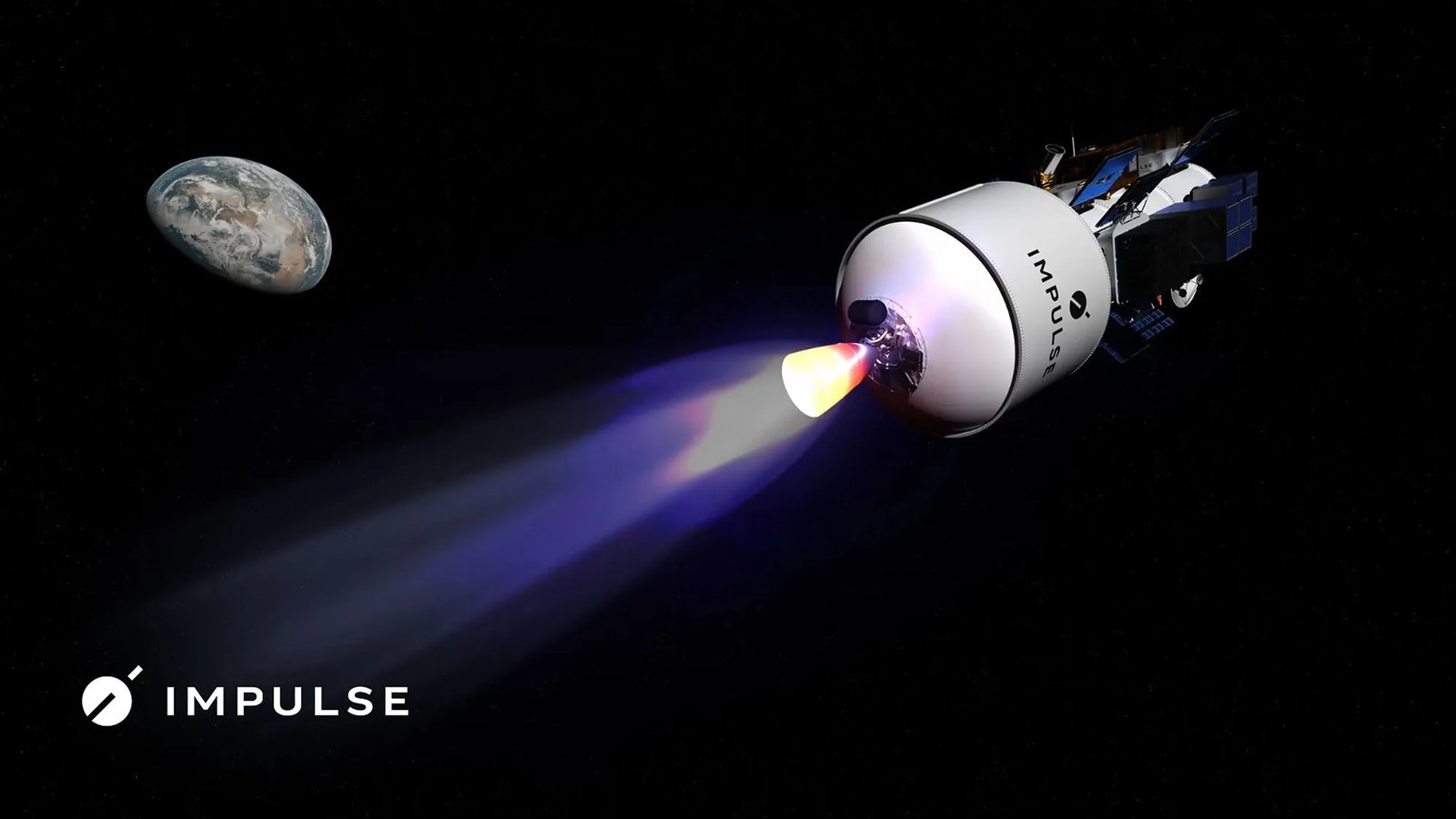
WASHINGTON — The U.S. Department of Defense has awarded California-based Impulse Space a $27.77 million contract modification to supply two additional Mira maneuverable spacecraft for the U.S. Space Force, strengthening the service's space domain awareness capabilities in low Earth orbit (LEO).
The award, announced on July 29, 2026, was issued as Modification P00010 to the company's existing Small Business Innovation Research (SBIR) Phase III contract (FA8809-25-C-B001). The modification increases the total contract value from approximately $35.04 million to $62.81 million.
At the time of the award, $19.75 million in fiscal year 2025 procurement funds had been obligated. The contract is managed by Space Systems Command at Kirtland Air Force Base, New Mexico. Engineering and production work will be carried out at Impulse Space's facility in Redondo Beach, California, with completion scheduled by March 31, 2030.
Supporting Space Domain Awareness Missions
The two additional Mira spacecraft will host U.S. government-furnished surveillance payloads designed to support space domain awareness (SDA) missions in low Earth orbit. These payloads will detect, track, identify and assess satellites, orbital debris and other objects operating in space.
Space domain awareness is a key mission for the U.S. Space Force, providing information needed to monitor activity in orbit, protect national security space assets and assess potential threats. The spacecraft will enable government sensors to operate from maneuverable platforms that can reposition after launch as mission requirements change.
Maneuverable Platform for Changing Orbital Requirements
Unlike conventional satellites that generally remain in fixed orbital paths, the Mira spacecraft is designed as a maneuverable orbital transfer vehicle capable of changing orbits during a mission. This allows operators to reposition payloads and sensors to improve observation and coverage when needed.
The spacecraft uses an onboard propulsion system together with autonomous guidance software to carry out repeated orbital maneuvers throughout its mission. This flexibility enables government and commercial payloads to be moved between operational orbits after deployment.
Transition from Prototype to Operational Capability
The latest award was made under the SBIR Phase III program, which is intended for technologies that have already demonstrated military value and are transitioning into operational use rather than research and development.
The purchase of two additional Mira spacecraft indicates that the Space Force considers the platform suitable for continued operational missions. The repeat procurement also reflects Impulse Space's growing role as a supplier for national security space programs.
Founded in 2021 by propulsion engineer Tom Mueller, Impulse Space focuses on in-space transportation systems. The company has also been selected for the Space Force's National Security Space Launch (NSSL) Phase 3 Lane 1 program, expanding opportunities to support future government space missions.
Previous Missions and Space Force Programs
Impulse Space has previously flown the Mira platform on multiple missions, including LEO Express flights that demonstrated high-thrust orbital maneuvers and payload operations.
An earlier SBIR Phase III contract worth $34.5 million, awarded in 2024, covered two Mira spacecraft for the Space Force's VICTUS SURGO and VICTUS SALO tactically responsive space demonstration missions planned for 2026.
The new contract covers only the two spacecraft. Launch services and the government-furnished payloads will be provided separately.
Mira Spacecraft Specifications
According to Impulse Space, the Mira spacecraft offers capabilities designed for missions requiring orbital mobility and precision.
Key specifications include:
- Propulsion: Proprietary Saiph bipropellant thrusters using nitrous oxide and ethane.
- Payload Capacity: Up to 300 kilograms (660 pounds).
- Delta-v Performance: 500–550 meters per second for a 300 kg payload, and up to 900 meters per second for a 100 kg payload.
- Guidance and Control: Autonomous guidance software, reaction wheels and thrusters.
- Pointing Accuracy: Better than 10 arcseconds, supporting stable operation of sensitive optical payloads.
Expanding Flexible Space Architecture
The procurement is part of the Space Force's broader effort to build a more distributed and flexible space architecture by incorporating commercial spacecraft alongside traditional national security satellites.
U.S. defense officials have highlighted increased activity by China and Russia involving spacecraft capable of complex maneuvers, close-proximity operations and orbital inspection missions. In response, the Space Force is expanding its ability to monitor the orbital environment using maneuverable platforms that can reposition sensors as operational requirements evolve.
With the addition of two more Mira spacecraft, the Space Force continues to expand its use of commercially developed maneuverable vehicles to support persistent space domain awareness operations in low Earth orbit.
——— End of Article ———