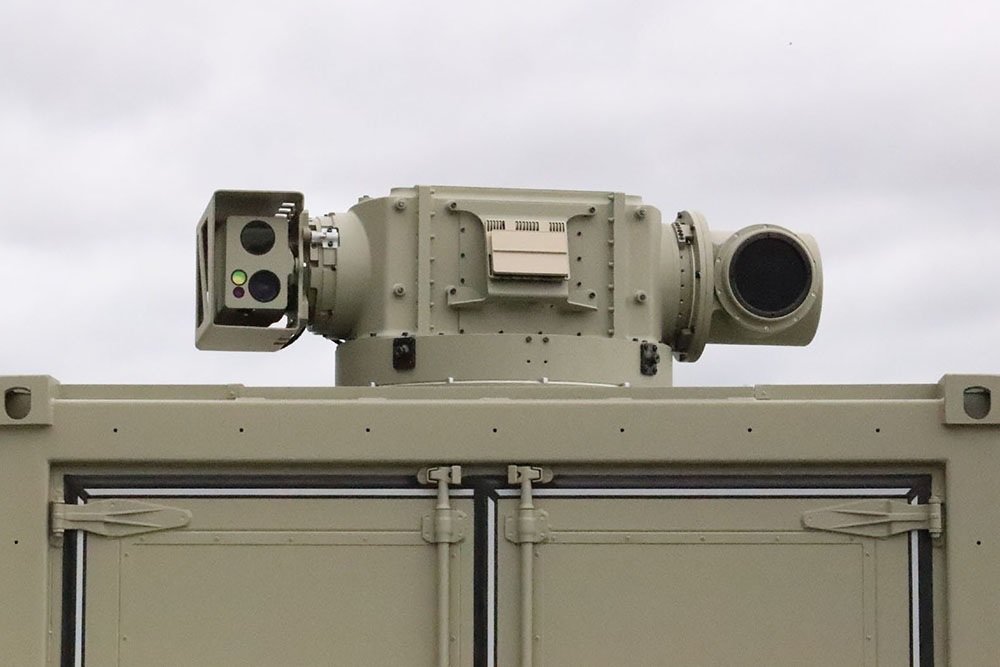
CAPE CANAVERAL, Fla. — The U.S. Space Force is adding directed-energy laser systems at Cape Canaveral Space Force Station to counter unauthorized drones and protect sensitive launch infrastructure.
Space Launch Delta 45 confirmed the addition of the laser systems as part of a wider counter-drone security upgrade. Col. Brian Chatman, commander of Space Launch Delta 45 and director of the Eastern Range, said the systems can physically disable drones that enter restricted areas with hostile intent. The systems have been tested by the Air Force Research Laboratory and shown to safely bring down drones.
The directed-energy systems are being introduced partly because traditional radio-frequency jamming can interfere with communications and other electronic systems used by rockets and spacecraft. “If you start blasting a bunch of RF energy you run into potential challenges. You don’t want that,” Chatman told Florida Today.
Wider counter-drone system
The laser systems are part of a broader security network. Officials are also adding the Lattice system, an AI-powered platform that combines data from military radars and sensors into a three-dimensional picture to help detect and track unauthorized drones.
A multi-million-dollar radio-frequency jamming system began installation last winter to expand coverage across Cape Canaveral. Additional equipment is also expected from the Pentagon’s Joint Interagency Task Force 401.
Cape Canaveral supports launches for SpaceX, United Launch Alliance, Blue Origin and national-security missions. The nearby NASA Kennedy Space Center also contains major launch infrastructure, including facilities supporting the Artemis lunar program. The Space Coast recorded 109 orbital launches in 2025, most of them from Cape Canaveral, with launch activity expected to increase in coming years.
Unauthorized drone activity
Drone activity has become a growing security concern in the region. Port Canaveral recorded more than 500 unauthorized drone flights in 2025. Unauthorized drone flights over the port are a third-degree felony under Florida law. The Space Force has also warned that drone flights and photography of military installations at Cape Canaveral are prohibited, including from public roads.
The issue was highlighted by a recent federal case. On September 18, 2026, Chinese tourist Xiaodong He pleaded guilty in U.S. District Court in Orlando to a misdemeanor charge of violating national defense airspace.
According to the provided case details, He flew a drone on July 25 from a parking area at Playalinda Beach Access No. 8 in Canaveral National Seashore. The flight lasted 12 minutes and 24 seconds, reached about 231 feet, and recorded video within 1.56 miles of Launch Complex 39B at Kennedy Space Center and 4.23 miles of related facilities. He and family members said they were capturing scenery and were unaware of the restrictions. He remains free pending sentencing, which can include up to one year in prison, supervised release and a fine.
In another case in July 2025, Chinese-born Canadian citizen Xiao Guang Pan pleaded guilty after taking nearly 250 photographs and videos of military installations, fuel storage areas and security checkpoints at Cape Canaveral Space Force Station over three days.
State awareness campaign
Florida Gov. Ron DeSantis recently announced a $150,000 state grant for the Economic Development Commission of Florida’s Space Coast. The money will support a regional public-awareness campaign on responsible drone use and no-fly zones around Cape Canaveral and Patrick Space Force Base.
Space Launch Delta 45 said the broader effort combines detection, tracking and defensive capabilities to protect personnel, launch complexes and national-security payloads. Officials have not provided a timeline for the laser systems becoming operational or identified the exact system model.
The upgrades also reflect lessons from conflicts such as Ukraine, where small drones have demonstrated their potential threat to critical infrastructure.
——— End of Article ———