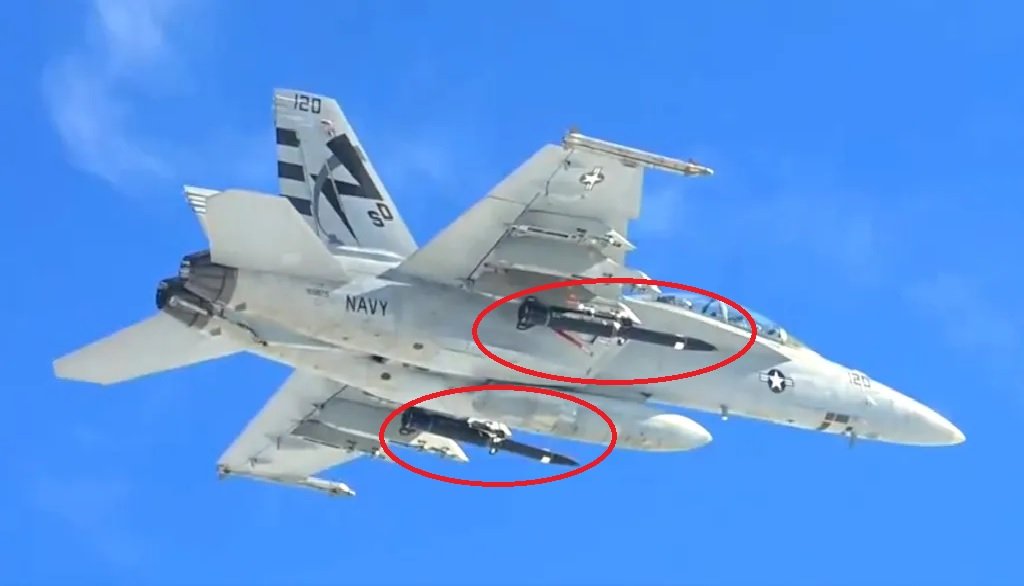
WASHINGTON — The U.S. Navy has released video showing its Blackbeard hypersonic missile mounted under the wings of an F/A-18E/F Super Hornet during flight testing, confirming that the program has moved beyond ground integration and test-loading.
The footage was posted by Naval Air Systems Command (NAVAIR) on September 25, 2026, while the Navy’s Office of the Portfolio Acquisition Executive for Aviation (PAE-A) released a test montage with the message, “Coming soon to a theater near you…BLACKBEARD!” The post tagged U.S. Central Command and U.S. Pacific Command.
The development follows confirmation at the Tailhook Association convention in August 2026 that Blackbeard had begun test-loading on Super Hornets.
Coming soon to a theater near you...BLACKBEARD!@USPACOM @CENTCOM @PAEAviation pic.twitter.com/KgBtIqdf8I
— NAVAIR (@NAVAIRNews) September 25, 2026
Affordable hypersonic weapon
Blackbeard is being developed by Castelion, a Torrance, California-based defense startup founded in 2022 by former SpaceX engineers. The weapon is being acquired under the Navy's Multi-mission Affordable Capacity Effector (MACE) program, with the Super Hornet serving as the initial launch platform.
The Navy is targeting at least limited early operational capability by 2028 and a full-rate production cost of less than $300,000 per missile. Castelion has previously indicated a range of just under 500 miles.
On September 14, 2026, the Pentagon awarded Castelion a $43.65 million firm-fixed-price contract for manufacturing, assembly, testing and delivery of the first production lot of 444 All-Up Rounds (AURs). The fully functional tactical missiles are supplied in specialized storage and shipping containers, with completion expected by September 2028.
Other 2026 awards include a $105 million contract in April for F/A-18 integration, a $49.9 million award in February to advance the weapon toward early operational capability, a $23.4 million June order for 50 pre-production prototypes, and an approximately $90 million August award supporting those weapons and transition to a formal program of record. PAE-A has also announced production delivery orders valued at up to $200 million.
In May 2026, the Pentagon announced a framework agreement covering potential purchases of up to 12,000 Blackbeards over five years.
Compact two-stage design
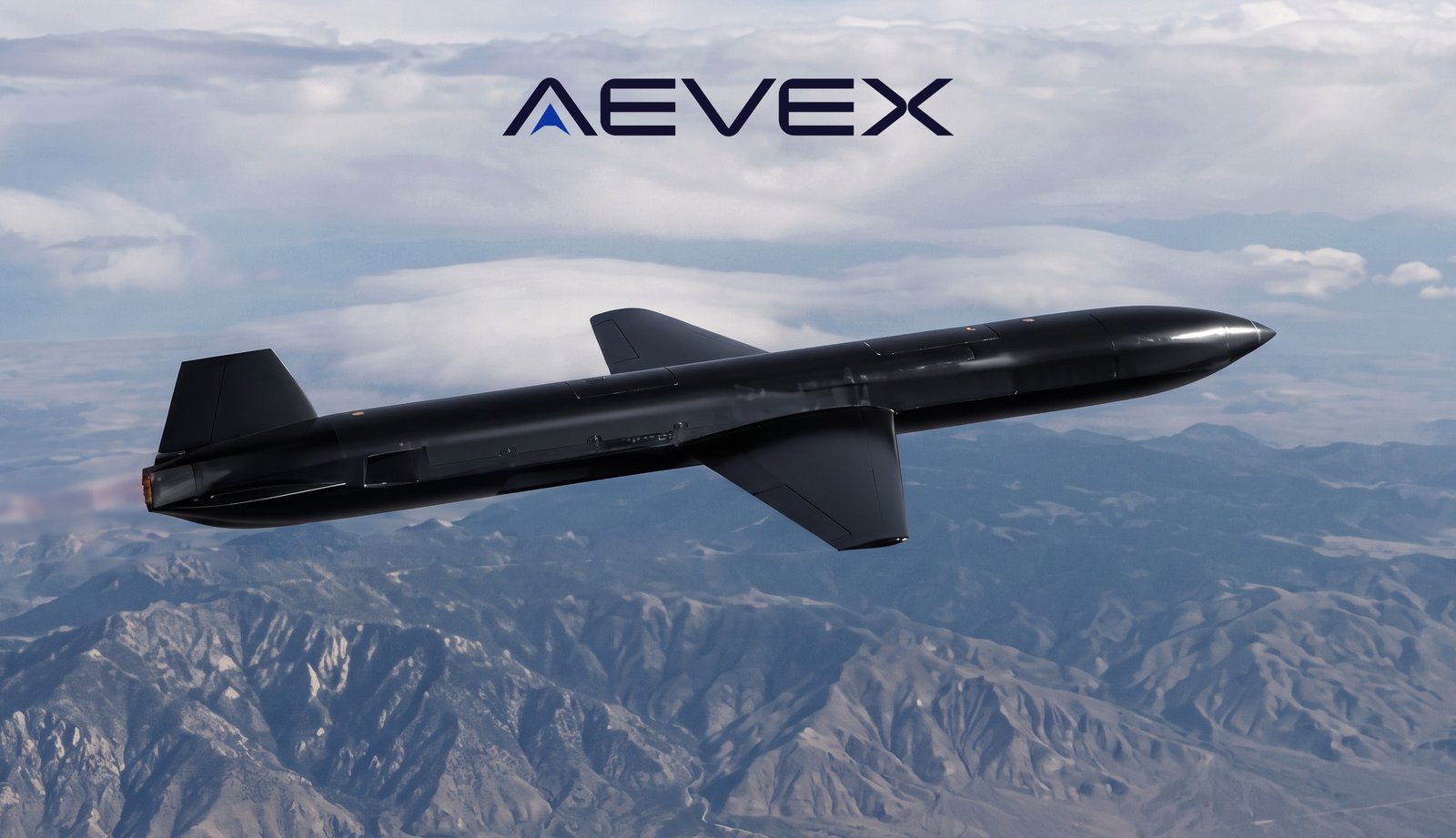
Blackbeard uses a two-stage architecture. A solid-fuel booster accelerates the missile before the upper stage separates for hypersonic flight. The upper stage may operate as a hypersonic glide vehicle or incorporate its own propulsion.
Available images show cruciform fins, a chine line and a slightly beak-like wedge-shaped nose. An aperture visible on the nose could be associated with a terminal guidance seeker, potentially an imaging infrared (IIR) sensor, although the Navy has not publicly confirmed its exact configuration.
The missile is approximately 12 feet long, seven inches in diameter and weighs about 2,750 pounds. Earlier MACE requirements called for a weapon compact enough for the F-35C and F-35A to carry up to four missiles internally, although it is unclear whether that remains a firm requirement.
The U.S. Army is also developing a ground-launched Blackbeard variant compatible with systems such as HIMARS.
Intended for long-range strike
Blackbeard is intended as a standoff weapon against maritime and land targets, with the program emphasizing affordable, scalable production and increased missile availability.
The capability is being developed partly in response to increasingly advanced anti-access/area-denial (A2/AD) environments, particularly in the Indo-Pacific. The Navy's focus on lower-cost, higher-volume weapons also reflects concerns about missile stockpiles and replenishment rates highlighted by recent conflicts.
Castelion is expanding production at its Project Ranger facility in New Mexico.
The September 25 footage confirms that air-launched Blackbeard testing on the Super Hornet is underway. However, the Navy has not publicly released exact test locations, separation-test details or precise performance data.
Blackbeard's progress comes alongside the Air Force's Hypersonic Attack Cruise Missile (HACM) program, which has targeted limited operational capability around the end of Fiscal Year 2027.
——— End of Article ———