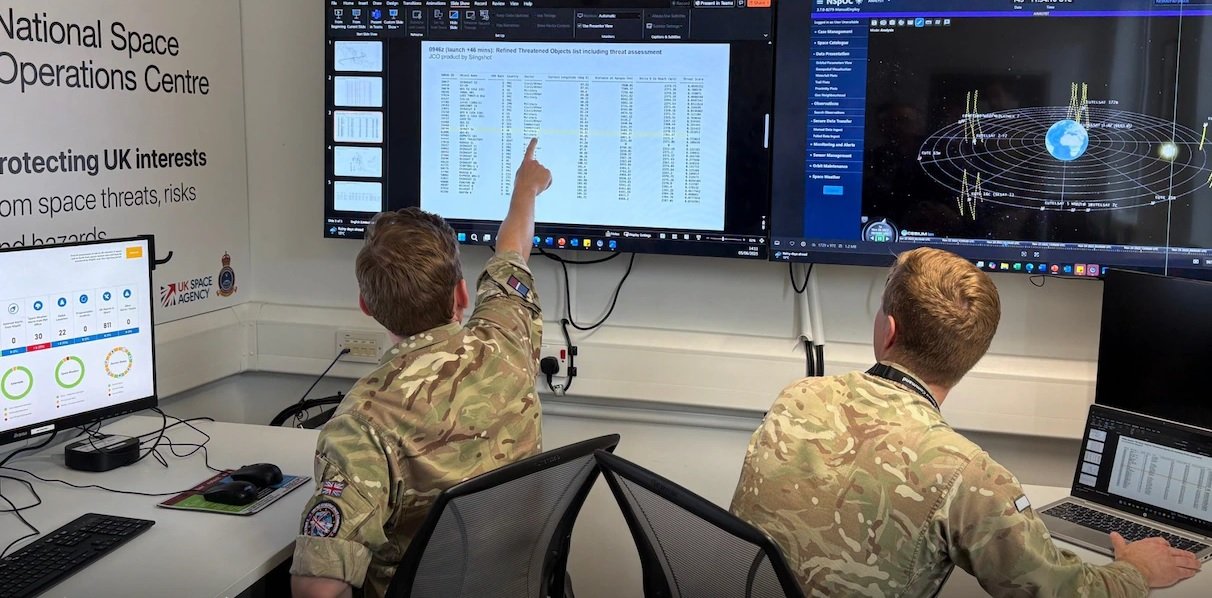
LONDON — The Royal Air Force (RAF) has formed No. III Space Effects Squadron, its first dedicated unit focused on countering hostile threats to UK satellites. Chief of the Air Staff, Air Chief Marshal Sir Harv Smyth, announced the squadron at the first UK Space Power Conference in London.
The squadron operates under UK Space Command and brings together specialist personnel from across the UK Armed Forces. It will conduct both defensive and offensive space operations, using capabilities including electronic warfare to disrupt, degrade and deny hostile activities while protecting UK and allied satellites.
The RAF already operates No. I Space Operations Squadron and No. II Space Warning Squadron, which monitor space and provide warnings of potential threats. No. III Squadron is intended to add the ability to act against those threats.
UK satellites support military and civilian services including communications, maritime navigation, missile warning, weather forecasting, emergency services and energy networks.
“Space no longer supports operations from the sidelines. It’s a domain of direct competition, where our military advantage can be won or lost,” Air Chief Marshal Smyth said. He added that the squadron would protect the benefits space provides to UK forces while being capable of denying those benefits to adversaries.
Part of UK's wider space strategy
The squadron supports the Control of Space Requirement included in the UK government's Space Strategy. The requirement calls for the UK to maintain freedom to operate in space while having the ability to deny the same freedom to adversaries. It builds on the Strategic Defence Review, which identified space operations as important to UK security, prosperity and daily life.
The Ministry of Defence is developing capabilities including electronic warfare and countermeasures against anti-satellite weapons. The UK has ruled out destructive anti-satellite missile testing and continues to work through the UN Committee on the Peaceful Uses of Outer Space to promote responsible space activities while cooperating with allies on collective defence.
The UK has allocated £880 million between 2026/27 and 2029/30 for space-based intelligence, surveillance and reconnaissance and space control activities.
Defence Secretary Wes Streeting said the UK's growing dependence on space and the increasing scale, speed and sophistication of threats mean that British deterrence in space must match its capabilities on Earth.
The RAF headquarters at High Wycombe was redesignated Air and Space Command at the beginning of September. Further space units, including Nos. 4, 5 and 6 Squadrons and a Space Tactics and Training Squadron, are planned.
Formed in September 2026, No. III Space Effects Squadron is expected to expand as new space-defence capabilities enter service.
——— End of Article ———