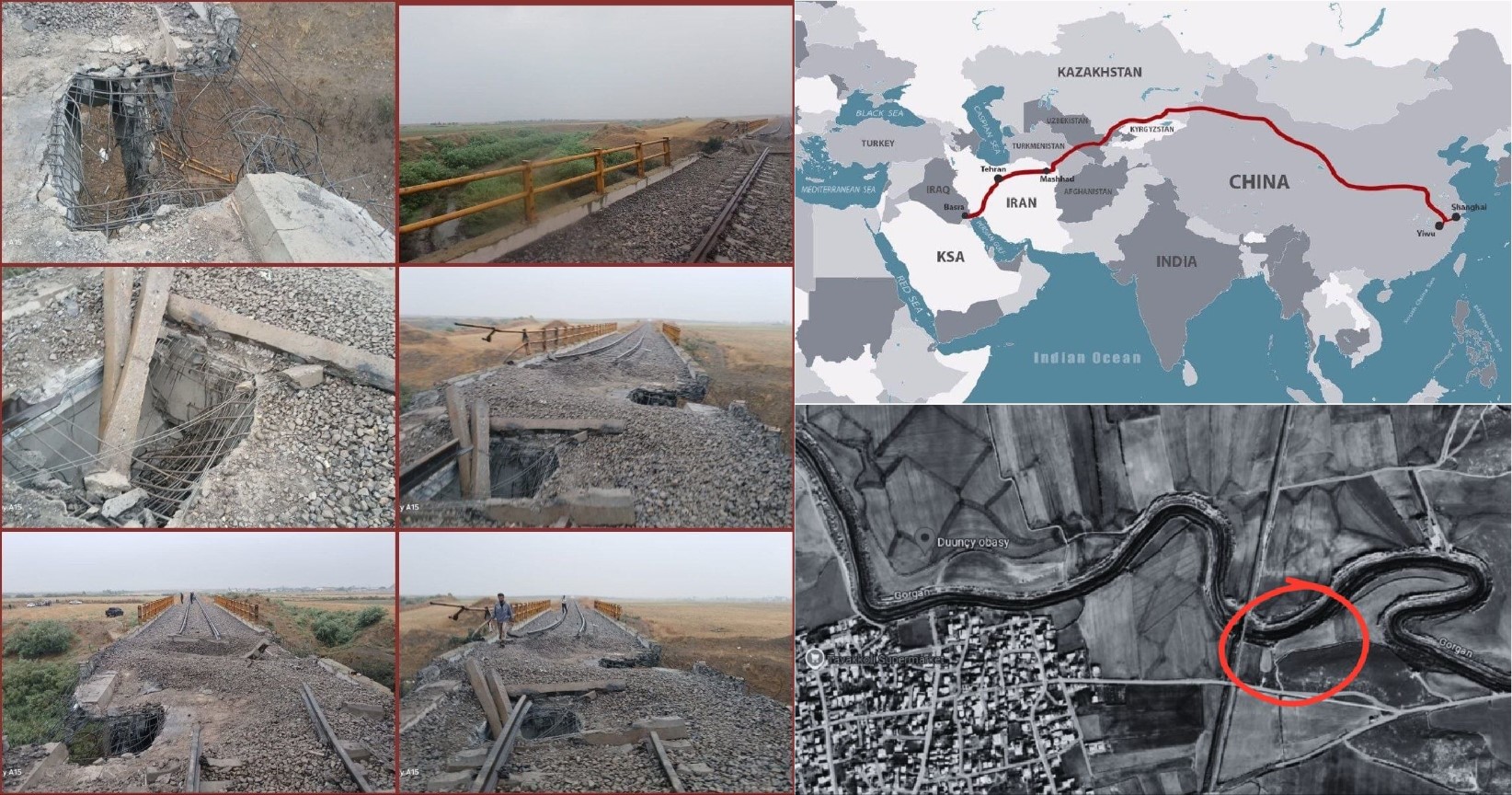
GORGAN, Iran — United States forces carried out an overnight cruise missile strike on the Aq Tekeh Khan railway bridge in Iran's northeastern Golestan province, targeting a key section of the country's overland transport network connecting Iran with China and Russia.
According to Iranian state media and the Islamic Revolutionary Guard Corps (IRGC) Neynava Corps, the bridge in the Aqqala district was hit by a US cruise missile. Iranian officials reported no casualties, while emergency teams were deployed to assess the damage.
The strike marks a notable change in the current US military campaign against Iran. Since the collapse of the recent ceasefire, most US operations had focused on military facilities in southern Iran near the Strait of Hormuz. The attack on the Aq Tekeh Khan bridge, located close to the Turkmenistan border, extends operations deep into northern Iran and targets infrastructure with significant logistics and transportation value.
Key Transport Link for China and Russia
The Aq Tekeh Khan railway bridge is part of the China–Kazakhstan–Turkmenistan–Incheh Borun railway corridor, an important overland route linking the Chinese city of Xi'an with Tehran. The railway also forms part of the broader International North-South Transport Corridor (INSTC) and supports China's Belt and Road Initiative.
The corridor has become increasingly important for trade between Iran, China, and Russia. Over the past year, at least 65 freight trains traveled from China to Iran along this route. Rail traffic increased significantly after the US Navy blockade of Iranian Gulf ports earlier this year, with Iranian authorities relying more heavily on land transportation to reduce dependence on maritime routes through the Strait of Hormuz.
Russia has also used the same railway corridor for cargo shipments to Iran since late October 2025, making the route strategically important for regional trade and logistics.
Passenger Rail Services Affected
Following the strike, passenger rail services between Tehran and the northeastern city of Mashhad were disrupted. Iranian authorities redirected stranded passengers to road transportation while damage assessments and recovery work continued.
The IRGC's Neynava Corps confirmed the attack and stated that no deaths or injuries were reported.
Change in US Military Operations
The attack represents one of the deepest reported US strikes inside Iranian territory during the current conflict.
Before this operation, US Central Command had stated that its military actions were aimed at reducing Iran's ability to threaten maritime navigation around the Strait of Hormuz by targeting military facilities in southern Iran. The latest strike, however, focused on transportation infrastructure that plays a major role in Iran's international trade network.
The renewed fighting follows the collapse of a ceasefire agreement reached last month. After the ceasefire ended, US President Donald Trump announced that the agreement was over, while the United States revoked a license that had allowed Iranian oil sales.
US Central Command has since reported conducting strikes against more than 90 Iranian targets. In response, Iran's IRGC said it carried out retaliatory attacks against US military bases in Kuwait and Bahrain.
Previous Railway Infrastructure Strikes
Iran's railway network has faced similar attacks in recent months.
During strikes on April 7, US and Israeli forces targeted six railway bridges across Tehran, Alborz, Qom, Isfahan, Zanjan, and East Azerbaijan provinces. Iranian authorities restored several of those damaged crossings within days. The Yahyaabad railway bridge in Kashan reopened three days after the attack, while another railway bridge near Qom was repaired in less than 40 hours.
Iranian officials have indicated that repair work on the Aq Tekeh Khan bridge is expected to begin quickly based on previous restoration efforts.
Strategic Importance
The Aq Tekeh Khan bridge serves as a critical connection for rail freight moving between Iran, China, Russia, and Central Asia. As maritime routes have faced increasing disruption during the conflict, the railway has become an important alternative for international cargo transport.
Damage to the bridge is expected to affect rail logistics on one of Iran's main overland trade corridors while authorities continue to assess the full impact on freight operations and passenger services.
——— End of Article ———