LONDON — The United Kingdom has successfully completed the world's first extracted-load airdrop of an uncrewed surface vessel (USV) from a military transport aircraft, demonstrating a new method of rapidly deploying autonomous maritime systems directly into operational waters.
The trials were conducted over the North Sea by the Royal Navy in partnership with British maritime autonomy company Kraken Technology Group and aerial delivery specialist Capewell under the Royal Navy's Project Beehive.
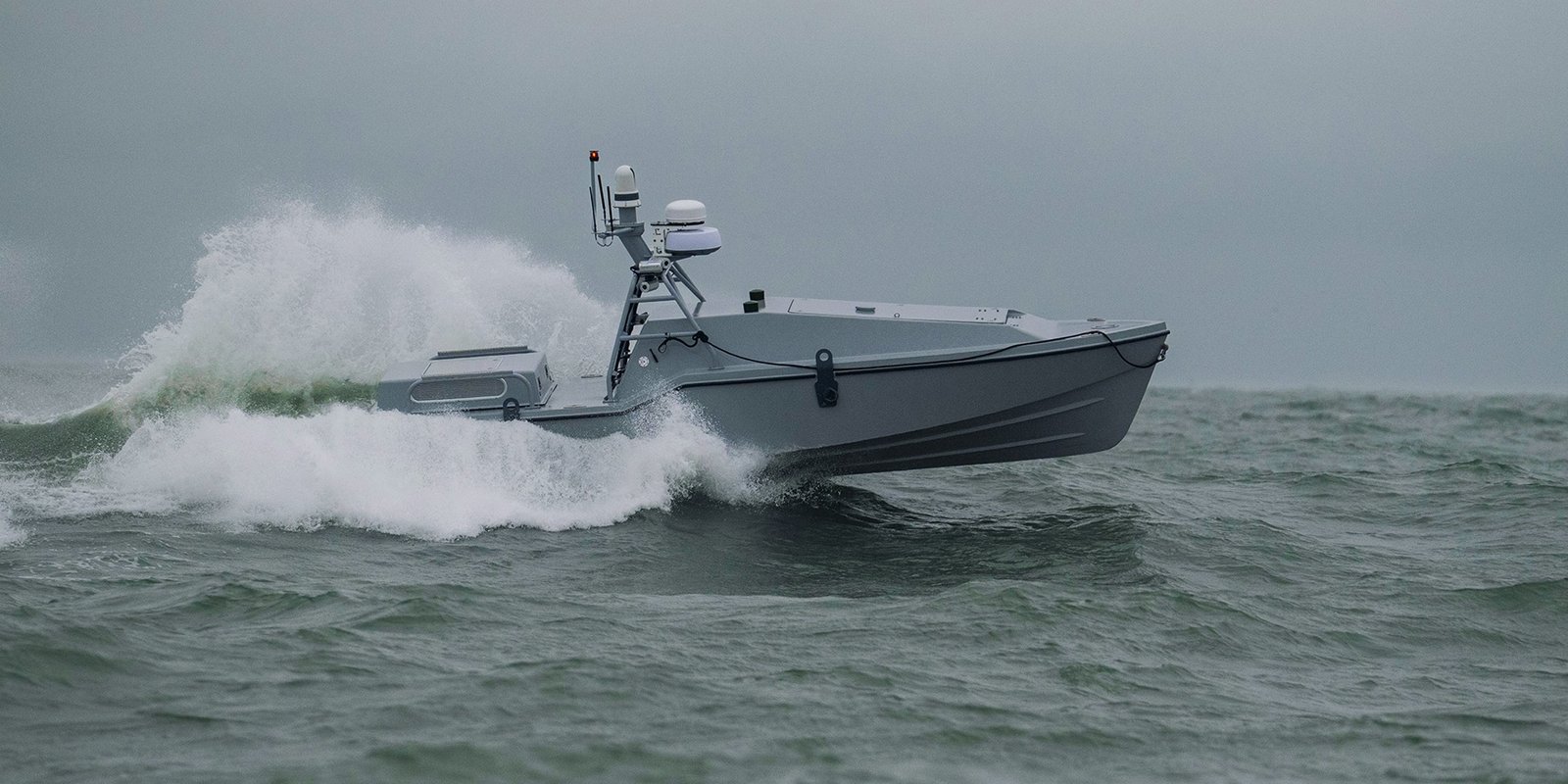
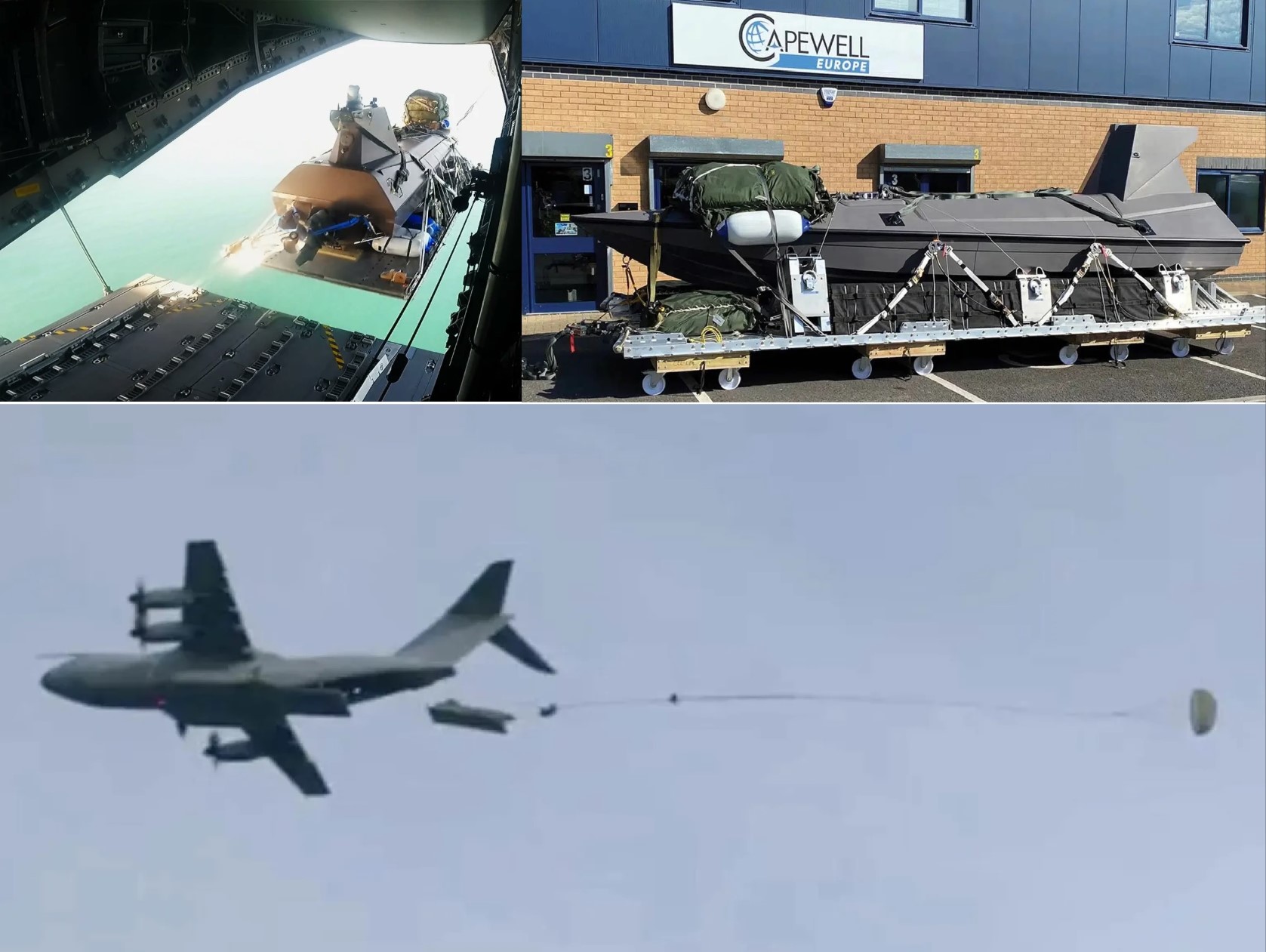
During the six-day trial campaign, a Project Beehive-configured K3 SCOUT USV was successfully deployed four times from an Airbus A400M Atlas transport aircraft flying at an altitude of 1,300 feet. The vessel was dropped into Sea State 4 conditions, where waves can reach up to approximately 2.5 metres (8 feet), and successfully transitioned into operational mode after entering the water.
The demonstration validated a new capability that allows autonomous maritime systems to be deployed directly into contested or difficult-to-access waters without relying on nearby ports, naval vessels, or other supporting infrastructure.
New Aerial Delivery System Validated
For the trials, the K3 SCOUT was equipped with Kraken Technology Group's optional airdrop kit and mounted on Capewell's Universal Maritime Craft Aerial Delivery System (UMCADS), a reconfigurable Type V parachute-based platform designed to deliver maritime craft into military operating areas.
The extracted-load process involves pushing the USV, mounted on the UMCADS platform, from the aircraft's cargo bay before parachutes slow its descent into the sea.
The campaign also successfully tested the new electro-mechanical IN-Release system, which synchronizes the separation of the delivery platform and the vessel immediately before water entry. According to the companies, the configurable mechanism can support a range of aerial and maritime deployment applications.
The trials demonstrated that the K3 SCOUT could withstand the impact of the airdrop, remain operational in rough sea conditions, and begin its mission shortly after landing in the water.
Supporting Rapid Maritime Operations
The new deployment method provides military forces with the ability to position autonomous surface vessels hundreds of miles from friendly bases using strategic airlift aircraft such as the Airbus A400M.
According to the Royal Navy, this capability offers commanders an additional option for rapidly deploying uncrewed systems in areas where conventional naval access may be delayed, denied, or considered too high risk. Potential missions include intelligence gathering, surveillance, force protection, and precision strike operations.
Captain Adam Ballard, who is involved with Project Beehive, said the capability represents a change in how maritime power can be deployed. While navies have traditionally launched air power from ships, he noted that autonomous maritime capability can now also be delivered directly from the air.
Project Beehive and the Hybrid Navy
The trials form part of the Royal Navy's Project Beehive, which is supporting the integration of autonomous systems into the UK's future "Hybrid Navy" concept that combines crewed and uncrewed platforms within the Surface Flotilla.
Earlier this year, the UK Ministry of Defence awarded Kraken Technology Group a £12.3 million contract to deliver 20 K3 SCOUT uncrewed surface vessels over a 12-month period. The vessels will support operational deployments, tactical development, and training activities.
K3 SCOUT Specifications
The K3 SCOUT is an approximately 8.4-metre composite-hulled autonomous surface vessel featuring a low-signature design. It has a maximum speed of 55 knots, can carry payloads of up to 600 kilograms, and offers an endurance of up to 30 days, depending on mission requirements.
The platform is designed for missions including surveillance, reconnaissance, force protection, precision strike, and casualty evacuation.
Company Expansion
The successful trials come as Kraken Technology Group continues to expand its operations. Founded in 2020 by Mal Crease, the company recently completed a $175 million Series B funding round backed by investors including the NATO Innovation Fund and the British Business Bank.
According to the company, the investment values Kraken at more than $1 billion and will support international manufacturing expansion and the further development of its autonomous platforms.
Commenting on the trials, Mal Crease, Founder and CEO of Kraken Technology Group, said the partnership with Capewell and the Royal Navy demonstrated that the K3 SCOUT could be rapidly deployed from a military transport aircraft into contested or difficult-to-access waters ready for operation. He added that the company will continue working with its partners to develop modular autonomous systems for future operational requirements.
Mark Lavender, Director of Business Development and Training at Capewell, said the campaign validated the integration of the K3 SCOUT with the UMCADS platform and demonstrated the flexibility of the delivery system. He noted that the team completed four live airdrops in six working days using the same boat and delivery platform, highlighting the system's ability to support different mission requirements.
The successful demonstration marks a practical step in expanding the Royal Navy's ability to deploy autonomous maritime systems rapidly from the air while reducing dependence on conventional naval deployment methods.
Source: navylookout
——— End of Article ———