WASHINGTON — The U.S. Department of War has awarded two Other Transaction Authority (OTA) agreements worth a combined $86 million to nLIGHT Defense and Lockheed Martin Aculight under the Joint Laser Weapon System (JLWS) program. The initiative is intended to accelerate the development of high-energy laser weapons designed to counter cruise missiles and unmanned aerial systems (UAS).
The agreements are being managed through the Scaled Directed Energy (SCADE) Critical Technology Area (CTA) under the Office of the Under Secretary of War for Research and Engineering (OUSW(R&E)). While the initial award totals $86 million, the overall JLWS program has a ceiling value of $847 million, reflecting the Department's long-term investment in directed energy technologies.
Developing Field-Ready Laser Weapons
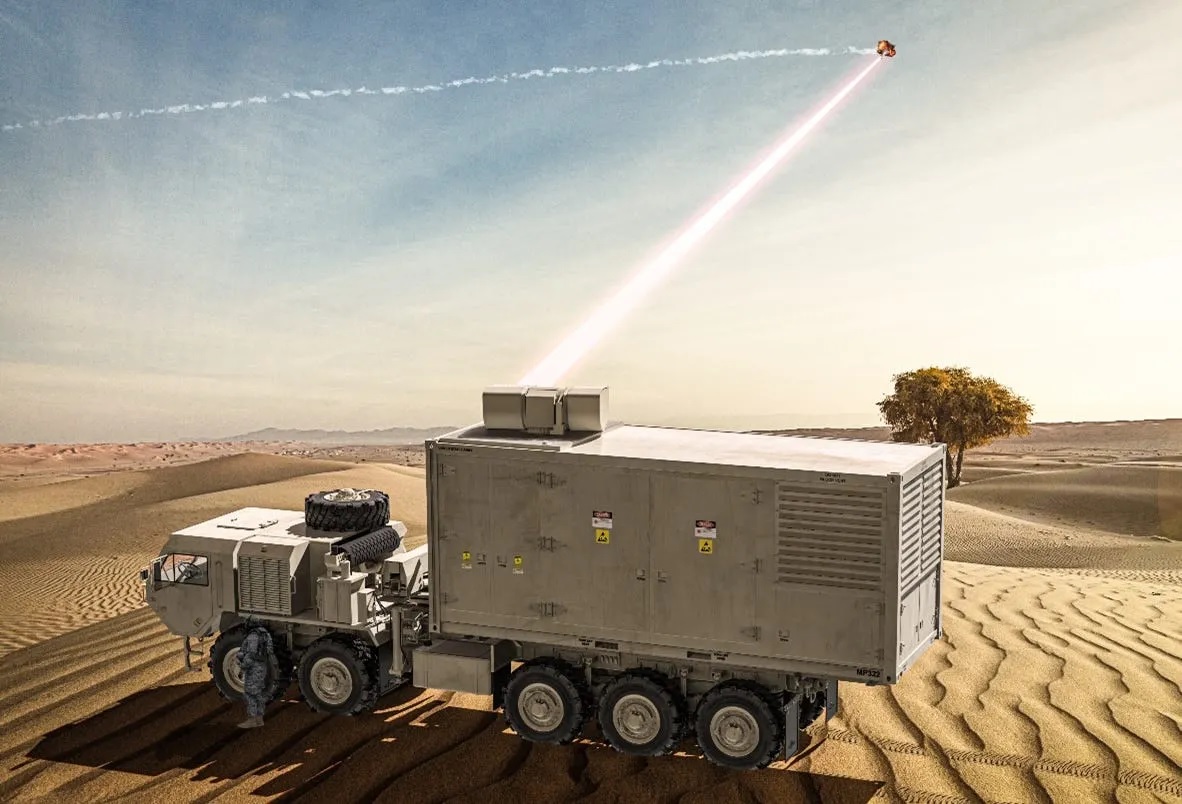
The JLWS program is focused on transitioning directed energy systems from demonstration prototypes into production-oriented, operational platforms. The Department plans to develop containerized high-energy laser weapons that can be rapidly deployed and integrated across multiple military platforms.
According to the Department, these laser systems are intended to provide several operational advantages over conventional missile-based interceptors. They can engage threats at the speed of light, support repeated engagements without carrying large numbers of interceptor missiles, and significantly reduce the cost per engagement. These characteristics are considered particularly valuable for defending against large drone swarms and increasingly capable cruise missile threats.
Initial 150 kW Systems to Scale Up
The first JLWS prototypes will be built with an output of approximately 150 kilowatts (kW). Future versions are planned to increase power into the 300–500 kW range, which the Department considers necessary for effective cruise missile defense.
In parallel, the program will also develop a 500 kW integrated laser weapon system using a laser source developed through the High Energy Laser Scaling Initiative (HELSI). Both the scalable laser systems and the 500 kW integrated system will use a containerized design, allowing modular installation on both ground vehicles and naval platforms. This approach is intended to simplify deployment across different geographic combatant commands.
Accelerated Development Through OTA Agreements
The Department said it selected the Other Transaction Authority (OTA) acquisition model to speed development by avoiding some of the longer timelines associated with traditional defense procurement.
The OTA framework allows rapid prototyping, closer collaboration with industry, and iterative development based on changing operational requirements, helping move promising technologies toward production more quickly.
"We must actively defend the homeland against emerging threats," said Emil Michael, Under Secretary of War for Research and Engineering.
"We are partnering with industry to rapidly deliver deep magazine directed energy capabilities to the Joint Force that can be seamlessly deployed across multiple domains."
Building on Earlier Directed Energy Programs
The JLWS program will build on technologies and lessons learned from previous U.S. directed energy efforts.
Among them is the U.S. Navy's High Energy Laser with Integrated Optical-Dazzler and Surveillance (HELIOS) system, currently installed aboard the USS Preble, an Arleigh Burke-class guided missile destroyer. The program also draws on experience from the U.S. Army's Indirect Fire Protection Capability–High Energy Laser (IFPC-HEL) prototype.
Lockheed Martin has served as the prime contractor for both HELIOS and IFPC-HEL.
Industry Experience
Both companies selected for JLWS bring previous experience in high-energy laser development.
nLIGHT Defense has been a key participant in the HELSI program. The company previously developed a 300 kW laser weapon using its coherent beam combining (CBC) architecture and later received expanded funding to advance laser source technology beyond the megawatt-class level.
Lockheed Martin Aculight has contributed to multiple U.S. Army and U.S. Navy directed energy programs, including earlier laser weapon demonstrations and operational prototypes.
Role in Future Air and Missile Defense
The Department said the JLWS program is intended to provide combatant commanders with scalable and cost-effective options for defeating both asymmetric threats, such as drone swarms, and more advanced threats, including cruise missiles.
The effort also supports broader U.S. homeland defense initiatives, including the "Golden Dome for America" missile defense concept, which aims to strengthen protection against evolving aerial threats through advanced technologies.
Budget documents previously submitted by the Department include approximately $675.93 million in planned research and development funding for JLWS over the next five years, indicating continued investment in expanding directed energy capabilities across the U.S. military.
The award of the OTA agreements marks the next phase of the JLWS program as the Department moves toward testing, integration, and eventual fielding of high-energy laser systems for operational use.
——— End of Article ———