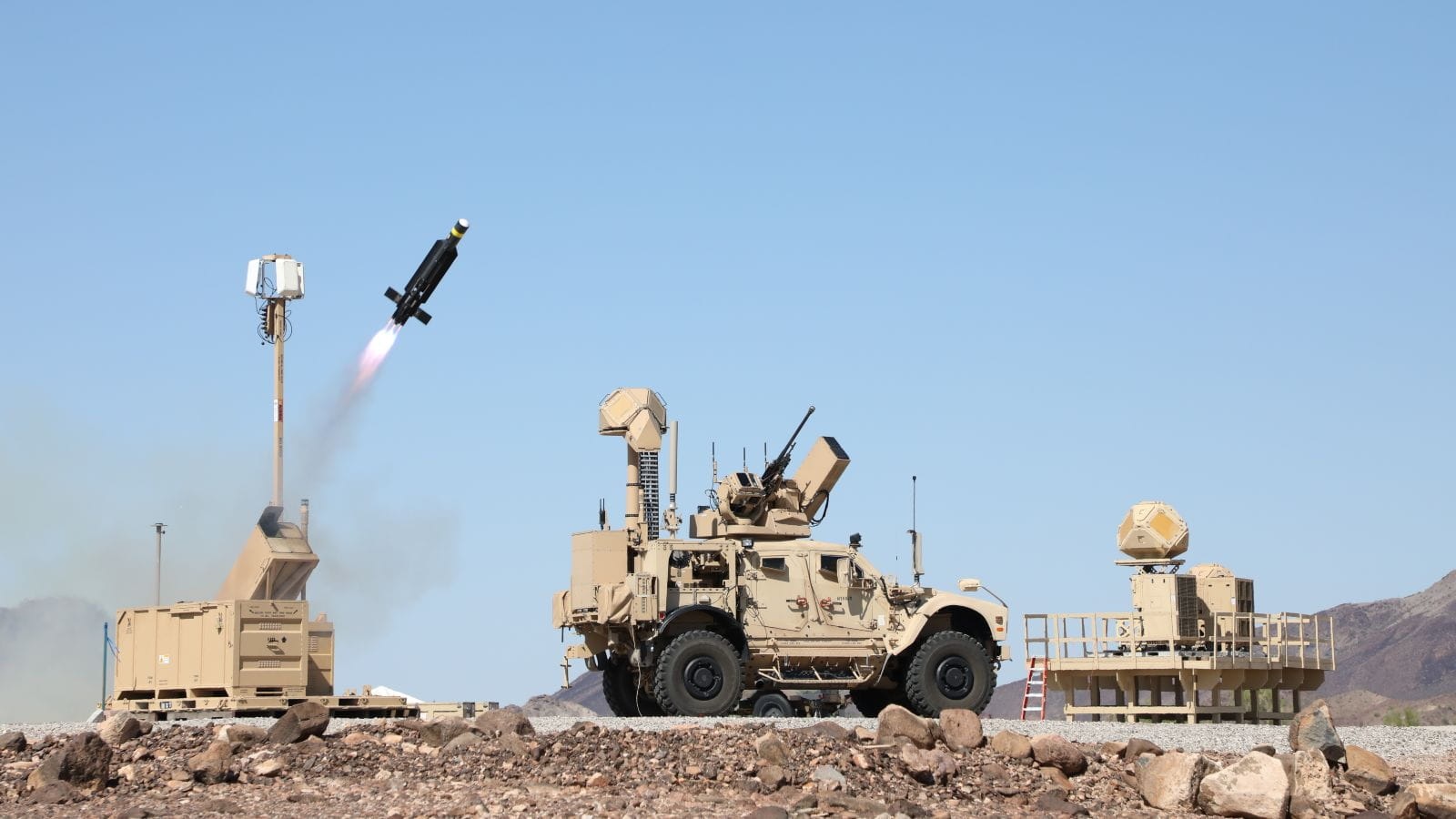
WASHINGTON — March 23, 2026 : The United States has approved a $2.10 billion Foreign Military Sale (FMS) to the United Arab Emirates (UAE) for the acquisition of the Fixed Site–Low, Slow, Small Unmanned Aircraft Integrated Defeat System (FS-LIDS) and associated equipment, following an emergency determination that bypassed the standard Congressional review process.
The approval, issued by the U.S. Department of State, authorizes the rapid transfer of counter-unmanned aerial system capabilities intended to strengthen the UAE’s ability to defend critical infrastructure against evolving aerial threats.
Emergency Waiver and Approval Framework
U.S. Secretary of State Marco Rubio determined that an emergency exists requiring the immediate sale of defense articles and services in the national security interests of the United States. This decision invokes an emergency waiver under Section 36(b) of the Arms Export Control Act, allowing the administration to bypass the customary Congressional notification and review period.
The expedited approval comes amid the ongoing U.S.–Israel–Iran conflict, where Iran has conducted sustained waves of missile and drone attacks across the region. Gulf countries, including the UAE, have faced repeated strikes involving low-cost one-way attack drones such as the Shahed series, targeting energy infrastructure, military bases, and urban areas.
These attacks have highlighted a growing imbalance between low-cost drones and high-cost interceptor systems, with defense forces often relying on expensive missile interceptors and fighter aircraft to neutralize relatively inexpensive aerial threats.
The FS-LIDS package forms part of a wider $16.5 billion emergency arms initiative aimed at replenishing and strengthening air defense systems among U.S. partners in the region, including the UAE, Kuwait, and Jordan.
In addition, the sustained pace of drone attacks has contributed to pressure on interceptor missile inventories, prompting several countries to explore alternative solutions. Regional partners have increasingly turned to low-cost counter-drone technologies, including interceptor drones developed and tested in Ukraine, to counter Iranian kamikaze UAVs more efficiently.
According to the State Department, the sale supports U.S. foreign policy objectives by enhancing the defense capabilities of a partner considered central to regional stability and economic security.
System Configuration and Capabilities
The UAE has requested ten complete FS-LIDS System of Systems, a fixed-site counter-drone architecture designed to detect, track, identify, and defeat low-altitude, low-speed, and small unmanned aerial threats that are difficult to intercept using conventional air defense systems.
The FS-LIDS integrates multiple subsystems into a layered defense framework, combining radar, electro-optical sensors, command-and-control networks, and kinetic interceptors.
Key components of the approved package include:
-
240 Coyote Block 2 All-Up-Rounds: Rail-launched interceptor systems equipped with active radar homing seekers and optimized fragmentation warheads designed to neutralize small UAVs. The interceptor operates at subsonic speeds with an approximate range of 15 kilometers.
-
Ku-Band Multi-Function Radio Frequency System (KuMRFS) Radars: Providing detection, tracking, and fire-control functions for small aerial targets.
-
Coyote Launcher Systems: Configured in four-pack launch units for rapid deployment and engagement.
-
Forward Area Air Defense Command and Control (FAAD C2) Systems: Enabling integrated battlespace management, sensor fusion, and engagement coordination.
-
Electro-Optical/Infrared (EO/IR) Sensors: Supporting target identification and tracking under day and night conditions.
-
AN/PYQ-10 Simple Key Loaders: Used for secure cryptographic key management and communications integration.
Support, Integration, and Logistics
In addition to primary system components, the agreement includes a comprehensive support package covering:
-
Integration and test equipment
-
Spare and repair parts
-
Communications systems
-
Software delivery and lifecycle support
-
Facilities and construction assistance
-
Technical documentation and publications
-
Personnel training and training equipment
-
U.S. Government and contractor engineering, technical, and logistics support services
-
Maintenance services, studies, and surveys
The State Department indicated that the UAE is expected to integrate the systems into its existing defense architecture without difficulty, supported by U.S. technical assistance and training programs.
Operational Role and Threat Environment
The FS-LIDS system is specifically designed to counter low, slow, and small unmanned aerial threats, which have become increasingly prevalent in recent regional conflicts. Such threats often operate at low altitudes and present small radar cross-sections, enabling them to evade traditional air defense systems optimized for larger, faster targets.
By combining radar detection with electro-optical tracking and kinetic interceptors, FS-LIDS provides a layered defense capability for fixed installations, including energy infrastructure, logistics hubs, and military bases.
The deployment of such systems reflects a broader shift toward cost-effective and specialized counter-UAV architectures, as militaries adapt to the increasing use of mass-produced, low-cost drone systems in modern warfare.
Industrial Participants
The principal contractors involved in the program are U.S.-based defense firms:
-
RTX Corporation (formerly Raytheon Technologies), headquartered in Tewksbury, Massachusetts
-
Northrop Grumman, based in Huntsville, Alabama
-
SRC Corporation, headquartered in Syracuse, New York
These companies will be responsible for system production, integration, and support services under the FMS framework.
Programme Implementation
The approval was formally notified on March 19, 2026. Implementation will include phased delivery of systems, along with training, integration, and sustainment support provided by U.S. government agencies and contractors.
The transaction reflects ongoing U.S. efforts to expand counter-UAV capabilities among allied nations facing persistent aerial threats, while reinforcing interoperability and defense cooperation across the region.
——— End of Article ———