BRUSSELS, Belgium — The European Commission and MBDA have advanced the European Hypersonic Defence Interceptor System (HYDIS) program after the successful completion of the project's Final Concept Review on July 10, marking a significant milestone in Europe's effort to develop a future interceptor capable of countering hypersonic and advanced ballistic missile threats.
Following the review, the four participating nations—France, Germany, Italy, and the Netherlands—selected a single interceptor concept, known as AQUILA, from two concepts that had been evaluated during the earlier Initial Concept Review. The decision allows the MBDA-led consortium to focus its work on refining AQUILA through the remainder of the three-year Concept Phase, which is scheduled to conclude in May 2027.
The HYDIS program is intended to develop a European endo-atmospheric interceptor designed to counter hypersonic and ballistic threats while integrating with existing air and missile defense networks.
Source: mbda-systems
AQUILA Selected as the Preferred Interceptor Concept
Over the past several months, the HYDIS consortium, led by MBDA, has carried out detailed work on solid rocket motor-based interceptor concepts with support from industrial partners, research organizations, academic institutions, and technology companies.
The project team conducted extensive performance assessments using simulations that modeled different stages of the interceptor's flight. These studies evaluated interception capability, flight performance, and the system's ability to provide area protection against high-speed threats.
The selected AQUILA concept combines technologies developed by several European defense companies. Italian propulsion specialist AVIO is responsible for the interceptor's solid rocket motor architecture, while ArianeGroup and ROXEL are developing the final-stage control mechanism. LYNRED is supplying the terminal infrared (IR) sensor used during the final engagement phase.
MBDA is integrating these technologies into a complete interceptor system while drawing on experience gained from the ASTER family of air and missile defense interceptors.
Integration with Existing Air Defense Systems
Alongside interceptor development, the consortium has continued work on integrating AQUILA into wider air and missile defense architectures.
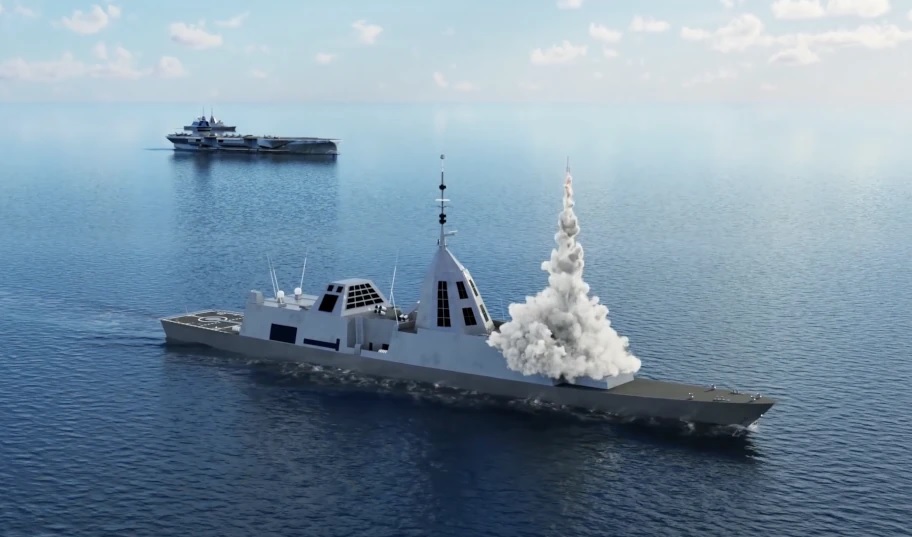
Thales Netherlands has provided updated performance data for both naval and ground-based sensor systems, supporting the interceptor's integration into future defense networks. Meanwhile, GKN Fokker has advanced studies on compatibility with the Mk 41 Vertical Launching System (Mk 41 VLS), one of the most widely used naval missile launch systems.
According to the consortium, AQUILA is being developed as a dedicated counter-hypersonic interceptor capable of operating alongside existing naval and land-based air defense systems.
Technical Review Completed
The technical studies completed during the concept phase were examined over a six-week review period by the Organisation for Joint Armament Cooperation (OCCAR) and representatives from France, Germany, Italy, and the Netherlands.
The review process included technical discussions and a convergence week during which the participating nations and the consortium addressed outstanding questions before presenting the final results to the HYDIS Steering Committee on July 10.
The successful completion of the Final Concept Review formally confirmed AQUILA as the concept that will move forward into the final stage of the current development phase.
€140 Million European Defence Project
HYDIS, officially contracted as HYDIS² in May 2024, has a total budget of approximately €140 million.
The project receives €80 million in co-funding from the European Union through the European Defence Fund (EDF), while the participating member states provide the remaining funding.
OCCAR serves as the Contracting Authority, managing the program on behalf of the European Commission and the participating countries.
The consortium includes 19 industrial partners and more than 30 subcontractors from 14 European countries, bringing together expertise in propulsion, guidance, aerodynamics, sensors, weapon integration, and missile technologies.
Major participants include MBDA, AVIO, ArianeGroup, ROXEL, LYNRED, ONERA, Bayern Chemie, TDW, DLR, OHB System, C.I.R.A., GKN Fokker, Thales Netherlands, and TNO.
Competition with Europe's HYDEF Program
HYDIS is one of two major European initiatives focused on developing future hypersonic defense interceptors.
Its primary competitor is the HYDEF (Hypersonic Defence Interceptor) program, led by Spain's SMS with technical architecture developed by Germany's Diehl Defence.
While MBDA's AQUILA concept builds on experience gained from the ASTER interceptor family, the HYDEF program draws on technologies associated with Diehl Defence's IRIS-T air defense systems.
Both projects are preparing for future pre-development activities, with the European Defence Fund expected to support the selection of a single architecture for Europe's future endo-atmospheric hypersonic interceptor capability.
Next Phase Through 2027
With AQUILA now selected, the MBDA-led consortium will concentrate its efforts on refining the interceptor's design until the completion of the Concept Phase in May 2027.
The work will focus on strengthening the technical foundation required for future manufacturing and development phases while supporting Europe's long-term objective of establishing an indigenous capability to defend against emerging hypersonic and advanced ballistic missile threats through a collaborative multinational program.
——— End of Article ———