In the ongoing war between Russia and Ukraine, one of the more interesting developments has been the capture of a German-made Leopard 2A6 tank by Russian forces. Recently, reports surfaced in Russian media that this tank had been transported to Uralvagonzavod, the country’s premier tank manufacturing facility, where the T-72 and T-90 tanks are produced. There, experts plan to meticulously analyze the Leopard 2A6, looking into its components and subsystems to better understand its technical sophistication.
Why is the Leopard 2A6 Important?
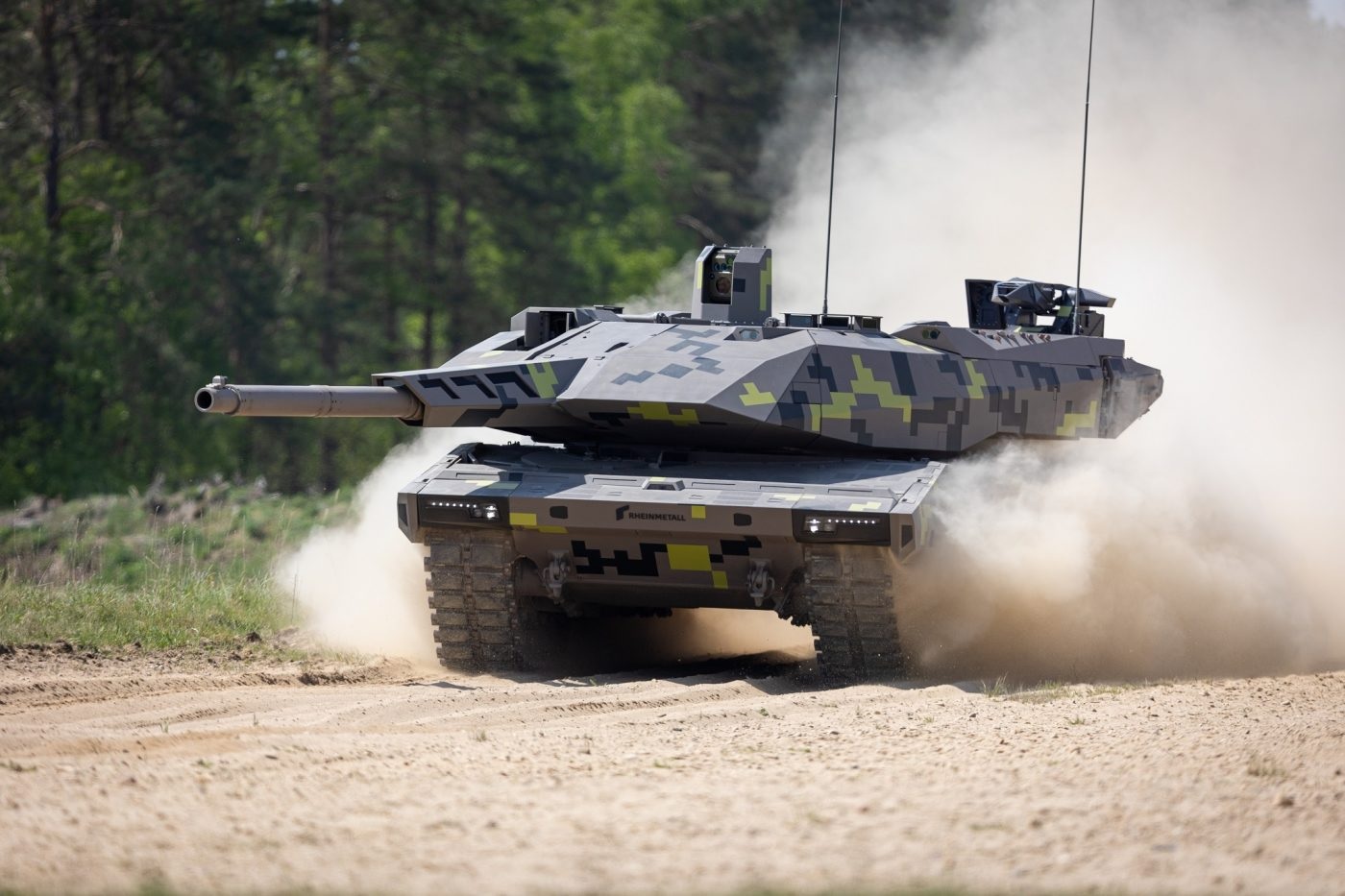
The Leopard 2A6 is one of the most advanced main battle tanks (MBTs) in the world, fielded by many NATO members and widely respected for its combat performance. Originally introduced in the mid-2000s, the 2A6 version features an upgraded Rheinmetall 120 mm smoothbore gun, improved optics, and enhanced armor protection. It also boasts excellent mobility, thanks to its 1,500-horsepower MTU MB 873 Ka-501 engine, which allows it to reach speeds of up to 68 km/h (42 mph) despite its heavy armor.
In addition to its firepower and speed, the Leopard 2A6 has a modular armor system that offers protection against a wide variety of threats, including anti-tank missiles and IEDs (improvised explosive devices). Its advanced fire control systems allow it to engage targets with remarkable accuracy, even while on the move.
This makes the Leopard 2A6 a crucial asset for any army, and Russia’s capture of one provides a unique opportunity to explore and understand the technology underpinning modern Western armored vehicles.
What Russia Might Learn
By examining the Leopard 2A6, Russian engineers will likely focus on the tank’s advanced systems, including its thermal imaging sensors, fire control systems, and composite armor materials. These technologies could offer Russia insight into how NATO designs and implements cutting-edge defensive and offensive capabilities in its MBTs.
The examination could also reveal weaknesses or potential vulnerabilities in the Leopard’s design, which might be exploited in future conflicts. Understanding how the tank’s components work together may also help Russian engineers develop countermeasures for future confrontations with NATO forces.
However, some experts are skeptical about the practical benefits of this analysis for Russia. For one, the technological gap between Russian and NATO tanks is significant. The T-90M, the most modern tank produced by Russia, is still heavily based on the older Soviet T-72 design, and recent reports indicate that Russian tank manufacturing relies on foreign components for critical systems. The Leopard 2A6, on the other hand, represents years of advanced research and development, incorporating many high-tech features that would be challenging for Russia to replicate under its current industrial conditions.
Challenges in Reverse Engineering
Reverse-engineering a tank as complex as the Leopard 2A6 is no small task. The level of technical expertise required, combined with the fact that some components rely on highly specialized materials and proprietary technology, makes it unlikely that Russia will be able to immediately copy or implement many of the innovations found in the tank.
Furthermore, Russia’s defense industry has been hit hard by sanctions, which restrict access to key technologies and materials needed to produce modern tanks. Many experts believe that even if Russia gains valuable insights from the Leopard 2A6, its ability to incorporate these lessons into new designs will be limited in the short term. This is particularly true given that Russia has struggled to modernize its own tank forces, with the T-14 Armata, its supposed next-generation tank, seeing significant delays and very limited production.
Symbolic Victory or Practical Gain?
While the capture and study of the Leopard 2A6 certainly represent a symbolic victory for Russia, the real-world benefits may be limited. While Russia will likely gain a better understanding of NATO tank design, replicating or surpassing the Leopard 2A6’s capabilities is a much more complex endeavor. The captured tank might provide valuable data for future Russian tank designs, but it is unlikely to lead to any major breakthroughs in the near term.
In the end, while the Leopard 2A6 could offer Russia some tactical insights and perhaps guide improvements to its own tank systems, it is unlikely to revolutionize Russian tank production overnight. However, it does underscore the continuing importance of advanced military technology in shaping modern warfare, where even a single captured vehicle can provide a strategic advantage.
——— End of Article ———