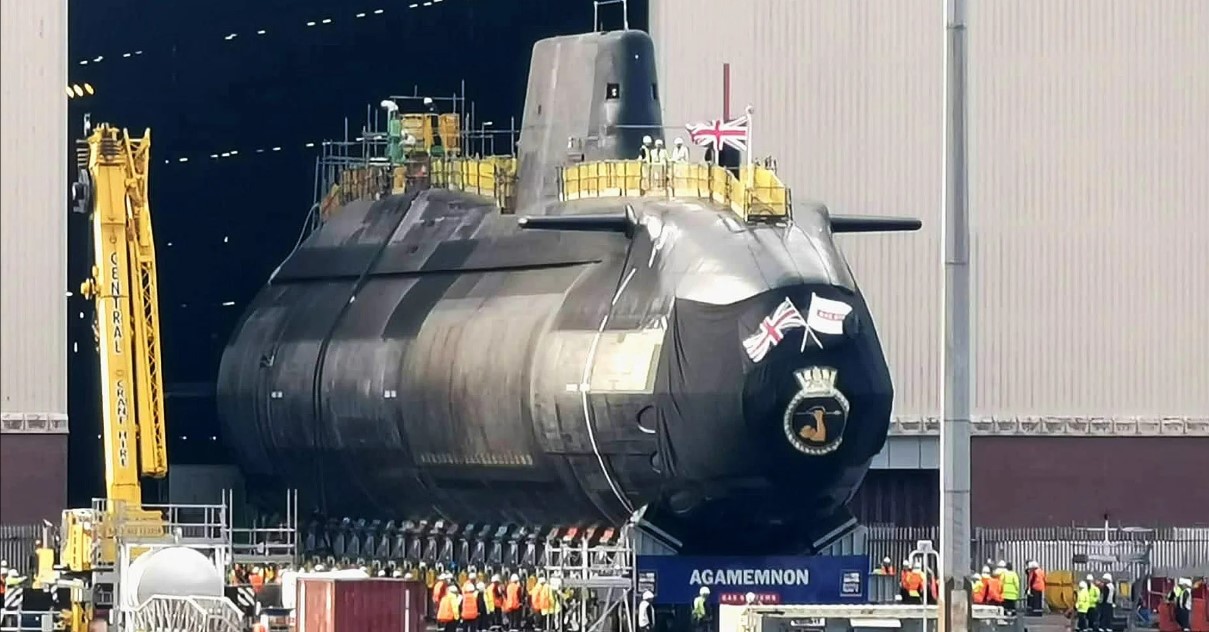
The Royal Navy recently celebrated a major milestone with the launch of Agamemnon, the sixth Astute-class attack submarine, at BAE Systems’ shipyard in Barrow-in-Furness, Cumbria. Named after the famous Greek king, this nuclear-powered submarine represents the pinnacle of the UK’s naval engineering. Weighing 7,400 tonnes and measuring 97 meters in length, Agamemnon is the latest addition to a series of advanced vessels that are redefining underwater combat and defense capabilities for the United Kingdom.
A Technological Marvel
What makes Agamemnon and its sister vessels truly impressive is their nuclear propulsion system. Unlike conventional submarines, which require frequent refueling, the Astute-class submarines can remain operational for extended periods without ever needing to refuel. This endurance is a result of their nuclear reactors, which provide virtually limitless propulsion. These submarines can generate their own oxygen and drinking water, allowing them to stay submerged for long stretches, which is key to covert operations.
Each Astute-class submarine is equipped with cutting-edge sonar, sensors, and combat systems, making them some of the most advanced attack submarines ever constructed. They are designed for a variety of roles, including intelligence gathering, surveillance, and anti-submarine warfare, as well as launching precision strikes using Tomahawk cruise missiles. With the ability to carry up to 38 weapons, these submarines are crucial for the UK's maritime defense strategy.
Advanced Design and Construction
The design and construction of the Astute-class submarines is a highly complex and collaborative effort, involving thousands of skilled workers. BAE Systems, a global leader in defense technologies, leads this effort in collaboration with the UK Ministry of Defence and other key partners, such as Rolls-Royce. The construction takes place at the historic Devonshire Dock Hall in Barrow, a site with over a century of submarine-building experience.
Steve Timms, Managing Director of BAE Systems Submarines, emphasized the importance of this national effort, calling the launch a “hugely significant achievement.” Commander David ‘Bing’ Crosby, the Commanding Officer of Agamemnon, expressed his pride in the workforce, noting that while much work remains to be done, the team’s accomplishments thus far are immense.
Integrating with India’s Defense Strategy
While Agamemnon will serve the Royal Navy, the advancements seen in the Astute-class submarines hold potential interest for global military powers, including India. India has been enhancing its naval capabilities in the Indian Ocean region and has developed its own nuclear-powered submarine program, notably the INS Arihant class. While India’s submarines serve different strategic purposes, there are parallels in the technological advancements between the two nations.
India's defense sector collaborates closely with international allies, and the expertise of companies like BAE Systems could influence future Indian projects, either through shared technology, best practices, or strategic partnerships. India’s focus on anti-submarine warfare and securing maritime boundaries aligns well with the strengths of the Astute-class submarines, particularly in terms of stealth, endurance, and offensive capabilities.
While India has not publicly expressed any intent to acquire technology directly from the Astute-class program, the ongoing exchange of military technology and collaboration between Western defense industries and Indian firms could bring some of these innovations into India's future defense planning. The focus would likely be on adapting cutting-edge sonar, propulsion, and missile systems for Indian needs, while also drawing lessons from the UK's experience in submarine warfare.
The Future of UK Naval Power
With Agamemnon now launched, the Royal Navy looks ahead to its commissioning and sea trials. This latest addition to the Astute class is part of a broader modernization of the UK’s submarine fleet. The final vessel in the series, Agincourt, is currently under construction, and BAE Systems is already working on the next-generation Dreadnought-class submarines, which will replace the UK’s Vanguard-class ballistic missile submarines.
Agamemnon, alongside her sister vessels, will play a pivotal role in the UK's national defense strategy for decades to come, offering unmatched endurance, firepower, and stealth capabilities.
In summary, the launch of the Agamemnon underscores the UK's commitment to maintaining a strong and technologically superior navy. As other nations like India continue to modernize their naval forces, the lessons and technologies from the Astute-class submarines may well influence global defense strategies in the years ahead.
——— End of Article ———