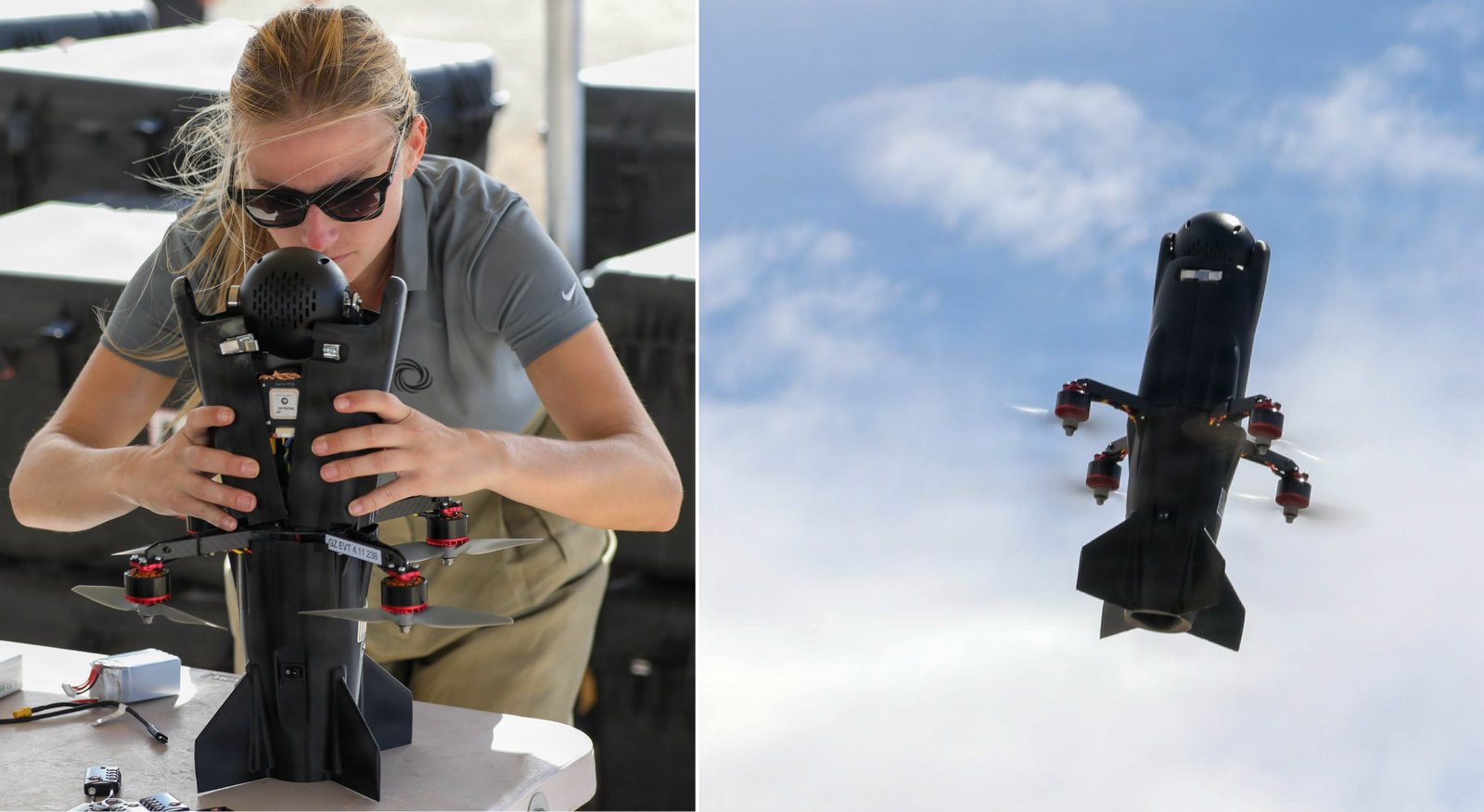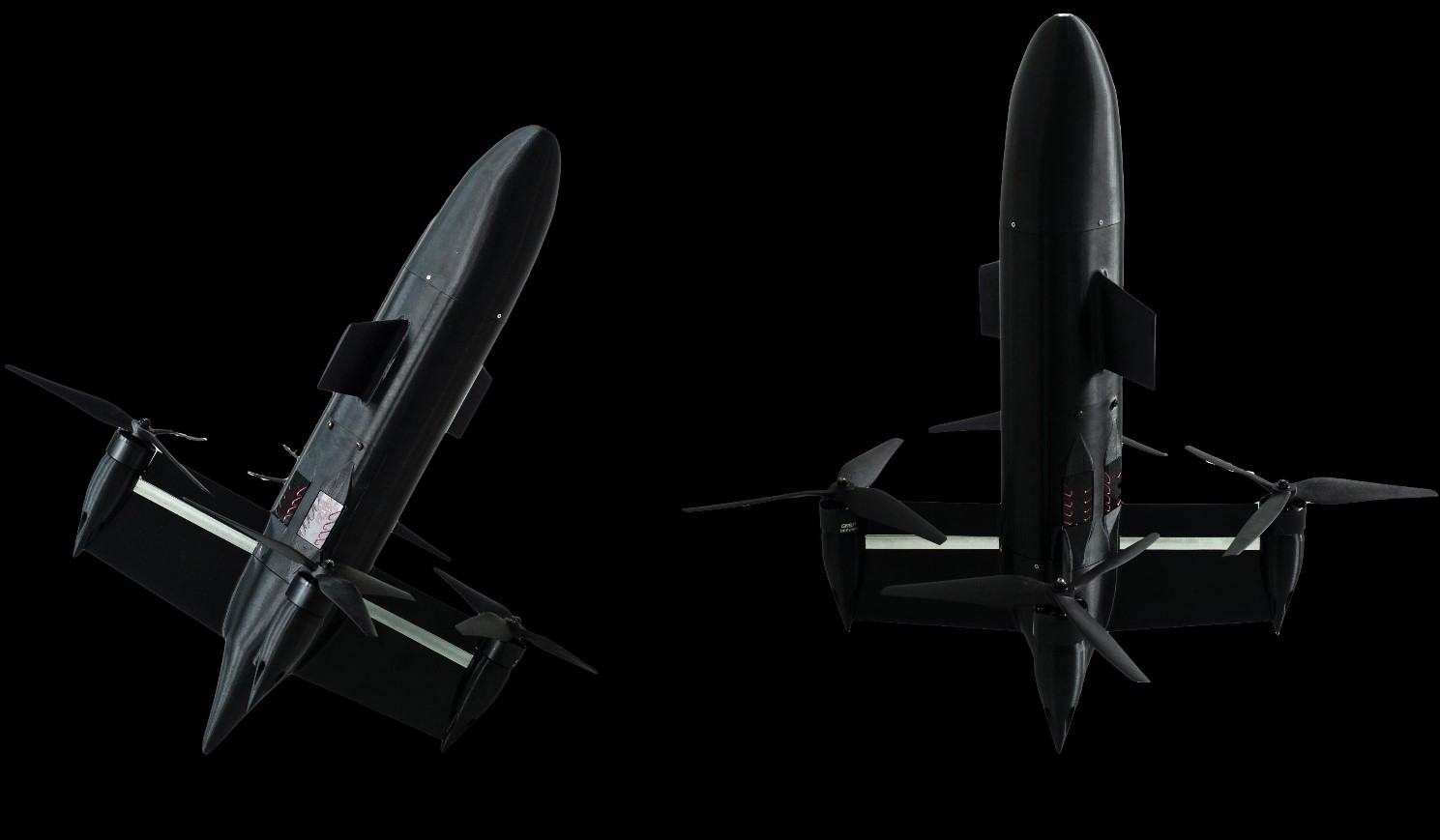
VILNIUS, Lithuania, June 25, 2026 — Lithuanian defense technology company Granta Autonomy has officially unveiled the Black Wasp, a new interceptor drone developed to counter hostile unmanned aerial vehicles (UAVs), including Shahed-class strike drones, loitering munitions, and intelligence, surveillance, and reconnaissance (ISR) platforms. The company says the system provides military forces with an automated, infrastructure-independent kinetic defense capability designed to address the growing threat posed by low-cost aerial systems.
The Black Wasp has been designed as a cost-effective alternative to traditional surface-to-air missiles for engaging small unmanned threats. By providing an autonomous interception capability, the drone is intended to complement existing air-defense systems while reducing the cost of defending against large numbers of incoming UAVs.
AI-Based Autonomous Interception
A key feature of the Black Wasp is Granta Autonomy's proprietary artificial intelligence and machine learning (AI/ML) navigation system. The drone is capable of operating autonomously after launch without requiring continuous manual control, allowing it to function in highly contested environments where electronic warfare (EW) frequently disrupts GPS and GNSS signals.
Using onboard computer vision algorithms, the interceptor identifies, tracks, and locks onto high-speed aerial targets before executing terminal guidance during the final phase of interception. The AI-powered flight control system enables automated navigation, target tracking, and engagement while maintaining mission continuity in GPS-denied environments.
The Black Wasp also integrates with most standard NATO air-defense radar networks, allowing it to receive real-time three-dimensional telemetry and target position updates. This integration enables operators to receive continuous tracking information from target detection through engagement, improving situational awareness and reducing response time.
Designed for Front-Line Operations
The interceptor has been developed for deployment by infantry and forward-deployed military units operating in restricted environments. Its vertical take-off and landing (VTOL) capability eliminates the need for runways or specialized launch rails, allowing rapid deployment from confined positions.
After vertical launch, the drone transitions into a high-speed forward flight profile to intercept incoming threats. According to the company, the combination of autonomous flight, VTOL operation, and radar connectivity allows the system to respond quickly to evolving battlefield conditions.
Technical Specifications
The Black Wasp measures 600 × 450 × 450 mm, including the propeller arc. It has a cruise speed of 160 km/h and can reach a maximum speed of 320 km/h during interception missions.
The interceptor offers a flight range of 20 km, extending to 40 km on return-flight missions. Flight endurance is rated at up to 15 minutes during cruise operations and more than six minutes at maximum speed.
The system can operate at altitudes of up to 7,000 meters above mean sea level (MSL) and has a climb rate of 30 meters per second.
The drone has a maximum take-off weight of approximately 4 kg and can carry a payload or warhead weighing up to 500 grams. It supports multiple electro-optical seeker configurations, including daylight and thermal camera options, enabling operations in various environmental and lighting conditions.
For communications, the Black Wasp employs a jamming-resilient S-band and C-band data link while maintaining direct integration with NATO radar systems for real-time target updates.
Completing Granta's Counter-UAS Ecosystem
The Black Wasp expands Granta Autonomy's existing multi-layered unmanned systems portfolio and completes the company's integrated "kill-chain" ecosystem.
It is designed to operate alongside the Hornet XR, a long-range reconnaissance drone that serves as the system's sensor platform, and the X-Wing, a VTOL loitering munition used as the strike component. Together, the three platforms enable military units to detect, track, identify, and neutralize targets through a coordinated network.
Each system can operate independently for specialized missions or be controlled simultaneously from a unified ground control station, allowing commanders to conduct reconnaissance, target acquisition, and engagement using a single integrated architecture.
Battlefield-Informed Development
Founded in 2015 by former military engineers Gediminas Guoba and Laurynas Litvinas, Granta Autonomy has based its product development on operational feedback from active combat environments.
Since the start of Russia's full-scale invasion of Ukraine, the company has maintained an operational presence supporting the Ukrainian Armed Forces, delivering thousands of GA-FPV quadcopters and hundreds of reconnaissance drones.
Following a €1 million seed funding round in 2024, Granta Autonomy expanded its European manufacturing capabilities, increasing production of UAV platforms, ultra-lightweight micro-gimbal tracking optics, and proprietary data-link technologies.
With its autonomous AI-powered navigation, electronic warfare resilience, NATO radar integration, and VTOL deployment capability, the Black Wasp is intended to provide armed forces with a dedicated interceptor designed to counter the increasing use of strike drones, loitering munitions, and ISR platforms while complementing existing air-defense networks.
——— End of Article ———