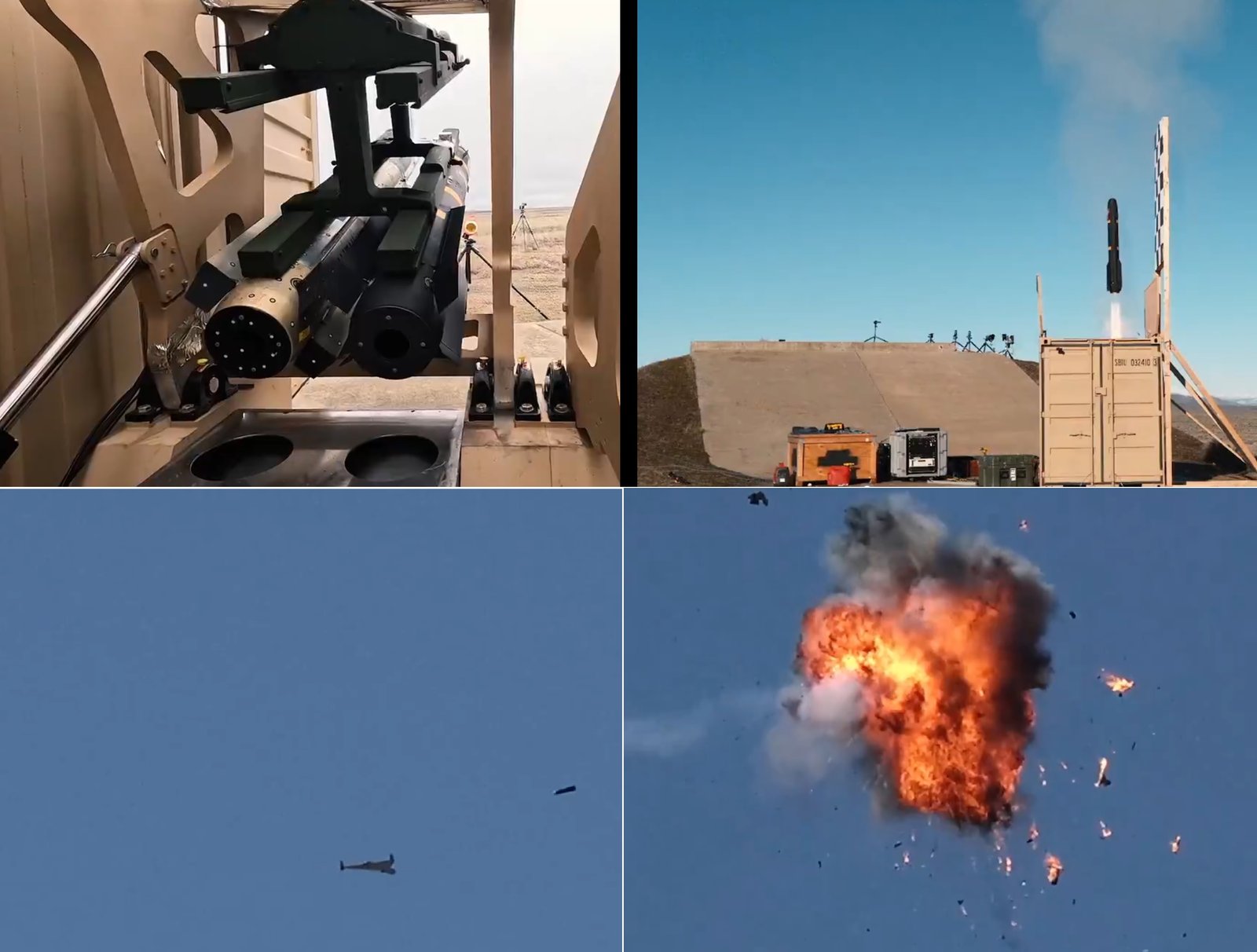
Washington, U.S. — Lockheed Martin has released new video footage of live-fire testing of its GRIZZLY containerized missile launcher, describing the system as production-ready. The launcher is designed to provide an affordable, reloadable and mobile missile-launch capability for distributed operations.
GRIZZLY places a missile launcher inside a standard 10-foot Tricon shipping container, allowing it to be transported by truck, rail or ship using existing logistics equipment. Lockheed Martin developed the system in about six months using internal funding, combining existing launcher and weapon designs, including the fielded M299 launcher.
Built fast. Built flexible. Built for the mission.
— Lockheed Martin (@LockheedMartin) August 12, 2026
GRIZZLY™ is an affordable, reloadable and production-ready containerized launcher designed to bring mobility and adaptability to the fight.
The future of defense is here — and it’s containerized. 📦🚀 pic.twitter.com/HZiboJY3jE
Live-Fire Testing
In March 2026, Lockheed Martin completed GRIZZLY's first integrated live-fire tests at Yakima Training Center, Washington. A Hellfire missile was launched from the container in both vertical and angled configurations. The tests confirmed the system could load and launch a missile from the containerized setup and meet the required trajectory parameters.
GRIZZLY can carry up to eight ready-to-fire missiles and supports toolless reloading. It can operate from ground locations or ships, use internal or external power, and can be remotely operated. The launcher is also designed to work with different command-and-control and sensor systems rather than one dedicated network.
JAGM Demonstration Against a Drone
In June 2026, Lockheed Martin conducted another major test at Yuma Proving Ground, Arizona. GRIZZLY fired a Joint Air-to-Ground Missile (JAGM) to intercept a Group 3 one-way attack drone.
The demonstration integrated GRIZZLY with Lockheed Martin's Sanctum counter-unmanned aircraft system battle manager and Fortem R-40 radars. The radars detected and tracked the target, Sanctum processed the engagement data, and GRIZZLY launched the JAGM. Lockheed Martin said the integration and live-fire testing were completed in less than 45 days.
JAGM was developed as a successor to the Hellfire and TOW missiles. It uses a dual-mode seeker with laser and millimeter-wave radar guidance, giving it flexibility for different operating conditions.
Use of Existing Missiles
Lockheed Martin says the use of established missiles such as Hellfire and JAGM allows military units to rely on existing missile stocks, training and logistics rather than introducing a completely new munition.
The company is also developing the related Kodiak containerized launcher. In August 2026, Kodiak completed its first integrated live-fire test at Yakima Training Center using a Reduced-Range Practice Rocket associated with GMLRS-family munitions. Kodiak is designed to carry up to 12 GMLRS rockets and provide containerized offensive-fire capability across land, air and maritime platforms.
Production Plans
Lockheed Martin CEO Jim Taiclet said in early August 2026 that the company had pre-funded GRIZZLY production as part of its Sanctum counter-drone architecture and directed teams to prepare for 1,000 units. The company plans to seek U.S. military contracts and potential export sales while continuing work with the U.S. government on further development.
The GRIZZLY concept reflects growing interest in containerized launchers that can use existing transportation infrastructure while distributing missile-launch capability across different locations. Its live-fire demonstrations with both Hellfire and JAGM have established the system's ability to launch different missiles from a standard containerized platform.
——— End of Article ———