LONDON — Saab UK, Aquark Technologies and the Royal Navy’s Disruptive Capabilities and Technologies Office (DCTO) have completed a UK trial demonstrating that a distributed network of Saab Giraffe 1X radars can maintain a coherent air picture without relying on GPS or other satellite-based timing.
The trial was conducted in June 2026 and combined Saab’s Giraffe 1X radar with Aquark’s AQlock quantum timing technology. Saab said the demonstration is believed to be a world first for a distributed high-performance military radar network maintaining a coherent operational picture using independent quantum timing sources. QinetiQ and the Defence Science and Technology Laboratory (DSTL) also participated in the trial.
Trial tested radar operation without GNSS timing
Modern distributed radar networks require precise timing to combine tracking information from multiple sensors into a single air picture. Global Navigation Satellite Systems (GNSS), including GPS, are commonly used as an external timing reference. However, GNSS signals can be jammed, spoofed or otherwise disrupted, creating a challenge for networked sensors operating in contested environments.
During the trial, multiple Giraffe 1X radars tracked live aerial targets while using independent AQlock quantum timing sources. The test team then introduced controlled timing errors to reproduce conditions associated with GNSS spoofing and denial.
According to Saab, the radars continued to combine their tracking data into a single coherent air picture without GNSS timing. The network showed predictable performance degradation when timing was deliberately disrupted and recovered rapidly after synchronisation was restored. It also remained operational under representative GNSS-denied and spoofed conditions.
AQlock quantum clocks provided independent timing
Two AQlock 2.0 cold-atom clocks were deployed at separate locations during the trial. The systems reached an acceptable timing signal from a cold start in less than 30 minutes and provided the sole timing reference for the two operational radar systems.
Aquark’s AQlock technology uses a cold-atom approach based on its Super-Molasses Trap method. The company has previously worked with the Royal Navy on trials involving its cold-atom technology.
Quantum timing provides a local source of highly accurate time without requiring an external satellite signal. In a distributed radar network, this can allow geographically separated sensors to remain synchronised when satellite-based timing is unavailable or cannot be trusted.
Giraffe 1X used in the distributed network
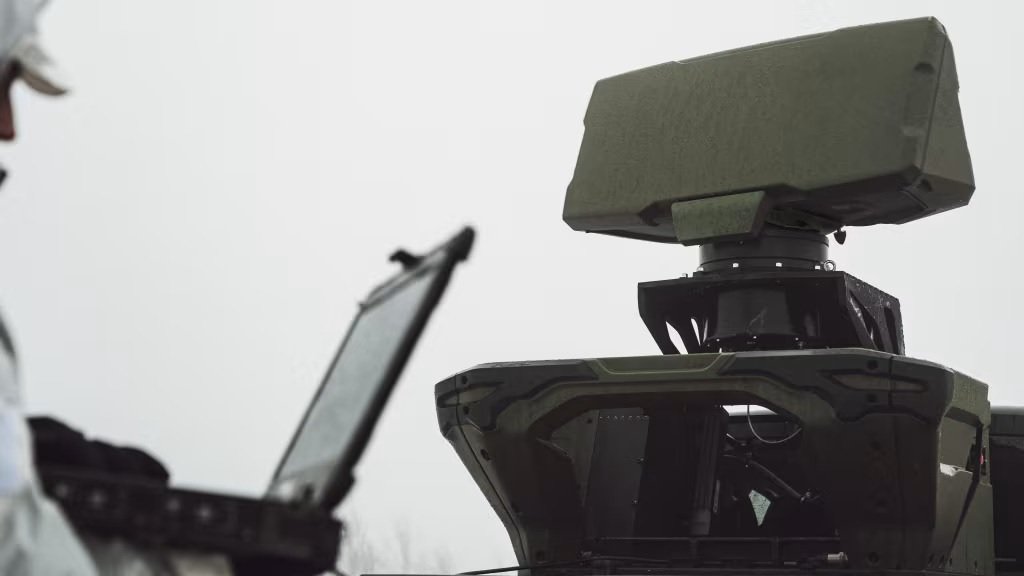
The Giraffe 1X is Saab’s compact 3D multi-mission radar. Saab says it can detect, track and classify air targets, including small unmanned aerial vehicles, and can be deployed in mobile or fixed configurations. The radar is also used for applications including ground-based air defence, counter-UAS operations, weapon locating and sea-surface surveillance.
Saab UK has been producing Giraffe 1X systems at its Fareham facility. In May 2026, the company announced that it had completed its 100th Giraffe 1X radar in the UK.
The June trial extended the radar's use into a distributed configuration in which separate radar locations maintained a combined air picture using independent quantum timing sources.
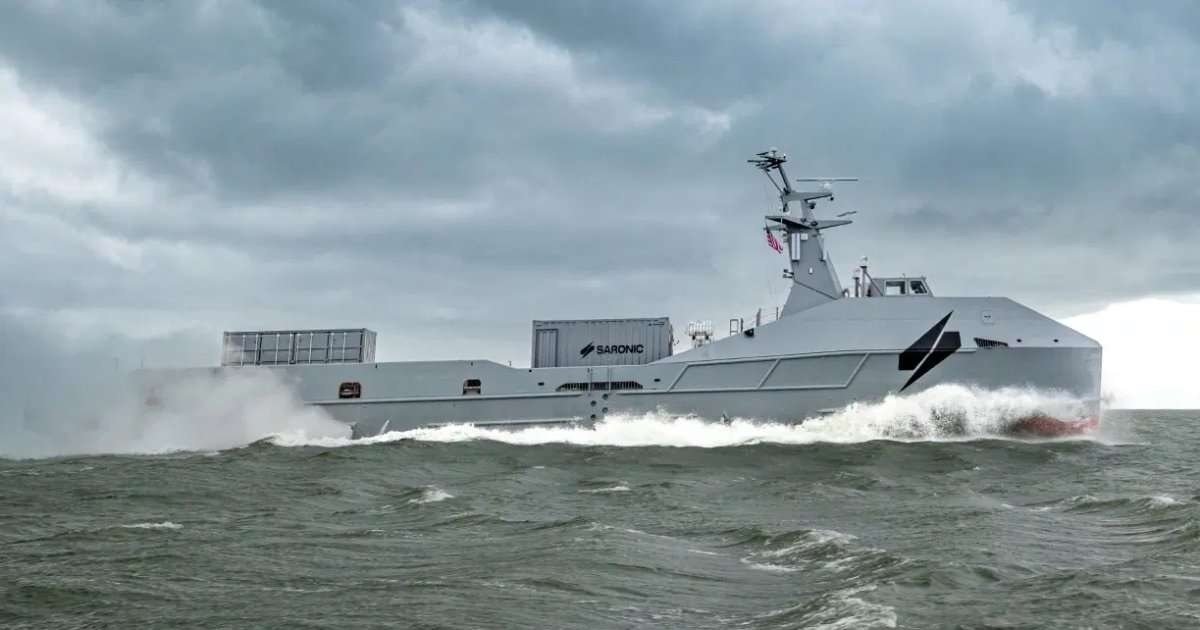
The Royal Navy’s experimental ship XV Patrick Blackett and DSTL also acted as network rebroadcast nodes during the trial, according to information released about the demonstration.
Saab highlights potential for GPS-denied operations
Andy Fraser, Group Managing Director at Saab UK, said the trial demonstrated a practical capability by combining quantum timing technology with the Giraffe 1X radar.
“This trial is a great example of how collaboration can accelerate innovation,” Fraser said. “By combining quantum timing technology with Saab’s advanced Giraffe 1X radar system, we have demonstrated a practical capability that could help customers continue to operate effectively when it matters most.”
Matthew Aldous, Timing Lead at Aquark Technologies, described the trial as a milestone for UK sovereign quantum technology and as the first known deployment of a pair of British-built cold-atom systems against a defence requirement.
The results were announced by Saab UK on August 12, 2026. The companies said the work forms part of wider efforts to develop radar and timing capabilities for military operations where satellite navigation and timing services may be disrupted or compromised.
——— End of Article ———